/pic447982.jpg)
Arimaa, pronounced "a-ree-muh," is a game where stronger animals like elephants and camels freeze, push, and pull the weaker ones from the opposing team around and into traps, while one of the rabbits tries to sneak across the board and harmlessly reach the other side. The first player to get one of their rabbits to the other side wins.
This may sound like a simple kids' game, and while it is easy enough for your kids to learn and enjoy, you will find that it is also a very deep game that can take a lifetime to master. Arimaa is one of the deepest strategy games ever invented in the history of mankind, but designed to look intuitively simple. No two games of Arimaa are ever the same. There is much to learn and discover about this intuitively simple, yet intellectually challenging, game.
Played on an 8x8 grid with four trap squares and 32 animal pieces (16 gold and 16 silver). Each player has an elephant, a camel, 2 horses, 2 dogs, 2 cats, and 8 rabbits. Strength hierarchy: Elephant > Camel > Horse > Dog > Cat > Rabbit. The game begins with an empty board. Gold places the sixteen gold pieces first in any configuration on the first and second ranks. Silver then places the sixteen silver pieces in any configuration on seventh and eighth ranks. Then gold moves its pieces first. A player can move up to four "steps" each turn. All pieces move orthogonally (at right angles).
Arimaa was invented by Omar Syed, an Indian-American computer engineer trained in artificial intelligence. Syed was inspired by Garry Kasparov's defeat at the hands of the chess computer Deep Blue to design a new game that could be played with a standard chess set, would be difficult for computers to play well, but would have rules simple enough for his then four-year-old son Aamir to understand. (Arimaa is Aamir spelled backwards plus an initial "a"). In 2002, Syed published the rules to Arimaa and announced a $10,000 prize, available annually until 2020, for the first computer program (running on standard, off-the-shelf hardware) able to defeat each of three top-ranked human players in a three-game series.
Primal: The Awakening | Chapter 3 | Hit & Miss

- strong action focus
- engaging boss-battle dynamic
- concern about variety since the base map is limited
- combat-focused, boss encounters, escalating threats
- mythic/boss-battling arena
- campaign-esque with boss-centric chapters
Mechanics (from transcript analysis)
- Boss Battler — combat against a primal boss with phase-based mechanics
- boss_battling — combat against a primal boss with phase-based mechanics
- card_rotation — rotating cards to regulate your hero's actions and abilities
Video topics + discussion points
Quotes (from this video)
- objectively the greatest game of all time
References (from this video)

- The campaign continues next week on Tuesday.
- The host is not going to get the miniature painted in time.
- Nanolith
Mechanics (from transcript analysis)
Video topics + discussion points
Quotes (from this video)
- Endeavor Deep Sea is very, very high to the top of the list.
- I am 90% sure they would say yes.
- My current three favorite games that don't have any kind of space or science fantasy whatever uh element to them is through the ages feast roadin and Maraca.
- So, yeah, it's very much a multiplayer solitaire game, but it's very good.
- I believe it's a much improve a much better version of Hrien's Wall and I love the way that the combat works against the actual the the puzzle of trying to defend yourself against the different forces that are attacking you. I really like it. So yeah, Anarchy gets a big thumbs up for me.
- Flam Rouge, fantastic game. Definitely Flam Rouge.
- I personally don't feel it's right for me to do them at the end of the year because most of the games I will have only played once and some of them I won't have even played.
- I personally prefer Flam Rouge to heat.
- Anything that wins Spiel Dejars will go on to sell way more copies, especially in the family category if it gets that Spiel Dejars award on it, which they have to pay for. They have to pay to have that award put on there, which is how Spiel Dejares makes its money. But it will sell many, many copies of the game.
References (from this video)
- Variety of character builds and deck customization options
- Strategic depth in card play and movement
- Engaging campaign progression with branching choices
- Dynamic monster behavior that requires adaptation
- Steep learning curve and frequent rule clarifications needed
- Can be slow-paced due to complex interactions and rules checks
- Certain card combos can be overly powerful or lead to 'broken' strategies
- Struggle management can be unintuitive at times
- Monster Hunting
- Jungle
Mechanics (from transcript analysis)
- Behavior Refresh — The monster's behavior cards are refreshed according to specific rules, often at the end of a player's turn or round.
- Blind — A card effect that can be applied to the monster, potentially nullifying certain abilities.
- Card play sequencing — The order in which cards are played is crucial for activating abilities and maximizing damage or defensive effects.
- damage mitigation — Players utilize various abilities and card effects to avoid or reduce damage taken from the monster or environmental hazards.
- Deck construction — Players upgrade their decks by adding new cards based on campaign progression and in-game choices.
- Mastery — Players work towards completing character-specific 'masteries' through particular card plays or actions.
- Monster Behavior — The monster has specific behavior cards that dictate its actions, including movement, attacks, and special abilities like 'quick refresh'.
- Riding Check — A mechanic that involves comparing attrition and stamina values to determine the outcome of certain actions.
- Stealth — Cards can grant stealth to players or monsters, affecting targeting or evasion.
- struggle management — Players interact with a 'struggle' mechanic on the monster, which can be reduced or increased through card effects.
- Stun — The monster can be stunned, preventing certain actions or effects for a turn.
- Terrain effects — Different terrain types on the board have unique effects on players, such as limiting sequence length or causing damage.
- Vulnerable — Inflicting 'vulnerable' on the monster increases the damage it takes from subsequent attacks.
Video topics + discussion points
Quotes (from this video)
- “It's a jungle bush.”
- “It's a nightmare.”
- “You can't cancel that.”
- “The variety of builds is part of why I love this game.”
- “If you double it and then double it again, it just gets out of control.”
References (from this video)
- Unique boss battler.
- Enemy activation based on player actions/positioning.
- Strategic deck construction.
- Planning is key to success.
- Fast and fun resource gathering and crafting.
- Story is not the strongest, but connects to battles.
Mechanics (from transcript analysis)
- Boss Battler — It's a unique boss battler where the enemy activates based on what you do or where you are positioned on the board.
- Deck construction — The characters come with a deck of cards that you can over time construct and make different which will help you handle certain bosses.
- Resource Management — Gaining resources and crafting new weapons and armor is super fast and fun.
Video topics + discussion points
Quotes (from this video)
- I love campaign games that uh I haven't finished and I need to finish these.
- Isoparian Guard is a game that involves exploration with a compelling story.
- This is Stars of Aarios. This is a ship battling game, and it works really well.
- Aon Trespass Odyssey is the game for you.
- The boss fights are epic.
- Number one on the list is Madara.
- There's so many things that make this game a mustplay that it tops my list of campaign games that I need to complete.
References (from this video)

- Fantastic game.
- Not much played of it this year, although some has been played.
Mechanics (from transcript analysis)
- Boss Battler — Can be played more often as a one-off boss battler, session by session.
- Campaign — Mentioned as a big box game and a type of game that can be played as a campaign.
- living card game — Shares a similar vibe in terms of the puzzle and what you're doing.
Video topics + discussion points
Quotes (from this video)
- I just I thought this was going to end up being a huge game.
- If you can get a copy of Men Nefer, if you can find that game and you like Eurogame, that is definitely one to try.
- My number one, Star Wars Unlimited, which even at the time I was like, I'm it didn't really feel like a board game, but like it was the game I played most in 2024.
- this was my number one, this was the one for me that beat out STI was Saltfield.
- Saltfield I 100% stand behind.
- He destroyed everybody just like he always does. And it felt like, you know, and again, this is not unself because I played uh what was the one Sor also with him and he destroyed everyone in that to the point where I was like, "Oh, what? Either we're dumb or the game is broken and the games aren't broken."
- this is what makes Isaac such a great game designer. And this is how we get games like Gloom Haven
- The ones I didn't get to play, they're just going to get shoved over to the 2026 year.
- It came out in December of 2024. Not a lot of people got to play in 2024.
References (from this video)

Mechanics (from transcript analysis)
Video topics + discussion points
Quotes (from this video)
- Probably the most complex game I have in my collection, which is Lisboa.
- Wild Garden, super fun, but the group I played it with just took so long in their turn so I'm like, I need a break from this game for a second.
- Thunder Road: Vendetta continues to be a game that I introduce to brand new players and people just have so much fun with this game.
- I played and I love this game.
- this was so much fun.
- This game slaps.
- It feels like a 2D arcade scrolling game and we're looking for it.
- I've had so much fun with Street Fighter and I've always kept it around because I just love the miniatures
- This is a really fun building game.
- This plays so different from other Lacerda games of course, because it's way easier.
- I just think the style overall just feels a lot more like flowy, a lot more straightforward than his other games
- Snow Planner, really love this game.
- Thank you to Leder Games for sending this one over. Of course, I cannot wait to play this.
- With that in mind, the final count is 160 games.
References (from this video)
- stymied character growth
- limited item options
- campaign was unfun
- story was awful
- took itself too seriously
- Fantasy
- Combat heavy with minimal narrative
Mechanics (from transcript analysis)
- Character progression — Character growth was stymied, with very limited options for items and equipment.
Video topics + discussion points
Quotes (from this video)
- This is very like tribal like morbid.
- It's um it's Dark Souls King Arthur, the Arthurian legend.
- this one is kind of like it's very like tribal like morbid.
- But if we're looking at themes of negative like negative games that I just did not care about the theme
- I typically don't buy them if I if I don't like the theme.
- the way that they did the theme was was so uninspired.
- Odelin is again a good one just because it's it's Diablo generic demon fantasy thing. I find that incredibly tired.
- Vagrant song certainly unique. I don't call it bad, but it had a hard time ringing with me
- I was actually kind of glad you decided to quit that one.
- So, if we're looking at games that I think does CA uh combat one of the best I'm trying to think is I mean Osworn is definitely up there.
- That's the highlight. I mean, this is also a boss battler, but it is a campaign. But each boss is unique. I love the way that it utilizes the battle flow system. The fact that you can use cards or dice.
- Their dedication to the secret boss. I applaud. That they they did everything they could to keep it all a mystery.
- But then on repeat, the the mystery is gone, but the combat is still still great.
- Because that's all it is is boss fights. I think a game funny enough that does boss fights terribly is one we've already talked about Madara
- Madara's boss fights are [ __ ] bullet sponges with 800 health
- the AI itself when you're doing the mobs, that works relatively well for the various enemies that are in the game, and they do level up, which is nice. They get more challenging, but it kind of just boils down to more HP and more damage. It does. They still kind of run the exact same way, but they color code it so it's not just a hodgepodge of just enemies.
- the inverted paradigm system is amazing.
- And actually a good positive and probably a good negative for some is atto to KDM. It depends on how you like your boss fights.
- Don't get me wrong, they're they're extremely similar. And it just kind of depends on how you want your boss fights. KDM does it. I'm not saying KDM is necessarily a negative, but in the sense that it's combat can literally boil down to I have a character that can crit on everything
- It's too It's just way too clunky.
- God, no. A green [ __ ] Who the hell goes off a D 100?
- But yeah, folklore the affliction. This was the one had had a really cool world. I like the the fable element, the gothic horror stuff. I think the characters were unique. Um but man, fiddly as all hell.
- Yeah. And I mean, they shot for the open world.
- It would have just been better if it was if it was uh scenario based.
- but he doesn't want to carry any of his [ __ ] to my house.
- I want to see it. I want to see this game of his that he owns like everything for
- I didn't ever bring this one up because I haven't touched it in years.
- Yeah, I know. I know. You would think with how much [ __ ] he has and how much he doesn't touch it, you would that he would want to play it. I told him we could have three. We could get cuz you'd be in on it, but he doesn't want to carry it over to my house.
References (from this video)

- Potential for more accessible version
- Ability to pick or choose what hits the table
- Over-the-top miniature experience may not appeal to all
- Miniature experience
- Marvel Champions
Mechanics (from transcript analysis)
- Card-based — The new games are described as being card-based only, differentiating them from the original Primal.
Video topics + discussion points
Quotes (from this video)
- Hey, I'm Alex Radcliffe from Board Game Co, and this is news and week in review.
- So, I definitely be It's definitely worth being aware of that at the very least as you choose how to spend your money on board games and as you choose how to spend your money on Prime.
- Effectively, Spirit Island is something that the rights to a lot of the things are held by Flat River Group, but the right to the game itself, he has.
- I always thought Spirit Island deserved better, you know, better everything kind of just to some extent.
- Because Awaken Realms is one of the fascinating companies. Like they have they are responsible. They get they they kind of moved into the Seeman problem where people love to hate to an extent, but people love to hate they How to put this?
- My own two cents here um is that when a company is successful, they either can be comple- or individuals. Individuals, companies, whoever, they can either be like almost completely pure of heart and then they earn a lot of respect for being completely pure of heart.
- But because they've been so successful, you fall into that range of almost some groups of people will love to hate them even as they continue to put out things that are massively popular and have huge audiences and they're clearly delivering things to people who want those things.
- I think the complaints people do have are legitimate. I think they're often over-magnified because of the success of those companies, and I think those complaints often ignore the very large groups of people who are fans of those companies and enjoy what those companies put out and do not have the same issues you do.
- I cannot get over the fact that I played Eureka over 50 times in like a 2 and 1/2 week period.
- I hope you enjoyed this video and as always, I hope you have a good one.
References (from this video)

- Requires interrupting turns at multiple points
- Constantly pay attention to enemy actions
- Risk of missing triggers
Mechanics (from transcript analysis)
Video topics + discussion points
Quotes (from this video)
References (from this video)
- huge, ambitious box with epic scope
- strong card synergy and upgrade depth
- large footprint and weight
- requires commitment and space
- boss-battler in a campaign-style context
- fantasy monster hunt with giant minis
- Monster Hunter World (in vibe with big monsters and big battles)
Mechanics (from transcript analysis)
- Card Crafting — you upgrade cards and unlock powerful combos that affect both you and enemies
- card-crafting and synergy — you upgrade cards and unlock powerful combos that affect both you and enemies
- deck-building with upgrade pathways — cards have synergies and upgrades to increase attack and resources
- dynamic monster encounters — monsters scale and present a variety of threats
Video topics + discussion points
Quotes (from this video)
- We’re obsessed with board games.
- I freaking love Unstoppable.
- This game is great because there’s also it's a very open game where when a threat is out there, you can know what's on the other side of that.
- You can see from the other side like what is on the other side.
- Terra Mystica is getting a giant crazy big box version.
References (from this video)

- One of the author’s favorite boss battlers
- Single-shot and campaign modes provide flexible play
- Potential for a scaled-down entry that preserves core experience
- Base box is expensive
- No straightforward stand-alone smaller version in the current line
- deck-building, big monster battles, and tactical combat
- Epic fantasy with boss-battler themes
- campaign and single-shot experiences with heavy boss focus
- Jaws of the Lion
- Rove Anchor Point
Mechanics (from transcript analysis)
- Boss Battler — Long-form battles against multiple large antagonists with escalating complexity.
- Boss-battler campaigns — Long-form battles against multiple large antagonists with escalating complexity.
- Deck Building — Construct and improve your deck to defeat towering enemies.
- Deck-building and gear optimization — Construct and improve your deck to defeat towering enemies.
- Modular campaign options — Campaigns can be tailored with selectable scenarios and content.
Video topics + discussion points
Quotes (from this video)
- The Elder Scrolls deserves a smaller box entry point
- It's an accessible entry point to the world of Oswan with a guided experience
- This is a great option to get into the system without having to go full bling
- It's hands down my favorite boss battler
- Ice Vanguard is a fantastic epic experience, but so big it needs a way to be approachable
References (from this video)

- Promising look and feel from early impressions
- No personal play experience to share yet
Mechanics (from transcript analysis)
Video topics + discussion points
Quotes (from this video)
- I still absolutely love this design
- the AI system is so smart
- it's on the totally table Todo list
- Frost Punk is incredible
- I absolutely plan to get to the table this year
- the slide puzzle mechanism I love
- Weather Machine remains one of my favorites
- Sleeping Gods no reason to believe that I won't love this one as well
References (from this video)

Mechanics (from transcript analysis)
Video topics + discussion points
Quotes (from this video)
- What enters my collection is a whole another story.
- I'm absolutely hooked on it. I love Primal.
- If I add something to my collection, ideally I want to see it there a year from now, at least a year from now.
- It is such a good implementation of the Glass Road system.
- It's not forever, but it feels like a forever game for me.
References (from this video)
- The minis and terrain components have a crystalline, visually striking aesthetic that elevates the boss encounter spectacle.
- The turn-by-turn flow is fast-paced and rewards thoughtful sequencing and synergy between red/blue/yellow/green card plays.
- Mastery paths and Berserker state mechanics create high-risk, high-reward moments that feel thematic and satisfying when executed well.
- Expansion and campaign options were showcased, suggesting meaningful replayability and customization.
- The live-stream energy and community interaction add a fun, communal feel to a challenging, tactical game.
- Rule complexity can be dense; real-time tracking of many triggers and tokens may overwhelm new players.
- Technical issues with the streaming chat (YouTube) can disrupt flow and take attention away from the game.
- The rampage/attrition interaction can become a combinatorial tangle, especially under pressure with multiple cards in play.
- Keeping track of on-board tokens, stance changes, and card upgrades requires careful organization, which can slow down first-time play.
- Some terminology (e.g., aggro, resilience, mastery natures) may require repeated reference to the rulebook for newcomers.
- Cooperative/competitive boss encounter with deck-building mechanics, tactical positioning, and boss stance progression across rounds.
- Eloria region; vast deserts and canyons with salt flats, ancient ruins, and seafaring weather extremes. The action unfolds around a desert frontier where Seekers explore a long-lost civilization.
- Narrative delivered through in-game lore about Seekers and the Great Salt Desert, punctuated by live-host banter, audience comments, and spontaneous lore riffs.
- Slay the Spire
- Monster Hunter (in spirit of weapon-based builds and boss fights)
- Kingdom Death: Monster (for sheer boss-battle complexity and campaign progression)
- Marvel United: X-Men (for license-based IP integration and mini aesthetics)
Mechanics (from transcript analysis)
- Aggro tokens and aggro-driven sequencing — Aggro markers influence who draws, who takes top-card risks, and which player is exposed to certain rampage or attrition effects; they drive turn order tension and card flow.
- Berserker State and Mastery customization — Characters gain bonuses in Berserker State through Mastery cards, often including healing and increased weapon damage; entering Berserker State changes available actions and risk/reward calculus.
- Deck management and draw restrictions — Decks, discards, and the attrition deck interact with draw limits and fatigue mechanics; certain actions force discards or reshuffles, impacting long-term strategy and hand composition.
- Deck Manipulation — Decks, discards, and the attrition deck interact with draw limits and fatigue mechanics; certain actions force discards or reshuffles, impacting long-term strategy and hand composition.
- Front/Flank/Exposed positioning and hit windows — The monster and participants interact across front, flank, and other sectors; certain hits are only possible or more effective from exposed positions, creating tactical positioning decisions.
- Rampage and attrition event chain — Rampage cards trigger a cascade of effects. Players reveal attrition cards, suffer damage or draw cards, and resolve a sequence of linked, escalating consequences that test endurance and coordination.
- Top-card color reveal and color-first play — At the start of a player's action phase, the active player reveals the top card of their deck; the color revealed often dictates the color of the first card that must be played in their sequence (blue/green/yellow/red).
Video topics + discussion points
Quotes (from this video)
- This is epic; the fight feels tense and fast-paced, and the boss has real presence on the board.
- Look at the crystals on this mini; it looks awesome and the whole setup feels alive.
- 18 damage in a single turn is brutal but satisfying when you pull it off.
- We might do a solo run after this to explore the new characters; I’m excited about the possibilities.
- The chat issues aside, this is one of the most fun, brutal boss fights we’ve streamed.
- This Mastery path is changing how I approach Berserker state—very flavorful.
References (from this video)
- Engaging cooperative boss fight with in-depth tactical decision-making
- Rich thematic blend of underwater exploration and ancient temples
- Dynamic combat with level-up style card upgrades and Berserker state interactions
- Excellent table presence with 3D terrain and detailed components
- High entertainment value in a live-stream setting due to player banter and emergent strategy
- Complex rules and long play sessions; steep learning curve for newcomers
- Heavy reliance on in-game memory of rules and sequence order can slow turn flow
- Attrition and luck elements can spike difficulty and cause frustrating moments
- Sea-adjacent exploration, ancient civilizations, mythic beasts, cooperative boss encounter
- Ancient seabed caverns and temples submerged beneath the sea; exploration of underwater ruins and cavernous chambers with bioluminescent flora
- Narrative-driven co-op adventure with table presence, evolving terrain, and boss-centric progression
- Return to Dark Tower
- Halls of Hegra
- Frost Punk
- Kings of Ruin
- Back to the Future (reference joke)
Mechanics (from transcript analysis)
- Attrition and debility mechanics — At end of rounds, players draw and resolve attrition cards; debility cards add constraints that must be played in sequence, adding sustained pressure.
- Boss Battler — Multiple players coordinate to defeat a driven boss with a rotating and evolving set of abilities, water terrain effects, and phase transitions.
- cooperative boss encounter — Multiple players coordinate to defeat a driven boss with a rotating and evolving set of abilities, water terrain effects, and phase transitions.
- Deck-based action planning and debility management — Players manage a hand of attack, defense, assist, and debility cards; start-of-turn effects, discard logistics, and fatigue-like penalties influence pacing.
- Movement Points — Water terrain tokens and front/ rear positioning affect which actions trigger and how damage is allocated; moving into water can incur extra costs or effects.
- Terrain and water-activation system — Water terrain tokens and front/ rear positioning affect which actions trigger and how damage is allocated; moving into water can incur extra costs or effects.
- Terrain-based positioning and reach — Front-facing vulnerability vs back armor, plateaus, and rocky terrain affect targeting and mitigation, encouraging movement and tactical risk-taking.
Video topics + discussion points
Quotes (from this video)
- we're just going right off the cuff here we didn't know if half the stuff was going to work
- first of all just streaming with bar is so incredibly fun
- we milking it for all its worth
- massive blow this time we tried the other one but I think I want to go back to massive blow
- we just killed him man we just killed him
- this is going to be interesting
- your damage output is amazing
- it's really fun to watch and play together
References (from this video)
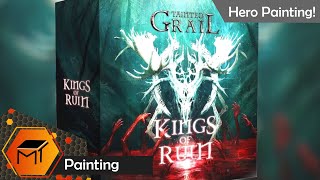
- engaging cooperative feel
- accessible weight for a campaign-style title
- immersive world-building and thematic flavor
- some missions can feel repetitive
- rule wording can be dense for new players
- survival, exploration, and cooperative play in a creature-filled world
- prehistoric/fantasy survival with tribal aesthetics
- campaign-esque progression with modular scenarios
- Distant Skies
- Seven Citadels
- Legends of Dragaar
- Kings of Ruin
Mechanics (from transcript analysis)
- action selection / area control style — choices drive exploration, gathering resources, and crafting
- Character progression — unlock abilities and customize the party over time
- Cooperative campaign — players work together across missions to survive and advance
- randomized missions / variability — each run can present different setups and challenges
Video topics + discussion points
Quotes (from this video)
- absolutely fantastic, super fun I had a great time
- Kings of Ruin we're going to paint
- standalone and Adventure kind of from what I understand
- Primal playthrough was a blast
- I've been so impressed by Primal
- the funny thing is they put a rock back there they put a rock
References (from this video)
- Vibrant, highly themed minis and components; the venomous serpent miniature is visually striking and immersive.
- Cooperative, high-tension boss fight with meaningful decision points rather than 'press button to win' feel.
- Campaign/episode structure supports long, engaging play sessions and streaming potential.
- Expansions and different monster designs add replayability and variety.
- Rule complexity and edge cases can cause confusion; players often rely on memory or living room notes to navigate advanced interactions.
- Board setup and card management can be fiddly, especially live on stream with multiple participants.
- Punishing attrition mechanics can lead to dramatic defeats that may be frustrating for new players.
- cooperative survival against a menacing, evolving monster with escalating threats; tactical positioning and resource management under siege-like pressure.
- A primal fantasy world featuring swamps, jungles and ancient monsters; players are explorers-warriors fighting a venomous serpent and other beasts through a campaign-style sequence.
- episodic campaign with escalating peril; scripted scenario cards interwoven with emergent player choices.
- Slay the Spire
- Leviathan (board game)
- Monster Hunter (video game)
Mechanics (from transcript analysis)
- Area Movement — Front, mouth, swamp, fog sectors influence who is threatened and what cards cost to play; movement incurs risk and can alter attack opportunities.
- assist and defense tokens — Allies can assist each other, draw cards, heal, or place defense tokens; defense cards can reduce attrition and help survive difficult turns.
- attrition and venom mechanics — Attrition damage from perils, venom cards, and swamp/fog sectors add ongoing pressure; players manage discard piles and venom tokens to avoid crushing penalties.
- boss battle with phase progression — The monster (venomous serpent) has multiple stages; damage thresholds drive phase changes and new threats emerge as the fight progresses.
- Boss Battler — The monster (venomous serpent) has multiple stages; damage thresholds drive phase changes and new threats emerge as the fight progresses.
- campaign progression and resource tracking — Campaign tracked across chapters; decisions affect resources, feather items, and ability to endure tougher encounters as the monster scales.
- Combat: Damage Based — Attrition damage from perils, venom cards, and swamp/fog sectors add ongoing pressure; players manage discard piles and venom tokens to avoid crushing penalties.
- deck-building combat — Players build and play action cards (red, green, and other symbols) to deal damage, trigger buffs, and manage stamina; card sequencing and color costs shape strategy.
- sector/movement and environmental hazards — Front, mouth, swamp, fog sectors influence who is threatened and what cards cost to play; movement incurs risk and can alter attack opportunities.
Video topics + discussion points
Quotes (from this video)
- The cool thing about Primal, though it doesn't look like I'll have to play Tetris in order to fit everything on my table, like I do with other games, because it's not that big.
- Massive blow! I've got to land a big hit and heal at the same time, which feels epic.
- This monster is massive and purple and it's gorgeous and terrifying at the same time.
- We are going to get rocked, but that's what makes it so fun.
- The cool thing about Primal is you can design do what you want, whatever you want.
References (from this video)

- Giant monster co-op that is fun and thematic
- Strong group coordination feel
- Can be brutal or long for some groups
- Rules curve may be a hurdle for casual players
- prehistoric combat and primal creatures
- Giant monster confrontation
- cooperative monster-hunting with teamwork
Mechanics (from transcript analysis)
- Cooperative combat — Players band together to defeat a colossal monster.
- Team coordination — Players coordinate actions to coordinate monster threats.
Video topics + discussion points
Quotes (from this video)
- "This is my go-to game to take and I love it because I think we put it on our icebreaker list. It really is a great game to play with people who you don't know very well because you're trying talking about how you rank different things and it brings just some really unintentional hilarity when people will put the things in order that they do. I like this party game a lot. I really recommend this is one of those games I think everybody should own."
- "A Message from the Stars, a cooperative deduction game... I really like the aspect of working together trying to figure out this alien language of sorts and I think it and it's just done through math and I really like it."
- "Bombbusters is an absolutely fantastic game... one of the best cooperative games that with little interaction between the players."
- "Endeavor Deep Sea. What a fantastic game. I hadn't played it in 2024. Other people played it, and I love the concept of going down into the ocean."
- "Star Wars Unlimited... I enjoy them all. I get them when they come out. I sort out the cards. Have fun building decks. Still really loving this game."