/pic6555779.jpg)






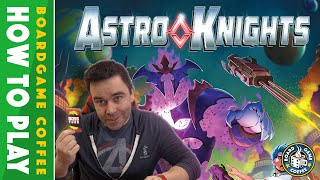


Astro Knights Deep Dive
What the Community Thinks About Astro Knights
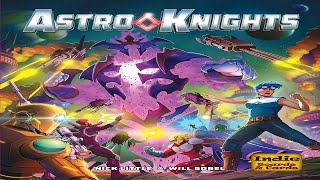
Astro Knights arrives as a breath of fresh air in the cooperative deck-building space. Board Game Coffee walk through its boss-battling engine, Our Family Plays Games rank it among the best games for deck-building fans, and Danielle notes it has genuinely replaced its predecessor in her collection. Reviewers consistently praise it as a streamlined evolution of the genre's foundation, combining accessible mechanics with enough tactical depth to challenge veterans. The consensus centers on a rare blend of immediate approachability and meaningful strategic choices.
Core Mechanics That Define Astro Knights
Deck Building Without the Shuffle
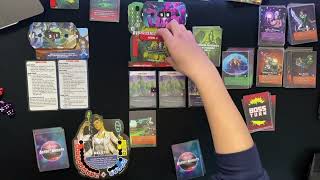
The heart of Astro Knights rests on an elegant decision: your deck never shuffles. Instead of reshuffling your discard pile back into the deck, you flip it over and continue drawing, which means card order becomes a tactical element you can control. This transforms a common pool-building exercise into something more deliberately puzzle-like. You acquire fuel, tech, and weapons from a communal supply, with fuel serving as your primary energy to purchase upgrades and power abilities. The streamlined economy moves faster than traditional deck builders, keeping turns snappy and decisions focused.
Boss Combat and the Turn Order Gamble
Rather than alternating player turns followed by a boss turn, Astro Knights randomizes the order through a dedicated turn-order deck. Before each turn, you draw a card to determine who acts next. It could be you, another player, or the boss, and that unpredictability reframes every decision. Do you build defensively, bracing for a sudden boss strike, or press your advantage while you have momentum? The boss itself strengthens over time, advancing through levels as its deck cycles and gaining health whenever it levels up. Players must balance deck development against the clock, since letting the boss reach its peak with cards remaining means defeat.
The Astro Knights Experience
A Galaxy Under Threat
You pilot ships across a galaxy, embarking on a space adventure to unite your fleet and take down a powerful enemy before time expires. The theme carries weight through character powers and boss variety. Each player commands a unique pilot with a signature ability fed by a power track: charge it with energy and unleash a special move. The homeworld sits at the center of the table as a second health pool you defend communally, adding a shared vulnerability that demands cooperation. Reviewers highlight how the presentation reinforces this, with boards built for clear tracking, intuitive character mats, and component organization that signals care for the play experience.
Cooperative Tension and Solo Accessibility
Whether you play with a full table or solo, Astro Knights scales cleanly. The cooperative nature means victories feel genuinely earned, since you are not racing each other but racing a clock and an escalating threat. Danielle notes the solo setup is remarkably easy, since you pull out pre-divided character decks and go. Damage flows naturally when the boss strikes, with exhausted players taking doubled damage, creating cascading consequences for poor planning. This accessibility extends the game's reach beyond hardcore enthusiasts to players who want cooperative depth without heavy overhead.
What Makes Astro Knights Stand Out
An Evolution, Not a Replacement
Astro Knights inherits from Aeon's End but ventures in new directions. Where Aeon's End leans toward defensive card management and breach tactics, Astro Knights emphasizes engine-building momentum and unpredictable sequencing. Our Family Plays Games describe it as taking arguably the best deck-building system and continuing to streamline it to make it easier for people. The randomized turn order dispels the analysis paralysis that sometimes plagues cooperative games, since you cannot solve everything in advance and must commit to moves and adapt when surprises emerge. The art brings energy to every card, making the visual experience as engaging as the mechanics beneath.
Scalability and Replayability
A roster of distinct characters, multiple boss configurations across difficulty ratings, and tougher challenge modes ensure each session feels different. You are not grinding toward a single dominant strategy, since the randomized turn order and diverse pilot powers encourage experimenting with new combinations. Danielle's observation stands out: she would happily trade away her copy of Aeon's End because Astro Knights fulfills that role more effectively, a strong endorsement from an experienced solo player.
Potential Drawbacks
Randomness as a Double-Edged Sword
The turn-order deck's unpredictability brings excitement but can punish careful planning. A streak of boss turns early may feel unfair, while fortunate sequencing can trivialize a challenge. Our Family Plays Games note the game has real difficulty, and that even a veteran of Aeon's End can struggle with it, which speaks to the balance, though variance introduces occasional heartbreak. Players who prefer more control over sequencing may find the random draws frustrating when fate intervenes at the wrong moment.
Component Management and Table Space
Danielle admits to knocking over her board several times and losing tracking position, a minor ergonomic issue that does not undermine gameplay but signals the game can be a table hog. The market cards and boss configurations require careful organization, and while the included dividers help, players with limited setup space may find the component footprint demanding. Setup remains easier than many deck builders, yet it is not a pick-up-and-play experience.
If You Enjoy Astro Knights
Fans of cooperative deck building should explore Aeon's End, the spiritual ancestor, which emphasizes breach defense and spell sequencing. Marvel Champions provides a thematic cooperative card game with similar boss-battling tension and asymmetric heroes. For push-your-luck deck building with momentum, Clank! blends deck construction with risk and exploration, and for cooperative adventure with narrative weight, Sleeping Gods offers a story-driven alternative. The through-line is clear: Astro Knights sits at the intersection of accessibility and depth, ideal for players who want cooperative challenge without legacy campaigns or heavy rulebooks.
What Reviewers Are Saying
"If you love deck building, Astro Knights will be up there as one of the best games. It takes from arguably the best deck building system and continues to streamline it to make it a little easier for people."
— Our Family Plays Games
"I would be completely fine if I ended up trading away or selling Aeon's End from my collection, because Astro Knights really has replaced it for me, and I think that's a good thing. The evolution of Aeon's End to Astro Knights is a great story to be told."
— Danielle
"One of the coolest things about it is the turn order cards. You don't know who's going next until you start getting down into the deck, and whenever at the start of a turn you draw a card, you always want to see a player go first."
— Our Family Plays Games