
A board game for 2-5 players. Each player controls a group of Rangers, who are working on nature and industry projects in Australia during the 1920s. The game board shows 6 states, which are divided into 24 land or water regions. Every region contains a face down industrial counter and a face up nature counter. On the borders, you find bases (camps or ships), where the players place their Ranger pieces to score points. At the beginning, every player receives a number of Rangers, which he keeps on his own player board, a plane, and two cards. The back of a card shows how many Rangers you can place in a base and how many dollars you receive. The front of a card shows the region where this base should border on.
The active player must perform two actions from the following three possibilities:
1) A player may fly his plane to a region and turn up an industry counter (if available).
2) A player may play a card to collect money and/or place Rangers in one base. Should this card have the same color as the region where his plane is, placement is free. Otherwise, a fee of $3 is collected from the player.
3) A player may remove up to four Rangers from the game board back to his or her supply.
Note: A special move is allowed to move any Ranger on the board for a cost of $4.
You score points by completing nature or industrial projects. Nature projects are completed as soon as the last free base in this region contains at least 1 Ranger. The player who completes the project receives 3 bonus points. Every player with Rangers in a base in this region receives 1 point for every Ranger (2 points for Rangers on a ship base). Industrial projects are completed as soon as the industry counter is turned over and the surrounding bases contain the required number of Rangers. These projects also provide 3 bonus points and 1 point per Ranger (2 points for Rangers on a ship base). Points are registered on a scoring track. At the end of the game, each dollar is an extra victory point.
The game ends when all card piles are exhausted and at least one player has played his last card. The players add their remaining dollars to their scores. The player with the most points wins the game.
Note: the English rules for the basic game may have an errata. It says draw 9 cards to make stacks, when the non-English rules say draw 8 cards, and the Advanced English rules say draw 9 instead of 8 cards.
Advanced rules
A windmill is introduced. When an industry counter with a windmill symbol is turned over, the windmill moves to another region and will add 1 point to its value. Whenever a region is scored, the nature or industry counter is placed on a windmill track. When the windmill track is filled, a windmill scoring round takes place. To score at the windmill, players need to place Rangers on a special Ranger track (instead of placing them in a base, as they normally would do). The player with the most Rangers on the Ranger track receives the value of the windmill in victory points. The second place receives half, the third place receives half of the second place. After the windmill scoring round, the counters on the windmill are removed and the players have to take half of their Rangers on the Ranger track back. Several windmill scoring rounds are possible. At the end of the game, an extra windmill scoring round takes place.


Images


- Australia-themed mix of real and unreal elements
Mechanics (from transcript analysis)
Video topics + discussion points
Quotes (from this video)
- Downforce is now available to play as a beta
- I almost had it... but it just couldn't quite make it happen
- Fair Dinkum time
- test test test test everything
References (from this video)
- Australia-themed, mix of real and unreal elements
Mechanics (from transcript analysis)
Video topics + discussion points
Quotes (from this video)
- Downforce is now available to play as a beta
- I almost had it... but it just couldn't quite make it happen
- Fair Dinkum time
- test test test test everything
References (from this video)

- intriguing dice-drafting/dice-utilization mechanic
- cooperative-feel with ecosystem-building themes
- marine ecosystem with dice drafting
- East Australian current; sea turtle setting
Mechanics (from transcript analysis)
- Dice Drafting — use dice to form strategies and ecosystems
- multi-dice / ecosystem building — form schools of fish and coral growth through dice selection
- open drafting — dice are drafted to form growing schools of fish and settle corals
Video topics + discussion points
Quotes (from this video)
- there's a deck construction element but it does not say that it's a deck builder
- opposing factions race to control or eliminate ancient Titan artifacts
- Beyond the Horizon ... 2.0 reimplementation sort of of Beyond the Sun
- the scoreboard itself is a mini-game of snakes and ladders
- it's essentially a 3X type game that really focuses on building out a communal Tech tree
- the gam play is simple on your turn you just do one of the six actions that shows up here
References (from this video)

- Chaotically hilarious
- Provides memorable stories
- Pure joy and fun
- Heavy luck element
- Not consistently strategic
- sea creatures, environmental race
- ocean
Mechanics (from transcript analysis)
- Area Control — you're trying to area control for quarrels
- Dice Drafting — drafting Dice and doing things associated with those dice
- Dice Rolling — you will all roll the dice that have numbers and the lowest number gets eliminated gone
- Push Your Luck — you can collect cards that lift up your dice value
Video topics + discussion points
Quotes (from this video)
- This game is literally you draw a card it's kind of like twister with your hands it is it's not kind of like twister with your hands it's twisted with your hands and sticks yeah
- Combo is a good way to understand rankings of poker hands or of hands in general
- The Gang was a game that came out and there are some really memorable hands and I feel like that game just always makes me filled with joy
- it's important now that we're especially now that we're working in the hobby that we take some time to enjoy the hobby because we never want that fire to burn or the fire to continue to burn we don't want it to dim
- Do you want to see me and Tyler go head-to-head in yellow house do you want a how to playay video of Cascadia Jr do you want to see a tether competition
References (from this video)

- Fun to play with an 8-year-old who is dominating.
- Being dominated by an 8-year-old is embarrassing.
- Ocean floor
Mechanics (from transcript analysis)
- Tile Placement — Involves placing coral pieces.
Video topics + discussion points
Quotes (from this video)
- All right, so we are playing Australas, which has these awesome little coral pieces.
- And already it's positive. I I it's the rule the learning is positive.
- This is kind of a the fish version of Wingspan.
- I liked it a lot.
- All right, so I'm about to start the Boop tournament.
- Endeavor Deep Sea is probably my favorite game of the convention so far.
- One of my absolute favorite trick taking games.
- This is only available in Korean, unfortunately, but it's super cool if you're a Pokemon fan.
- Basically, this kind of order fulfillment game.
- I did lose at Duos.
- Yeah, another game that his youngest beat him at.
References (from this video)

- Engaging for all ages
- Thematic elements (sea turtles) appealed to the 8-year-old
- Created a fun and energetic atmosphere
- The 8-year-old dominated and won
- Involves sea turtles, combat dice, and various elements that engage the players.
Mechanics (from transcript analysis)
- Dice Rolling — Involves rolling combat dice.
- Miniatures Movement — Players move little turtles around.
Video topics + discussion points
Quotes (from this video)
- We are doing a top 10 games we've played in May.
- It's probably my number one favorite trick chicken game.
- Imperial Assault is basically a app-driven dungeon crawl in a Star Wars world.
- As some of you know, I am kind of on this solo journey.
- It was just really clever game that involved this kind of this tetrisy gravity thing.
- I just really like having a game that I can play in 15 minutes in my bag at all times, and this is the one.
- But to me, in me, in my opinion, uh this is like the penultimate version or the ultimate version of that system.
- She dominated. She she beat me and the other two guys as well.
- It was not mine. It was like the heaviest game in the universe. It's rated at 4.39 weight.
- Yes, it is this big, heavy, complex game, but once you start doing it, it's it's not anymore.
- Endeavor Deep Sea, which is a whole new thing using some similarities from the original Endeavor system.
- It was incredibly thematic which was more than I can say for the original Endeavor.
- Every single action was fun.
References (from this video)

- Has a little bit of many different mechanisms
- Fun dice drafting
- Clean and fun dice battle system
- Creates big emotional and memorable moments
- Exploration and resource management
- Oceanic region
Mechanics (from transcript analysis)
- Area Control — Drafting certain colored dice allows players to place coral in areas.
- Dice combat — After actions, players engage in dice battles where the lowest roll is eliminated each round.
- Dice Drafting — Players draft dice of various colors, which grant different special abilities and actions like placing coral for area control, moving a turtle on a stream, or getting cards for engine building.
- Engine Building — Drafting certain colored dice allows players to acquire cards for engine building.
- track movement — Drafting certain colored dice allows players to move their turtle forward on a stream.
Video topics + discussion points
Quotes (from this video)
- These are lighter strategy games.
- I love strategy games that have interesting decisions but still play in an hour or less.
- if I have four hours to play games, I would rather play three games than one single game.
- it has a little bit of everything in it.
- The dice battle system is really clean and fun in this game.
- it makes for those big emotional moments
- This is a really silly and unique game.
- you will build a bunch of cards and be feeling pretty good about your engine. And then all of a sudden, a lot of bad cards are going to get added to the deck.
- It makes me laugh every time I play it.
References (from this video)
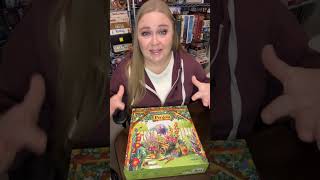
- strong ocean theme
- looks great on the table
- multiple paths to victory
- dice-driven action selection and oceanic exploration
- ocean-themed island voyage with sea life
- adventure-forward
Mechanics (from transcript analysis)
- card-driven progression — drawn cards enable actions and scoring opportunities
- Dice Rolling — dice-driven actions with luck and control elements
- Push Your Luck — decisions about which route to pursue for payoff
- push-your-luck or choice-based strategy — decisions about which route to pursue for payoff
Video topics + discussion points
Quotes (from this video)
- Hello and welcome to 2026. So this year I am doing four lists for my top games of 2025.
- This is the medium box game list.
- What would you put in this category? What do you think of my choices?
- Parks and Potions. This is a wonderful game. It looks amazing.
- I adore this game. I cannot wait for the expansion to come out in 2026.
- The artwork on this is incredible. It is really, really fun.
- This game for only being in a box this size is a table hog, but it is really cool.
- Obviously, I enjoy an ocean theme.
- There’s a ton of amazing tiny components in here with no lid.
References (from this video)
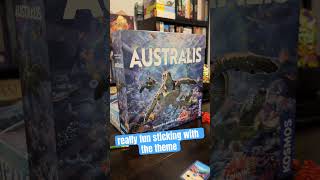
- turtles navigating currents; dice drafting
- East Australian Current / ocean
Mechanics (from transcript analysis)
- Dice Drafting — players draft dice; score points for drafted dice
- end-of-round dice tournament — end-of-round tournament where the last one standing scores additional points
Video topics + discussion points
Quotes (from this video)
- This game is super fun and it's a little bit chaotic.
- Now, here we're turtles trying to navigate our way through the East Australian current.
- Now deep dive was the one that we ended the night off to stick with the theme and this is a push your luck game where you're essentially flipping tiles to create sets of sea creatures to score the most points.
References (from this video)

- Innovative time-track mechanism adds timing pressure
- flavorful Lovecraftian theme with engaging combat
- solid solo play that translates well to a one-player context
- Not as under-the-radar as the title suggests
- Top 200 positioning on People’s Choice indicates some visibility
- Lovecraftian horror intersects with conventional warfare/resource management
- hex-map world plagued by Lovecraftian horrors expanding into war zones
- thematic clash of fantasy horror and military logistics
Mechanics (from transcript analysis)
- Combat resolution via card flips — Combat outcomes are determined by flipping a card to see hits; unit effectiveness varies by type.
- Hex-map movement and engagement — Movement and battles occur on a hex grid with various units and targets.
- Resource Management — Resources are spent to perform actions like building units (tanks, soldiers) and deploying assets (zeppelins).
- Resource-to-action economy — Resources are spent to perform actions like building units (tanks, soldiers) and deploying assets (zeppelins).
- Time Track — Actions cost time; the player furthest back on the time track goes next.
- Time track turn order — Actions cost time; the player furthest back on the time track goes next.
Video topics + discussion points
Quotes (from this video)
- it's crazy it sounds downright ridiculous but it's incredibly fun
- Time Track in order to determine turn order
- zombies are represented by wooden cubes
- the solo mode is very well done
- it's wild and crazy and swingy and really leans into the pirate theme
- you can screw yourself over you can have just an absolutely horrendous game
- it's one of my favorite rolling rights
- cooperative pick up and deliver puzzle that is deceptively crunchy
- this auction system is brutal but incredibly satisfying
- the zombies feel scary the system is just incredible
References (from this video)

- strong Euro flavor with an interesting time/sequence mechanic
- semi-coop elements add tension without full collaboration
- not every player appreciates the semi-coop balance
Mechanics (from transcript analysis)
- Worker Placement — Players allocate actions with a Euro flavor and manage resource flow against a semi-cooperative backdrop.
- Worker placement / action selection — Players allocate actions with a Euro flavor and manage resource flow against a semi-cooperative backdrop.
Video topics + discussion points
Quotes (from this video)
- it's a great mix of things I like and things I don't like
- it's a very deceiving game because you are playing this pretty light child drafting game and then it's like oh you don't have stuff
- ton of fun
- one of the best narrative stories I have experienced in a game
- it's fantastic you should play it
- it's a heavy game and my brain melts when I'm playing it
References (from this video)
- ambitious genre-mash of euro-style resource play with eldritch theme
- lots of content and variability
- combat system can feel unwieldy or unfocused
- balance of solitaire vs cooperative play can be uneven
- resource management blended with eldritch horror
- Australia; mining and eldritch menace intertwined
- semi-cooperative with thematic flair
Mechanics (from transcript analysis)
- combat against eldritch threats — Defending farms and infrastructure from monsters while expanding economy.
- cooperative-but-competitive combat with eldritch foes — Work with others to defeat threats while competing for scoring opportunities.
- monster threats and blight scoring — Monsters threaten farms; players balance economic growth with defense.
- tile laying / resource management — Build rail/town networks while managing resources.
- tile-based economy and transport — Managing resources to grow a mining economy while facing eldritch incursions.
Video topics + discussion points
Quotes (from this video)
- we format this in the way of giving each game a prestigious award
- it's weirdly strategic
- the writing the story writing of the story
- the game that makes us lol the most
- it's so simple... it's so strategic
- it's a sandbox for experiences
References (from this video)

- multi-layered mechanics in a family-friendly shell
- engine-building concepts introduced accessibly
- could be a bit dense for very casual players
- rulebook clarity could be better
- engine-building and coral-reef competition
- Underwater scenario around Australia, sea life and currents
- educational yet light
Mechanics (from transcript analysis)
- area control / scoring around reefs — end-round scoring around coral reef influence and card-driven bonuses
- Dice Drafting — draft dice with distinct actions and colors
- Engine Building — color-coded dice enable chaining abilities and bonuses when used together
Video topics + discussion points
Quotes (from this video)
- This game you're going to be basically dressing up uh the kids in different costumes.
- You're going to be mixing and matching or matching and placing them on different things.
- Waddle is kind of a meaner area control game.
- There's a little bit of everything here. There's pressure your luck. There's some planning and mitigating.
- Datoms is a crunchy puzzle to figure out.
- Ink is a lot nicer than Azul, I would say, uh because you can't really totally hoe someone by sticking them with tiles they can't have.
- Positano. Tons of interaction. If you like sort of meanness blocking with some secret auction, that is very interesting.
References (from this video)

- easy to learn and teach
- great strategy and tension
- visuals are brown-toned; not to everyone's taste
- rail building with cosmic monsters
- Australia; rail network and monsters theme
- quirky and thematic
- Terraforming Mars
- Our Wedding Game
Mechanics (from transcript analysis)
- route/track building — laying tracks to connect cities and manage monsters
Video topics + discussion points
Quotes (from this video)
- we are going to give away board games to you
- this is such a great game
- stronghold games thank you so much for supplying this
References (from this video)

- Engaging and thematic with a strong sense of place and threat
- Streamlined for a complex-looking concept, making it accessible
- Excellent replayability due to randomized setup and variants
- Solid solo mode and cooperative elements for varied play
- Tight tension as Old Ones awaken and threaten ports
- Potentially lengthy sessions for some groups
- Can be dense for new players and may require a few plays to grok all mechanics
- Survival and expansion under existential threat; infrastructure building amid eldritch awakening
- Alternate-history Australia (1930s) frontier setting with zombies and Lovecraftian Old Ones
- Macro-scale strategy with escalating horror and cooperative tension; emergent storytelling through mechanics
- A Study in Emerald
Mechanics (from transcript analysis)
- Area attack and exploration of Old Ones — Old Ones move toward the nearest farm or port; they blight farms and threaten supply lines, creating pressure and risk.
- Defensive co-op elements — In certain situations players may need to cooperate to prevent port destruction, adding a cooperative dynamic within a competitive framework.
- End Game Bonuses — The game ends either when all markers reach a cap or when a port is destroyed, with scoring coming from farms, resources, and defeated Old Ones.
- End-game conditions and scoring — The game ends either when all markers reach a cap or when a port is destroyed, with scoring coming from farms, resources, and defeated Old Ones.
- Military recruitment and permanent abilities — Players can recruit military units and personalities that grant one-use or permanent abilities, shaping long-term strategy.
- Once-Per-Game Abilities — Players can recruit military units and personalities that grant one-use or permanent abilities, shaping long-term strategy.
- Resource Management — Players spend time and resources to build railways, mine resources, and develop ports, balancing expansion with defense.
- Resource management and build actions — Players spend time and resources to build railways, mine resources, and develop ports, balancing expansion with defense.
- Solo mode and two-player variants — Dedicated solo mode and two-player variants provide tailored experiences and ensure high replayability.
- Time Track — Turn order is determined by the time track; the player furthest behind on the time track gets to act next, ensuring constant pressure and dynamic pacing as each action costs time.
- Variable setup and replayability — The board is randomized for each game and there are multiple variants, including Western Australia, which increases replay value.
Video topics + discussion points
Quotes (from this video)
- one of my favourite mechanics in the game and in general is that the player who's furthest behind on the time track is the one who plays next
- it's bizarre but it works really well together
- I found myself towards the last round of the game not wanting it to end
- really feel that the thread of the old ones is real you need to prepare wisely for the awakening