/pic6917219.jpg)
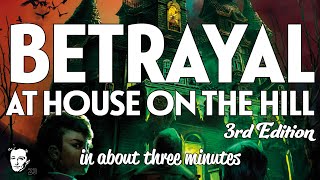
The House on the Hill still sits abandoned, and fearless group of explorers has been drawn to the house to discover its dark secrets. Immerse yourself in the narrative gameplay as you take on the role of one of those explorers.
The co-operative board game Betrayal at House on the Hill: 3rd Edition includes fifty haunts and dozens of danger-filled rooms that will terrify even the strongest among you. At first you'll work together, but beware...one explorer will betray the others and then the haunt begins.
This edition of the popular haunted house traitor game features content and gaming elements that help new players jump right in. So gather friends for a game night of monsters, miniatures, and modular board pieces in this immersive, story-driven hidden traitor game.
—description from the publisher

- Huge variety of haunts and scenarios
- Extremely replayable due to traitor dynamics and narrative twists
- New content in Third Edition with tightened rules and fresh haunts
- Appealing to groups that enjoy chaotic teamwork and silliness
- First half of games can feel exploratory and slow
- Some haunts require specific tokens or setups
- Complex to teach for new players in one sitting
- Cooperative investigation with hidden traitor dynamics and variable haunt narratives.
- A haunted house exploration that reveals new rooms and events as players move through a changing mansion.
- Scenario-driven with evolving objectives and betrayals.
- Mansions of Madness
- Betrayal at Baldur's Gate
Mechanics (from transcript analysis)
- card_management — Manage multiple card types (events, items, omens) that influence actions and outcomes.
- Dice — Dice with values 0, 1, and 2 are rolled for various checks and actions.
- Dice Rolling — Dice with values 0, 1, and 2 are rolled for various checks and actions.
- haunt_mechanic — A haunt triggers during play, revealing a new objective and possibly a traitor role.
- movement_restrictions — Movement is limited; crossing doorways into unexplored areas triggers new tiles.
- omen_and_traitor — Omen cards accumulate, affecting haunt rolls and traitor determination.
- Tile Placement — As players explore, new room tiles are revealed and placed to expand the mansion.
- tile_placement — As players explore, new room tiles are revealed and placed to expand the mansion.
- Traitor Game — Omen cards accumulate, affecting haunt rolls and traitor determination.
Video topics + discussion points
Quotes (from this video)
- it's a game you play for the chaos and silliness it brings
- the best thing about this game is the different haunts you, never know what to expect
- this is a game of one halves
- the first half of the game is largely meaningless and the real game kicks off when the haunt does
- there's a heap of events and items all of which draw on classic horror tropes
- for a different take on haunted houses try Mansions of Madness
- the basement starts off inaccessible and can only be accessed through rooms like the laundry chute
- but once you are in the basement you may explore freely
- the third edition contains entirely new haunts and a tightened rule set
- this is a game you play for the chaos and silliness it brings
- it's a game of one halves
- the first time I played betrayal at house on the hill third edition, I found the haunt mechanics especially cool and story-driven
References (from this video)
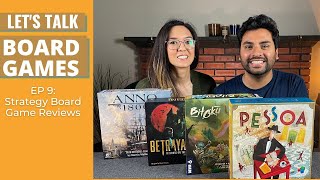
- table-strong storytelling and experience
- variety of scenarios
- engaging betrayal mechanic
- rule clarity can be an issue
- some scenarios feel broken or inconsistent
- editions differ in ways that affect play
- betrayal and haunting scenarios
- haunted house exploration
- story-driven, RPG-like
- Second edition Betrayal at House on the Hill
Mechanics (from transcript analysis)
- character asymmetry — Characters have different starting abilities; betrayal shifts the dynamic.
- cooperative exploration with hidden betrayal — Players explore rooms; one player may become betrayer later; exploration builds the haunted house.
- haunt triggering and asymmetric win conditions — Haunt triggers reveal betrayal; both sides have distinct victory conditions.
- scenario-based play — Different scenarios provide varied setups and endings; historically some rule ambiguities exist.
Video topics + discussion points
Quotes (from this video)
- it's a really, really clever mechanism in the game
- the onus in a two-player game is on two people now to build out these industries
- the player interaction is just so prevalent in the game
- it's my type of euro game i'm a big fan of, get the cube, do this, do that
- it's beautiful, i mean this definitely has a big focus on art
- the busiest board of the year
- everything's so beautiful
- it's an experience game, it's about what happens at the table
- the heteronym concept is super cool
- this is beautiful art in itself