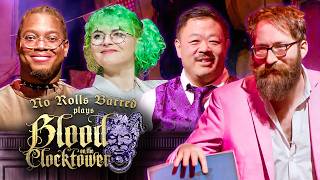
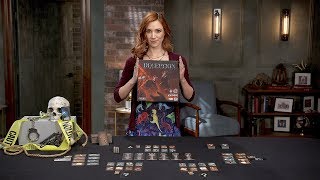
Blood on the Clocktower box art

Blood on the Clocktower

Game ID: GID0048732
Collection Status
Description

In the quiet village of Ravenswood Bluff, ‌a demon walks amongst you. During a hellish thunderstorm, on the stroke of midnight, there echoes a bone-chilling scream. The townsfolk rush to investigate and find the town storyteller murdered, their body impaled on the hands of the clocktower, blood dripping onto the cobblestones below. A Demon is on the loose, murdering by night and disguised in human form by day. Some have scraps of information. Others have abilities that fight the evil or protect the innocent. But the Demon and its evil minions are spreading lies to confuse and breed suspicion. Will the good townsfolk put the puzzle together in time to execute the true demon and save themselves? Or will evil overrun this once peaceful village?

Blood on the Clocktower is a bluffing game with players on opposing teams of Good and Evil, overseen by a Storyteller player who conducts the action and makes crucial decisions. The goal of the game is to successfully deduce and execute the demons before they outnumber the townfolk.

During a 'day' phase players socialize openly and whisper privately to trade knowledge or spread lies, culminating in a player's execution if a majority suspects them of being Evil. During a 'night' time, players close their eyes and are woken one at a time by the Storyteller to gather information, spread mischief, or kill.

The Storyteller uses the game's intricate playing pieces to guide each game, leaving others free to play without a table or board. Players stay in the thick of the action to the very end even if their characters are killed, haunting Ravenswood Bluff as ghosts trying to win from beyond the grave. If you arrive late to a game, you can enter after it's started as a powerful Traveller character with unusual talents and questionable allegiances. Each character comes with their own special ability and no two players in a game are ever the same character.

Year Published
2022
Transcript Analysis
Browse transcript mentions, sentiments, pros/cons, mechanics, topics, quotes, and references.
Total mentions: 40
This page: 40
Sentiment: pos 28 · mix 9 · neu 1 · neg 0
Mentions per page
Top
Showing 1–40 of 40
Video T-kBBwCrMK4 top_10_list at 1:01:23
video_pk 62894 · mention_pk 155756
Blood on the Clocktower video thumbnail
Click to watch at 1:01:23 · YouTube ↗
Pros
none
Cons
none
Thematic elements
Comparison games
none
Mechanics (from transcript analysis)
Mechanics unknown.
Video topics + discussion points
No key topics recorded for this video.
Quotes (from this video)
  • it's the meanest game in my top 10, no question
  • there's just always something exciting to do on your turn
  • it's an absolute hit
  • it's the best social deduction experience I've ever had
  • the shortest playing time
References (from this video)
No references stored for this video.
Video NCj0fWMw_Ic Unknown Channel top_10_list at 11:34 sentiment: positive
video_pk 62506 · mention_pk 155138
Unknown Channel - Blood on the Clocktower video thumbnail
Click to watch at 11:34 · YouTube ↗
Overall sentiment (raw)
positive
Pros
  • Fixes the shortcomings of traditional social deduction (elimination)
  • Extensible with community scripts and official content
Cons
  • Can be dense for new players; learning curve with scripts
Thematic elements
  • deduction without traditional social pressure; player elimination reimagined
  • Fantasy town with a focus on social deduction in a large group
  • community-driven, script-based content
Comparison games
  • Werewolf
  • Mafia
Mechanics (from transcript analysis)
  • Large-group scalability — Supports up to 20 players with flexible participation.
  • player elimination — When you die, you keep influence via votes; you’re still in the game.
  • Player elimination reimagined — When you die, you keep influence via votes; you’re still in the game.
  • Role-based scripts and modules — Three official scripts; endless community-created content.
Video topics + discussion points
No key topics recorded for this video.
Quotes (from this video)
  • It's approachable enough that new players can learn it in one session, but deep enough that you're still finding new strategies after 30 plays.
  • The expansions add modules instead of replacing the base game. So, you're building a collection, not cycling through versions.
  • It's Dune. That IP isn't going anywhere. As long as people are watching Dune movies, they're going to want to play Dune games.
  • The magic is in the gear shift mechanism.
  • It's creating a new genre, strategic deduction.
  • "No, you're a ghost now. You still matter."
  • "The objectives change every game."
References (from this video)
No references stored for this video.
Video 4iEQadFX8wQ Get Into Games general_discussion at 1:56 sentiment: positive
video_pk 61703 · mention_pk 154365
Get Into Games - Blood on the Clocktower video thumbnail
Click to watch at 1:56 · YouTube ↗
Overall sentiment (raw)
positive
Pros
  • Chaotic, fun group game
  • New demon mechanic adds freshness
Cons
  • Requires a large group and active participation
Thematic elements
  • Array
Comparison games
none
Mechanics (from transcript analysis)
  • social deduction — Identify the killer through clues and discussions.
Video topics + discussion points
No key topics recorded for this video.
Quotes (from this video)
  • it's a big topic and it probably requires a couple of episodes
  • I love the action queue in Ark Nova
  • the upkeep of the score for you
  • it's chill but surprisingly strategic
  • it's the perfect gateway game for many people
  • the admin is done and it makes it smoother
  • you can play from the same IP address
  • the tactile nature of moving the cubes up and down
References (from this video)
No references stored for this video.
Video 4iEQadFX8wQ Get Into Games general_discussion at 15:21 sentiment: positive
video_pk 61703 · mention_pk 154377
Get Into Games - Blood on the Clocktower video thumbnail
Click to watch at 15:21 · YouTube ↗
Overall sentiment (raw)
positive
Pros
  • Dynamic group experience
  • Adds variety with new demon type
Cons
  • Requires time and social energy
Thematic elements
  • Array
Comparison games
none
Mechanics (from transcript analysis)
Mechanics unknown.
Video topics + discussion points
No key topics recorded for this video.
Quotes (from this video)
  • it's a big topic and it probably requires a couple of episodes
  • I love the action queue in Ark Nova
  • the upkeep of the score for you
  • it's chill but surprisingly strategic
  • it's the perfect gateway game for many people
  • the admin is done and it makes it smoother
  • you can play from the same IP address
  • the tactile nature of moving the cubes up and down
References (from this video)
No references stored for this video.
Video 04aJI9oFNns Get into Games on Air top_10_list at 24:57 sentiment: positive
video_pk 61678 · mention_pk 154338
Get into Games on Air - Blood on the Clocktower video thumbnail
Click to watch at 24:57 · YouTube ↗
Overall sentiment (raw)
positive
Pros
none
Cons
none
Thematic elements
Comparison games
none
Mechanics (from transcript analysis)
Mechanics unknown.
Video topics + discussion points
No key topics recorded for this video.
Quotes (from this video)
  • The podcast life chooses you.
  • The content gods that making all the content.
  • Pub Meeple is a website that you can link your board game collection.
  • Return to Dark Tower is uh I want to play this game more often than we do.
References (from this video)
No references stored for this video.
Video tdVDzg2yoHE general_discussion at 0:01 sentiment: positive
video_pk 60492 · mention_pk 152893
Blood on the Clocktower video thumbnail
Click to watch at 0:01 · YouTube ↗
Overall sentiment (raw)
positive
Pros
  • Deep, player-driven social deduction with rich, asymmetric roles
  • High replay potential due to many possible roles and scenario variations
  • Thematic depth and storytelling opportunities that reward careful listening and persuasion
  • Strong group social dynamics that can lead to highly memorable sessions
Cons
  • Relies heavily on group size and participant engagement; suboptimal in small or very quiet groups
  • Can be intimidating for new players due to complexity and hidden information
  • Does not scale equally well if players rush through discussions or over-interpret rules
Thematic elements
  • Social deduction with asymmetric roles, trust, deception, and collaborative storytelling under visualized night/day cycles.
  • A gothic-fantasy village where residents and visitors assume secret roles to uncover a demon among them; the environment supports intrigue, rumor, and high-stakes social interaction.
  • Player-driven narratives emerge from hidden information and the group’s collective investigation; stories unfold through discussion, accusation, and role-activation.
Comparison games
none
Mechanics (from transcript analysis)
  • Bluffing and deduction — Players must bluff or reveal information strategically, using persuasion, misdirection, and inference to identify the demon or protect allies.
  • hidden roles — Each player receives a unique role with specific abilities and information that are not fully revealed to others, enabling diverse strategies and misdirection.
  • Night and Day Phases — The game alternates between a quiet night when certain players secretly act, and a day when everyone discusses, votes, and reacts to information that surfaced during the night.
  • voting and elimination — During the day phase, players discuss and vote to execute suspects, shaping the town’s fate and the demon’s odds of remaining hidden.
Video topics + discussion points
No key topics recorded for this video.
Quotes (from this video)
  • This time tomorrow, our brand new Blood on the Clock Tower series launches Demon Eyes.
References (from this video)
No references stored for this video.
Video YrD1fPx5YUs Blanco Incorporated playthrough at 0:22 sentiment: mixed
video_pk 60491 · mention_pk 152892
Blanco Incorporated - Blood on the Clocktower video thumbnail
Click to watch at 0:22 · YouTube ↗
Overall sentiment (raw)
mixed
Pros
  • rich role variety and character depth
  • thematic flavor and dramatic tension
  • audience engagement via demon-perspective framing
Cons
  • can become chaotic with many players
  • requires a storyteller to run smoothly
Thematic elements
  • social deduction
  • Ravenswood Bluff
  • demon-centric with audience involvement
Comparison games
none
Mechanics (from transcript analysis)
  • day/night cycle — night for evildoers, day for discussion and voting
  • execution/voting — nomination and vote to execute a suspect; majority wins the day
  • hidden roles — each player has a unique power affecting information or actions
  • social deduction — players assume roles with hidden information and try to identify evil players
  • Voting — nomination and vote to execute a suspect; majority wins the day
Video topics + discussion points
No key topics recorded for this video.
Quotes (from this video)
  • The audience will only know what the demon knows, moving step by step with them towards victory or defeat.
  • Demon Eyes, we're doing something a little different.
  • Blood on the Clock Tower is a social deduction game pitting a large team of blue good villagers against a secret demon and their minions.
  • During the night, the demon will prowl throughout the town, selecting one of the players to die.
  • Snitches get stitches.
References (from this video)
No references stored for this video.
Video OoeXtTk6f-M Born Stupid general_discussion at 0:37 sentiment: neutral
video_pk 59342 · mention_pk 151928
Born Stupid - Blood on the Clocktower video thumbnail
Click to watch at 0:37 · YouTube ↗
Overall sentiment (raw)
neutral
Pros
  • Rich social interaction and bluffing potential
  • Strong community support and established fanbase
Cons
  • Rules complexity and learning curve can be steep for new players
  • Requires a group of engaged players to realize its depth
Thematic elements
  • social deduction, hidden roles, manipulation and bluffing
  • Dark fantasy town-centered intrigue where players assume secret roles and influence events within a clocktower-structured community
  • collaborative storytelling with asymmetric information and dramatic reveals
Comparison games
none
Mechanics (from transcript analysis)
  • Hidden Information — Most of the critical information is known only to certain players, creating tension and uncertainty.
  • Role assignment — Each player receives a unique character with specific abilities that shape interactions and power dynamics.
  • social deduction — Players try to uncover others' alignments and goals through discussion, voting, and deduction.
  • Unique player powers — Each player receives a unique character with specific abilities that shape interactions and power dynamics.
Video topics + discussion points
No key topics recorded for this video.
Quotes (from this video)
  • Paradise is one of the fastest growing board game conventions.
  • There will be an open gaming zone with a free-to-play library of over 200 games offered by our friends at CGC.
  • blood on the clock tower zone with some very special guests.
  • Paradise 28th of February and 1st of March. I'll see you there.
References (from this video)
No references stored for this video.
Video Z0oSBJX1skI Board Shipping top_5_list at 18:09 sentiment: positive
video_pk 41389 · mention_pk 125562
Board Shipping - Blood on the Clocktower video thumbnail
Click to watch at 18:09 · YouTube ↗
Overall sentiment (raw)
positive
Pros
  • Catalyzed a resurgence in social deduction with robust conventions presence
  • strong community-driven development and content
Cons
  • Can be complex to teach
  • niche audience for heavy role-play groups
Thematic elements
  • mystery, social deduction, storytelling
  • Social event within a town or village with hidden roles
  • theatrical, community-driven
Comparison games
  • Werewolf
  • Mafia
Mechanics (from transcript analysis)
  • hidden roles — Players assume roles with unique abilities and hidden agendas.
  • Hidden roles and social deduction — Players assume roles with unique abilities and hidden agendas.
  • Player-driven storytelling — Narrative progression shaped by player interactions and scripts.
Video topics + discussion points
No key topics recorded for this video.
Quotes (from this video)
  • Exploding Kittens was raised $8 million on Kickstarter for many years. It opened the floodgates for other publishers to look at Kickstarter as a viable medium.
  • I don't think we'd have Gloomhaven without Exploding Kittens.
  • Blood on the Clock Tower is the de facto social deduction game taking shape.
  • It's a beautiful game about nature reserves.
  • ARCs has done very very well and other games in the leader lineup as well as the sister company.
References (from this video)
No references stored for this video.
Video adKwQ9pCc78 Board Stupid top_5_list at 23:55 sentiment: positive
video_pk 39736 · mention_pk 119939
Board Stupid - Blood on the Clocktower video thumbnail
Click to watch at 23:55 · YouTube ↗
Overall sentiment (raw)
positive
Pros
  • highly atmospheric and theatrical
  • great party-like experience with a big group
  • role mechanics encourage social interaction and deduction
Cons
  • requires a large player count (typically 8–15)
  • rules and powers can be dense; onboarding takes time
Thematic elements
  • Liminal heroism, social deduction, and roleplay-driven mystery
  • Contemporary fantasy town with ritual demon hunting
  • Deep roleplay with a focus on conversation and persuasion
Comparison games
  • Mafia
  • Werewolf
  • The Resistance
Mechanics (from transcript analysis)
  • demon/evil role with a public and private agenda — One or more players hide a malevolent role to disrupt the town
  • discussion-driven resolution — Even small information matters and players must persuade others
  • social deduction with strong roleplay — Each player has a unique power and a secret objective
Video topics + discussion points
No key topics recorded for this video.
Quotes (from this video)
  • the two Hitler and the fascist players are going to try to demolish democracy and take over the power
  • it plays with giving everyone bad information
  • it's a pretty decent social deduction game
  • it's a backstabbing traitor Black Knight
  • it's such a cool theme and it's such a cool game
  • the game is like go kill player three oh damn okay that's the game from now on
  • you need to lean into those secret things with 100% conviction
  • the role playing in the game is essential
  • it's all of these games but just cranked up to 11
References (from this video)
No references stored for this video.
Video -eJDW8bIYhE Unknown Channel playthrough at 0:14 sentiment: mixed
video_pk 38636 · mention_pk 152543
Unknown Channel - Blood on the Clocktower video thumbnail
Click to watch at 0:14 · YouTube ↗
Overall sentiment (raw)
mixed
Pros
  • Rich social interaction and tension between players
  • Damiliar fusion of deduction, roleplay, and collaborative storytelling
  • High replayability due to variable roles and scenarios
Cons
  • Steep learning curve and sometimes opaque rules
  • Longer session lengths can be challenging for casual play
  • Reliant on group dynamics; the experience varies with players
Thematic elements
  • hidden identities, deception, investigation, and social manipulation within a communal storytelling framework.
  • A fictional town during a ritualized social deduction scenario where players take on hidden roles with supernatural flavor.
  • player-driven, collaborative storytelling with competing agendas and limited public information.
Comparison games
none
Mechanics (from transcript analysis)
  • discussion_and_voting — Daytime rounds encourage discussion, persuasion, and collective voting to identify suspected players or villains.
  • hidden roles — Players are assigned secret identities with different abilities and alignments, creating ambiguity and tension.
  • hidden_roles — Players are assigned secret identities with different abilities and alignments, creating ambiguity and tension.
  • night_actions — Certain roles act in the night to influence the coming day, adding a layer of strategy and hidden information.
  • public_and_private_information — A mix of revealed and concealed information drives uncertainty and misdirection, influencing conclusions.
  • role_play_and_flavor — Character flavor and role-specific abilities encourage immersion and narrative direction.
  • Voting — Daytime rounds encourage discussion, persuasion, and collective voting to identify suspected players or villains.
Video topics + discussion points
No key topics recorded for this video.
Quotes (from this video)
  • This is my first time playing Blood on the Clock Tower. It can't be that hard, can it?
  • Kate's evil.
  • I'm getting some investigation flavor on this.
  • I've got some very hot goss about the killer's best friend. It's too risky for me to tell my truth.
  • I'm going to ignore all the actual information and go against all of my instincts.
  • I was not expecting to become so dedicated to the art and science of mathletics.
  • No. I think Kate's evil.
  • Kate might be telling the truth and be good.
  • My mustache is too evil looking, so it throws people off the scent.
References (from this video)
No references stored for this video.
Video 90H8HHsJmw8 Board Stupid general_discussion at 4:24 sentiment: positive
video_pk 32757 · mention_pk 97058
Board Stupid - Blood on the Clocktower video thumbnail
Click to watch at 4:24 · YouTube ↗
Overall sentiment (raw)
positive
Pros
  • High engagement through group interaction
  • Strong convention-friendly format with live play opportunities
  • Curated events and sign-ups (e.g., Ivan Brett-led sessions)
Cons
  • Can require a larger, structured group to run smoothly
  • Longer session lengths may constrain schedules at a convention
Thematic elements
  • Social deduction with hidden roles
  • Fantasy town with supernatural elements
  • Roleplay-driven storytelling within a live game event
Comparison games
none
Mechanics (from transcript analysis)
  • hidden roles — Each player has a unique character with special abilities influencing play.
  • social deduction — Players attempt to identify the demon/traitor through discussion and observation.
Video topics + discussion points
No key topics recorded for this video.
Quotes (from this video)
  • the library I've had to look is freaking awesome
  • the board gamer community is one of the finest community of all the obbies it is
  • 99.999% people are nice and just want to play games and have fun
  • wash your hands wash your hands damn it
  • probably don't plan too much
  • it's four days long
  • airon is known as the friendly and inclusive gaming space
References (from this video)
No references stored for this video.
Video 8dxZhFjCL-0 Cardboard top_10_list at 3:12 sentiment: positive
video_pk 30566 · mention_pk 89989
Cardboard - Blood on the Clocktower video thumbnail
Click to watch at 3:12 · YouTube ↗
Overall sentiment (raw)
positive
Pros
  • rich social interaction
  • strong player agency and role design
Cons
  • high demand on player group size and commitment
Thematic elements
  • massively interactive social deduction in a living-world setting
  • fantasy town with social deduction and hidden roles
  • theatrical, player-driven storytelling
Comparison games
none
Mechanics (from transcript analysis)
  • social deduction — players assume roles with hidden objectives and try to uncover or deceive others.
Video topics + discussion points
No key topics recorded for this video.
Quotes (from this video)
  • Final Girl was number one.
  • There were 61 games that made the cut.
  • Death May Die. It's an S tier spooky game.
  • Slay the Spire... this one is a spectacular game.
References (from this video)
No references stored for this video.
Video ir7mzbJOGZw Unknown Channel analysis at 25:24 sentiment: positive
video_pk 13740 · mention_pk 40126
Unknown Channel - Blood on the Clocktower video thumbnail
Click to watch at 25:24 · YouTube ↗
Overall sentiment (raw)
positive
Pros
  • rich interaction and social deduction depth
  • different loyalties create dynamic strategic possibilities
Cons
  • complex to learn due to multiple roles and interactions
Thematic elements
  • social deduction with loyalty and deception
  • fantasy town with hidden roles
  • story-driven with secret objectives
Comparison games
  • Unfathomable
  • Code Names
  • Root
Mechanics (from transcript analysis)
  • hidden roles and loyalties — players have unique powers and goals that shape play and alliances
Video topics + discussion points
No key topics recorded for this video.
Quotes (from this video)
  • asymmetry is The Game's capacity to encourage and force different decisions from players by creating unique advantages or disadvantages
  • turn order is the plague the kill of so many otherwise symmetrical games
  • it's a pure unfiltered symmetrical game and it's a perfect example for our base level
  • a single difference will create a Cascade of changes that dramatically changes the play style and strategy between each player
  • asymmetry lets us express and connect to a very human feeling of having personal strengths and weaknesses
References (from this video)
No references stored for this video.
Video Opyn7B4Xfcs Board Game Spotlight Podcast general_discussion at 34:12 sentiment: positive
video_pk 12805 · mention_pk 37368
Board Game Spotlight Podcast - Blood on the Clocktower video thumbnail
Click to watch at 34:12 · YouTube ↗
Overall sentiment (raw)
positive
Pros
  • rich, thematic storytelling and bespoke scripts
  • deep, role-based engagement with varied scripts
  • approachable entry point into social deduction with storytelling depth
Cons
  • niche appeal; can be intimidating for newcomers
  • requires a dedicated storyteller to run well
Thematic elements
  • role-based social deduction and storytelling
  • fantasy town with supernatural overtones
  • epic storytelling through the storyteller and players
Comparison games
none
Mechanics (from transcript analysis)
  • bluffing_and_voting — players vote to execute or save, with bluff and misdirection
  • social_deduction — players have hidden roles and must deduce others' identities
  • storyteller_role — a designated storyteller guides the narrative and reveals information
Video topics + discussion points
No key topics recorded for this video.
Quotes (from this video)
  • it's the easiest thing in the world i should just get better at my job
  • "the storyteller's job isn't for either side to wins almost like a dm in a dnd session; their goal is to make for an epic conclusion"
  • i'm elbow deep in bloodstone tidal blades 2 banner festival
  • you're basically space Uber or space lift
  • cash grab means that you put no or little effort into a product and then you over price it
References (from this video)
No references stored for this video.
Video U7GwZExOj0g No Rolls Bard playthrough at 0:00 sentiment: mixed
video_pk 12728 · mention_pk 37134
No Rolls Bard - Blood on the Clocktower video thumbnail
Click to watch at 0:00 · YouTube ↗
Overall sentiment (raw)
mixed
Pros
  • Rich and varied cast of roles (Harpy, Village Idiot, Banshee, Demon, Cannibal, etc.) create deep bluffing and deduction wrinkles.
  • Host-centered narration and live role reveals keep the game dynamic and entertaining.
  • High replay potential due to numerous role configurations, bluffs, and faction interactions.
Cons
  • Rule density and many special interactions can overwhelm new players.
  • Chaotic early-game discussions may be hard to follow without a firm grasp of every role's nuance.
Thematic elements
  • Social deduction, deception, murder-mystery, supernatural factions
  • A supernatural town square with a storyteller guiding the game and residents who may be demon, minion, townsperson, or outsider—each with unique nighttime abilities and public/private information.
  • Storyteller-led with live role reveals, improvisation, and scripted bluffing
Comparison games
none
Mechanics (from transcript analysis)
  • Hidden roles with unique abilities — Each player has a character (Harpy, Village Idiot, Devil's Advocate, Banshee, Cannibal, etc.) that confers a specific night- or day-action and affects information flow.
  • Night/day cycle and dual-phase consequences — Night actions reveal or conceal information; day discussions lead to nominations and executions, with special rules such as the Harpy Madness and Devil's Advocate protections.
  • Publicly-private information & bluffing — Players must infer who is what, often lying about roles; multiple bluffs (Balloonist, Saint, Virgin, Outsiders) complicate deduction.
Video topics + discussion points
No key topics recorded for this video.
Quotes (from this video)
  • it's a 10-player game so we don't have any Outsiders
  • Don't Fear The Goblin
  • Goblin Town what's the new village idiot
  • you may nominate twice per day and vote twice per nomination
  • this is a 10-player game so we don't have any Outsiders
References (from this video)
No references stored for this video.
Video JxjoMZ27has Unnamed Board Game Review Channel game_review at 0:55 sentiment: positive
video_pk 12523 · mention_pk 36530
Unnamed Board Game Review Channel - Blood on the Clocktower video thumbnail
Click to watch at 0:55 · YouTube ↗
Overall sentiment (raw)
positive
Pros
  • Players feel involved even after dying
  • Unique player powers
Cons
  • Complicated for the moderator
  • Convoluted rules
Thematic elements
  • Murder mystery
  • Social deduction scenario
  • Storyteller-driven
Comparison games
  • Werewolf
Mechanics (from transcript analysis)
  • social deduction — Players try to determine the killer
Video topics + discussion points
No key topics recorded for this video.
Quotes (from this video)
  • I'm hoping this video is mostly praising games rather than the last video which is just mostly dunking on games
  • These are my personal feelings towards the game
References (from this video)
No references stored for this video.
Video iABOc19lAf0 Unknown Channel general_discussion at 2:28 sentiment: positive
video_pk 11926 · mention_pk 115353
Unknown Channel - Blood on the Clocktower video thumbnail
Click to watch at 2:28 · YouTube ↗
Overall sentiment (raw)
positive
Pros
  • great for large groups
  • rich social dynamics and misdirection
  • accessible entry point for social deduction
Cons
  • can be chaotic with many players
  • requires a capable storyteller to shine
Thematic elements
  • mystery, deception, storytelling
  • fantasy city with hidden roles and social deduction
  • story-driven social puzzle
Comparison games
  • Avalon
  • Quest
  • So Clover
Mechanics (from transcript analysis)
  • asymmetric roles — the storyteller runs the game with special powers and complexities
  • hidden roles — players have secret identities and goals; one is the demon-like threat
  • Misdirection — players bluff, accuse, and deduce through layered information
Video topics + discussion points
No key topics recorded for this video.
Quotes (from this video)
  • What's the best entry-level board game? Wrong question. There is no best entry-level board game. There's only the chart.
  • This is the chart chart.
  • Don't optimize too hard. We aren't playing scythe right now.
  • This is the gateway to an entire genre.
  • For entry-level gamers, you want to have that fun to admin ratio heavily tilted towards fun.
  • If someone has real enthusiasm for a game, just play it.
  • Trust on your group, trust on your instinct.
  • It's the gateway game that opened the floodgates to the modern industry.
References (from this video)
No references stored for this video.
Video 65wqGeEcypQ Shut Up and Sit Down top_10_list at 0:41 sentiment: positive
video_pk 11065 · mention_pk 96144
Shut Up and Sit Down - Blood on the Clocktower video thumbnail
Click to watch at 0:41 · YouTube ↗
Overall sentiment (raw)
positive
Pros
  • Allows eliminated players to remain active in the game
  • Large variety of roles available
  • Works best with larger groups who genuinely want to play
  • Convention setting provides enthusiastic players and experienced facilitators
Cons
  • Can be soured by players who don't want to participate
  • Requires an experienced game master to run smoothly
Thematic elements
  • Social deduction and deception
  • Generic
  • Real-time social interaction
Comparison games
  • Werewolf
Mechanics (from transcript analysis)
  • Betting and bluffing — Players lie and trick others to accomplish their goals
  • bluffing — Players lie and trick others to accomplish their goals
  • Role assignment — Each player gets a unique role with different abilities and objectives
  • social deduction — Players are assigned roles and must deduce who the killers are through discussion and voting
Video topics + discussion points
No key topics recorded for this video.
Quotes (from this video)
  • I've seen enough 90 sitcoms to know it's never a good idea to try to be in two places at once
  • conventions are the perfect place to play a game that requires a larger group
  • at a convention the people who signed up to play probably really want to be there
  • I'm easily distracted at a convention it's a lot of stimulus and it's overwhelming
  • it's quick and shouty and silly and it always goes over really well
  • it's unreasonably fun and lovely and feels really good to play from a pure really tactile perspective
  • it's wacky high energy dexterity silliness and that's honestly everything I want while at a convention
  • I mean no accomplishment feels as good as that
  • it's so simple and so good and it makes me laugh with my friends
  • knowing when to try and win a trick and when to try and lose a trick makes me feel so dang smart
  • it's fascinating that depending on the style of the people I'm playing with the game can feel really different
  • it's just it's dang good y'all
References (from this video)
No references stored for this video.
Video 4m8x9i7xxHg Unknown Channel analysis at 11:32 sentiment: positive
video_pk 10187 · mention_pk 119843
Unknown Channel - Blood on the Clocktower video thumbnail
Click to watch at 11:32 · YouTube ↗
Overall sentiment (raw)
positive
Pros
  • high depth potential
  • strong social interaction and storytelling
Cons
  • steep learning curve for newcomers
  • requires a capable Storyteller
Thematic elements
  • social deduction and storytelling
  • fantasy town with hidden roles
  • heavy emphasis on script/storytelling
Comparison games
  • Avalon
  • Mafia
Mechanics (from transcript analysis)
  • asymmetric player powers — players have unique powers and win conditions
  • asymmetric roles — players have unique powers and win conditions
  • deck/script-based events — scripts/rounds influence play and decisions
  • Events — scripts/rounds influence play and decisions
  • story-driven play — the Storyteller guides events and balance
Video topics + discussion points
No key topics recorded for this video.
Quotes (from this video)
  • Candyland there is no depth there really isn't even a game
  • it's a real puzzle that can be optimized
  • the depth is nine out of ten Blood on the Clock Tower is extremely deep and becomes progressively more skill dependent
  • Twilight Imperium is a big freaking game; it's got 25 factions
  • Dune Imperium Uprising pulls from a lot of prerequisite game knowledge which makes it something more complex than Settlers or Katan
  • Root is an excellent game it's deeply strategic and emergent
References (from this video)
No references stored for this video.
Video dU35D9vtum8 No Rolls B playthrough at 0:56 sentiment: positive
video_pk 9902 · mention_pk 82343
No Rolls B - Blood on the Clocktower video thumbnail
Click to watch at 0:56 · YouTube ↗
Overall sentiment (raw)
positive
Pros
  • Deep social deduction with rich role interactions
  • Flavorful and varied roles (Undertaker, Slayer, Butler, Fortune Teller, etc.)
  • Dynamic information flow through night actions and day discussions
  • Butler role enables strategic voting and social play
Cons
  • High complexity due to Outsider/Drunk mechanics and many roles
  • Reads and bluffing can obscure information and frustrate some players
  • Can be long and intricate for new players
Thematic elements
  • hidden roles, social deduction, demon vs townsfolk
  • Ravenswood Bluff in a haunted town
  • group narrative with negotiation, bluffing, and misdirection
Comparison games
  • Clue
Mechanics (from transcript analysis)
  • hidden roles — Each player has a unique role with alignment and win conditions, many with night actions.
  • Hidden roles with special powers — Each player has a unique role with alignment and win conditions, many with night actions.
  • night/day cycle — Night effects reveal or obscure information; day is for discussion and voting.
  • public revelations and bluffing — Players bluff about their identities and abilities to influence others.
  • special kill/ability dynamics — Roles such as Slayer can instantly end a demon by targeted action; other roles modify information flow.
  • Voting — Nominations and votes determine who is executed; dead players can still speak in some sessions.
  • Voting and execution — Nominations and votes determine who is executed; dead players can still speak in some sessions.
Video topics + discussion points
No key topics recorded for this video.
Quotes (from this video)
  • Blood on the clock tower belongs to the werewolf family of games loads of good players who don't know who each other are versus a team of evil players who do know who each other are
  • there are two phases to the game night and day
  • The Slayer's ability is that they once per game they can at any time during the day just stand up and say I'm the Slayer and I shoot this person and if the person they shoot is a demon the Imp that player dies immediately
  • I'm the butler
  • I am the Undertaker
  • I am the Washer Woman
  • I am the Empath
References (from this video)
No references stored for this video.
Video xpIjRhcvE4M No Rolls B Plays playthrough at 0:00 sentiment: mixed
video_pk 9156 · mention_pk 26985
No Rolls B Plays - Blood on the Clocktower video thumbnail
Click to watch at 0:00 · YouTube ↗
Overall sentiment (raw)
mixed
Pros
  • Rich, multi-layered social deduction with deep bluffing mechanics.
  • High interactivity and dramatic turnarounds during day/night cycles.
  • Dynamic tension from the Marionette/Marionette-like mechanic and the potential two-pair evil setup.
Cons
  • High complexity and rule-intensive; can be hard for newcomers to track all claims and implications.
  • Possibility of chaotic reasoning and rapid shifts in information can overwhelm players.
Thematic elements
  • Hidden identities, bluffing, and social deduction with roles like Undertaker, Saint, Raven Keeper, Marionette, and Scarlet Woman.
  • A mysterious town (Ravenswood) with a mix of townsfolk and supernatural roles; nightly actions and daytime voting drive the plot.
  • Multi-character, improvisational dialogue with on-the-fly role revelations and strategic misdirection; heavy emphasis on bluffing and web of lies.
Comparison games
  • Trouble Brewing (Blood on the Clocktower expansion/variant)
Mechanics (from transcript analysis)
  • hidden roles — Players are assigned secret roles (e.g., Undertaker, Saint, Mariner/Marionette, Demon/Scarlet Woman) that drive each player's win conditions.
  • Nightly powers — Most roles have nighttime actions (e.g., Undertaker learns who died; Raven Keeper learns a player's identity when they die; Investigator and other bluffs provide reads).
  • Nomination and voting — During the day, players nominate someone to be executed; the group votes to determine who dies. The outcome shapes the remaining players and info landscape.
  • Outsider/Marionette/Minion/Demon matrix — A web of special roles (Outsiders, Marinette/Marionette, Minions, Demon) interacts with the main roles to create misdirection and conflicting objectives.
  • Public and private information — Some roles reveal information to certain players (e.g., Librarian reveals whether two selected players contain an Outsider), while others are fully hidden.
  • Star passing / bluffs — Mechanics around players bluffing (e.g., claiming Mariner/Marionette or Saint) and the possible consequences of those claims on the game state.
Video topics + discussion points
No key topics recorded for this video.
Quotes (from this video)
  • the unwritten rule of this game is that the newest player always pulls the evilest character
  • the strength of the marionette is that they genuinely believe they're a good character
  • there are two pairs of evil players
  • this is a very fun Grim
  • we're in a cool Jazz Cafe giving you snaps Ben
References (from this video)
No references stored for this video.
Video Ia8i8-Inh1U Unknown Channel playthrough at 0:00 sentiment: positive
video_pk 8981 · mention_pk 26490
Unknown Channel - Blood on the Clocktower video thumbnail
Click to watch at 0:00 · YouTube ↗
Overall sentiment (raw)
positive
Pros
  • High interactivity and deep social deduction mechanics
  • Rich setup with multiple interacting roles creates emergent storytelling
  • Live playthrough captures bluffing, misdirection, and group dynamics effectively
Cons
  • Very high learning curve; numerous roles and interactions can be confusing
  • Online play can become muddled if players (or storytellers) mishandle timing or nomenclature
  • Heavy reliance on player honesty and bluffing can frustrate newcomers
Thematic elements
  • social deduction, cooperation, deceit, and concealed roles
  • Clocktower town with a supernatural/folk-hanting atmosphere
  • live storytelling with a storyteller managing night/day phases and role reveals
Comparison games
  • Legion (demon variant)
  • Little Monster
  • Vortox
Mechanics (from transcript analysis)
  • Demon/minion variants — Different script variants (e.g., little monster, legion, vortox) alter who dies each night and how the demon/minion network behaves.
  • Hidden roles with special powers — Minions, outsiders, and demons each carry unique abilities that influence nights, days, and the endgame. Examples include the fear monger, noble, bounty hunter, drunk, philosopher, pixie, damsel, huntsman, goblin, and boom dandy.
  • Nominations and executions — Players nominate someone to be executed; the group votes and the person with the most votes dies. In certain demon/minion configurations, a single player (the fear monger) can nominate and execute to instantly end the game for one side.
  • Not-in-play minion abilities — Some minions gain abilities that are active only if certain conditions are met or when their role is not in play, creating bluffing and bluff-detection dynamics.
  • Outsider-to-townshfolk conversions — Outsiders (like the damsel) may convert or be converted (e.g., huntsman converting the damsel), shifting alliances and win conditions.
  • Role reveals and bluff-checking — Multiple moments rely on players publicly claiming roles or bluffing about their true identity, then validating claims through checks, public discussion, or night actions.
Video topics + discussion points
No key topics recorded for this video.
Quotes (from this video)
  • this is a very very high risk high reward script
  • the best of all of us laurie is the noble
  • we're in a race against time
  • the game is about what information you can learn between the moment the game begins and the moment the game is on its final day
  • boom dandy
References (from this video)
No references stored for this video.
Video gpMaS915CYk No Rolls Bard playthrough at 0:00 sentiment: positive
video_pk 8481 · mention_pk 24966
No Rolls Bard - Blood on the Clocktower video thumbnail
Click to watch at 0:00 · YouTube ↗
Overall sentiment (raw)
positive
Pros
  • deep, emergent bluffing and deduction with a large cast of thematic powers
  • high replay potential via varied role combinations and scripted dynamics
  • thematic cohesion around trains, fear, and nocturnal misdirection
Cons
  • high complexity may overwhelm new players without a skilled moderator
  • the large cast can slow early setup and require careful note-taking during play
Thematic elements
  • paranoia, deception, cults, outsiders, demon, minions, town justice
  • A traveling train-thematic town during the night, with a clocktower as a looming motif; a Storyteller guides a morally fraught social deduction scenario.
  • scripted role reveals interlaced with improvised banter; a format built around bluffing, misdirection, and variable power shifts
Comparison games
  • Werewolf
  • The Resistance
  • Mafia
Mechanics (from transcript analysis)
  • carousel of roles / role-swaps — Certain powers (e.g., minion/demon shuffles or the Poison chain) can cause roles to switch or be reinterpreted, generating dynamic tension as information changes.
  • cult leadership and alignment switching — The Cult Leader can try to pull players into a cult by alignment switching and consensus; this creates a temporary alliance dynamic that can end or extend the game depending on outcomes.
  • day and night phases — The game alternates between day discussions and night actions; certain roles activate or reveal information only at night or after specific events.
  • hidden roles — Players are assigned secret roles (townsfolk, Outsiders, Minions, Demon) with unique abilities and information that must be inferred by discussion and voting.
  • information asymmetry and bluffing — Across roles like the Banshee, Ballonist, Undertaker, and Night Watchman, players manage who they claim to be and how much they reveal, shaping the town's confidence and accusations.
  • nomination and execution voting — During the day, players nominate a target for execution and then vote; the outcome determines who leaves the game (subject to Zealot modifiers and other special rules).
  • poison mechanics (no-dashi / pucka poison) — The demon and certain outsiders can poison neighbors; poison effects can travel around the circle via power interactions, altering who is vulnerable or who is announced as poisoned.
  • special announcements and wake-ups — Some roles cause private or public announcements when waking another player, shaping information flow and potential lies.
  • town cry / organ grinder / other minion-minion interactions — Minion abilities can influence the narrative and information flow; some powers reveal or conceal information only under specific conditions, such as when a minion is nominated.
Video topics + discussion points
No key topics recorded for this video.
Quotes (from this video)
  • All aboard the bad guy Express.
  • it's basically a carousel of evil back to townsfolk.
  • this is a game about fear and misdirection and who you think is good.
  • you must vote for every nomination if there are five or more players alive.
  • the demon who has to be killed to win is the one and only demon.
References (from this video)
No references stored for this video.
Video y6a2NxC02xg general_discussion at 18:12 sentiment: positive
video_pk 8147 · mention_pk 121162
Blood on the Clocktower video thumbnail
Click to watch at 18:12 · YouTube ↗
Overall sentiment (raw)
positive
Pros
  • Deep and varied experiences
  • Large groups get meaningful participation
  • No forced player elimination and scalable with scripts
Cons
  • Steeper learning curve
  • Can be lengthy depending on group
Thematic elements
  • Social deduction with defined roles and narratives
  • Village with roles and scripted interactions
  • Script-driven matches with a puzzle-like mystery
Comparison games
  • Mafia
  • Werewolf
Mechanics (from transcript analysis)
  • Interconnected narratives — Each script defines unique interactions and clues
  • role-based social deduction — A curated script of roles creates interlocking puzzles to solve the mystery
Video topics + discussion points
No key topics recorded for this video.
Quotes (from this video)
  • Wavelength has a lot of good things going for it
  • it's perfect for close friends at a holiday party
  • Poetry for neanderthals is a team based game that's all about using one syllable words
  • Codenames is an ultra popular board game about giving secret clues to your teammates
  • Blood in the Clock Tower is an evolution of the classic Mafia and Werewolf
  • Camel Up is the greatest crowd pleaser of them all
  • Skull comes in a small box and it's a super quick teach and keeps the attention on one another
  • Zuus is a negotiation game where up to seven people are trying to make their animal faction the star attraction in a zoo
References (from this video)
No references stored for this video.
Video H8t2VA8MAfw general_discussion at 12:11 sentiment: positive
video_pk 7754 · mention_pk 22887
Blood on the Clocktower video thumbnail
Click to watch at 12:11 · YouTube ↗
Overall sentiment (raw)
positive
Pros
  • Rich social interaction and replayability
  • Atmospheric and thematic immersion
Cons
  • Requires a larger group and cooperative engagement
  • Potentially lengthy play sessions
Thematic elements
  • Social deduction, deception, and group storytelling
  • Gothic inn at night with tavern atmosphere
  • Role-based social interaction with hidden information
Comparison games
none
Mechanics (from transcript analysis)
  • hidden roles — Players are assigned secret roles with unique abilities.
  • public voting / discussion — Daily phase where players discuss and vote on elimination decisions.
Video topics + discussion points
No key topics recorded for this video.
Quotes (from this video)
  • Berlin is not a country
  • London is not a country
  • it's like the spot where you get together and just discuss anything fiction
  • board game cafes were already so popular because we have such a chilled atmosphere
  • you actually needed to reserve a table there
  • The biggest audience are Walkins tourists and people who know board games maybe haven't played a lot
References (from this video)
No references stored for this video.
Video kd7La4ewijc Unknown Channel analysis at 19:37 sentiment: positive
video_pk 7267 · mention_pk 94594
Unknown Channel - Blood on the Clocktower video thumbnail
Click to watch at 19:37 · YouTube ↗
Overall sentiment (raw)
positive
Pros
  • Innovative use of a social deduction framework to illustrate philosophy
  • Strong thematic experimentation
Cons
  • Can be lengthy and intense; complex for new players
Thematic elements
  • Ethical skepticism, demonstration of error theory through gameplay.
  • Modern social deduction with roles including an atheist who knows the truth.
  • Story-driven roles and scripted events exploring philosophical ideas.
Comparison games
none
Mechanics (from transcript analysis)
  • hidden roles — Players have secret identities and objectives.
  • Scripted scenario for demonstration — Custom script to demonstrate error theory with an atheist role.
  • social deduction — Town must decide who is evil through discussion and voting.
  • Social deduction / voting — Town must decide who is evil through discussion and voting.
Video topics + discussion points
No key topics recorded for this video.
Quotes (from this video)
  • Spirit Island creates a perfect laboratory where we can see the core principle in action.
  • Goodness is a tangible feature of this world.
  • When you make a move in Spirit Island, you can point to a real tangible outcome.
  • The game of go is the perfect game for this idea.
  • Aji is really fascinating for me.
  • In Dixit, the storyteller gives a clue based on one of their cards.
  • They're having an emotional reaction to the art.
  • The town's folk team to win, the town must vote to execute the storyteller.
  • colossal 20 lb box of adventure Gloom Haven.
  • The scenario book dictates reality. It tells you the objective of your quest, and that objective is good simply because the book has proclaimed it to be so.
  • Now, let's use a custombuilt script with the experimental roles to demonstrate and error theory.
References (from this video)
No references stored for this video.
Video OPogmpG4D7c No Rolls Barred legacy_game_session sentiment: positive
video_pk 5611 · mention_pk 16672
Overall sentiment (raw)
positive
Pros
  • Complex strategic gameplay
  • Unpredictable interactions
  • Dynamic role mechanics
Cons
  • High complexity
  • Potential for player frustration
Thematic elements
  • Social deduction/hidden roles
  • Ravenswood Bluff
  • Legacy campaign
Comparison games
none
Mechanics (from transcript analysis)
  • Alignment switching — Players can change from good to evil during the game
  • Elimination — Players can be executed or killed during night phases
  • hidden roles — Players have secret roles with unique abilities
Video topics + discussion points
No key topics recorded for this video.
Quotes (from this video)
  • One of the best games we have ever filmed.
  • Lunatic's not supposed to be fooled for the entire game.
  • This is the whole game right here.
References (from this video)
No references stored for this video.
Video ZN-6fDhcF3Y No Rules Bard playthrough at 0:00 sentiment: mixed
video_pk 5630 · mention_pk 16703
No Rules Bard - Blood on the Clocktower video thumbnail
Click to watch at 0:00 · YouTube ↗
Overall sentiment (raw)
mixed
Pros
  • High engagement through dynamic bluffing and distrust
  • Rich, overlapping role interactions produce varied narratives
  • Excellent potential for dramatic reveals and misdirection
Cons
  • Rule density can overwhelm newcomers
  • Many micro-mechanics require careful tracking during live play
Thematic elements
  • social deduction, demon hunting, twin identities, public/private information warfare
  • Ravenswood Bluff town and clock tower environs
  • noir-inspired storytelling with in-play role reveals and meta-discussion
Comparison games
none
Mechanics (from transcript analysis)
  • demon, minions, and flagging poisons — various roles include demons and minions; poison and outsider mechanics affect information flow and neighbor interactions.
  • evil twin / good twin dynamic — two players are paired; one is the evil twin who can cause the good twin's loss if certain conditions are met, while the good twin seeks to expose and survive.
  • night/day cycle with information reveals — actions occur at night or day, with information revealed via reads, deaths, or role actions, shaping the town’s decisions.
  • private information and deception tools — roles such as artist, seamstress, juggler, flower girl, sage, savant, etc., provide private or semi-private information and bluffing opportunities.
  • public nominations and voting — players nominate and vote to execute, with risk dynamics around keeping/destroying certain roles (flower girl, knacks, etc.).
  • role-swaps and transformations — certain abilities can change a character’s role or alignment, creating emergent narratives and misdirection.
Video topics + discussion points
No key topics recorded for this video.
Quotes (from this video)
  • Luke is our evil twin.
  • I am the snake charmer.
  • I am the seamstress and I’m holding off using my power until there’s a really good reason.
  • The demon voted last night; there are four people involved in the read.
  • You and an opposing player know each other if the good player is executed; evil wins.
References (from this video)
No references stored for this video.
Video GzfxhpTjW04 Dice Tower game_review at 0:00 sentiment: mixed
video_pk 4148 · mention_pk 94588
Dice Tower - Blood on the Clocktower video thumbnail
Click to watch at 0:00 · YouTube ↗
Overall sentiment (raw)
mixed
Pros
  • Rich, layered deception and DM flexibility
  • Excellent table presence and components
  • Deep role interactions and narrative potential
  • Tense play with pacing that can reward clever misdirection
Cons
  • Heavy rules and a steep learning curve
  • Quality heavily depends on the moderator
  • Can be exhausting or stressful for some players
  • First moments can be slow due to rule introduction
Thematic elements
  • demon vs villagers; deception, social deduction, and role-driven play
  • A village under the strain of demon activity, with a flexible, narrative-driven town setting.
  • narrative-forward, moderator-driven with modular town settings
Comparison games
  • Werewolf
  • Deception: Murder in Hong Kong
  • Secret Hitler
  • Feed the Kraken
Mechanics (from transcript analysis)
  • day-night cycle — Nights involve actions by the demon and other roles; days are spent discussing and voting.
  • death is not elimination — Players who die continue to participate and influence the game in various ways.
  • hidden roles — Each player has a secret role with unique abilities that influence the night and day phases.
  • moderator-driven deception — The game host can alter information and steer the narrative to shape outcomes.
  • player elimination — Players who die continue to participate and influence the game in various ways.
  • Voting — The village nominates players to die and conducts votes to resolve accusations.
  • Voting/Nomination — The village nominates players to die and conducts votes to resolve accusations.
Video topics + discussion points
No key topics recorded for this video.
Quotes (from this video)
  • it's become a lifestyle game
  • The nights were quick.
  • Ross did a 10 out of 10 job in my opinion.
  • I caught it really fast
  • This game gives you a lot of tools to deceive.
References (from this video)
No references stored for this video.
Video m14N28Lq-jM No Rolls Barred playthrough at 1:16 sentiment: mixed
video_pk 3437 · mention_pk 10192
No Rolls Barred - Blood on the Clocktower video thumbnail
Click to watch at 1:16 · YouTube ↗
Overall sentiment (raw)
mixed
Pros
  • In-person, high-energy social deduction with dynamic bluffing and counter-bluffing
  • Rich, evolving information landscape driven by night actions and public votes
  • Strong narrative through line of clock tower theming and moral framing (demon vs town)
  • Varied, interesting set of roles that interact in complex ways (Recluse, Outsiders, Saint, etc.)
Cons
  • High complexity and rule density can be intimidating for new players
  • Long sessions with many discussions can be slow and occasionally repetitive
  • Reliant on a consistent group; meta-reads from previous games can overly influence decisions
Thematic elements
  • distrust, deception, demon vs townsfolk
  • Ravenswood Bluff, town square beneath the clock tower
  • live, improvised social deduction with scripted roles and blown reveals
Comparison games
none
Mechanics (from transcript analysis)
  • Bluffs and deception as core strategy — Many roles rely on misdirection; players bluff about their true alignment to influence votes and eliminations.
  • Hidden roles and secret identities — Players are assigned roles (demon, minions, townsfolk, outsiders, etc.) with unique abilities, and others must deduce who is who.
  • Night actions and information flow — Various players wake at night to perform role-specific actions that alter what information is available to others.
  • Public voting and execution — During the day, players nominate and vote to execute someone, with a majority needed to remove them.
  • Special roles with double-bluffs (e.g., Recluse, Saint, Undertaker, Poisoner, etc.) — Some roles can appear deceptively powerful or harmless, creating meta-deductions about what information is true.
Video topics + discussion points
No key topics recorded for this video.
Quotes (from this video)
  • There is a demon here among you
  • The clock tower stood watching as trust gave way to fear
  • The demon remains
  • There is a demon here among you, but then again wasn’t there always
  • we killed that man who just wants to be on his own
References (from this video)
No references stored for this video.
Video PC8s9NprEhE Foster the Meeple general_discussion at 35:51 sentiment: positive
video_pk 3244 · mention_pk 9541
Foster the Meeple - Blood on the Clocktower video thumbnail
Click to watch at 35:51 · YouTube ↗
Overall sentiment (raw)
positive
Pros
none
Cons
none
Thematic elements
Comparison games
none
Mechanics (from transcript analysis)
Mechanics unknown.
Video topics + discussion points
No key topics recorded for this video.
Quotes (from this video)
  • We have 63 games to talk to you about today.
  • Grab a coffee, we're gonna go quick.
  • We love board games and board gaming things.
  • I just bought too many bones and dungeons dice in danger.
  • If you're interested in buying board games, I feel like we missed a bunch.
References (from this video)
No references stored for this video.
Video DscHCeJFTGk No Rolls Barred game_playthrough sentiment: positive
video_pk 3105 · mention_pk 9050
Overall sentiment (raw)
positive
Pros
  • Highly interactive gameplay
  • Unique character abilities
  • Storytelling elements
  • Social deduction mechanics
Cons
  • Complexity of rules
  • Potential for misunderstandings
Thematic elements
  • Social deduction, hidden roles
  • Ravenswood Bluff
  • Collaborative storytelling
Comparison games
none
Mechanics (from transcript analysis)
  • Elimination — Players can be eliminated through voting or night actions
  • hidden roles — Players have secret roles with unique abilities
Video topics + discussion points
No key topics recorded for this video.
Quotes (from this video)
  • I hope I could break the game.
  • Don't let him leave. Strap your dad to your chair, make you watch.
  • Legacy, baby!
References (from this video)
No references stored for this video.
Video puDFWxNx4Wc No Rolls Bard general_discussion at 0:00 sentiment: positive
video_pk 3081 · mention_pk 104103
No Rolls Bard - Blood on the Clocktower video thumbnail
Click to watch at 0:00 · YouTube ↗
Overall sentiment (raw)
positive
Pros
  • rich role variety and thematic depth
  • strong social dynamics and bluffing tension
  • interesting interaction of madness and serenovis mechanics
  • storytelling opportunities for hosts and players
Cons
  • high cognitive load for new players
  • reliant on experienced moderator to run smoothly
  • potential for chaos if players aggressively bluff or lie
Thematic elements
  • murder mystery with hidden factions and demon minions
  • Ravenswood Bluff, a Victorian-era town with occult overtones
  • story-driven social deduction with chaotic player interactions
Comparison games
  • Trouble Brewing
  • Vigor Mortis
Mechanics (from transcript analysis)
  • Bluffing and deduction — players bluff about their identity or alignments to mislead others and gain information
  • hidden roles — players are assigned secret characters with unique abilities to influence the game
  • per-night information flow — abilities that reveal or modify information each night create uncertainty and misdirection
  • social deduction — teams of townsfolk, outsiders, minions, and demons vie for control through discussion and voting
Video topics + discussion points
No key topics recorded for this video.
Quotes (from this video)
  • the night is when you learn how many people are dead
  • the three bluffs we've chosen for isaac are clock maker
  • the savant may visit the storyteller to learn two things in private
  • it's brutal to be mad about something and try to convince others it's true
  • the demon may swap two players not another demon
References (from this video)
No references stored for this video.
Video 5Vn92iG1fKk Unknown Channel general_discussion at 0:00 sentiment: positive
video_pk 2783 · mention_pk 122186
Unknown Channel - Blood on the Clocktower video thumbnail
Click to watch at 0:00 · YouTube ↗
Overall sentiment (raw)
positive
Pros
  • Strong thematic flavor with demon/minion dynamics that reward strategic discussion and social manipulation.
  • Ability to customize with specific minions (e.g., Poisoner) and outsiders (e.g., Baron) that influence player interaction.
  • Engaging setup with character costumes and thematic accessories that enhance immersion.
Cons
  • Complex rule set that can be intimidating for new players or casual sessions.
  • High reliance on group dynamics can lead to uneven experiences depending on player skill.
  • Potential for meta-game or repetitive patterns if players fixate on certain roles or strategies.
Thematic elements
  • Secrecy, deception, social deduction, and power struggles among town residents and supernatural entities.
  • A medieval fantasy village during a demon invasion, with a secret society of roles fighting for control and survival.
  • Parlor-game style social deduction with hidden roles and asymmetric information; emphasis on discussion, bluffing, and vote-driven outcomes.
Comparison games
  • Blood on the Clock Tower
Mechanics (from transcript analysis)
  • hidden roles — Players are assigned secret roles (demon, minions, outsiders, townsfolk) with unique abilities, influencing decisions and information flow.
  • Outsider and minion dynamics — Roles like Outsiders and Minions modify rules for information sharing, voting, or how players interact, creating tension and misdirection.
  • Role-based night actions — Certain roles have night-time actions that affect information or outcomes, adding strategic layers to discussion and inference.
  • Social deduction and voting — Players discuss, persuade, and vote to determine who to eliminate, shaping the game's power dynamics.
Video topics + discussion points
No key topics recorded for this video.
Quotes (from this video)
  • Trouble ring is great because we know the demon's going to be an imp.
  • the demon's going to be an imp.
  • I love a poisoner because I love the first thing I really loved about Blood on the Clock Tower was the idea of getting bad intel.
  • it's got to be a Poisoner.
  • The Baron is always good.
  • there's like, look, upstairs there's some fun costume pieces. There are several top hats.
References (from this video)
No references stored for this video.
Video gDGjRHG8sDI No Rolls B Plays playthrough at 0:00 sentiment: mixed
video_pk 1981 · mention_pk 5665
No Rolls B Plays - Blood on the Clocktower video thumbnail
Click to watch at 0:00 · YouTube ↗
Overall sentiment (raw)
mixed
Pros
  • rich, theatre-like social deduction with multiple bluffing avenues
  • strong thematic flavor and memorable demon/minion roster
  • flexible host/demon interactions create dynamic late-game swings
Cons
  • high rule complexity that can confuse new players
  • potential for long, tactical sessions with many reads
  • heavy reliance on social dynamics which can be exhausting in longer runs
Thematic elements
  • mystery, deception, trust, and power dynamics among competing factions
  • A haunted town square where townsfolk, minions, and a demon vie for control via social deduction and night/day cycles.
  • script-driven, live-play with role-bluffs and in-game discussions
Comparison games
none
Mechanics (from transcript analysis)
  • Bluffing and deduction — Players bluff about their abilities/alignments to influence others and identify real demons.
  • demon-host dynamics (Leech/Vortex/Leper-style hosts) — Demon creation and host mechanics that influence who can act and when, adding strategic tension.
  • hidden roles with win conditions — Each player has a role (e.g., Summoner, Exorcist, etc.) with unique powers and a factional goal.
  • night and day phases with information flow — The game alternates between night actions and day nominations/voting, with information revealed through statements and reveals.
  • public statements and gossip — Certain roles can make public statements or gossips that reveal or obfuscate information and trigger votes.
Video topics + discussion points
No key topics recorded for this video.
Quotes (from this video)
  • basically if you've got a Summoner on a script you want to give them an interesting choice because they get to choose what kind of demon is in play
  • I've put four demons on this script that all provide something different
  • The three demon Bluffs that Lori will be receiving are The Village Idiot
  • The Exorcist blocks the demon from acting for a night
  • one of the only abilities that can power through the Sailor's cannot die ability
  • this is one of the craziest nights we have had in this game
  • I'm The Exorcist
  • we're the boys we're the boys
References (from this video)
No references stored for this video.
Video M_kTvfP4mds No Rolls Bard Plays playthrough at 0:00 sentiment: positive
video_pk 1113 · mention_pk 3241
No Rolls Bard Plays - Blood on the Clocktower video thumbnail
Click to watch at 0:00 · YouTube ↗
Overall sentiment (raw)
positive
Pros
  • Rich, chaotic social interaction
  • Intricate rules with multiple win conditions
  • Dynamic use of 'atheist' disruption to drive narrative
Cons
  • Steep learning curve for new players
  • Rule ambiguity can arise around storyteller power when an atheist is in play
Thematic elements
  • social deduction with demon legions and town alignment
  • Ravenswood Bluff, a haunted town during a ritual-based mystery
  • live-play, hosted storytelling with scripted reveals and improvisation
Comparison games
  • Ravenswood Bluff (Blood on the Clocktower)
Mechanics (from transcript analysis)
  • bluff distribution — bluffs are assigned to players to create confusion and strategic misdirection
  • hidden roles / misdirection — demons/Legion minions masquerade as townsfolk or good players to mislead others
  • night actions and awakenings — night phase reveals or conceals information; some roles reveal abilities publicly or privately
  • social deduction — players deduce loyalties and roles based on statements, votes, and night actions
  • storyteller power — the Storyteller controls deaths and can bend rules under certain conditions (atheist disruption)
  • Voting and execution — public votes determine who dies; ties and turn orders shape outcomes
Video topics + discussion points
No key topics recorded for this video.
Quotes (from this video)
  • this is a legion game so we have six Legions and four good guys
  • one true statement and one false statement... there are no evil players in this game
  • the Storyteller role in London collector often gets compared to the game master role in an RPG
  • the atheist is a really good example of disruption... you want players to see all your content and win in a last desperate grasp
  • the more possible worlds there are, the more stuff to tangle with
References (from this video)
No references stored for this video.
Video fYW4SY-VcGU No Rose Bard playthrough at 0:00 sentiment: mixed
video_pk 701 · mention_pk 2030
No Rose Bard - Blood on the Clocktower video thumbnail
Click to watch at 0:00 · YouTube ↗
Overall sentiment (raw)
mixed
Pros
  • Rich and varied role design with multiple bluffing avenues
  • Vortex mechanic creates compelling tension and narrative payoff
  • Strong story-telling potential for dramatic reveals and misdirection
  • replayability through different role distributions and bluffs
Cons
  • High complexity and learning curve for new players
  • Downtime can be significant with many private discussions
  • Reliance on a skilled storyteller to maintain pacing and fairness
Thematic elements
  • Dark fantasy intrigue, social deduction, and storytelling pressure
  • Ravenswood Bluff, a Clock Tower town with players in roles such as townsfolk and outsiders
  • Script-driven, vortex-enabled deduction with deception and misdirection
Comparison games
  • Legion
Mechanics (from transcript analysis)
  • Damsel/outside alignment dynamics — Certain outsiders like the Damsel alter the flow of information and threaten the town’s options.
  • day/night cycle — Turns are segmented into day and night phases where different powers resolve or reveal information.
  • Hidden Information — Many roles operate with private knowledge or information that is not shared truthfully by design.
  • Role-based Powers — A large cast of unique abilities (e.g., Damsel, Vortex, Goblin, Balloonist, etc.) with specific win conditions.
  • social deduction — Players assume hidden roles with aligned or conflicting goals; truth and lies drive the outcome.
  • Vortex twist — A scripted condition that causes information to be false or misleading, complicating deductions.
  • Voting and execution — Players nominate and vote on someone to execute; the outcome shapes the town's fate.
Video topics + discussion points
No key topics recorded for this video.
Quotes (from this video)
  • Ravenswood Bluff the clock tower circus is in town and there are so many frights to see
  • this is a script that's all about execution
  • a million reasons to claim it's a really great role
  • the Vortex will yield false info each day
  • it's a vortex game both of Dan's neighbors are good so we can show him anything but the truth
References (from this video)
No references stored for this video.
Video x-XuA04YmcE BG Expansions promotion at 0:00 sentiment: positive
video_pk 67 · mention_pk 151
BG Expansions - Blood on the Clocktower video thumbnail
Click to watch at 0:00 · YouTube ↗
Overall sentiment (raw)
positive
Pros
  • Enhances organization with official accessories (token displays, name tags, and a tidy grimoire).
  • Improves in-game communication through physical tools that are easy to reference during play.
  • Official support for upgrade kits and compatibility with accessories promotes a cohesive ecosystem.
Cons
  • Promotional focus may dilute discussion of gameplay mechanics for some listeners.
  • Details about compatibility across all editions or expansions may require further clarification.
Thematic elements
  • Murder mystery, social intrigue, and storytelling through hidden roles
  • A haunted town / fantasy social deduction in Ravenswood Bluff or similar setting where roles influence the narrative and outcomes.
  • Player-driven storytelling with evolving suspicion and banter during day/night phases
Comparison games
none
Mechanics (from transcript analysis)
  • day_night_cycle — Alternating phases where different actions take place and information is revealed.
  • hidden_roles — Players are assigned secret roles with unique abilities, shaping interactions and strategy.
  • social_deduction — Players deduce who is lying or misdirecting others based on in-game statements and actions.
  • special_abilities — Roles confer unique powers that can alter the game state or pace.
  • voting_and_lynching — During the day, players vote to eliminate suspects, potentially ending rounds quickly.
Video topics + discussion points
No key topics recorded for this video.
Quotes (from this video)
  • Yes, with a new blood on the clock tower upgrade kit from PG expansions, you can finally be the storyteller of legend that you always wanted to be.
  • With their token displays, you can easily communicate with other players using just one hand.
  • All pieces are backed with soft melt to provide extra grip.
  • BG Expansions catalog covers dozens of different titles.
References (from this video)
No references stored for this video.
Video oFHhsnznRc8 Ravenswood Bluff gameplay at 0:00 sentiment: other
video_pk 50 · mention_pk 100560
Ravenswood Bluff - Blood on the Clocktower video thumbnail
Click to watch at 0:00 · YouTube ↗
Overall sentiment (raw)
excited
Pros
none
Cons
none
Thematic elements
  • Deception and hidden roles
  • Small town
  • Social deduction
Comparison games
none
Mechanics (from transcript analysis)
  • Character ability manipulation — Ability to rearrange character ability wording
  • deck manipulation — Ability to rearrange character ability wording
  • Role selection — Players draw characters with unique abilities
Video topics + discussion points
No key topics recorded for this video.
Quotes (from this video)
  • The storytellers are dead, which means there's a demon in town. Find them. Don't get yourselves killed.
References (from this video)
No references stored for this video.
Transcript Navigation
Top
Showing 1–40 of 40
View on BoardGameGeek