/pic6222695.jpg)
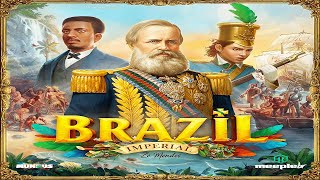
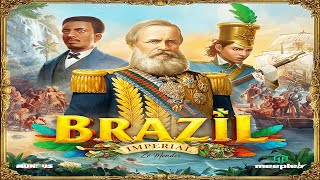
Take on the role of one of the great monarchs of the past, and show your valor! You will arrive in a vast and rich territory, but the road to the prosperity is filled with challenges.
In Brazil: Imperial, you need to construct buildings, manage resources, explore the land, create trade, acquire the support of the greatest personalities of the country, and recruit a powerful army to protect your interest against the rival states. If you make the right choices, you can complete missions to progress to a more advanced era, receiving new interesting options of development and victory points. In the end, the best monarch receives the title of Brazilian Emperor and constructs a new era of prosperity, freedom and peace!
In more detail, while playing in a modular map board that recreate real regions, you use a combination of worker placement, area majority, and individual powers to construct an empire in Brazil between the 16th and 19th centuries. You start by choosing one of the available monarchs and its personal game board and components; some monarchs are strong in combat, while others prioritize science or exploration. You receive tasks that advance you to a new era when you complete them, giving you access to more power constructions as you move into the second and third eras of the game, then you choose a starting point on the shared map.
On each turn, you can participate in an action phase and a movement phase. You manage actions on your individual game board, and you have these seven choices:
Deploy: Summon one military unit to explore and defend your territory.
Frame: Buy cards that represent famous historic figures to receive special powers and victory points.
Build: Construct farms, mines, cities, and other structures to generate resources and do other things.
Renovate: Overhaul an old building to produce new resources.
Manufacture: Produce basic resources — wood, sugar cane, cotton, or coffee — to receive victory points, improve your "action arches", and have raw material for more valuable products.
Harbor: Go to the port to receive a small amount of basic resources.
Trade: Sell your basic resources to receive gold and special cards to improve your empire.
During the movement phase, you can explore hidden places or attack other players. For combat, you check the power of the troops involved in the conflict to determine the winner, with cards being able to modify these values. Once a player completes their goals in the third era, the game ends and players tally their scores.
Brazil: Imperial was developed with the concept of it being "Euro X", a new style of game that combines Eurogames (in which you collect and manage resources) and 4x games (in which you explore, expand, exploit and exterminate). A new concept of maps was also introduced in this game. All maps are different and created with modular boards that recreate real regions of Brazil and the world. Each game you can focus on resource management, combat, or a combination of both, depending on your choice of monarch and the interaction with other players.


Brazil Imperial Runthrough
- Solid civ-light experience
- Tactile and engaging component movement
- Deeply thematic with historical elements
- Impressive and clean artwork
- Rewards alternate playstyles
- Faster playtime compared to traditional civ games
- Factions/player powers are not balanced
- Uncertain and potentially abrupt end-game trigger
- Limited building options
- Progression can feel railroaded
- Objectives can feel random and disconnected
- Science resource is difficult to acquire
- Player turn order does not change
- Theme doesn't always integrate with gameplay mechanics
- Building up civilizations
- Brazil
- Cards and flavor text describing historical figures and events
- Imperial Settlers
- Scythe
- Napoleon
- Gloomhaven
- Race for the Galaxy
- Puerto Rico
- Scythe
- Gloomhaven
- Civ
- Through the Ages
- Civilization (PC game)
- Clash of Cultures
- Viticulture
- Gutenberg
Mechanics (from transcript analysis)
- Combat — Combat exists but is not heavily incentivized, often seen as a deterrent or a way to force suboptimal plays rather than a primary conflict driver.
- exploration — Exploration tiles are available, offering points and resources, but are not always a compelling path for players.
- Objective Fulfillment — Players work towards completing objectives, which can be variable and sometimes lead to a sudden end-game.
- Player powers/Monarch abilities — Each player has unique abilities tied to their faction or 'monarch', influencing their strategies and resource acquisition.
- Resource Management — Players collect resources to perform actions and acquire cards, with science being a particularly tight resource.
- Tile-based civilization building — The game is tile-based and involves building up different civilizations, similar in concept to other civ games but with a tactile element.
Video topics + discussion points
Quotes (from this video)
- this is kind of in their wheelhouse this isn't so out of the realm i don't think they haven't
- but this has more of a sieve feel because of the actual tactile nature of moving around and building onto various uh terrain
- um of where i'm hung up though is like i don't know if i would always want to keep playing it you know it feels very limiting
- glaring issue with this is when we we saw it like well one my biggest negative and i hate this really in any game because a lot of games the players dictate they're not a lot of games but some games players dictate the speed but everyone's aware of that everyone's aware okay like at any given point someone could just like try and end it right now this game wants to have that but it doesn't because no one knows where anyone is at any given point because these are completely random
- i think the structure of this game is odd to me the way that the hard stop the uncertainty and ending and then the fact that the player turned order doesn't change i feel like the tweaking any one of those would drastically help
- from the perspective of a non-hero gamer it's not bad yeah it's it's definitely playable
- because i don't know i don't really want to play it again yeah not that that means it's a bad game it just means it's showing me everything it has to offer
- deeply thematic historical perspective but it had nothing to do with gameplay
- but this is the route you take if people want to throw their fit about games just don't play the [ __ ] game and move on
References (from this video)
- Interesting characters with unique abilities.
- Variety of buildings and strategic options.
- Engaging progression through different eras.
- Thematic incorporation of historical figures and events.
- Complex rules and iconography that can be difficult to learn.
- Potentially slow start due to complexity.
- Portuguese maritime exploration and expansion, development of Brazil
- Brazil, spanning three different eras
- Napoleon
Mechanics (from transcript analysis)
- Area Control — Players build structures like sawmills, trading posts, and cities on the map.
- Asymmetric Player Powers — Each player chooses a character with unique abilities, like Dom Manuel I or Dom Afonso Henriques.
- Card Drafting — Players acquire painting cards that grant abilities or bonuses.
- Combat — Combat cards are used for bonuses in defending or attacking.
- Resource Management — Players gather and spend resources such as wood, gold, and science.
- Set Collection — Players collect manufactured products and complete missions for victory points.
- Technology tree — Players advance through different eras, unlocking new buildings and abilities.
- Worker Placement — Players place action tokens to gain bonuses or perform actions.
Video topics + discussion points
Quotes (from this video)
- So, he's just a better Napoleon.
- This is not specific to a specific time.
- He was born in 1469, died in 1521. Known as the fortunate Dom Manuel I was acclaimed king in 1495, proving to be a worthy successor.
- The Continental Blockade policy that he imposed on the United Kingdom was an event that impacted the history of Brazil.
- So, I'm kind of a big deal.
References (from this video)
- Enjoys the Euro-style approach to 4X.
- Appreciates the action selection mechanism.
- Good variability in map setup.
- Multiple paths to victory (point salad).
- High-quality artwork and components.
- Includes historical background information.
- Replayable due to different monarchs and setup.
- The reviewer hasn't experienced much direct combat, suggesting it might be less prominent or requires a specific playstyle.
- Setup can be lengthy due to the number of pieces.
- A 4X game with Euro mechanics, focusing on exploration, expansion, resource management, and potential combat.
- Brazil
Mechanics (from transcript analysis)
- 4X — Explore, expand, exploit, exterminate.
- action selection — Players choose actions from a common pool, with actions becoming unavailable for the next turn.
- Area Control — Players expand their territory and try to control hexes on the map.
- Combat — Players can engage in head-to-head combat, though this was not heavily emphasized in the playthrough.
- Resource Management — Players gather and spend resources like wood, grain, and a 'white resource'.
- Set Collection — Collecting sets of cards or resources to achieve era objectives.
- Variable player powers — Each monarch (player) may have unique abilities.
Video topics + discussion points
Quotes (from this video)
- This game is all about putting blocks together to meet certain patterns and have certain colors on the side and saying I'm going to get how many colors on this side.
- I think these games have made it better than the original pandemic.
- For me, if to get a quick game in I'm going to pull out the Clone Wars over War to Warcraft and that's for Simplicity only.
- Euro X meaning the idea of a 4X game with a Euro type feeling where there's a lot of resource management.
- And to me it's very point salad and what I mean by that is there's a lot of ways to get victory points in this game.
- This is a C&C game, Card driven game.
- It did dramatically, especially when I'm up there and I'm rolling and suddenly my eight cannons fire and you see see nothing but four sixes and you're like oh my gosh what just happened here.
- Fantastic job to Robert Deleski and a big thanks to Capstone games for bringing out this two-player historical game highly recommended.
- We used to love playing World of Warcraft we felt that this game really called the theme of World of Warcraft.
- The action is super over the top I think the character of bay Antica is hysteric I think she's a fun character.
- His voice will always be the Batman to me.
- His laugh will always be the Joker Laugh to me too.
References (from this video)

- vibrant components; varied mechanisms; potential for deep play
- not a lot of specifics provided in transcript
- eurox; euro plus 4x elements with monarchs of Brazil
- Terra Mystica Gaia Project
- Voidfall
- Brass-style hybrid comparisons
Mechanics (from transcript analysis)
- euro x 4x hybrid — combines euro resource/stock management with 4x-style exploration and conflict
Video topics + discussion points
Quotes (from this video)
- i'll be discussing 32 games that i have learned about over the last eight weeks
- gen con is happening
- arc nova it says you design a modern zoo and you run a successful park and you support conservation projects
References (from this video)

Mechanics (from transcript analysis)
Video topics + discussion points
Quotes (from this video)
- the core decision loop felt elegant to me
- every single turn I was excited about the options that I had
- it's incredibly simple
References (from this video)

Mechanics (from transcript analysis)
Video topics + discussion points
Quotes (from this video)
- I'm spoiled for Choice over here
- Trans-Siberian railroad is indeed excellent
- it was a joy to have the game go so sideways like everybody was just laughing like crazy
- I thought it looked super cool
- I'm actively excited I'm looking forward to playing that one
- there's a mountain of prototypes off camera
- Darwin's Journey was the first rule book I ever wrote from scratch
References (from this video)

Mechanics (from transcript analysis)
Video topics + discussion points
Quotes (from this video)
- I have a monstrous shifting shelf
- nine games leaving the collection
- there are 19 new games that arrived this month
- I backed it on Kickstarter and apparently I backed it for a level that also got me Deep Dive
- Founders is a Thailand game
- bone race essentially
- this is going to be four videos coming out that week
References (from this video)
- Had a ton of fun
- Good direction from starting cards
- Efficiently building and upgrading actions felt like a race
- Not a game they would choose over existing collection games
- Has attacking, which the host dislikes (though it didn't affect them)
Mechanics (from transcript analysis)
- action selection — Upgrading actions is part of the gameplay.
- Area Control — Getting more units on the board and producing stuff.
- Combat — Includes attacking, although it didn't impact the host's experience.
- era advancement — Gold cards in hand bring everyone to the next era.
- Game End Trigger — The game ends when a player in the 'lost' position plays their last card.
- Resource Management — Using resources to build production places and get more units on the board.
Video topics + discussion points
Quotes (from this video)
- it doesn't feel that much like getting something off the shelf of Shame when we had it for like two months but some of these are old titles some of them we had longer it's the same thing some of them we had longer some of them we had shorter so it feels like a good mix of games and also a good mix of smaller and bigger games
- I made a deal with my myself that I'm only going to choose games that I somehow want to play and not games I was like oh let's just play it and get it out of the way
- Best and worst experience Best Automania worst broth of Fire Mountain
- subscribe to the channel was what I was hoping you would say but also look outside because it's outside or look at the board game because board games are fun
References (from this video)

- Works well at 2 and 4 player counts.
- Fun to grow and shrink the map based on player count.
- Good for players who like Euro games but want more interaction.
- Avoids the snowball effect common in 4X games.
- Balanced economic engine and tactical strategy.
- Streamlined technology progression.
- Good middle ground for a 4X/Civ-like experience within a reasonable playtime.
- Combat is handled in a way that doesn't feel overly punishing.
- Temporary hold on enemy buildings is a unique mechanic.
- Units can be redeployed without full cost after being defeated.
- Thematic connection to Brazil's formation.
- Good resource management and building renovation mechanics.
- Solo mode is not well-fleshed out and feels more like a scenario/tutorial.
- The stated playtime of 100 minutes might be optimistic, especially for first-time players.
- Formation of the nation of Brazil
- Brazil
- Civilization: New Dawn
- Clash of Cultures
- Eclipse
- Tigers and Euphrates
- Samurai
- Through the Desert
Mechanics (from transcript analysis)
- 4X — The game is described as a 4X (explore, exploit, exterminate, expand) civilization-style game.
- action selection — Players choose from various action spaces on their player board, with progression through Eras unlocking new actions and bonuses.
- Area Control — Players expand their buildings on the map, with rules preventing building adjacent to opponents and rules for temporary holds on enemy buildings.
- Asymmetric leaders — Players take on asymmetric roles with different leaders, offering unique abilities.
- Building placement — Players build structures like Sawmills, Trading Posts, Farms, and Cities on specific terrain types, adjacent to existing buildings or their Capital.
- Card Drafting — A pseudo-draft is used for starting positions and tiles, which also provide bonus resources.
- Combat — Combat involves using battle cards and unit/building strengths, with bonuses for defense and attack.
- Hand Management — Players manage hands of battle cards and gold cards, with limits of three for each.
- Objective Fulfillment — Era cards present objectives that players fulfill to score points at the end of the game, triggering game progression.
- Renovation/Production — Buildings can be renovated to produce different resources or refilled, with a cost unless a special ability is unlocked.
- Resource Management — Players manage four basic resources (gold, wood, sugar, coffee) and science, with limits on storing resources on the player board.
- Set Collection — Players collect manufactured goods of matching shapes to unlock bonuses on their player board.
- Tile exploration — Hidden tiles on the map can be explored by moving units into them, revealing rewards or challenges.
- Variable player powers — Leaders provide asymmetric abilities, and players can acquire paintings that grant special actions and bonuses.
- Worker Placement — Actions are taken on a player board using worker placement mechanics, where action spaces cannot be repeated consecutively.
Video topics + discussion points
Quotes (from this video)
- this game is kind of a 4X civilization sort of Style game all set in Brazil and also during the time of kind of the formation of the nation that we now know today as Brazil
- players will take on kind of different asymmetric leaders and and roles in the game and then have your kind of traditional Forex things which is explore exploit exterminate and expand
- the end of the game is triggered by these Era cards here
- this is the action of how you unlock those Extra Spaces
- it doesn't really feel like it snowballs against you at all and that's one thing that I think this achieves
- straddles The Best of Both Worlds in a way
- this is very kind of laser focused
- I definitely recommend Folks at least take a look at this Brazil Imperial if you're over here in the states uh portal is going to be bringing it over
References (from this video)

- Players complete missions towards progressing into a more advanced era.
- Losers are banished to a ship lost at sea where they inevitably pledge allegiance to a kraken.
- Constructing buildings, managing resources, exploring, creating trade, and recruiting armies
- Brazil
Mechanics (from transcript analysis)
- Area Control — Recruit a powerful army to protect their interests against the rival states.
- civilization building — Construct buildings, manage resources, explore the land, create trade, acquire the support of the greatest personalities of the country, and recruit a powerful army.
- Resource Management — Manage resources.
- Tech Tree — Missions will be completed towards progressing into a more advanced era, receiving new development options.
Video topics + discussion points
Quotes (from this video)
- it seems there's always another game on the shelf waiting to be discovered
- this episode is made possible in part by oceans from north star games
- You know what's even better than the idea of a lifetime spent exploring space doing so from the comfort of your own home where the potato chips are kept and that's why I joyfully wept gently for several minutes in secret where nobody else could see my shame once I discovered that this month's countdown would be starting with the economic space strategy game Master of Orion the board game
- The winner being granted the coveted title of emperor of the galactic council which is essentially just an honorary title for a glorified administrative desk job
- Now that we've conquered space which took way less time than I was anticipating let's now turn our attention towards conquering the sea because it's just sitting there being all damp and such
- Aquatica with a recent second edition from arcane wonders is a strategic but easy to learn family engine building game about underwater kingdoms
- You know I always enjoy a good bluffing game or do I perhaps I was bluffing just now you can't no I'm unknowable I barely know myself
- Vindication is a wonderful feeling like when you warn someone not to sit on wet paint but they ignore you and then immediately get eaten by a crocodile
- Every year sorcerer city gets built and rebuilt in magically new ways with blocks moving and rotating in crazy directions
- It sounds like a workers compensation insurance nightmare but that's what you get for hiring Howard Howard and Fine as your city planners
- Keith Forge's world was always in a constant state of change but now a vault containing mysterious dark amber is open causing strange and unusual transformations unlike anything seen before
- If you're anything like me then you also have a hilarious crocodile-based anecdote locked and ready to go at a moment's notice but you'd also probably fare pretty well if you ever came time to live underground
- Fallout shelter the board game a post nuclear worker placement board game for two to four players from fantasy flight games based on the hit mobile game from Bethesda softworks
- Three orders nobles civilians and religion unlike today where it's organized around media influence and high fructose corn syrup
- Typically a roll and write game is only a proper roll and right game if it's from the Roland Right region of France
- Otherwise it's a sparkling dice based activity
- And now for some lip smacking cracking action in the upcoming hidden role deduction game from Fun Tales Feed the Kraken featuring three asymmetric factions for feuding friends
- In 1871 with Canada only four years old the prime minister calls for a massive undertaking a transcontinental railway to link eastern and western provinces
- It would be a nation defining project shaping not only the economy of this young fledgling country but also his identity as the well-mannered cousin of the United States who lost a bunch of weight and finished community college
- Brazil Imperial coming from Meepo BR in 2021
- The best monarch receives a title a Brazilian emperor which is essentially just an honorary title for a glorified administrative desk job
- Losers are banished to a ship lost at sea where they inevitably go madam pledge allegiance to a kraken
- That's our list of games we wanted to make sure did not go overlooked this month
References (from this video)
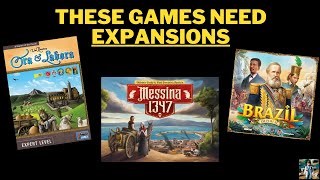
- strong theming for fans of Scythe-style games
- depth and accessibility balance for many players
- replayability can be limited by artifact-like cards and token variety
- USOT (otoma) module availability impacted availability and exploration
- regional development with a historical narrative
- colonial Brazil, historical events, and a Scythe-like vibe
- engine-building with thematic flavor and asymmetric play
- Scythe
Mechanics (from transcript analysis)
- area/territory-style interaction with a euro feel — focus on tiles/cards and objective fulfillment with a Scythe-like vibe
- Asymmetric Player Powers — each player has different capabilities influencing strategy
- Set Collection — gaining resources and using them to score through various objectives
- Set collection and resource management — gaining resources and using them to score through various objectives
- variable player power / asymmetry — each player has different capabilities influencing strategy
Video topics + discussion points
Quotes (from this video)
- "I'm incl some games that I haven't gotten the chance to play its expansion or expansions yet"
- "I would love some added variability in the building tiles perhaps some additional modules"
- "this game deserves expansion"
- "I would love to see some additional content for that game"
- "I think there's plenty of room to expand this game"
References (from this video)
- Vast buffet of options and upgrade paths
- Engaging efficiency puzzle with momentum
- Can feel heavy for new players
- Requires attentive planning to avoid late-game bottlenecks
- resource optimization, production chain
- empire-building in a unified Forex-themed system
- euros-themed with efficient puzzle
Mechanics (from transcript analysis)
- action economy and timing pressure — players start with objective-era cards and must keep pace with others to avoid falling behind
- Engine Building — develop your empire by buying and upgrading buildings to improve efficiency
- resource generation and building upgrades — develop your empire by buying and upgrading buildings to improve efficiency
Video topics + discussion points
Quotes (from this video)
- these are ten really really good games
- this is one of the coolest games in terms of like turn angst and frustration
- it's timeless and very clean design
- this is a co-design but it's definitely got a lot of the dna in it through that tile placement and other little mechanisms
- an absolute blast to play
- Arc Nova is going to stand the test of time
References (from this video)
- tight euro-style design that remains accessible
- pacing maintains momentum and minimizes churn
- clear core loop with multiple strategic options
- learning curve for players not familiar with euro 4X-style games
- theme integration could be stronger for some audiences
- resource management and empire-building
- Imperial Brazil era (historical period)
- historical/strategic
Mechanics (from transcript analysis)
- Resource Management — collect and allocate resources to build infrastructure, military, and technologies.
- tech progression and objectives — acquire technologies and actions to reach set goals.
- territory exploration/expansion — travel a map, develop areas, and achieve public objectives.
Video topics + discussion points
Quotes (from this video)
- it's just a very fun and a pretty accessible experience considering how much is going on here
- I love the way this game develops
- this game does what it promises
- This is a puzzly tile placement Style game
- I split you choose Style game
- Peloponnese is definitely one of the most punishing games I have but I love it for that reason
- Luna does stand on its own and feels different to the rest of them
References (from this video)
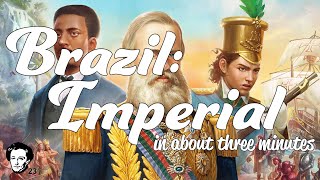
- Robust civ-style engine with multiple interacting mechanics that support deep strategic planning
- Strong action-selection core that rewards optimizing each turn
- Renovate action with double-sided buildings provides a satisfying design hook
- Painting cards are visually striking and paired with a dedicated art direction
- Offers a sandbox-like experience with room for long-term strategic development
- Combat is not the main focus; players seeking heavy conquest may be disappointed
- Can be lengthy to play and set up, contributing to a higher time commitment
- Historical depiction of Brazil is not deeply clarified or explicitly argued about in the game
- Many interlocking mechanics can feel overwhelming for newcomers
- Civilization-building and resource management with exploration, settlement, and limited conflict in a sandbox civ framework.
- The vast Amazon and surrounding lands during a colonial-era context; not yet a nation-state as colonial powers and locals vie for influence.
- Historical civ-building with a focus on action optimization rather than high direct conflict; emphasizes development, diplomacy, and technology.
- Scythe
- Civilization: A New Dawn
Mechanics (from transcript analysis)
- action_selection — On each turn, a player selects one action from seven available action windows, driving strategic pacing and prioritization.
- Area Control — Controlling map tiles provides bonuses and enables building opportunities, influencing expansion and scoring.
- area_control — Controlling map tiles provides bonuses and enables building opportunities, influencing expansion and scoring.
- combat_and_tactical_considerations — Combat exists but is not the central focus; victory depends on unit strength, defender values, and painting/card bonuses.
- harbor_and_trade_actions — Harbor grants resources or a powerful Gold Card when upgraded; trade lets players exchange resources, gold, and science.
- leader_tiles_and_monarchs — Each player selects a leader tile; monarchs influence positioning and movement, adding a strategic layer to expansion.
- manufacture_action — A dedicated action that moves markers to lower future costs, creating recurring benefits with repeated use.
- painting_cards — Paintings grant ongoing bonuses; players acquire and replace them, adding a layer of card-driven synergy and resource mechanics.
- Reclaim as Action — Renovate allows restocking a building to its original resources or flipping it to its other side for new bonuses.
- renovate_action — Renovate allows restocking a building to its original resources or flipping it to its other side for new bonuses.
- Resource Management — Core resources include wood, sugar, coffee, and cotton, with gold acting as a universal wildcard and science as a multi-type wildcard.
- resource_management — Core resources include wood, sugar, coffee, and cotton, with gold acting as a universal wildcard and science as a multi-type wildcard.
- tile_building_and_placement — Players use a personal board to place palaces, manufacturables, and troops, while city placement follows monarch-driven rules.
- Trading — Harbor grants resources or a powerful Gold Card when upgraded; trade lets players exchange resources, gold, and science.
Video topics + discussion points
Quotes (from this video)
- The mix of building, exploring, marching armies about and developing Gold Card technologies will appeal to people who like classic Civ games too
- The painting cards are very striking and I love the art Direction too
- it's fundamentally an action selection game, where you take one of those seven actions each turn
- it's a Sandbox game that happens to have other players in it
- however, combat is not Conquest in this game and if you pick it up looking for lots of fights you may be disappointed
- all up a solid civ Style game with less direct conflict than most
References (from this video)
- varied maps
- dense euro mechanics
- rule complexity
- setup can be long
- economic expansion; territorial control
- 4X-style empire building in Brazil
- Euro-style planning across eras
Mechanics (from transcript analysis)
- action restriction — cannot repeat actions; map-based decisions drive pace.
- Area Control — claim terrains and deploy buildings.
- Resource Management — manage sheep, food, grain resources; upgrade buildings.
Video topics + discussion points
Quotes (from this video)
- Phil Collins should retire
- it's a sliding puzzle... it's a quick 20 minutes
- this is a totally different style of game when it comes to card play
- these games have made it better than the original pandemic
- it's not a 're-themed' pandemic; it's very different
References (from this video)
- Time as a core constraint creates a tight, efficient tempo and compelling puzzle.
- Modular map and map setup yield strong replayability and adaptability to playgroups.
- High production value, clean components, and intuitive design.
- Rich action tree with meaningful upgrades that keep future turns exciting.
- Combat is optional yet still valuable, preserving player choice and game flow.
- End-game tension and variety of strategies keep the game engaging across plays.
- Movement rules can feel clunky or unintuitive for first-time players.
- Pacing can occasionally lag or feel lengthy for larger groups.
- Combat resolution can appear swingy or underwhelming to some players.
- Resource management, exploration, and territorial expansion in a four-X Euro-style framework
- Modular map of a developing empire across three eras with explored and unexplored regions and city-building opportunities
- Historical/strategic with era-based progression and variable objectives
- Scythe
Mechanics (from transcript analysis)
- Action selection and cooldowns — Choose one of seven actions per turn and mark it; you cannot repeat the same action on consecutive turns, forcing movement and planning.
- Building placement and terrain constraints — Buildings placed on terrain-appropriate spaces with immediate resource yields and terrain-specific restrictions.
- Combat using combat cards — Conflict uses a deck of combat cards to add strength; temporary control of enemy tiles, not permanent theft.
- Combat: Deck/Hand — Conflict uses a deck of combat cards to add strength; temporary control of enemy tiles, not permanent theft.
- End Game Bonuses — Completing era objectives and placing palaces provides varied scoring bonuses and end-game dynamics.
- End-game era scoring and palaces — Completing era objectives and placing palaces provides varied scoring bonuses and end-game dynamics.
- Manufacture and upgrade system — Spend resources to upgrade actions, improving efficiency and unlocking stronger future actions.
- Modular Board — A configurable board with question-mark exploration areas and hidden tiles to reveal and pursue.
- Modular map and exploration tiles — A configurable board with question-mark exploration areas and hidden tiles to reveal and pursue.
- Movement economy — Basic actions grant a free movement, with potential extra moves based on actions taken and map features.
- Resource Management — Multiple resource types (wood, coffee, cane, knowledge, gold, etc.) with stock-and-spend mechanics and upgrade paths.
- Trade and gold economy — Trade resources for better resources or gold; some cards offer flexible benefits and conversions.
- Unique character powers — Each player has a unique character with a special ability that enhances play without breaking balance.
- Unique Player Powers — Each player has a unique character with a special ability that enhances play without breaking balance.
Video topics + discussion points
Quotes (from this video)
- I am very impressed with this game which I'm delighted about because I've been wanting a game like this for a long time.
- This one has just that perfect level of complexity without being overwrought.
- it's an intuitive system which definitely is going to be reminiscent of games like Scythe.
- I'm very happy with Brazil Imperial.
- This is a hit and I'm very, very happy to say that.