/pic2599157.jpg)
Burano, also known as the lace island, is an island in the northern Venetian lagoon. Burano is famous for its brightly colored houses, those square-shaped houses of a riot of colors along the water channels make it like a fairy tale land.
Fishing has been the main activity in Burano since its foundation. A story goes that while fishermen went a long-term fishing outside the lagoon, their wife who stayed and missed their husband took out needles and made lace like they mended their husband's fishing nets.
In the Middle Ages, Burano lace was highly admired and widely requested by royal families all over Europe. Players represent a family leader on this little island. They can send men to fish for the main source of income, or send women to lacemaking to sale abroad. Making a good living and making Burano become world famous, you have to figure out how to organize family members to their suitable work. It depends on you to earn the glory for your family and lead them to be outstanding from other families.
Burano is played over four seasons, 14 rounds altogether. Through the novel "cube pyramid-driven" mechanism, players take turns paying coins to operate their cube pyramid during each round. The operation of the color-coded cubes would trigger certain actions, such as fishing, lace making, and house roofing, which will earn players victory points (VP). At the end of the game, whoever has earned the most VP wins.

- Invoked memories of Venice
- Cool chilled game
- All elements in pictures are considered for scoring
- Cool medium level thinky weighted decisions
- A lot of ways to score
- Balanced low to midway family game
- Plays really beautifully at two players
- Lose three victory points for each time a building card doesn't match the color of the row
- Penalty for building with two or three different colors
- Building terraced buildings on the canals
- Venice, Italy (specifically Burano)
Mechanics (from transcript analysis)
- action selection — Choosing to take one, two, or three cards from a column, and deciding where to place them.
- Card Drafting — Drafting from three different columns of cards representing building levels (roofs, level ones, ground floors).
- Resource Management — Using coins earned by not picking cards to pay for placing cards in the tableau.
- Set Collection — Collecting tourists and residences that score points based on specific criteria within the tableau.
- Tableau Building — Players build a 3x5 grid of terraced buildings.
Video topics + discussion points
Quotes (from this video)
- now that we're married we can finally play some board games
- Cartographers is a gem of a little game
- it's going to be one of my all-time favorite games to play
- This is the beautiful beast known as World Fair 1893.
- it has this beautiful puzzly element that i've just really really really enjoyed
- it's just a fun game that just has some really cool medium level thinky weighted decisions
- Hooray to getting married yes
References (from this video)
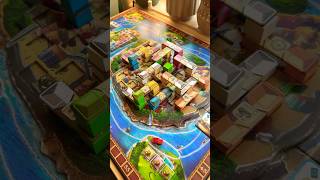
- Unique Euro game
- Goes in three dimensions
- Building to new heights
- Beautiful game
Mechanics (from transcript analysis)
- action selection — Each block has a special action allocated to it.
- Area Control — Think of it as a little area control mechanism.
- Set Collection — The main aim of the game is to place these blocks on the central island and build the matching colored roof.
- Worker Placement — You'll then be removing these workers from your dock and placing them in these lace work factories.
Video topics + discussion points
Quotes (from this video)
- This is one of the most unique Euro board games I've ever played.
- I love how it goes in three dimensions.
- Think of it as a little area control mechanism.
- This is a game that has you building to new heights.
- It's a beautiful game called Burano.
References (from this video)
- beautiful theme and tactile components
- strong spatial puzzle
- potentially fiddly with setup
- steep first-play learning
- tile placement, color matching, and roof-based scoring
- island city building with color-coded cubes and rooftops
- clever, highly tactile puzzle with spatial decisions
- Maau
- Taboni
Mechanics (from transcript analysis)
- city-building with adjacency rules — placing buildings and connecting zones to maximize points
- cube pyramid action selection — colored cubes form a pyramid; color determines available actions
- Cube Tower — colored cubes form a pyramid; color determines available actions
- roof tile scoring — matching colors and completing roofs yields specific scoring opportunities
Video topics + discussion points
Quotes (from this video)
- these are just 10 games I want to play this year that I already have I don't have to wait for a Kickstarter for it arrive
- the Rats of Wester it is a euro game which has this interesting wheel mechanism which is combined with worker placement
- it's a game where you'll be leading a herd of camels through the desert as you're basically looking for water holes
- I cannot wait to get this to the table and just really see what this game is like
References (from this video)
- Theme of work and stress is unappealing to some
- Spiteful and mean mechanics combined with mental health theme is off-putting
- Concept itself is a turn-off for some
- surviving work and sanity
- workplace
Mechanics (from transcript analysis)
- Take That — There's a large crowd of gamers that like these type of spiteful take that da da da type games
Video topics + discussion points
Quotes (from this video)
- This is my pick for the worst thing this week.
- It just looks heartless, mean, uh stupid.
- I just as a matter of course hate that.
- I haven't bounced off of one this hard in a while, I got to say.
- Also, I want more waves of some type, more types of electronic waves near my brain.
References (from this video)
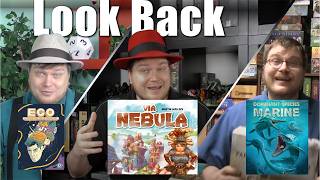
- really enjoy this game
- neat ideas
- colorful nature
- Not the biggest fan of rondels
Mechanics (from transcript analysis)
- Rondel — The whole board is a rondel and you move around it.
Video topics + discussion points
Quotes (from this video)
- Hey everybody, I'm Tom Vassal. Welcome to Look Back. This is a series that I do where I take a look at reviews that I did 1 year ago, 5 years ago, 10 years ago, and even 20 years ago during this time frame.
- It's It's doing okay. I think it's in the 4000s at BoardGameGeek. I just didn't like it at all. Boring, boring airplane travel game.
- What a fantastic game, a real-time shoot-'em-up strategy style game. Very entertaining. 10 out of 10. Just a great game. Still love this game 10 years later.
- honestly for a game that's themed on Taco Bell is like a 10 out of 10 in a sense cuz you're expecting it to be bad.
- This is the follow-up to the very popular Dominant Species.
- This is a fun party game in which someone's dying and they write a message on the board, but the other person he erases I think half of it.
- So, this is like the lowest seven I can give a game in a sense.
- The artwork is a little uh uh It's all mixed over. It's muddled and they made it for people who love Overpower and they threw in the kitchen sink.
- We're trying to get more people to play these games and they made it super complex.
- Point chips from a bag. That battle system is my favorite part and a lot of interesting decisions.
- The theme of the world is a little mundane for me. I wish there was more. It wasn't as interesting as it could be.
References (from this video)

- Enjoyed this game.
- Brightly colored hexes.
Mechanics (from transcript analysis)
- Movement — You're moving the boats around it.
- Tile Placement — Burano, the brightly colored hexes and putting them out there.
Video topics + discussion points
Quotes (from this video)
- So, we're going to jump right into these here. I'm going to take a look at them and tell you what I think about them.
- This game is now 20 years old.
- It's not nearly as good as made by the people who made War of the Ring.
- This is my favorite because all the pieces move like rooks sort of and you're trying to take over other people's pieces and each one has a special power and I like the theming of it.
- Layers expansions bring it up to a nine. Layers is amazing.
- I think the base game is fine, but when you I mean it's it's very it's enjoyable, but when you add the expansion it's fantastic.
- Nothing here I think is amazing.
References (from this video)
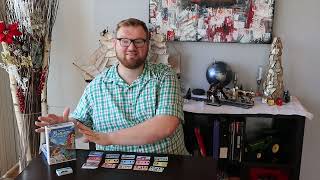
- Easy to learn and quick to play
- Appealing colorful components and theme
- Icons help clarify color groupings and reduce confusion
- Short playtime fits casual gaming sessions
- Color matching can be tricky when colors are similar (e.g., yellow vs green) which can cause scoring mistakes
- Requires careful attention to placement decisions
- building placement and set collection
- Burano, Venice area island with colorful pastel buildings
- abstract eurogame
- Mystery of the Temples
Mechanics (from transcript analysis)
- color_matching — match colors of buildings to align with scoring patterns; misreads are possible without careful observation.
- Resource Management — spend earned dollars to acquire additional building tiles.
- resource_management — spend earned dollars to acquire additional building tiles.
- Set Collection — collect sets of colored building tiles to score points.
- set_collection — collect sets of colored building tiles to score points.
- Tile Placement — place built buildings into your personal tableau to develop your district.
- tile_placement — place built buildings into your personal tableau to develop your district.
Video topics + discussion points
Quotes (from this video)
- it's a great little game
- there are icons that will help you out with this
- the goal ... is to get the same light colored buildings together
- in this game you're going to be collecting sets and then trying to build those buildings in front of you
References (from this video)
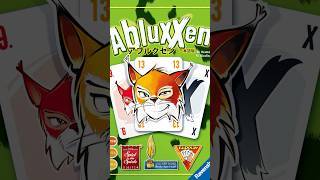
- Fast, quick, and clever gameplay; tense decisions in a short time frame
- Players are actively involved throughout the game
- Fits in a short play session without sacrificing engagement
- Perceived shallow depth; aging design
- Lack of shelf presence due to being overshadowed by newer titles
- Subjective: may feel too light for some players
- Reliance on a single short format may limit replay value
- Fast-paced, ruthless set-building with hand management and sudden changes in control
- Abstract, tabletop party game
- Courtroom-tinged banter: prosecution vs defense framing of gameplay moments
Mechanics (from transcript analysis)
- Compound Scoring — Score equals cards in the personal row minus cards in hand; highest total wins.
- Draw and hand management choices — Affected players draw from the deck or choose to retrieve cards into hand or discard and draw blind from the top.
- End-of-game trigger — The game ends when a player empties their hand.
- High-pressure, short-form pacing — Designed for 20 minutes or less with meaningful decisions on every turn.
- Oblux / take-and-affect — If you play a stronger set than another player's top row, you may take those cards, triggering consequences for the affected player.
- Real-Time — Designed for 20 minutes or less with meaningful decisions on every turn.
- scoring system — Score equals cards in the personal row minus cards in hand; highest total wins.
- Set building / formation in personal rows — Players create and manipulate sets of numbered cards in their own rows; stronger sets can interact with opponents' top rows.
Video topics + discussion points
Quotes (from this video)
- Let's hear the case. Players take turns playing sets of numbered cards to their personal rows.
- The goal, empty your hand to end the game.
- My verdict: Guilty.
- Too light to fight for space on the shelf.
- It's been a bluxed by More Fun Games.
References (from this video)
- Engages players in discussing stereotypes and social categories
- Illustrates social psychology concepts through play
- Relies on potentially sensitive content; requires thoughtful facilitation
- bias and stereotypes exploration; social identity
- Not specified
- educational discussion through play
- Pox
- Pandemic
Mechanics (from transcript analysis)
- descriptor cards / word association — cards with descriptors prompt players to name a person or identity; prompts constraints (e.g., cannot reuse a term such as 'Harry Potter')
Video topics + discussion points
Quotes (from this video)
- Play has to be free.
- designers solve problems; artists cause problems.
- Games carry meaning in them whether the designer intends that meaning or not.
- Chess has a social hierarchy built into it.