
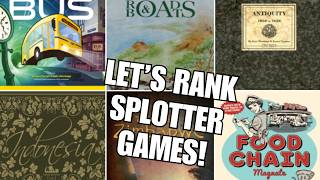



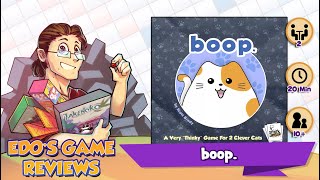













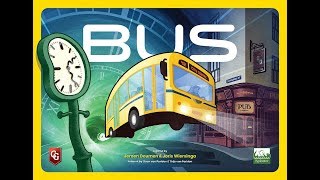







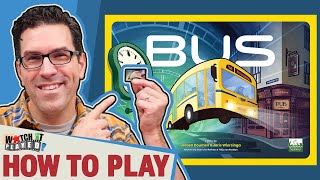
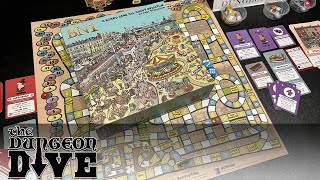

Prior to Essen 1999, a group of students created Splotter Spellen to sell some of their own game designs. This game is regarded as one of the highlights of that group. The object of the game is to deliver as many people to their destinations as you can. To accomplish this, players place route markers on the board to connect passengers to their destinations. However, the destination types (work, bar, home) vary from turn to turn, so you can follow certain passengers as they make their way through the daily grind.
Players may buy more buses (they start off with one), build onto their bus route, bring new passengers to the city (via the trains), expand the city by adding more buildings, and run their buses. There is another option, the clock. The action board has one other clever feature. On some actions, route expansion and building, the first player to choose that action actually gets to execute the action last! Which leads to some interesting games of chicken and some painful decisions.
Buying more buses allows a player to carry one more passenger every time they run their buses - hence scoring, in the best case, one more point. Depending on how the city gets built, however, finding lots of passengers on the street can be tricky.
Bus routes extend from either end of a Settlers-style initial placement. Extensions are appended to either end. Routes may only run parallel if there are no empty streets at one of the ends or the line ends on the crossing as another player's end. All new passengers will arrive at one of two train stations so that is one concern when route building. One must also be careful to run by a nice mix of building types. And, when building, one must always have an eye towards spoiling other players' routes by placing a mix of building types at each of their intersection so that all of their passengers just walk! Finally, when carrying passengers, one wants to be careful to set up to carry the same passenger next turn.
What is Worker placement
The Component Game - Round 2
- Strong interactive feel for a two-player title
- Dense weight with lots of decision points
- Availability and print runs can be a challenge
- Roads and Boats
- Indonesia
Mechanics (from transcript analysis)
- Logistics/worker placement flavor — Two-player heavy-weight logistics game with resource management and route/ownership dynamics.
- worker placement — Two-player heavy-weight logistics game with resource management and route/ownership dynamics.
Video topics + discussion points
Quotes (from this video)
- two players, not enough time
- steal someone's donkey
- bang for your buck
- eight maps in the base box
- you can draw from the deck. Each card has its own way of like yes, you can use it as an item, but it's also one of the endgame conditions
References (from this video)
- Neat bidding and action selection that scales with player count
- Balanced action economy across board regions
- Beautiful and thematic artwork with expressive components
- Elder cards add depth through set collection scoring
- Strong two-player experience and potential for expansions
- Moderate to high rule complexity for new players
- Some players may find the multi-part scoring system dense
- End-game scoring heavily relies on elder/shrine cards requiring planning
- trade via water, naval power, religious offerings to deities
- Indonesian archipelago waterways during a thalassocracy
- informational/educational with light humor
Mechanics (from transcript analysis)
- Action bidding and variable turns — Bidding determines available actions; turn order and actions vary based on bids.
- card drafting — Top cards are drafted from each quadrant to gain resources and actions.
- Modular board — Four regions (forest, shore, village, sacred lake) drive actions and scoring.
- Modular board quadrants with totems and shrines — Four regions (forest, shore, village, sacred lake) drive actions and scoring.
- Offerings and altar/sacrifice mechanics — Resources can be offered at altars to gain victory points.
- Resource management — Fish are used to acquire cards and resources; income comes from revealing workers.
- Resource management with fish currency — Fish are used to acquire cards and resources; income comes from revealing workers.
- Round incentives and timing — Tokens revealed at the start of rounds create short-term incentives and drive pacing.
- set collection — Elder cards score points based on collected resources and offerings.
- Set collection via elder cards — Elder cards score points based on collected resources and offerings.
- worker placement — Players place workers on action spots; numbers are hidden until revealed.
- Worker placement with face-down choices — Players place workers on action spots; numbers are hidden until revealed.
Video topics + discussion points
Quotes (from this video)
- this game plays two to four potentially five people
- i have decided that this game was created for bethany
- a spectrum of game that i like... euro game and between a light to medium is like my sweet spot
- i thoroughly enjoyed this game
- this was a lot of fun
References (from this video)
- tight, clever design
- great for travel playgroups
- beautiful integration with other Packo titles
- may rely on players embracing abstract play
- efficiency and route optimization in a tiny package
- Travel-sized micro-game collection; abstract strategy feel
- clever, brisk
Mechanics (from transcript analysis)
- area/cluster considerations — Formation of score-able clusters influenced by card placement.
- card drafting — Drafts from a shared pool to build the best routes or sets.
- card-drafting — Drafts from a shared pool to build the best routes or sets.
Video topics + discussion points
Quotes (from this video)
- eight full board games in this one little pouch
- this set is absolutely brilliant absolutely genius
- we were blown away with how much you can do in such a little package
- the cards are two-sided one is positive one is negative feel upside down
- in Sly you're drafting these cards face down into the hen house
- this is a horse racing game
References (from this video)
- Deck-driven movement adds flavor and avoids aimless rolling
- Character-specific goals create varied play styles and replayability
- Vibrant Brighton theming with local lore and real-world references
- Strong interaction elements (sneak/take-that) are light-hearted and fun with groups
- Rich combination of mechanics (stores, bus travel, encounters, destinations) all cohesive
- A charming aesthetic and thematic cohesion that captures a seaside city vibe
- Possible learning curve for new players due to multiple moving parts
- Requires 2+ players to realize the social dynamics and interaction benefits
- Distribution/shipping costs outside the UK noted as a concern for availability
- Some may prefer a more deterministic flow rather than a deck-driven system
- city exploration as a tourist trying to have the most interesting day and collect anecdotes
- Brighton, United Kingdom, modern day coastal city
- anecdote-driven, competitive city-crawl with lighthearted narrative flavor
- Talisman
- Popper's Ladder
Mechanics (from transcript analysis)
- bus stops and day passes — Bus stops let players buy a day pass to travel quickly; rolling on a random destination after misrouting adds tension and chance.
- character-specific action decks — Each of the five characters has a unique deck that subtly steers play toward their goals (sites, provisions, entertainment, history, etc.).
- deck-based movement — Movement is driven by a deck of action cards specific to each character, with a recommended play style over rolling dice for movement.
- destination cards and scoring — Destination cards provide goals; reaching destinations yields anecdote points and sometimes specific bonuses.
- end condition via anecdotes — The first player to accumulate 50 anecdote points and reach the train station wins the game.
- provisions and monetary economy — Provisions are draw-and-use items that grant money or bonuses; players manage a small budget to fund actions and purchases.
- random encounters and local lore — A large deck of Encounters features local figures and Brighton lore that drives narrative flavor and anecdote points.
- take that — Sneak cards and other players’ actions can impact others’ days; interaction is light-hearted rather than punitive.
- take-that and interaction — Sneak cards and other players’ actions can impact others’ days; interaction is light-hearted rather than punitive.
- tile-based movement with color-coded actions — White tiles are streets, blue tiles are stores, beige tiles are Random Encounters, and green spaces (parks) provide bonuses.
Video topics + discussion points
Quotes (from this video)
- this game is absolutely delightful
- I'm having a blast just playing it solo
- the custom action decks are something that are really really cool
- I would love to see these games get better distribution so that people outside of the UK don't have to spend quite as much on shipping
References (from this video)
- Tension and strategic planning
- Compact and portable
- Delightful tension and competition
- Limited two-to-three player count
- May feel repetitive for some players
- nut gathering and squirrels
- woodland/forest with nuts and squirrels
- abstract
Mechanics (from transcript analysis)
- area scoring via connected components — Score based on the largest connected orthogonally touching nuts in trees
- Compound Scoring — Score based on the largest connected orthogonally touching nuts in trees
- set collection / column draft — Columns of cards; lead player selects a card and the opponent takes the remaining card in the column
Video topics + discussion points
Quotes (from this video)
- these little packo games um they're just the cutest thing in the world
References (from this video)
Mechanics (from transcript analysis)
Video topics + discussion points
Quotes (from this video)
- Bollocks.
- This is a Splatter game that got a reprint a few years ago.
- I'll probably jump off a [ __ ] bridge or something.
- Stop [ __ ] lying.
- I'll personally come around your house with a slapstick and whack you around the head.
References (from this video)
- Easy to learn and quick to play
- Clear visual of progress via center total
- Four special cards add tactical twists
- Luck-driven element from random draws
- Limited interaction beyond the center total
- Scoring relies on counting and hand management which can slow some players
- Push-your-luck number-accumulation with bust mechanics
- Casual round-table game night
- Rule-focused demonstration with example-driven narration
Mechanics (from transcript analysis)
- Announce center total — When you play a card, you announce the new total in the center; players track the running total.
- Bust and scoring — If the center total exceeds 21, the player busts and receives zero points for that round.
- Draw a card — On your turn you either draw a card or play a card to the center area.
- end-of-round scoring — After a bust or when a round completes, players tally points in hand; the first to reach 100 wins.
- Four bottom-text cards — There are four special cards that modify play: (a) discard a card from the row; (b) reverse play order; (c) take a card from the row into your hand; (d) discard all cards from the row that share the same number as the played card.
- hand size limit — A player may not have more than three cards in hand.
- No passing — On your turn you must either draw or play; you cannot pass.
Video topics + discussion points
Quotes (from this video)
- burst is going to get zero points
- you can never pass and you can never have more than three cards in your hand
- when you play this card down, if there were any other twos, all those twos would get discarded
- This would be 26. But it doesn't actually burst
References (from this video)
- quick 15-minute playtime
- interactive bluffing tension
- dynamic with action cards that shift outcomes
- luck of lure draws can dominate early
- bluffing may be opaque for new players
- lure matching and bug collection
- family game night, bug-themed bluffing
- expository overview
Mechanics (from transcript analysis)
- Action cards — play action cards that alter outcomes and sabotage opponents
- Betting and bluffing — bluffing card game where players use lure cards to attract bug types
- bluffing — bluffing card game where players use lure cards to attract bug types
- set collection — collect bug tokens by matching lure with bug type while action cards disrupt others
- set collection / resource management — collect bug tokens by matching lure with bug type while action cards disrupt others
Video topics + discussion points
Quotes (from this video)
- the crowd loves seeing a variety in their performances
- customers can be very demanding
- the game comes with a basic and advanced mode adding in bonus tiles
References (from this video)
- Strong interactive feel for a Splotter game
- Engaging pulsing timing via the Time Track
- Older design may feel dated to modern players
- Can be heavy for newcomers
- Route development with time-track interaction
- Bus routes and urban transit network planning
- Array
Mechanics (from transcript analysis)
- Network/route building — Develop a bus network to gain points and advantage.
- Route Building — Develop a bus network to gain points and advantage.
- Time track — Time track pushes actions and pacing throughout rounds.
- worker placement — Place workers to establish routes and move passengers.
Video topics + discussion points
Quotes (from this video)
- This is all an effort to rerank my collection
- here are the honorable mentions there are 29 games unique games that start with the letter b
- Brass Birmingham is the number one game of all time as according to Board Game Geek
References (from this video)
- fast-paced dungeon crawl with quick setup and intuitive rules
- strong thematic appeal with evolving heroes and epic boss encounters
- cooperative play that scales across 1–6 players with manageable session length
- high perceived value of components and artwork, including expansion options
- good engagement signals on Kickstarter (stretch goals, updates, polls)
- video length could be trimmed for tighter communication
- deluxe/collector offerings aren’t showcased as clearly on the main image or video
- shipping timeline and some pricing tiers feel a bit unclear or risky for some backers
- unclear designer credit and brand history in the presentation
- cooperative hero progression against an encroaching void, with evolving powers and varied bosses
- A fantasy dungeon realm under threat from a vortex and tyrants; modular dungeon exploration
- epic fantasy with modular, replayable dungeon scenarios and a vortex-containment objective
- King of Tokyo
- Battle and Survive
- Vast: The Crystal Caverns
Mechanics (from transcript analysis)
- boss battler — Each boss/tyrant has a unique deck and actions, with varying difficulty and behavior to challenge the group.
- Boss/Tyrant Encounters — Each boss/tyrant has a unique deck and actions, with varying difficulty and behavior to challenge the group.
- Cooperative Game — 1–6 players work together to defeat bosses and prevent the vortex from destroying the world.
- cooperative play — 1–6 players work together to defeat bosses and prevent the vortex from destroying the world.
- Energy/Action Economy — At the start of your turn, you increase your energy and spend it to move, attack, activate unique powers, or save for ally turns.
- expansion content — Deluxe/core expansions add new components (3D terrain, mounts, extra wooden pieces) and new forest/tile dynamics.
- Hero Progression and Customization — As the party levels, players customize their heroes with new powers to fit their evolving strategy.
- modular dungeon tiles — Exploration involves evolving dungeon tiles with new monsters and portals appearing as the vortex grows.
Video topics + discussion points
Quotes (from this video)
- It's 60 minutes. I was excited for 60 minutes.
- LOOKS FUN.
- I'm in. I'm done. I just need to see the shipping.
- It's a breath of fresh air and a hobby of big heavy games.
- The price is very Kickstarter reasonable.
References (from this video)
- Humorous concept that leans into a lighthearted, wacky vibe
- Accessible entry point within a top 10 format
- Thematic tie-in with Udemy-style course branding adds flavor
- Potentially punishing for beginners due to its worker placement tension
- Limited published information may make it harder to verify details
- Jenga
Mechanics (from transcript analysis)
- hand management — Players manage a hand of cards/actions that influence available choices and timing.
- hand_management — Players manage a hand of cards/actions that influence available choices and timing.
- worker placement — Players assign workers to action spaces to gain resources and take actions that progress toward goals.
- worker_placement — Players assign workers to action spaces to gain resources and take actions that progress toward goals.
Video topics + discussion points
Quotes (from this video)
- These are my top 10 Udemy board games
- for number ten, I have Bus, a wacky but mean worker placement game.
- For number nine, I have Scythe, an engine building game.
- For number eight, I have Necoima, a much better version of Jenga.
- For number seven, I have Tea Garden, a hand management game with beautiful artwork.
- For number six, I have Mountain Goats, a push your luck racing game.
- For number five, I have Rebel Princess, a trick-T game with asymmetric abilities.
- For number four, I have Andromeda's Edge, a worker placement game, but with a lot of things going on, but it's so much fun.
- For number three, I have Wingspan. You guys know what this is at this point.
- For number two, I have Distilled, where you're making whiskey in this game.
- for number one, I have STI, where you're trying to find extraterrestrial life.
- And this game is beautiful.
References (from this video)
- Bluffing element via the stop-time mechanism adds tension to a dry Euro framework
- Dynamic interaction where increasing bus capacity can benefit all players and force tradeoffs
- Endgame token economy prevents hoarding and compels timely play
- Relatively accessible and reasonable playtime for a Euro game
- Solid pick-up-and-deliver core that remains engaging
- Claims of being a 'complete edition' are questionable because the original board is missing
- Rule fiddliness around route placement and exceptions can stall teach/first plays
- Board can become congested at 4–5 players, reducing strategic clarity
- Teaching new players can be prickly until rules are learned
- Transport logistics, route planning, and scheduling in a Euro-style framework
- Urban city bus network with routes to destinations such as home, work, and the pub
- Abstract/euro-style decision making with light flavor
- Vic Culture Bordau
Mechanics (from transcript analysis)
- Action selection with finite tokens — Players choose actions from a fixed set using a limited pool of action tokens each turn.
- Bus/resource management — Buses increase action capacity; buildings determine available building slots; endgame ends when slots fill.
- Congestion and blocking — The board can become congested, influencing route placement and strategy, especially at higher player counts.
- end game bonuses — End conditions include filled building spaces, disruptions to space-time, or depletion of actions; ties broken by time markers and stack order.
- Endgame triggers and tie-breakers — End conditions include filled building spaces, disruptions to space-time, or depletion of actions; ties broken by time markers and stack order.
- Movement phase (vroom) — Buses are moved along the network to transport passengers; movement is constrained by available buses and actions.
- Network/route building — Place route markers on unoccupied streets; routes may connect to other players' routes under certain constraints.
- Passengers and scoring — Transport passengers to destinations for victory points.
- Resource management — Buses increase action capacity; buildings determine available building slots; endgame ends when slots fill.
- Route expansion on a shared map — Place route markers on unoccupied streets; routes may connect to other players' routes under certain constraints.
- Time/clock bluffing mechanism — A clock action can stop time and create bluffing opportunities; time progression influences scoring and strategy.
Video topics + discussion points
Quotes (from this video)
- This is a pick up and deliver game.
- the maximum number of buses action helps other people, right?
- it's a quintessential Euro type decision that you got to make.
- one of the endgame mechanisms means that you can't hoard your action tokens.
- the game retains its brain burning nature and fish choices.
- With five players, this game just descends into chaos.
- it's not the complete edition.
References (from this video)
- Early worker placement game
- Didn't set the world on fire
- public_transportation
- Aladdin's Dragons
- Cathedral
Mechanics (from transcript analysis)
Video topics + discussion points
Quotes (from this video)
References (from this video)
- Tense, dynamic negotiation with meaningful choices
- Factions feel distinct and flavorful
- Great for social play and repeated sessions
- Can be brutal; table dynamics matter
- Complex for first-time players
- Betrayal, negotiation, and deal-making
- Zoo with animal factions seeking star exhibits
- Factions vie for power through deals and votes
Mechanics (from transcript analysis)
- Power-based negotiation — Each faction has unique abilities that can be traded or leveraged in deals
- Voting — Players use votes and special powers to advance their faction
- Voting and majorities — Players use votes and special powers to advance their faction
Video topics + discussion points
Quotes (from this video)
- Wavelength has a lot of good things going for it
- it's perfect for close friends at a holiday party
- Poetry for neanderthals is a team based game that's all about using one syllable words
- Codenames is an ultra popular board game about giving secret clues to your teammates
- Blood in the Clock Tower is an evolution of the classic Mafia and Werewolf
- Camel Up is the greatest crowd pleaser of them all
- Skull comes in a small box and it's a super quick teach and keeps the attention on one another
- Zuus is a negotiation game where up to seven people are trying to make their animal faction the star attraction in a zoo
References (from this video)
- Engaging bidding and action selection
- Strong interaction through competition for actions
- Can feel heavy on setup and bookkeeping for a light family group
Mechanics (from transcript analysis)
- worker placement — Workers are placed and meeples bid to take actions; resource control features prominently.
- Worker placement / auction hybrid — Workers are placed and meeples bid to take actions; resource control features prominently.
Video topics + discussion points
Quotes (from this video)
- Dominant species is a truly awful game that I really really dislike
- this is a very very light worker placement game
- the seventh continent for us
References (from this video)
- Easy to learn and quick to teach
- Solid design that rewards strategic play
- Some actions can feel useless at times, requiring you to take something
- route competition, indirect cutthroat gameplay
- rail transport and routing in a busy network
- light, strategic route-building in a bustling network
Mechanics (from transcript analysis)
- action selection — Each round consists of one primary action choice, with optional later actions possible.
- high interaction — Directly affecting opponents' routes and space to disrupt their plans.
- Network/route building — Players place/build routes, placing workers or guests to move along the network.
- routing/route building — Players place/build routes, placing workers or guests to move along the network.
Video topics + discussion points
Quotes (from this video)
- I really enjoyed this game. It was a ton of fun. Absolutely loved it.
- I don't understand mind management. If you really get it, please explain it to me.
- it's easy to learn, takes a lifetime to master
- This is one of those heavy euro that is a thick box; we learned and that was great.
- we absolutely lose. Cthulhu is immortal and it was the last possible round, but it created a fun story.
- I thought, this is good. This was a good experience.
- I would definitely play again after getting through the learning curve.
References (from this video)
- Straightforward basic rules
- high interaction and takedown opportunities
- Confrontational, not solitaire-friendly
- Urban transit competition and passenger flow
- A city’s public transportation system in an expanding city
- Direct, confrontational with open information
Mechanics (from transcript analysis)
- player interaction — Direct scoring and interference with opponents' routes.
- route/passage competition — Players compete to pick up and drop off the same passengers; no hidden information.
Video topics + discussion points
Quotes (from this video)
- deliciously confrontational game with everything out in the open, no hidden information.
- you only have 16 actions for the entire game
- There are two ways you can go in the game. You can stay a merchant for the entire game, and there are definitely some advantages for that, like there's a lot of income, but you can also decide to become a monk
- the action selection progress
- this is the most player interactive game I have in my list, and it is mean, but so much fun
- I love the aliens; at the beginning of the game, there are random aliens placed on the board face down
- you don't roll your dice. You set them to whatever numbers you want