/pic7611495.jpg)


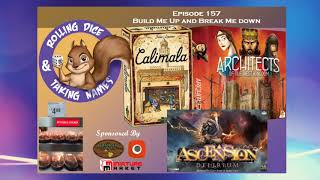














Calimala Deep Dive
What the Community Thinks About Calimala
Calimala has earned respect from reviewers as a clean, elegant economic game that prioritizes clever mechanics over flashy presentation. While opinions vary on how engaging the area majority puzzle truly is, nearly all reviewers praise the game's worker placement system as its most compelling feature. The game occupies an interesting space in the Eurogame landscape: mechanically rich and deeply interactive, yet visually understated in a way that appeals to traditionalists and puzzles traditionalists specifically.
Core Mechanics That Define Calimala
Worker Placement with Reactivation
Calimala's defining mechanic inverts the traditional worker placement formula. When you place a worker between two action spaces, you execute both actions. But here is where the design shines: every player who already occupies that stack below you gets to execute the same actions again. This creates positive interaction where placing your worker literally gives your opponents turns outside their normal sequence. The trade-off is constant and agonizing. Do you chase the action you desperately need, knowing you will hand your rivals opportunities? Or do you avoid the obvious move and sacrifice efficiency to deny them value? As the fourth worker lands on a stack, the bottom worker is ejected, kicked onto the first available scoring tile. This bump-out mechanism drives tension that builds throughout every single turn.
Area Majority Scoring with Predetermined Order
Calimala structures its area majority scoring around 15 randomly-placed tiles that activate in a fixed sequence from top-left to bottom-right. You know exactly which region will score next, but you do not know when. This asymmetry creates a planning puzzle distinct from games where majorities fire unpredictably. You can position cubes knowing that a particular chapel or city will eventually matter, but you cannot prepare for the exact moment when opponents will flood that same region. When scoring triggers, only players with trading posts or donations in that area compete. First place earns three points, second earns two, third earns one. The point differentials are small, but they compound across all 15 scoring events. This means a strategy of collecting several second-place finishes can compete with fewer first-place victories, rewarding balanced presence over narrow dominance.
The Calimala Experience
Tension and Interdependence
Reviewers repeatedly emphasize how tense Calimala becomes in practice. Your success depends on what your opponents do, because their placement decisions directly trigger your actions. If you position a worker early in a stack, you are banking on opponents choosing to take the same action later, activating you. If you are wrong about their priorities, your worker sits idle. This tension compounds with the knowledge that mid-game you can suddenly realize you have no path to victory. You may have locked yourself into pursuing a cathedral majority where an opponent has already claimed insurmountable control, or committed too many resources to a scoring round that will never arrive before the game ends. The game does not offer many second chances once momentum shifts against you.
Replayability Through Randomization
The scoring tile setup rotates each game, and this simple randomization does remarkable work. Because each tile defines which regions matter and when they matter, different tile configurations create entirely different board states and force different priorities. A chapel that was worth fighting over in one game might be irrelevant in the next. This same principle applies to action space adjacencies. Placing workers between "produce cloth" and "build warehouse" creates different strategic pressure than placing between "produce cloth" and "deliver goods." Reviewers note that this configurational variety generates genuine excitement to replay, because the puzzle feels fundamentally different rather than simply harder or easier.
What Makes Calimala Stand Out
Clean Design and Iconography
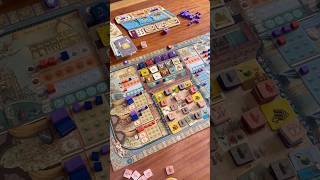
Designer Eno Tool's contribution to the second edition is visible in every corner. The iconography looks complicated at first glance, but once understood it becomes logical and intuitive. Action symbols clearly communicate what you will gain or build. The board layout organizes regions sensibly. Resources are abstract cubes that resolve quickly into area majorities without visual clutter. This restraint is intentional. Reviewers note that the game prioritizes clarity over atmospheric theming, and this choice pays dividends during gameplay. You spend your mental energy on the puzzle, not parsing what each symbol means or what the board is supposed to represent.
Action Cards as Flexibility Valve
When a worker is bumped from a stack and you cannot perform the resulting actions because you have already maximized your resources, you have an alternative: draw a bonus action card. These cards match the spaces on the board and can be played later on your turn for free. This system accomplishes multiple things. It softens the punishment of being blocked, giving you tools to recover. It introduces a small element of hand management and timing. Most importantly, it prevents the game from devolving into pure determinism. You are not helpless when stacked workers force you into impossible positions. You have agency to draw a card and wait for the moment when it delivers maximum impact.
Potential Drawbacks
Uneven Fun Across the Table
The game's interdependence creates a sharp asymmetry in enjoyment. If you position yourself well early and your opponents chase positions that activate your workers, the game sings. If your planned stack never gets activated because opponents prioritize different actions, you spend turns watching others play while your pieces sit dormant. Players who fall behind can recognize mid-game that they cannot catch up, and this knowledge can drain engagement. Reviewers describe this as an old-school Eurogame quality, where mechanical elegance does not guarantee even fun distribution across all players.
Majority Difficulty and Tiebreaker Complexity
Calimala uses an eight-step tiebreaker system to ensure no tie is left unresolved. Once you understand this system, it becomes logical. But the first few games require referring to the rules to work through the complete sequence. The game also presents another challenge: once someone takes an early lead in a particular region, catching them becomes extremely difficult. The point differential between first and second place is only one point, which sounds small until you realize that the same player claiming first place across multiple scoring rounds builds an insurmountable lead. Chasing second place across many rounds is mathematically viable, but it requires discipline and luck.
If You Enjoy Calimala
You should explore games that share its emphasis on clean worker placement and area majority puzzles. Hansa Tutonica, a classic Eurogame from 1997, resonates with Calimala players who appreciate medieval economic themes and straightforward area control. Istanbul offers similar pick-up-and-deliver flow with careful route optimization. For more complex tableaus, Underwater Cities and Pulsar 2849 share the same commitment to meaningful decisions compressed into elegant systems. Castles of Burgundy provides accessible dice drafting with area majority scoring. All these games speak the same mechanical language: economics, resources, timing, and control over shared spaces. They are not thematic experiences; they are puzzles where every token matters and every placement echoes.
What Reviewers Are Saying
"It is hard to overstate how tense and frustrating the worker placement system is in this game and how interactive and competitive it is, because you are giving out victory points and actions to other players every time you place on top of them."
— 3 Minute Board Games
"The starting configuration really does make each game feel different and it's the kind of thing that truly gets me excited to play again. Calimala also has a great deal of tension. Your success really does depend on what your opponents do."
— Board Game Dad
"I love that your workers sit out there and they get stacked upon and so when someone goes and takes an action, it's going to also activate the workers below it. That part is so fun to me."
— The Dice Tower