/pic8632666.png)

/pic706443.jpg)
/pic3325254.jpg)
/pic8632666.png)
/pic5054740.jpg)
/pic149643.jpg)
/pic162247.jpg)
/pic1081330.jpg)
/pic94341.jpg)
/pic121747.jpg)
/pic329096.jpg)
/pic594446.jpg)
/pic6877018.jpg)
/pic685614.jpg)
/pic7625877.jpg)
/pic4741220.jpg)
/pic4528659.jpg)
/pic2836284.jpg)
/pic3764169.jpg)
/pic4134942.png)
/pic6753707.png)
















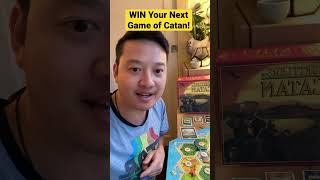





















CATAN Deep Dive
What the Community Thinks About CATAN
CATAN stands as one of the most influential board games ever created, often credited with launching the modern board game renaissance in the mid-1990s. Despite its age, reviewers and players consistently praise it for delivering accessible gameplay, engaging social dynamics, and strategic depth that appeals to both newcomers and veteran gamers. Players describe the experience as addictive and remarkably replayable, with the game's modular board ensuring no two games feel identical. The combination of resource management, negotiation, and controlled randomness creates a compelling loop that keeps players invested from start to finish.
Core Mechanics That Define CATAN
Resource Management and Trading
At its heart, CATAN is a game about managing scarce resources. Players collect five resource cards, wheat, sheep, brick, ore, and wood, by building settlements on hexagonal tiles. What makes this system brilliant is the negotiation layer: players must trade with each other to get the resources they need, transforming a simple collection mechanic into a deeply social experience. The trading negotiations often become the most memorable moments of play, with players making deals, blocking opponents, and leveraging their positions. The bank exchange system provides a safety valve, allowing players to convert four of one resource into one of another, but the player-to-player trades are where the real fun emerges.
Route Building and Network Growth
Building roads and expanding your settlements creates a puzzle of spatial positioning and forward planning. Players construct networks across the island, competing for valuable spots while managing a limited resource pool. The longest road bonus, awarded to whoever builds the longest continuous path, adds a secondary strategic goal that can shift the balance of power late in the game. This mechanic rewards both defensive play (blocking opponents) and aggressive expansion (racing to secure key locations), creating multiple viable strategies.
The CATAN Experience
Social Interaction and Negotiation
CATAN excels at creating dynamic table talk. The constant back-and-forth of trading creates opportunities for alliance-building, negotiation, and social maneuvering. Players must read table positions, anticipate what others need, and decide when to make deals or refuse them. This negotiation element transforms CATAN from a pure strategy game into a diplomatic experience where charisma and deal-making can swing outcomes. Reviewers frequently highlight how the game brings people together, encouraging conversation and engagement throughout play.
Dramatic Momentum Swings
CATAN's momentum is never locked in. A lucky dice roll can suddenly activate dormant tiles, granting resources to the player in last place and creating opportunities for a comeback. Conversely, bad luck can stall a leader's plans. This balance between strategy and chance keeps the game exciting and unpredictable, no one feels locked out of victory until the very end. The robber mechanism, triggered when a 7 is rolled, adds another layer of drama: the active player moves the robber to block a tile and steal from an opponent, allowing for targeted disruption and strategic blocking.
What Makes CATAN Stand Out
Modular Board Design
CATAN's randomized hexagonal board is a genius of game design. Because the tiles and number tokens are shuffled each game, every session feels fresh and different. No two boards are identical, and successful players must adapt their initial strategies based on how the island takes shape. This modularity directly addresses the replayability problem in strategy games and is a major reason why CATAN has remained in print and popular for nearly three decades.
Perfect Accessibility to Depth Ratio
CATAN occupies a sweet spot in the difficulty spectrum. New players can grasp the core rules in minutes and enjoy a meaningful game within an hour. Yet beneath this approachable surface lies enough strategic nuance to keep experienced players engaged: positioning matters, timing matters, knowing when to trade and when to hold matters. It serves as an ideal gateway game, one that introduces newcomers to modern board gaming without overwhelming them, while still offering genuine strategy that rewards skilled play.
Potential Drawbacks
Length and Runaway Leaders
CATAN typically takes 60 minutes or more to complete, and this length can feel extended if one player pulls into an early lead. Once a player reaches 8 or 9 victory points, they become difficult to stop, and remaining players may find themselves playing for second place rather than actual victory. The late game can drag if everyone is simultaneously hoping for a breakthrough that doesn't materialize, leading to extended downtime. Some groups address this with house rules or variants, but the base game can suffer from momentum imbalance in its final turns.
Dice Luck and Resource Scarcity
While controlled randomness is a feature, it can occasionally feel like a bug. Certain number combinations may be rolled far more frequently than others in a single game, leaving players positioned on inactive tiles with no resources while competitors reap harvests. This is especially frustrating during critical turns when a player desperately needs a specific resource to complete their strategy. Additionally, the total number of any given resource available across all hexes can create situations where entire resource types remain scarce throughout the game, forcing unwanted trading dynamics and frustrating long-term plans.
If You Enjoy CATAN
Players drawn to CATAN's negotiation-heavy gameplay will appreciate games like Ticket to Ride, which shares the same elegant simplicity wrapped around engaging strategic decisions. Carcassonne offers similar tile-placement accessibility with modular replayability. For those who want deeper resource management, Agricola or Puerto Rico provide more complex economic systems. Azul delivers the accessibility and quick playtime in a different context, while Splendor offers negotiation-free resource collection with sharper strategic depth.
What Reviewers Are Saying
"This is where all of a sudden it all goes Broadway, and the more you get the gravy train rolling, and the game just becomes about managing what you've got and watching the table dynamics shift."
— No Rolls Barred
"The critical thing is the initial placement really does matter because you're setting yourself up for success or failure later on in the game, and the positioning of your first settlements determines your access to resources."
— Beyond Solitaire
"CATAN brings people together in a way that few games do, because the negotiation and trading mechanics create these shared moments of triumph and friendly competition."
— Our Family Plays Games