/pic6753707.png)
/pic8632666.png)

/pic706443.jpg)
/pic3325254.jpg)
/pic5054740.jpg)
/pic149643.jpg)
/pic162247.jpg)
/pic1081330.jpg)
/pic94341.jpg)
/pic121747.jpg)
/pic329096.jpg)
/pic594446.jpg)
/pic6877018.jpg)
/pic685614.jpg)
/pic7625877.jpg)
/pic4741220.jpg)
/pic4528659.jpg)
/pic2836284.jpg)
/pic3764169.jpg)
/pic4134942.png)
/pic6753707.png)


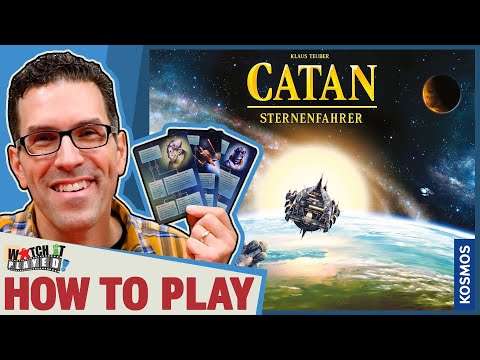


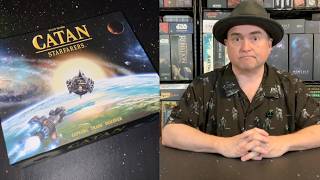

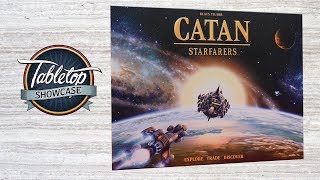



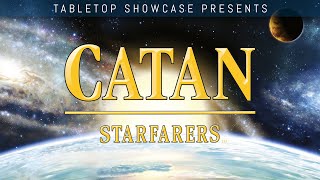

CATAN: Starfarers Deep Dive
What the Community Thinks About CATAN: Starfarers
CATAN: Starfarers evokes remarkably divided opinions across the board gaming community. As a reimplementation of the long out-of-print 1999 original, this 2019 release pairs the familiar resource economy that made base Catan a gateway game with a space exploration theme and a dramatically expanded mechanic set. Channels like Watch It Played and The Secret Cabal Gaming Podcast appreciate the thematic coherence and the production quality, while Shelfside and BoardGameBollocks express concerns about game length, randomness, and whether the additions ultimately serve or dilute the core Catan experience. The high price point amplifies these doubts for some, while others view the premium components and novel gameplay as justified investments.
Core Mechanics That Define CATAN: Starfarers
The Extended Resource Economy in Space
At its heart, CATAN: Starfarers preserves the foundational mechanic that defined the original Catan: rolling two dice to generate resources for players with colonies adjacent to the rolled planets. Instead of the familiar five resources, Starfarers uses new names like fuel, carbon, food, goods, and ore, but the economic logic remains unchanged. Players trade these resources with each other and the bank to build structures and upgrades. A critical innovation is the charity system: players earning few victory points draw extra cards each production phase, while higher-scoring players draw fewer or none. This catch-up mechanic keeps the game flowing and prevents early leaders from running away with victory, ensuring that players remain engaged even from behind.
Spaceship Movement and Exploration as the New Path to Victory
Instead of building roads to extend your empire across a fixed island, Starfarers introduces a modular galaxy board where players fly spaceship tokens across a variable, sector-based map. Ships are built at spaceports using resources, then moved in the flight phase using a unique speed mechanic: players shake their mothership (a physical component filled with colored balls), and the visible ball colors determine how far each ship can travel. A black ball triggers an encounter card, reducing movement but adding thematic flavor. This replacement of roads and settlements with exploration reshapes strategy. Instead of positional blocking and longest-road competition, players focus on which planets to discover and settle, how to upgrade their motherships with boosters, freight pods, and cannons, and whether to pursue alien friendships or combat enemy pirates. The flight phase transforms what was once a passive income mechanic into an active exploration loop each turn.
The CATAN: Starfarers Experience
A Living, Breathing Galaxy of Choices
Playing Starfarers immerses players in a sci-fi narrative of discovery and diplomacy. Early turns feel like scouting missions, with players gradually unlocking the hidden numbers and alien outposts scattered across the modular board. The alien civilizations each offer passive bonuses when you place trade stations at their outposts, encouraging a secondary race to secure majority control and earn friendship tokens worth victory points. Encounters add moments of surprise and theme: players might be asked to negotiate with merchants, flee pirates, or terraform hostile worlds. The mothership shaking mechanic provides a tactile, almost ceremonial rhythm to each turn that many players find memorable, even if randomness clouds the decision space.
A Longer, More Complex Evolution of Catan
Starfarers is decidedly not a quick variant. Expected playtime ranges from two to three hours, particularly for first games or groups unfamiliar with the rules. The rule book is structured into a concise core section and a detailed almanac, which helps teaching, but the number of moving parts (production, trading, building, flight, encounters, friendship cards, mothership upgrades) means turns can feel lengthy. The game requires strategic depth: where to place your first spaceport, which mothership upgrades to prioritize (boosters for speed, cannons for combat, freight pods for alien diplomacy), and how to manage the tension between settling nearby planets for safe income versus racing outward to claim alien friendships and defeat pirates. This complexity is by design and appeals to players seeking a meatier experience than base Catan, though it can overwhelm casual audiences.
What Makes CATAN: Starfarers Stand Out
Component Quality and Thematic Immersion
The production is a major talking point. Each player receives a large mothership component filled with colored balls that must be shaken each turn to determine ship speed, creating a memorable sensory experience rarely seen in modern board games. The alien friendship cards feature endearing artwork of distinct civilizations with their own visual identities and unique benefits. The resource cards, planets, and encounter cards are all cleanly designed and easy to read. The insert is thoughtfully engineered, with dedicated slots for every piece. This premium feel reinforces the price tag, though opinions differ on whether the components alone justify the cost compared to similarly priced games in the modern hobby.
Strategic Depth Through Modular Exploration
Unlike base Catan, where the board is fixed and strategy emerges from fixed positions, Starfarers introduces modularity: the planetary sectors can be arranged in multiple ways, and players discover them gradually as ships move outward. This means no two games follow identical territorial paths. The variety of upgrade paths (speed-focused, combat-focused, diplomacy-focused) allows different player archetypes to excel. A player who rushes alien friendships early may secure free victory points but risks exposure to pirates; a player who invests in cannons can destroy pirates for points but sacrifices cargo capacity. These interlocking systems create a rich decision tree that evolves each session.
Potential Drawbacks
Randomness Layers That Can Overshadow Skill
CATAN: Starfarers adds several independent randomness sources on top of the base dice roll. Players shake their mothership to determine ship speed, and any black ball triggers an encounter card draw. Encounter cards range from thematic but minor flavor to game-altering events that teleport a ship anywhere on the map or grant a free trade ship. The variance in encounter outcomes is wild: some ask players to spend resources with uncertain results, while others grant free resources, massive tempo swings, or sudden victories. For players who valued the strategic negotiation and positional play of base Catan, these layered randomness sources can feel like the game is playing you rather than you playing the game. The encounter deck's limited card count means later games repeat encounters, dulling thematic surprise.
Game Length and Pacing Concerns
With a nominal two-hour playtime that regularly stretches to two and a half or three hours, Starfarers demands patience. Downtime can accumulate as players read encounter cards aloud and others parse their meaning, as players manage mothership upgrades and alien cards, and as the game lacks the economic escalation that keeps base Catan moving. The removal of the robber mechanic, replaced by a simpler seven-roll system, eliminates some of the negotiation and strategic blocking that many Catan fans enjoy, instead creating a longer, more solitaire-like experience. For groups accustomed to playing base Catan in 60 to 90 minutes, the extra rules overhead and decision points can feel excessive without proportional payoff.
If You Enjoy CATAN: Starfarers
Fans of Starfarers often appreciate games with exploration at their core and light sci-fi themes. Scythe shares the modular board aesthetic and faction diversity, though with deeper asymmetry and an alternate-history setting. Seafarers, the predecessor expansion to base Catan, offers a gentler exploration variant with ship building and water-based routes, without the encounter-card chaos. For those who love the alien-diplomacy angle, exploring deeper engine-building games adds more negotiation and asymmetry. And if you found yourself wishing Starfarers had less randomness and faster pacing, returning to Rivals for Catan (the quick two-player card game variant) or exploring Traders and Barbarians (Catan's most modular expansion) may scratch the strategic itch more effectively.
What Reviewers Are Saying
"This is a game that takes Catan to a new level both in theme and in mechanics. Instead of bartering or farming, you're now out in the universe exploring, gathering resources, building. It takes it to a new level entirely, and the space theme really does fit this really well."
— BoardGameBollocks
"CATAN: Starfarers is going to get a recommended score of 4 out of 10. It is below average. This would have been a 5 out of 10, but the price really is the breaking point. You can understand why it's so high because of these motherships, a pretty unique thing, but it's really stretching this game's value."
— Shelfside
"Catan has been introducing people to the wonderful world of board games. Like so many others, I myself got my start down the long road of the board gaming hobby with the Settlers of Catan, and there isn't a day that goes by that I don't think about those Friday nights around the table with my best friends trading wood for sheep."
— The Secret Cabal Gaming Podcast