/pic7040521.jpg)

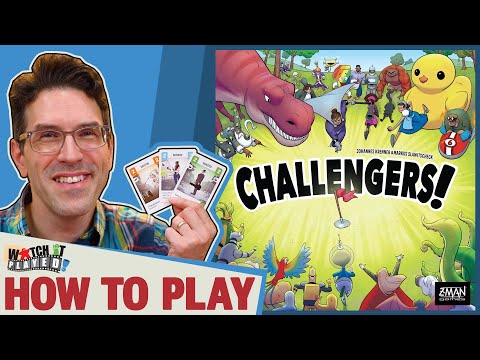



























Challengers! Deep Dive
What the Community Thinks About Challengers!
Challengers! has earned a reputation as a swift, vibrant tournament game that brings players together through simultaneous head-to-head matches. Reviewers consistently praise its elegant approach to scaling, noting that the game plays identically whether you have two players or eight, creating a uniquely inclusive design that maintains competitive energy regardless of table size. The game's core appeal lies in its combination of rapid gameplay, meaningful deck-building choices, and the constant shifting of opponents that keeps every match fresh. From casual players to board game enthusiasts, the community recognizes Challengers! as a modern take on competitive gaming where strategy and chance intertwine.
Core Mechanics That Define Challengers!
Deck Building with Purpose
At its heart, Challengers! is a deck-building game where players progressively assemble their tournament team from a shared market of three card decks: A, B, and C. Each round, players draw five cards from their available deck option and must choose a specific number to keep, with the remainder discarded. The brilliance of this system is that players can later remove any cards from their deck they no longer want, allowing them to sculpt their roster as they gain access to stronger cards. This creates meaningful tension between acquiring new, powerful cards and maintaining deck coherence. The 75 distinct characters with over 40 exciting effects ensure that no two games feel identical, as the cards you pursue shape your entire tournament experience. Players also benefit from being able to redraw once per deck phase if their initial draw disappoints, adding a small layer of control without breaking the core decision-making loop.
Capture the Flag Head-to-Head Combat
Each match unfolds as a simultaneous card-flipping duel where players attempt to capture and defend a flag by playing cards from their shuffled deck. The start player flips a card, establishing an initial power value. The attacking player then reveals cards one at a time until their total power matches or exceeds their opponent's flag carrier's value, at which point they stop and seize control. When the flag changes hands, the losing player's cards are benched in a limited set of six spaces (duplicate cards stack, but unique names occupy separate slots). The match continues with flag exchanges until one player either runs out of deck cards or runs out of bench space, triggering their loss. This back-and-forth design creates genuine tension, as each exchange could spell victory or defeat. The constraints of the bench spaces become strategically critical, forcing players to consider card synergies carefully during the deck phase.
The Challengers! Experience
Rapid Rounds That Sustain Momentum
Challengers! delivers a distinctive experience of compact, high-energy rounds that typically resolve in 30 to 45 minutes total. Match phases are exceptionally brisk, resolving in just a few minutes per pair of players. This speed translates into an unusual advantage for larger player counts, as multiple matches run simultaneously with minimal downtime. Eight players will have four matches happening at once, and because every match executes at roughly the same pace, there is little waiting involved. The result is a game that scales beautifully without becoming bogged down by administrative overhead or player idle time, making it genuinely more fun at higher player counts rather than less.
Multiple Opponents Keep Play Fresh
Across seven tournament rounds, players face different opponents by rotating through the colored perk mats according to their tournament plans. This structure ensures that players build up familiarity with each opponent's deck composition while still encountering new strategic challenges. By the seventh round, when the two highest-scoring players advance to a final match, the winner is crowned tournament champion. The constant seating rotations combined with ever-evolving decks mean that repeat plays offer different strategic landscapes. Reviewers emphasize that watching other players succeed with different deck combinations teaches you new synergies and inspires different draft strategies in subsequent games.
What Makes Challengers! Stand Out
Tournament Structure That Works at Any Player Count
Challengers! solves a problem many designers face: scaling. The game employs paired matches on individual perk mats, meaning that two players, four players, eight players, or even odd counts all play using the same core rules. When you have an odd number of players, an AI bot deck handles the missing player. This design is innovative because it removes the need for scaled rulesets, separate components, or downtime adjustments. Every match is equally valid, and all matches contribute to the final championship tally. Players encounter variety not through rule changes but through changing opponents and decks, maintaining mechanical consistency across all player counts.
Character Diversity Drives Replayability
With character cards spanning wizards, aliens, cats, gangsters, and krakens, each possessing unique effects like attack bonuses, flag possession abilities, and bench synergies, the card pool generates staggering mechanical depth. Effects may trigger only when attacking, only when holding the flag, or immediately upon entering play. Some cards interact with the bench, others with your discard pile, still others with icon matches among your cards. This explosion of mechanical variety means that every card you acquire opens new strategic paths. A player who drafted Newcomers might leverage their cheap duplicates to absorb bench pressure, while another might focus on high-power effects that activate in specific phases. The combination of 75 cards with 40+ effects creates a design space where draft decisions ripple through the entire tournament.
Potential Drawbacks
Luck Plays a Significant Role
Critics note that deck shuffling introduces considerable randomness into the execution phase of each match. After choosing which cards to keep and building your deck, you shuffle and flip cards from the top without the ability to reorder them. Your deck construction phase is strategic, but your match phase is largely determined by draw order. While card effects provide some modulation of power values and there are opportunities to move cards to the top or bottom of your deck, the fundamental element of whether you draw your strong cards or your weak ones remains chance-dependent. Some players view this as fun chaos that prevents analysis paralysis; others feel it undermines the value of the deck-building decisions they carefully crafted.
Limited Decision-Making During Play
Once a match begins, your agency is largely spent. You flip cards one at a time in a predetermined order, and your only interactive moment is usually when a card effect offers a choice, such as moving cards to your discard pile or shuffling a specific card to the top of your deck. Between these rare moments, you are essentially clicking a button to reveal the next card. The meat of the game lives in the deck-building phase, not in the match itself. For players seeking strategic depth in moment-to-moment gameplay, the match phase can feel mechanical and driven by chance. The game trades tactical decision-making for streamlined, snappy execution, which appeals to some players and frustrates others who expect richer in-game choices.
If You Enjoy Challengers!
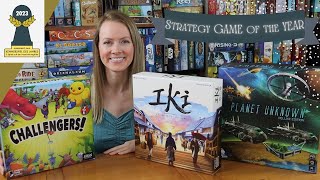
Players who gravitate toward Challengers! often appreciate games like Iki, a rondelle-based artisan trading game with intricate worker placement, or Planet Unknown, a polyomino tile-laying puzzle that rewards creative spatial planning. War, the classic card game of matching card values, shares Challengers!' mechanical DNA of drawing and comparing numbers, though War lacks the deck-building and card effects that elevate Challengers!. King of Tokyo offers similar press-your-luck mechanics and dice-roll variance, appealing to players who enjoy probabilistic outcomes. Quacks of Quedlinburg similarly balances controlled deck-building with the unpredictability of draws. If the competitive tournament structure appeals, players might explore other head-to-head games that use rotating matches or championship brackets to determine a final winner. Ultimately, Challengers! sits at the intersection of accessibility and novelty, making it a natural gateway for players transitioning from simple games to moderately complex ones.
What Reviewers Are Saying
"The really cool thing about this game is play is simultaneous, so no matter how many players you have all the way from two up to eight, which is a really huge range, the game plays the same because everything is simultaneous."
— Tabletop Tolson
"It has such a lovely feel, it scales incredibly well between two and eight players, even if you have an odd number of players there is an AI deck that you can play against."
— Tabletop Tolson
"The game comes with hundreds of cards, and it's really a deck builder. The deck you're building is essentially a little battle deck, and there is just so much depth created by the combination of characters you recruit into your decks and their various effects."
— JestaThaRogue