

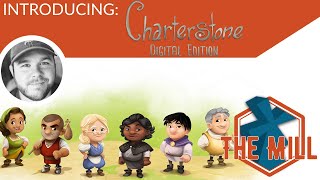











The prosperous Kingdom of Greengully, ruled for centuries by the Forever King, has issued a decree to its citizens to colonize the vast lands beyond its borders. In an effort to start a new village, the Forever King has selected six citizens for the task, each of whom has a unique set of skills they use to build their charter.
In Charterstone, a competitive legacy game, you construct buildings and populate a shared village. Building stickers are permanently added to the game board and become action spaces for any player to use. Thus, you start off with simple choices and few workers, but soon you have a bustling village with dozens of possible actions.
Your journey through Charterstone's many secrets will last twelve games, but it doesn’t end there. Your completed village will be a one-of-a-kind worker-placement game with plenty of variability.
Charterstone released in the US/Canada on December 12, 2017 (the rest of the world received it slightly earlier).
Mechanics (from transcript analysis)
Video topics + discussion points
Quotes (from this video)
- um I love this game
- I like having low numbers in the crates
- this is our first time so bear with us
- the marks challenge doesn't have any of the promo Realms but Carol and I do have them all
References (from this video)
- strong legacy framing with two-player viability
- cute art style
- campaign length can be long
- repetition can set in without extensions
- legacy village-building with campaign progression
- early empire-building in a cooperative campaign puzzle
- campaign-driven with evolving rules and components
Mechanics (from transcript analysis)
- legacy — unlock new rules and components across envelopes
- Legacy game — unlock new rules and components across envelopes
- Resource management — build and develop your settlement to score
- work replacement / resource management — build and develop your settlement to score
Video topics + discussion points
Quotes (from this video)
- it's the long game versus the short game
- it's a really fun dice puzzle
- the depth grows the more you play
- it's a legacy you can actually finish in a campaign
References (from this video)
- narrative-driven progression
- reacts to player choices with lasting changes
- requires repeated play with the same group
- may feel tedious if played with inconsistent sessions
- Legacy campaign with evolving rules
- A living, evolving village-building campaign
- Narrative-driven, long-form campaign
- Imperial Assault
- Zombie Teens Evolution
Mechanics (from transcript analysis)
- legacy / campaign progression — Rules and components evolve as boxes are opened and envelopes are read; board and components change over time.
Video topics + discussion points
Quotes (from this video)
- every card should work in exactly the same way and the simplest way of doing that is saying that you play the card once you get the benefit and then you discard the card
- it's a streamlined system so every card should work in exactly the same way
- the goal in a game of hive is to surround the queen bee
- you can see it laying out on the map as things get shut off by the other players
- there is something really satisfying and unusual about that experience
- a legacy game once in a while played with my wife
- it's basically a form of set collection... many different variations of sets which create different words
References (from this video)
- Deep personalization through naming and character-driven moments
- Long-term world evolution feels alive and personal
- Strong design philosophy around experience-first play
- Legacy framework can be heavy and commitment-heavy
- Longevity may outpace some players’ interest
- Community development, village management, and evolving narratives
- Legacy-style competitive/shared world-building
- Player-driven story through persistent board state
- Above and Below
- Near and Far
- Empires of the Void II
Mechanics (from transcript analysis)
- action drafting — Actions influence long-term development and story arcs
- Legacy game — Players impact a shared board that evolves over campaigns
- Legacy-style character and board progression — Players impact a shared board that evolves over campaigns
- Worker/action selection with world-building — Actions influence long-term development and story arcs
Video topics + discussion points
Quotes (from this video)
- when I'm in the game I want to feel like the game itself has a mind of its own and it is operating like its own organism
- experience is one of the most important things to me about any game no matter what it is
- these event cards don't poke you with a stick directly but what they do is they create some sort of event that is going on in the universe based on that planet
- the game feel alive
References (from this video)
- Satisfying sense of progression and tangible legacy feel
- Solid component quality and clear thematic arc
- Heavy commitment for first-time players
- Legibility of long-term plan can be challenging for some groups
- legacy-style city construction and worker placement
- a village-building magistrate simulation that evolves over time
- progressive world-building with evolving rules
- Gloomhaven
- Seafall
Mechanics (from transcript analysis)
- legacy-style progression — The game evolves as players complete campaign cells and unlock content.
- worker placement — Players place workers to take actions across a growing board.
Video topics + discussion points
Quotes (from this video)
- Artwork does have a big impact on my interest in playing the game.
- I bought games just for artwork that I've never played.
- Santorini doesn't turn me off, and Arcadia Quest doesn't turn me off exactly but I would prefer it to be more realistic in general.
- I think games with Xavier Colette his kind of artwork he did the a lot of the dixit stuff.
- I love getting up and coming down here and shooting a video and editing a podcast and developing content for the next show.
- quit drinking soda it's poison.
- Feast for Odin is a Viking-era title that rewards careful planning.
References (from this video)
- Deluxe components and reprint materials highlighted
- Potential to use resources for other games (e.g., Scythe).
- Whole-campaign timing makes it hard to review or present legibly on channel
Mechanics (from transcript analysis)
Video topics + discussion points
Quotes (from this video)
- Kia ora Lotou and welcome to my shelf of Shame update for July 2019
- it's ballooned up to about 25 at the moment
- this is the mechanically most complex game in the set
- I really should give it at least one go over
- this ties into that whole getting a campaign together exactly we want it to play the whole damn thing
References (from this video)
- Innovative legacy mechanics
- Replayability through evolving board
- Campaign length can be long
- Legacy progression; permanent changes to the game world
- Fantasy city-building in a competitive, evolving world
- Campaign-driven, story-like progression
- Scythe
Mechanics (from transcript analysis)
- engine_building — City-building progression with evolving capabilities
- legacy_gameplay — Permanently changes the game state as you play and progress the campaign
- worker_placement — Action selection and resource management via workers
Video topics + discussion points
Quotes (from this video)
- Alzheimer's is the leading cause of dementia and I want to support Research into finding a way to treat it
- the money from the auction goes to Alzheimer's Research UK
- it's not going to be easy to win we're competing against the other auctions
- what's this Jamie Stigmar guy
- you can't change my name though because I'm real
- the winning bidder of the charity auction will have a character named after them in one of John's future videos
- the channel with the most thumbs will get a copy of Jam's hotly anticipated upcoming game charterstone
- oh yes wonderful
References (from this video)
- Accessible entry into legacy genre with a modular city-building feel
- Great for group storytelling and long-form play
- Beautiful production and thematic cohesion
- Requires long-term commitment and frequent sessions
- Rules experimentation can slow early play
- player-driven city-building with ongoing territorial development
- A shared village-building legacy game embedded in a kingdom-building arc
- deliberate, ongoing campaign with evolving rules and boxes
- SeaFall
- Game of Thrones Second Edition
Mechanics (from transcript analysis)
- Euro-style worker placement and engine-building — Players place workers to gain resources, build, and advance objectives
- legacy / campaign progression — Permanent changes to the board and components across sessions
Video topics + discussion points
Quotes (from this video)
- I think it's probably my first experience with tinkering with game design probably when I was in sixth grade.
- "a freaking masterpiece of dudes on a map games"
- it's just a phenomenal day and something I'll always remember fondly it was perfect
- I still have that sitting around at my home
- the eyepatch being worn that we had snuck into this game largely because it made sense in the game
References (from this video)
- innovative legacy mechanism
- strong art direction
- complex rule set for some players
- Santorini
Mechanics (from transcript analysis)
- engine-building / legacy style — Players build out a shared village by drafting cards and placing workers.
Video topics + discussion points
Quotes (from this video)
- We wanted to just have become like this entity that would make games and be very awesome at switching styles.
- passion first
- we like freedom but sometimes after working on a project with a lot of freedom, it's nice to have things laid out and know where you're going.
- we have a very little sense of ego... I'm going to feel equally proud of the end product if she touched it, if we worked both of us on it.
- we want to work as a couple on the same games together
References (from this video)
- evolving board with cooler actions
- campaign integration
- cute whimsical art
- high mental load to remember campaign progress
- time-consuming not finishing backlog
- legacy worker placement with evolving board
- Medieval-like village building with a shared campaign
- story-driven campaign progression
Mechanics (from transcript analysis)
- legacy campaign — Campaign progression alters rules and board over time with one-time use cards and tuck boxes
- Legacy game — Campaign progression alters rules and board over time with one-time use cards and tuck boxes
- worker placement — Place workers to take actions and develop the village
Video topics + discussion points
Quotes (from this video)
- charter stone is a legacy worker placement game
- the art is amazing
- it's an absolutely underrated gem of a game
- rolling right to game night
- the parfait of puzzles
References (from this video)
- Built-in online lobby facilitates remote play
- Longer sessions without occupying real table space
- Mysterium
Mechanics (from transcript analysis)
- Legacy-like progression; communal drafting — Shared campaign with autonomous decisions; supports larger groups via digital lobby and asynchronous play.
- Legacy-style progression; asynchronous online lobby — Built-in online Lobby enabling larger-group play without leaving the app; asynchronous play expands duration without table space.
Video topics + discussion points
Quotes (from this video)
- All of our games must play from at least one to five players but a lot of our games also play up to six players.
- We want the heights of six players to be accessible to solo players, partners, and larger game nights alike.
- Simultaneous play keeps the game moving and prevents downtime from stalling the table.
- Trick-taking is a great example of short, simple turns that scale well with more players.
- Planet Unknown is a simultaneous game that plays well up to six players out of the box.
References (from this video)
- satisfying sense of discovery and board customization
- great for long-term campaign play with evolving mechanics
- requires long-term commitment and dedicated group
- some players may find the legacy progression restrictive
- legacy Euro legacy game about building a village over time
- medieval fantasy village with evolving architecture
- building narrative shaped by crates and stickers
Mechanics (from transcript analysis)
- card-driven actions and area influence — Players collect cards that enable actions and influence village growth.
- legacy progression — Players open crates and add stickers to the board, changing gameplay across sessions.
Video topics + discussion points
Quotes (from this video)
- one of the biggest things you know as being a good game designer you want to give players interesting choices
- Gamers or people in general they want to feel rich they want to feel powerful they want to feel smart
- there's value in playing terrible games
- you can create a system that can be re-themed to different things to make more money
- it's like watching film... you break it down to see how they do it
- this is a monumental feat of game design
References (from this video)
- long-term campaign feel
- variable board layout across plays
- can be heavy for casual sessions
- requires commitment of multiple sessions
- personalized campaign with evolving board
- legacy-style worker-placement village-building
- story-driven expansion across sessions
Mechanics (from transcript analysis)
- legacy-style expansion — board evolves across campaigns with new components
Video topics + discussion points
Quotes (from this video)
- Canvas is a really cool hand management set collection game with these really awesome transparent painting type cards that you layer on top of one another to score points
- the art is just absolutely amazing
- Wingspan continues to be one of my favorite games of all time
- this game is perfect for anyone who's interested in escape rooms or ciphers and puzzles
- it's really easy to get to the table which is one of the reasons why we played it so often
References (from this video)
- Faithful adaptation
- Excellent sense of discovery and progression
- New mechanics unlocked each round
- Engaging for committed play groups
- Very complex and busy interface
- Confusing if you step away from the game
- Not suited for solo play
- Difficult to plan moves
- Town building
- Community development
- Discovery mechanics
Mechanics (from transcript analysis)
Video topics + discussion points
Quotes (from this video)
- These are 15 new titles, well new to me at least
- This list is presented in order from my least favorite to most favorite of these games
- Functional is better than good looking when it comes to a board game adaption
- The captain's dead is one of my all-time favorite games
- Spirit island is my favorite game of all time so of course it's going to end up at the top of this list
- If you want a good filler game that's just dice chucking and logic puzzles and it's a little bit silly, definitely check out dicey dungeons
References (from this video)
- Expansive world-building
- High replayability across sessions
- Long play sessions
- Teaching complexity
- Campaign-driven expansion in a persistent world
- Legacy city-building with a shared universe
- Evolving board through scenarios
- My City
Mechanics (from transcript analysis)
- legacy campaign — progressive unlocking of rules and components; actions shape the world
- Legacy game — progressive unlocking of rules and components; actions shape the world
Video topics + discussion points
Quotes (from this video)
- Onboarding is not about just making that first sale; it's about creating a user who continues to engage with your product in the long term.
- Strong promises will motivate players to tolerate the arduous process of learning rules.
- The box size, the price, where it's bought, the artwork, the setting — these are pivotal factors that determine whether that game ever comes off the shelf.
- Brand advocates are everywhere in board gaming; satisfied gamers will share your product with friends and family.
- Kickstarter is a powerful way to create brand advocates through active backer engagement.
References (from this video)
- Engaging concept with evolving rules
- Interesting city-building through legacy structure
- Legacy changes create ongoing learning and reflection challenges
- Group prefers learning curves over ongoing splinters
- building a village through a campaign with evolving rules
- city-building within a shared legacy campaign
- fading and evolving world with recurring touches
- Pandemic Legacy
- Gloomhaven: Jaws of the Lion
Mechanics (from transcript analysis)
- cooperative worker-placement-lite — players cooperate to progress the city development
- deck-building-lite — cards provide actions and influence future rounds
- legacy — legacy-style progression with permanent changes to components and rules
Video topics + discussion points
Quotes (from this video)
- 2020 was the year that i finally decided i don't like legacy games
- if you like discovering new games and if you like playing a new game every week that's fantastic
- the experience for paradise lost was ... terrible