/pic3239104.jpg)
/pic1421173.jpg)
/pic3119514.jpg)
/pic3239104.jpg)

























Citadels Deep Dive
What the Community Thinks About Citadels
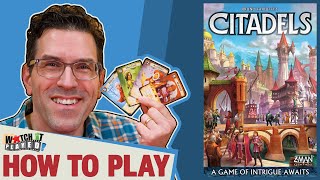
Citadels emerged as a modern classic that divides opinion sharply within the board gaming community. Some reviewers view it as a groundbreaking design that pioneered role-selection mechanics, while others feel the game's competitive bite has dulled with age. The consensus acknowledges its elegance and historical importance as a defining game from the year 2000, though players frequently struggle with the game's capacity to drag on longer than its elegantly simple ruleset suggests.
Core Mechanics That Define Citadels
Role Selection and Hidden Information
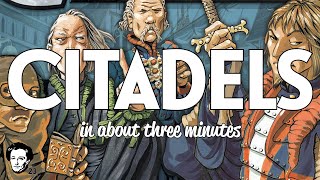
The heart of Citadels lies in its deceptively elegant role selection mechanism designed by Bruno Faidutti. Each round, players secretly draft character cards numbered one through eight, creating a shifting turn order that determines when each player can take their action. No player knows who has selected which role until characters are revealed in sequence. This creates persistent uncertainty about whether your chosen character will be available to activate your turn, or if someone else has selected the assassin with you in their crosshairs. The eight core characters include the assassin who skips a player's turn, the thief who steals gold, the magician who swaps or redraws cards, and the architect who can build up to three districts in a single turn. Each character grants unique abilities that reward clever timing and punish poor predictions about opponent behavior.
City Building Through Incremental Growth
Citadels wraps its competitive bidding around a straightforward city-building loop where players convert gold into district cards representing buildings. Players begin the game with four random building cards and two gold coins. On each turn, a player may collect two gold from the bank or draw two district cards and keep one. They may then spend gold to build one district from their hand unless they hold the architect card, which allows up to three buildings in a single turn. The game ends when any player completes their eighth building, triggering final scoring. Victory points derive primarily from the gold value of completed districts, with bonus points for collecting all five colors of districts and for being the first to complete eight buildings. This structure means efficient building matters more than rushing toward eight buildings, creating a strategic tension between quantity and quality.
The Citadels Experience
Confrontational Play and Social Deduction
Reviewers consistently note that Citadels shines as a confrontational game where players must navigate both strategic decisions and social dynamics. The hidden role selection creates frequent moments of uncertainty and strategic guessing. When the thief reveals themselves after the assassin's victims have been announced, the table erupts in discussion and blame. When the warlord destroys someone's carefully constructed buildings, accusations and grievances flow freely. Several reviewers note this game frequently generates visceral, angry reactions from players. The confrontational nature emerges not from dice rolls or cards drawn, but from the deliberate choices other players make to target you. While this creates memorable moments, some reviewers found it exhausting or felt they had become targets through no fault of their own.
Quick Rounds and Replayability
Citadels plays fast once players understand the character abilities. Reviewers praise the game's capacity to complete rounds in 30 minutes, making it ideal for evenings when players want multiple games or a quick diversion between heavier titles. However, several reviewers discovered that the actual runtime depends heavily on player count and player experience. At four to six players with experienced gamers, rounds move briskly. At seven or eight players with newer players, or in any game featuring the warlord destroying buildings and triggering endless revenge cycles, games can stretch toward an hour. The Broken Meeple notes it works great with five or six players and remains an "evergreen game that holds up well," while others caution that the wrong group size can undermine the experience entirely.
What Makes Citadels Stand Out
Elegant Scaling Across Player Counts
Bruno Faidutti's design achieves remarkable scaling across player counts from two to eight. The game includes variant rules for different player counts that adjust how roles are selected and how many face-down roles go into the middle of the table. This ensures that the core uncertainty and bluffing elements remain intact whether playing two-player, three-player, or the ideal four to six player range. The game's greatest strength lies in how the variable player powers and hidden information create a puzzle where you must constantly reassess your strategy based on who might have which role. Several reviewers praised how the point system rewards building high-value districts rather than rushing to eight buildings, creating multiple viable strategies rather than forcing all players toward a single approach.
Exceptional Value with Bonus Content
The base game ships with eight core character cards but includes ten bonus characters, effectively packaging nearly an expansion's worth of content in the box. This extraordinary value proposition impressed reviewers, with BoardGameBollocks noting that receiving roughly a third more characters and buildings at no additional cost represents phenomenal value for money. Recent reprints have refreshed the game's artwork with tarot-style cards and improved production quality compared to the original 2000 edition. The bonus characters introduce variations like the witch and the emperor, deepening strategic variety without overwhelming newcomers playing with just the core eight characters.
Potential Drawbacks
Pacing Issues and Game Length Variance
Despite its elegant mechanics, Citadels suffers from pacing problems that intensify with player count. Several reviewers noted the constant rhythm of stop, draft characters, announce turn order, resolve characters one by one creates a stuttering cadence rather than smooth flow. The warlord's ability to destroy buildings can extend the game unexpectedly, as destroyed buildings must be rebuilt, effectively resetting progress and adding rounds to games that appeared close to ending. Chairman of the Board recalls the game overstaying its welcome, noting that at certain player counts the game "drags on over time and can overstay its welcome." This makes it difficult to recommend for groups that need predictable playtime.
Targeting Frustration and Revenge Cycles
The hidden role selection creates situations where players can become trapped in revenge cycles through no strategic fault of their own. The assassin and thief are particularly harsh on targeted players, and some groups found the cumulative effect of being repeatedly targeted created resentment. Adam in Wales describes actively refusing to play the game again because "cards destroyed plans unexpectedly" and "other players could lengthen game." The game's core strategy can feel railroaded when a dominant approach emerges, reducing the meaningful decision space. When one player is consistently targeted, the social element transforms from playful deduction into genuine frustration, making group composition crucial to a positive experience.
If You Enjoy Citadels
Players seeking similar experiences should explore Coup for quick bluffing with heavier social deduction, Love Letter for light-hearted role-based elimination, and Masquerade for social deduction with variable player powers. Mission Red Planet offers confrontational play with role selection in a science fiction setting. Small World provides direct confrontation without hidden roles. Bohnanza offers trading and negotiation without elimination. San Juan provides pure building with more predictable pacing. For those wanting the role-selection mechanic specifically, consider Puerto Rico, which builds deeper strategic layers around the concept Citadels pioneered.
What Reviewers Are Saying
"Citadel's strength is its social deduction and figuring out what role to take that doesn't end with you being robbed or murdered. The best thing about this game is when the Assassin has a 50/50 chance of getting you and they still miss."
— 3 Minute Board Games
"It's a groundbreaking classic that redefined what could be done with these role selection games. The decision of am I gonna take a calculated risk or is that calculated risk actually just a foolhardy gamble is a really nice tussle you've got to come to terms with when you're playing this game."
— BoardGameBollocks
"This is one of those games where you start off a little bit slow, get set up, and then boom you run away with it. It's a really cool neat little game and it's Citadels. A classic game from like year 2000 that still goes strong every time they've brought out an expansion or redone version I've always been keen to get it."
— The Broken Meeple