











































Cities Deep Dive
What the Community Thinks About Cities
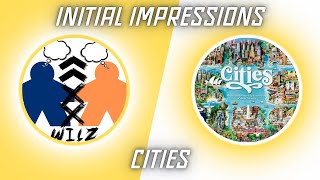
Cities, the 2024 tile-placement game from D Games, has quickly earned recognition as a standout release. Watch It Played introduces it as a new title from Steve Finn and Phil Walker-Harding, and kovray ranks it among the best gateway games of the year. Reviewers praise it for distilling city-building into an elegant, accessible experience that challenges both newcomers and seasoned gamers. What makes Cities resonate is not complexity but the tension baked into every decision: which action to prioritize when choices are limited, and how timing shapes your path to victory.
Core Mechanics That Define Cities
Worker Placement and Action Sequencing
Cities uses worker placement stripped to its essence. Each round players place workers to claim action types: collecting city tiles, choosing building types, taking objective cards that define scoring, and placing features on their grid. The genius lies in the ordering: you will take all the actions each round, but the sequence you claim them determines what remains for opponents. kovray emphasizes that this is the heart of the game, hoping someone does not grab what you want while you prioritize something else. Greedily taking buildings first might cost you the tiles or objectives that complete your plan, so priority becomes strategy and timing becomes the heartbeat.
Tile Drafting and Spatial Composition
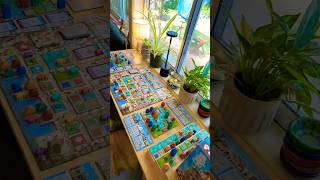
Cities are built on a compact grid of tiles, with players progressively adding features to maximize scoring. Each city grows as a tableau, and cards provide multiple paths to points through compound scoring: forming districts, arranging complementary tiles, satisfying shared objectives, and completing personal goals. kovray notes that the box offers several different cities, each with its own scoring conditions and spatial constraints, so no two games feel identical. That variability keeps the puzzle engaging across repeated plays without adding rules overhead.
The Cities Experience
The Gateway Classic Feeling
Cities excels at welcoming players new to modern board games while still rewarding deeper thinking. kovray pitches it as a great way to introduce worker placement to anybody, noting it runs around forty-five minutes and that you take all four actions every round, so no one feels left behind. The decision space never overwhelms despite the layered scoring. Casual players enjoy the tactile satisfaction of building a tableau, while hobby enthusiasts wrestle with placement geometry and scoring optimization, and both experiences feel complete.
Interactivity Through Limited Resources
What truly animates Cities is the tension of scarcity and order. Because each action space is limited, the first player to claim a spot controls what others can access that round. This produces moments of delightful frustration: you spot the perfect buildings for your emerging district but realize you must choose between that action and the tiles you also need now. kovray frames the appeal as the constant strategy of reading what others want and timing your own grab. The game punishes neither greed nor caution definitively; it rewards planning and adaptability.
What Makes Cities Stand Out
Elegant Design in Service of Theme
Cities succeeds because every mechanic reinforces the city-building narrative. Choosing buildings before tiles because you spotted a synergy feels thematic rather than arbitrary. Reviewers praise how the production, with its colorful tiles and clear iconography, supports decision-making instead of cluttering it. The game looks inviting without overwhelming newcomers, and the growing city gives immediate, satisfying feedback on progress, which kovray describes as a love letter to the gateway games that bring new people into the hobby.
Replayability Through Variable Cities and Objectives
The inclusion of several distinct cities turns Cities from a single puzzle into a modular experience. Each city shifts the scoring emphasis, forcing players to adapt their strategy: one may reward tight clustering, another sprawling districts. kovray notes this variety is substantial enough to keep the game fresh across many plays, and combined with the randomized objectives each game, it generates emergent situations where players pivot mid-game and discover new synergies.
Potential Drawbacks
Limited Ceiling for Heavy Strategists
While Cities welcomes beginners, its strategic ceiling sits below heavier worker-placement games. The action space is tight but involves fewer variables than its more complex cousins, and experienced players can solve the core puzzle relatively quickly, often converging on similar patterns. The luck of which objectives appear adds randomness that skilled play cannot fully mitigate. For players who want mastery to dominate luck completely, Cities may feel a touch too forgiving.
Downtime and Player Count Sensitivity
Cities plays in roughly forty-five minutes, but that can stretch when teaching newcomers or with players prone to analysis paralysis, since the sequencing creates turns where some players wait on pivotal decisions from others. The interactive tension of blocking an opponent's action also softens at two players, where coverage matters less. Some reviewers suggest Cities shines brightest at three or four players, which is worth weighing for groups that usually play in pairs.
If You Enjoy Cities
Players who gravitate toward Cities often appreciate Azul for its tile-drafting elegance and Splendor for action selection under constraints. The spatial-puzzle satisfaction recalls Cascadia, while the accessible-yet-deep design shares DNA with Carcassonne. For those drawn to the city-building theme specifically, Suburbia offers a richer strategic territory at the cost of more rules overhead. Cities occupies the sweet spot where new and veteran players meet, making it an ideal bridge between gateway games and the hobby's deeper waters.
What Reviewers Are Saying
"From D Games we have Cities, a new two to four player tile placement game from Steve Finn and Phil Walker-Harding, which all makes me very happy. You've been tasked by the city council to put together a plan."
— Watch It Played
"The simplicity in that action selection, although it seems quite simple, there is so much strategy that goes into it. Knowing and hoping that someone doesn't take what you want while you prioritize something else is the heart of this game."
— kovray
"This is a great way to introduce worker placement to anybody. It is the longest game in the list we've provided, but it only takes about forty-five minutes to play, and the nice thing is you're taking all four actions every round."
— kovray