/pic1340620.jpg)



City of Horror Deep Dive
What the Community Thinks About City of Horror
City of Horror is a polarizing semi-cooperative zombie survival game that draws strong reactions from the board gaming community. While reviewers like Board Game Replay and Shelf Side praise it as a unique take on the zombie genre, others such as Tabletop Turtle and Actualol find its blend of negotiation and voting mechanics divisive. The game works best with groups comfortable with backstabbing and dark humor, as the core loop involves voting to sacrifice one of your characters whenever zombies overrun a location. This premise generates the game's most memorable moments for those who embrace it, but can feel mean-spirited to players who prefer cooperative play.
Core Mechanics That Define City of Horror
Voting and Character Sacrifice
The heart of City of Horror lies in its voting system. Whenever a location reaches its zombie capacity, players present at that location must vote on which character gets fed to the undead. Each character a player controls grants one vote, giving players with multiple survivors significantly more power than those hanging on with one character. This creates a natural tension: keeping more survivors alive makes you a voting threat, but losing characters weakens your position. The first player can break ties, creating crucial moments where seat position matters as much as negotiation skill. Before the vote, players can use action cards and character abilities to reduce zombie counts and avoid the sacrifice entirely, or they can negotiate with other players, offering deals and bribes to swing votes in their favor.
Resource Scarcity and Location Abilities
Action cards function as the game's primary currency for survival. These limited cards let players kill zombies, move survivors between locations, or manipulate the vote itself. The game creates constant pressure because cards are scarce; spending them early for safety leaves players defenseless later. Each location on the board offers special abilities. One spot lets players peek at the next invasion, the hospital provides antidotes essential for endgame scoring, and another lets players swap action cards. Smart location control and resource management separate experienced players from novices. Antidote tokens are particularly critical: every survivor needs one to score victory points at the end. This scoring condition means negotiating for antidotes often matters more than pure survival.
The City of Horror Experience
Negotiation as the Core Loop
Unlike most zombie games that focus on defeating threats, City of Horror centers entirely on player interaction and deal-making. When a zombie attack looms, negotiation begins immediately. Players pitch offers to swing votes: an antidote in exchange for a vote elsewhere, or help surviving this turn for a card next round. The game creates organic moments of alliance and betrayal. A player sitting comfortably might suddenly target the leader to level the playing field. Weak players might band together against a front-runner, only to fracture when the threat passes. Action cards become negotiating chips, and even the threat of using a hide card shapes deals. The entire table becomes a marketplace of favors, promises, and desperate bargains.
Chaos and Unpredictability
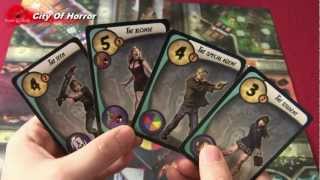
Action cards and character allocation introduce luck that keeps every game feeling fresh. Players draw random characters at the start and draw action cards from a limited deck throughout the game. Early bad luck or unfortunate card draws can leave a player without defensive options, forcing them into precarious positions. Zombie invasions happen in an unpredictable sequence, meaning the board might be calm one moment and overrun the next. This chaos prevents the game from becoming purely tactical; players must adapt, negotiate on the fly, and sometimes sacrifice characters simply because circumstances forced their hand. The pressure mounts visibly as zombies accumulate on the board and players watch their survival options dwindle.
What Makes City of Horror Stand Out
A Unique Zombie Spin
Most zombie board games focus on fighting undead hordes. City of Horror flips the script entirely. The zombies function as environmental pressure that forces player conflict rather than a cooperative challenge to overcome. This distinction is fundamental. Players aren't working together against a shared enemy; they're using the zombie threat as leverage in a game of social maneuvering. The voting mechanic perfectly captures the zombie apocalypse's human element: scarcity and survival instinct drive people to make terrible choices about each other. Reviewers note this approach feels far more thematically faithful to zombie fiction, which has always been about exploring how humans behave when civilization collapses, not about tactical zombie combat.
Moments of Dark Absurdity
The game generates hilarious, uncomfortable moments that linger long after play ends. Debates erupt about sacrificing an elderly character with a walker, or a loudmouth whose special ability attracts zombies. Players experience genuine guilt about voting someone out, yet the survival stakes make it feel necessary. This dark humor emerges organically from the mechanics and theme; nobody feels forced to laugh. The game becomes memorable not for optimal strategies but for the ridiculous arguments about morality that feel both awful and genuinely funny. A character who screams and attracts zombies becomes a running joke. Every game generates its own story of betrayals, unlikely alliances, and desperate last stands.
Potential Drawbacks
Group Dependency and Meanness
City of Horror requires a specific friend group to shine. It demands players comfortable with negotiation, backstabbing, and the emotional stakes of deciding to throw another player's character to the zombies. In groups where someone always targets the same player, the game stops being fun and starts feeling genuinely mean. The game works best when alliances shift naturally based on table position and current threats, not personal grudges. Players also need to accept that negotiation feels inherently unfair. A player with a strong position can make unreasonable demands, and weaker players may feel they have no choice but to capitulate. For groups preferring cooperation or balance, City of Horror's cut-throat economics become frustrating rather than engaging.
Action Card Scarcity and Hidden Information
The action card economy is brutally tight. Cards provide the only reliable way to avoid voting, kill zombies proactively, or control movement. Early-game abundance hides how desperate players become by the later rounds. New players often squander cards early, learning only through failure that conservation matters. The game also obscures key information. Players don't know when invasions will hit specific locations or what action cards other players hold. Some randomness serves the theme well, but the action card deck can feel swingy. A player unlucky enough to draw weak cards when zombies arrive has limited recourse. The game offers a draft variant to minimize this luck, but many casual groups never discover it, leading to sessions where card luck outweighs player skill.
If You Enjoy City of Horror
Players drawn to City of Horror typically enjoy games where social interaction and negotiation dominate mechanics. Dead of Winter offers another negotiation-heavy zombie experience with deeper asymmetric goals and a potential betrayer, making it thematically richer for players who want emergent narrative. One Night Ultimate Werewolf provides faster social deduction in a zombie-free setting, appealing to those who love the negotiation without committing to multiple rounds of zombie management. Last Night on Earth gives a more traditional zombie experience with similar B-movie aesthetics but relies on roll-and-move mechanics rather than negotiation, so it appeals to players wanting theme without heavy player interaction.
What Reviewers Are Saying
"It's chaotic, the pressure mounts, and you have to use your diplomatic charms, strategy, and luck to come out on top in City of Horror. It might not be for everyone, but if you like debates, manipulating others, and squeaking by silently like one of our players did, this one might be for you."
— Board to Death TV
"This game is pure player interaction. There's so much of it. At any time your character's about to die, you're going to be pleading for your life, you're going to be trading cards, you're making all kinds of deals."
— Board Game Replay
"What makes the game hilarious is when the debate comes up over who's going to get kicked out. People are like, this old lady with the walker is holding us up, we gotta kick her out, and you feel horrible. Everybody's just ragging on you for getting rid of this poor old lady. It's absurd that this is what's happening in this game."
— The Secret Cabal Gaming Podcast