/pic374847.jpg)
/pic3193295.jpg)
/pic8398991.png)
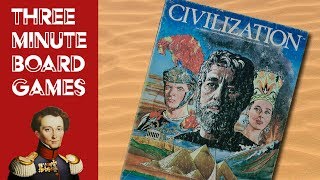
Civilization is a game of skill for 2 to 7 players. It covers the development of ancient civilizations from the invention of agriculture c. 8000 B.C. to the emergence of Rome around the middle of the third century B.C. Each player leads a nation of peoples over a map board of the Eastern Mediterranean and Near East as they attempt to carve a niche for themselves and their culture.
Although battles and territorial strategy are important, this is not a war game because it is not won by battle or conquest. Instead, the object of play is to gain a level of overall advancement involving cultural, economic, and political factors so that such conflicts that do arise are a result of rivalry and land shortage rather than a desire to eliminate other players. Nomad and farmer, warrior and merchant, artisan and citizen all have an essential part to play in the development of civilization. It is the player who most effectively changes emphasis between these various outlooks who will achieve the best balance and win.
(from the Introduction to the Avalon Hill edition rulebook)
This game has a huge following and is widely regarded as one of the best games about ancient civilizations. Each player takes on the role of leader of an ancient civilization, such as the Illyrians or Babylonians. Your task is to guide your people through the ages by expanding your empire and using its proceeds to finance new technological advances, such as Literacy, Metalworking, or Law. The advancements help your civilization better cope with its problems as well as help bring new advancements.
Civilization is widely thought to be the first game ever to incorporate a "technology tree," allowing players to gain certain items and abilities only after particular other items were obtained. This influential mechanism has been adopted by countless other board games, card games, and computer games.
This page includes videos and mentions from the whole Civilization family. Drill into a specific game below.
/pic374847.jpg)


CVlizations - How To Play
- Epic and grand scope
- Coherent theme and mechanics
- High immersion factor
- Dramatic swings in gameplay due to disasters and mismanagement
- No player elimination
- Contains elements like conflict resolution, trading, and set collection
- Extremely long playtime is the biggest detractor
- Takes several plays to understand mechanics
- Civilization Development through Antiquity
- 4000 BC, Fertile Crescent and Mediterranean
- Twilight Imperium 4
- Civilization: A New Dawn
Mechanics (from transcript analysis)
- Area Control — move any number of units one region each
- Combat — combat occurs after all players have moved
- economic engine building — build infrastructure
- Player Elimination — it has no player elimination
- Set Collection — collecting sets of trade goods is key to Victory
- Tech Tree — to buy technology you must use trade cards and discounts
Video topics + discussion points
Quotes (from this video)
References (from this video)

- Has been on the shelf for years, never been played.
- Difficult to get to the table due to playing with casual gamers who prefer shorter games.
Mechanics (from transcript analysis)
Video topics + discussion points
Quotes (from this video)
- I feel like my biggest achieve the thing I feel most kind of happy about having done is I think it would probably be when I see pictures or hear about online people playing sushi go like all over the world and say that the game has like yes so many different types of people in so many different age groups so many different ashin a letís yeah are enjoying sushi go around more that I think is the thing that gives me the most fulfillment
- A lofty aim is to you know create a new classic you know a game that people are playing in 50 years
- I think the middle part where you're just churning through like that tests and trying to get it to work and it really just feels like work you know and you've just got a repeat and repeat and change and repeat that process is where you can get stuck
- I find that if I have multiple games stuck in that same period being able to jump between them helps keep my brain operating
- Often you designers start with something that's quite complex and I kind of my advice often why not try to make a card game just with one deck of cards first
References (from this video)

- Influential game in its own right
- Early ideas of Eurogames present
- Hasn't aged particularly well
- Playtime is insanely long by modern standards
- Not likely to work well in the modern market
- Too long for the average gamer
- Historical Development
Mechanics (from transcript analysis)
- Diceless combat — Features combat without dice.
- Engine Building — Players build up their capabilities over time.
- Set Collection — Includes set collection as a mechanic.
- Technology advancement — Players advance through technology trees.
- Trading — Incorporates trading between players.
Video topics + discussion points
Quotes (from this video)
- Hunter is another one of those games we ended up playing a lot at University mostly while drinking
- Hunter has several problems it takes a lot longer to play than it should for what it is especially when you're doing the coup those can drag on quite a long time and also fundamentally it's pretty racist
- I think the hunter idea of a Banana Republic itself is pretty dated but the idea of a corrupt government where players of different office members competing for positions and stockpiling money definitely has potential just there's got to be a better way to interpret it
- Cosmic Encounter is still going strong and that is an achievement and a half
- it's core idea of a simple gameplay element Modified by a whole bunch of variable Powers has had a profound influence on all of gaming and unlike a lot of designs from this period it still holds up pretty well today
- so happy birthday to me for 42 years old today here's to 42 more
- if you want to do the same thing yourself just go to board game geek click on advanced search and search by year published range and just fill in the year and feel free to post your list Below in the comments
References (from this video)
Mechanics (from transcript analysis)
Video topics + discussion points
Quotes (from this video)
- So today Forex is best described or classified as a marketing term it's a term that people are using to sell games to give you an idea of the kind of experience that you can expect to have at the game
- The four words that all begin with the letter E they are explore expand exploit and exterminate
- The term 4X generally describes again this is not a hard and fast rule but a grandiose epic big long game with a lot of moving parts
- if you don't like board games that have a lot of player interaction where you're kicking over each other's sand castles then maybe when you hear that a game is a 4X game that might not be for you
References (from this video)
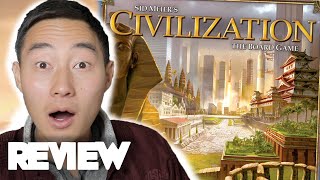
- Stunning aesthetic and component quality; map and art evoke Civilization flavor
- Rich map with mountains, deserts, rivers; visually cohesive and thematic
- High replay value via randomized tiles, factions, and four win conditions
- Strong asymmetry and negotiation potential; deep player expression
- Wonders, Great People, and tech flavor deeply integrated into gameplay
- Base combat system swingy and punishing; often requires expansions to balance
- No tutorial; rules are dense and can overwhelm new players
- Setup logistics and box/storage challenges; can be annoying
- Long play times; best with multiple players; coalesces around heavy commitment
- Balance concerns for weaker factions (e.g., Zulu) and complexity may deter newcomers
- Array
- Historical civilization-building on a world map
- enthusiastic, expository, opinionated
- Twilight Imperium
- Scythe
- Rome: Total War
Mechanics (from transcript analysis)
- Barbarians, huts, and spies — Hidden resources from huts; barbarians spawn and can fight; spies add counterplay abilities
- City actions per round — Players perform actions with each of their cities each round; city blocks provide production, culture, and commerce outputs
- Combat: Deck/Hand — Battle uses a deck of unit cards; players draw cards and place them on a battlefield; combat is resolved with card play; first strike and modifiers matter
- Deck-based combat (standing forces deck) — Battle uses a deck of unit cards; players draw cards and place them on a battlefield; combat is resolved with card play; first strike and modifiers matter
- Expansion-driven modularity — Expansions add factions, maps, and new mechanics; map and component variability
- Four victory conditions — Military destruction, top tech/space flight, cultural track, and economic coin goals all can end the game
- Movement and exploration — Units move to explore the map; movement is time-limited and unlocked by tech
- resource economy and trade — Trade currency and coin drive tech advancement and city development; resources can be plundered or traded between players
- Resource Management — Trade currency and coin drive tech advancement and city development; resources can be plundered or traded between players
- Resource plunder and capital destruction — Attacking and defeating a capital yields the end condition; loot is stolen from the defeated player
- Tech progression and pyramid — Techs are purchased with trade in a tiered pyramid; tier 2 requires multiple tier 1 techs; permanent buildings and abilities can be unlocked
- Tech Trees — Techs are purchased with trade in a tiered pyramid; tier 2 requires multiple tier 1 techs; permanent buildings and abilities can be unlocked
- tile-based exploration — The board is built from randomized face-down tiles that are explored as the game progresses
- Tile/Map Shifting — The board is built from randomized face-down tiles that are explored as the game progresses
- Wonders and Great People — Wonders provide powerful effects; Great People with unique powers influence strategy
Video topics + discussion points
Quotes (from this video)
- civilization is the grand computer game idea skill to a tabletop experience in about four hours with four friends
- the four victory conditions that are central to this game's identity
- my brain is just on fire in a good way looking at the possibilities
- my personal score for civilization is a 10 out of 10
- sieve gets a 7 out of 10 tentative score; with expansions this raises to an 8 out of 10
- this civilization is just the grand vision of the civilization franchise with all its 4xns translated to the table
References (from this video)
- card-driven approach
- civilization theming
Mechanics (from transcript analysis)
- card-driven — civilization style card-driven tableau building
- Hand swapping — swapping hands is a described mechanic
Video topics + discussion points
Quotes (from this video)
- it's a relatively lightweight card game
- looks very pleasant
- i would love to try at some point
- aesthetically pleasing vibe
- i'm genuinely curious to learn more about this
References (from this video)

- It is a huge game
- Has a thousand things going on
Mechanics (from transcript analysis)
Video topics + discussion points
Quotes (from this video)
- Clash of Cultures I like I like the the new the Revis Edition or whatever I thought that was good
- Last Light is the 4X face game that plays in an hour
- You heard me right it plays in an hour
- You know what band there's a band that I I love it's in my it me it maybe every once a while it would fall out of my top five bands but it's it it'll always remain like top six or seven
- When you were that good you're just that good
- I want to see the Chiefs win the next six Super Bowls I do
- I don't think it's a big deal why are you googling Board Game Geek stuff when you could just go to the website
- your guy doesn't do any attacks it's just all of his little minions do do his attacks for him
- Bone Razer is ready five bucks
- all the reviews Say it'll hit your dopamine pretty well
- the AI of it starts crumbling a bit so it gets really frustrating
- The revised edition is good
- Rules are tightened up
- Includes the old expansion
- It is a huge game
- Has a thousand things going on
- Plays in an hour
- Has over 2000 backers on Gamefound
- Did better than the first time
- One of the worst Productions I've seen the cards fall apart
- It's pretty good
- It's a Monty Python game
- The python game doesn't look good I just ped it because it's python
- Very much your standard Vampire Survivors
- Five bucks
- Definitely get five bucks with the fun
- Keeps unlocking new characters
- Has a lot of gameplay
- Hits dopamine well
- Leveling is really good
- Massive hit
- Early access
- AI of the game starts crumbling when automated elements are introduced.
- Gets really frustrating.
- Still has bugs.
- Feels like it has stolen Pokemon IP without actually stealing it.
- It was fine
- Puzzly
- Really simple
References (from this video)
- It is a good game
- Like the game a lot
- There are things I don't like about the game
Mechanics (from transcript analysis)
Video topics + discussion points
Quotes (from this video)
- it's a very tight economical puzzle where you are placing your production on the board trying to place it where it's both cheap and makes sense and you can build like in your network
- my number two is going to be clans of calonia because it's a fantastic game
- my number one is going to be another prototype it's going to be sweetlands
- the artwork is amazing the gameplay is so brain burning and cool
- it looks so good it looks like a finished game
References (from this video)

- Smooth teach after practice
- Fun once you learn it
- Good dice mitigation options
- Heavy game
- Steep learning curve
- Luck can be a factor
- Table hog
- Mixed reception expected
- Civilization building
Mechanics (from transcript analysis)
- action selection — There are 17 or 19 actions, many of which can be upgraded.
- Dice mitigation — Players can use powers to mitigate dice rolls.
- Dice Placement — Players roll dice and use them for actions.
- Resource Management — Players manage resources to build their civilization.
- Tableau Building — Players build a tableau of powers and technologies.
Video topics + discussion points
Quotes (from this video)
- nice I played the expansion of after the Empire with a guy who it's his favorite game ever so that was that was a lot of fun
- The implementation of the 'revealing thing' for the keys is frustrating and annoying.
- The way to feed the key in is face up, but it should be face down.
- everybody's just a jackass I mean you're basically just giving away all the food that we set aside for you
- BGCon competes with the vendors because it's a good convention in my opinion
- The older I get the more my calendar fills with funerals
- You know that guy was making crystal meth by the way this is sort of like on the politics Spectrum
- he survived the shooter was sentenced to 36 years in prison the man appeared seemingly out of nowhere and stood in front of our van and pulled out a gun aiming it right at us I yelled duck as The Gunshot rang out the guy shot he didn't even like oh that's c a lunatic
- it's a buying crowd nobody plays games it's just a buying crowd
References (from this video)
- Heavily featured in games of the year top 10
- Stephen Feld's biggest game to date
- Will be featured heavily on the channel going forward
- civilization
Mechanics (from transcript analysis)
- Euro — Mixed with more traditional Euro trappings.
Video topics + discussion points
Quotes (from this video)
- Joy Ride which is kind of a a stolen version of power boats
- Ramy uh tiny little card game where you're drafting these cards Ramy style trying to complete these objectives and that will also tailor your point scoring at the end
- take a Seat this is a you know a polyomino Style game as you're trying to fill up seats uh in a cinema with variable objectives looks like this quite a bit going on here but you know generally speaking I like polyomino style games especially when they tackle that idea from a different perspective
References (from this video)

- Stefan Feld's most ambitious and epic game yet
- Lived up to expectations
- Complex but brilliant
- Civilization Building
Mechanics (from transcript analysis)
Video topics + discussion points
Quotes (from this video)
- Chairman's Choice Awards for me this is the best of board gaming of 2024
- these games aren't necessarily released in 2024 these are all games that I played for the first time in 2024
- this was the strongest year ever for two-player only games that I played for the first time
- it's been a fantastic year so much competition
- it's been a fantastic year for board gaming for me personally played so many of my favorite games um and covered so many great ones
- hopefully you've enjoyed the video uh if you have please be sure to hit like And subscribe to the channel and check out my other content too
References (from this video)

Mechanics (from transcript analysis)
Video topics + discussion points
Quotes (from this video)
- the Restriction is supposed to be and when we moved which was a few years ago now it did get to these shelves are it get the games to fit on those shelves I think we did that and maybe had a bit of room to spare but since moving it's yeah there's a lot of extra shelves downstairs
- 300 is the mark of too much and that includes like the shelves of tiny games of the game and the C crazy
- it's size is driving it more than the numbers and as I said it's it's got a it's got to shrink down to mostly this room and there are big gaps but yeah it'll happen
- Mansions is like a cube to itself Eldritch horror is a Quee to itself
- Shadows of Brimstone that's probably the game that's it's probably tied from tied with Marvel United for a game that's taken up the most amount of space
- box size is the issue and that's why like it's so one of them may be um like Imperial like Imperial was a cool idea and a a great train game but like one of the major things it's get it's got against it is that's one whole cax Cube for that game also box size is the issue
- the game is always a favorite I think we've all got a copy of the game it never needs taken anywhere
- My number one wish list for board game arena is more Cooperative games
- I am continuously and constantly in gam castles of burgundy and I'm still no better at it
References (from this video)
- Inserts make setup easier
- Setup without an insert is a nightmare
- Civilization building
Mechanics (from transcript analysis)
Video topics + discussion points
Quotes (from this video)
- Ark Nova is my favorite game of all time.
- Look at how gorgeous that thing is. Oh my god, I am drooling. This is such a pretty insert to get out.
- So, inserts I think are worth it.
- The money you get in those two games is garbage.
- I do have a lot of inserts in a lot of my games. Now, some of them I probably shouldn't have bought because the game doesn't get played often enough.
- Upgrade it from something that's crap to something that's really good. Don't upgrade something that's already good to something that's just a bit more good. It's not worth the money.
- People don't respect wood enough. Wood pieces are great.
- I don't care about miniatures in games now. I'm getting sick and tired of gray miniatures in all my games.
- The Folded Space insert for Civilization and New Dawn is a thing of genius.
- Do bling your games is good, but remember that you're paying a lot of money for it.
- Live comedy these days has suffered a lot because of all the political correctness nonsense.
- The golden age of comedians is sadly dying out.
References (from this video)

- Lots of things to think about
- Interesting dice mechanic
- Rewarding despite being brain-burning
- Can be brain-burning
- Brain can be tired by the end
- Civilization development
Mechanics (from transcript analysis)
- Area Control — There is a bit of an area control section there on the main board.
- board development — The board is expanding because you're going to be developing it more.
- Dice Rolling — You are going to be putting together your dice in order to take different actions in order to build up your own personal board that's going to allow you to do more so you can score more points.
- Resource Management — You do need to think of your tribes that you have out because yes, in fact, you do need to feed them and you need to make sure that they don't die off.
Video topics + discussion points
Quotes (from this video)
- Survival of the fittest, baby. It is what it is.
- you need to win. you need to defeat everybody else and it is not a nice game
- Root is a very mean game because it does have kingmaking which is very mean and also very competitive
- It's so freaking cute.
- because what's more whimsical than a cafe where cappy bars are serving you?
- I think Get Bit is not loved enough.
- Phenomenal game. Phenomenal solo trick taking. Amazing.
- It is meant to be a mindful activity for solo players.
- you can play it so many times in a row, you will never get sick of it.
- It's a great game for me time.
References (from this video)

Mechanics (from transcript analysis)
Video topics + discussion points
Quotes (from this video)
- I don't think Project L should have the video theme category applied to it. I don't think so.
- my solo cadet mode for captain's chair is the best video to watch to learn how to play the game.
- you only score points for your tracks if you have completed at least one of your missions.
- Many of you, especially Mage Knight fans, will know Ricky because he did the solo playthroughs of Mage Knight, which helped make Mage Knight what it is today.
- I have news. I am not allowed to share that news. I am under um effectively an NDA.
- Marvel Champions is a fantastic, fantastic game.
- The stream was crashing and literally every 30 minutes the stream would crash and my software would crash and people would be in the chat saying the stream's gone down.
- Too Many Bones is a good game, but me being so far out of my comfort zone that I literally cannot understand how to play the characters that I'm playing whilst hosting a live stream. Yeah, I don't want to do that again. That was uh that was horrible.
- Monopoly is in that situation where it's popular because it's popular.
- It's still a terrible game. It is. It is a terrible, terrible, terrible game.
- The Lord of the Rings: Fate of the Fellowship, the new pandemic style game from Matt Leo. I'm going to pick that one. But caveat, I've only played it once and I haven't actually played that many games that technically have come out from 2025.
- You can't. There's too many games coming out every week.
- If you are not a Patreon supporter and you want to support me directly, you can for as little as $1 a month or $3 a month if you want access to the Slack channel, patreon.com/gamingrules.
- The secret word for this month is the game that arrived this afternoon that none of my patron supporters were able to guess.
References (from this video)

- Favorite game of last year for one of the hosts.
- Mini expansion adds a special ability from the start of the game.
- A lot of variability already in the base game.
- This expansion will not make people who didn't like the base game like it.
Mechanics (from transcript analysis)
- Area Control — The game has 'so much going on' and is a 'sandbox game by nature'.
- Variable player powers — The expansion adds a 'mini prelude expansion, where you start with a chip' that 'gives you a special ability right from the start of the game'.
Video topics + discussion points
Quotes (from this video)
- I did not enjoy my first play of Echoes of Time.
- this is a light tableau building card game.
- Flow... it looks gorgeous.
- Covenant. Number two on my most anticipated list.
- Vlaada Chvátil. Do you know what the last game that Vlaada designed was? ... He's not actually designed a new game and had a new game published for almost 10 years.
- It's called Severton.
- I have spent the last 15 years of my life telling everybody that Talisman is such a bad game... And with the fifth edition, I've had to sort of eat my words on that.
- There just isn't enough time to play all of the games.
- IR from Osprey Games. Children of the Sun. Yeah. It is really good.
- Druids of Adora, new Stefan Feld game from Alea
- There may be some Essen live streams while we're there.
- I have written to the publisher to ask for a potential review copy, yeah, but to be fair, I only emailed them yesterday.
- Covenant. I completely forgot that was a thing. Started looking at the pictures and and thinking, yeah, I'm down for that.
- The The Void Voynich Puzzle. Voynich Yeah. Don't forget go to bed reading the Wikipedia articles about the Voynich manuscript.
- Saboteur is the other one which I did know. I saw it on your shelf uh today earlier, but I didn't know much about it. But now you've explained what it is, I'm kind of getting that um like Enid Blyton vibe from it. Yeah. what was it called? The Famous Five. Famous Five. Famous Five. Of that kind of stuff. Yeah. And weirdly, I'm interested. All right. And I've looked at the pictures of that, so yeah. Yeah. Yeah, Saboteur is good.
- I'll be demoing, but I'm demoing um uh Revenant um I think twice on the Saturday from 12:00 till 4:00.
- Trickerion with the Arcane Arts expansion. I think that's my schedule.
- Now, the one game that I am going to be looking at is there's a new game that Mighty Boards have just announced recently called Gods. All right. Which is designed by David Thompson, Trevor Benjamin, and is right up my alley.
- And they said, "Well, at least come round and have a look at it." And I'm like, "Yeah, I'll come round and have a look at it." But I've already agreed that I'm going to be doing content on that.
- I find it really weird and unusual that and and everybody else does this. I'm the odd one, but all of all of these content creators go to Essen, they go to Gen Con, and they have meetings with publishers where they sit down and they make deals about payment and what videos they're going to Right. That's the worst place to have a meeting.
References (from this video)

- Favorite game of 2024.
- Still loves the game and really enjoyed playing it.
- Played with the new 'acceptance letter' mini-expansion.
Mechanics (from transcript analysis)
- Area Control — Players control territories on a map.
- civilization building — Players develop their civilization over time.
- Tech Tree — Players advance through a technology tree.
Video topics + discussion points
Quotes (from this video)
- It looks visually amazing. I personally like the color palette of the game, and I think it does look really good.
- The game is a heavy game. It's a Some people will call it a medium game, right? It's a 45-minute teach.
- Agemonia, still fantastic, still really good.
- It's all three of our number one games of all time.
- Does it fit with the Marvel theme? Absolutely. It it really does.
- I
- Magnate: The First City designed by James Naylor and I'm going to be doing a giveaway for it.
- So, good luck for that and I'll announce the winner next month.
- all of my advertising revenue from all of my videos every month goes to charity.
- So yeah, Solar Titans is going to get three play throughs on the channel in December.
- It's going to be January and February. In fact, February's looking like a good month for me at the moment.
- Talisman Nemesis is the latest expansion for fifth edition that turns the game into a one versus many game.
- And me and Rick on a Tuesday night we're starting playing the Arnak cooperative campaign. So that is another series of play throughs, Lost Ruins of Arnak the cooperative campaign.
References (from this video)
- Archaeological succession tables
- Big map of the world
- Technologies
- Trading with other players
- Asymmetry on different boards
- Production quality is okay
- Takes best part of a day to play
- Trading mechanic is a shout fest
- Trading of calamities is stupid
- Wipe out coastal cities
- Looks dull and horrible
- Takes way too long
- Chits everywhere
- Not really that fun a game
- Civilization
- Old World map
- Pit
Mechanics (from transcript analysis)
- Area Control — Players control areas on a large map.
- Civilization — A civilization game with technologies, trading, and a large map.
- event cards — Calamities (natural disasters) can be traded or suffered.
- Trading — Features an open outcry trading system similar to the game Pit.
Video topics + discussion points
Quotes (from this video)
- Imperial Steam. Oh god. Maybe this one's been a bit harsh because I have only played it the once a friend of mine to me, the one who likes train games. But I do remember disliking it.
- It it it's punishing. It's a boring theme. Like anything to do with trains is a boring theme. Yeah, fight me.
- This game is trash.
- I worry about the sort of games you play if you think this is fun. Seriously, this game is trash.
- Terraforming Mars, I think I might have rated a three or four when I first played it.
- Before Mars is still a six out of 10 for me.
- And Great Western Trail, you know, you know, my jump to New Zealand, you know, that one being one of my favorite games, you know, and uh despite hating the first edition of Great Western Trail.
- So, it seems I mean Feed the Kraken to some extent. Maybe Blood on the Tower a little bit. Imperial Steam just cuz I haven't played it that much, but even then not much.
- We all like different stuff. It's just the nature of the beast.
- What do you care if I hate them?
References (from this video)
Mechanics (from transcript analysis)
Video topics + discussion points
Quotes (from this video)
- Don't worry, there's nothing to really remember here. Just reveal the card and then take an action.
References (from this video)
Mechanics (from transcript analysis)
Video topics + discussion points
Quotes (from this video)
- Don't worry, there's nothing to really remember here. Just reveal the card and then take an action.
References (from this video)
- Best at three.
- More interaction between players at three.
- Table space is an issue at four.
- Four players is too long.
- Four players doesn't fit on the table.
- civilization building
Mechanics (from transcript analysis)
- civilization building — Civilization games.
- Worker Placement — Implied by actions and player sections.
Video topics + discussion points
Quotes (from this video)
- with three, there's that more player interaction, and there's more stuff happening from turn to turn.
- But this one is just tailor-made for three people, I think.
- So, I I like the combat in this game quite a bit.
- I really dislike this at four. I think it's too long.
- I In fact, I will not teach this to four players even. That's I'm so snobby about that.
References (from this video)
- Faithful representation of the video game
- High stakes and unforgiving gameplay
- Significant progression through eras and technology
- Fiddly and complex
- Janky combat system (especially without expansion)
- Can be overwhelming for new players
- Does not explore until expansion is purchased
- Distilled video game into board game form, ancient civilizations
- Civilization (video game)
- Civilization: A New Dawn
Mechanics (from transcript analysis)
- 4X — Represents the four X's: expand, exploit, exterminate, and explore (though explore is missing until expansion).
- asymmetric factions — Playable as historical ancient factions like Egyptians, Romans, Americans, and Japanese.
- multiple win conditions — Has four win conditions that often have crossover, leading to players focusing on one or two.
- Tech pyramid — Features a tech pyramid, a evolution of the video game's tech tree.
Video topics + discussion points
Quotes (from this video)
- I just love that resource progression.
- It the resource progression feels to me like that you start with a wheel then you get cards then you get uh spaceships right?
- The game is just way too heavy. It is insane.
- It's like a rock paper scissors. I'm building my ship this way to count to your ship. Then you should build your ship another way.
- Yeah. Because they are so heavy, right? They do take such an investment you want to like uh go through, but people were saying that that Colution was was awesome.
- I think the moral of this stream is we can call anything a Civ game if you try hard enough.
References (from this video)

- fantastic gameplay
- hefty game
- needs to be relearned
Mechanics (from transcript analysis)
Video topics + discussion points
Quotes (from this video)
- I named it the cream of the crop and yes, we are doing that again this year.
- I can already see they would probably get into my top 100 games of all time and it makes me so sad because when I was prepping for this video, I actually went back and watched the video that I did back in 2024.
- that does show just how hard it is to get games back to the table, especially being a like board game content creator.
- I desperately need to make a video of games with mini games because that is just one of like my favorite things in a board game.
- I have not been able to stop thinking about this game ever since we played it at the cottage.
- Holy crap. I'm looking at it in the camera, and it's really hard to hold it up and show you guys it because it is very reflective.
- And the part of the game that I just fell in love with with this game is the fact that each player has a hidden kind of endgame scoring.
- It makes me really sad cuz I do believe that Osprey Games is no longer going to be publishing games.
- It is so fun. Again, it has dice drafting but the dice drafting is very unique in its own way.
- It is the type of puzzly game that makes my brain very happy.
- I love themes of Japan. Francis and I went to Japan. We are going back to Japan this year, which we're very excited for and officially we have booked the flights for Japan, so we are very excited.
- Stefan Feld just he knows how to make games that make my brain happy.
- I feel like there needs to be more games that are druid themed.
- Remember, you are somebody's reason to smile.
References (from this video)
- Considered the number one civilization game by Assaf, closest to the video game experience.
- Has great persons and different civilizations.
- Thematic.
- Resources are relatively scarce.
- A true 4X game.
- Not as well-received or held up as a 'must-have' compared to Through the Ages.
- Out of print.
- Base game is not as good as the expansions.
- New Dawn (a different iteration) is considered a catastrophe.
- Civilization building
- Through the Ages
- Sid Meier's Civilization
- Civilization VI (video game)
- New Dawn
Mechanics (from transcript analysis)
- 4X — Described as a true 4X game with elements like building a civilization and managing scarce resources.
- Card Crafting — Mentions card crafting as a mechanism.
- Resource Management — Described as a true 4X game with elements like building a civilization and managing scarce resources.
- Worker Placement — Implied through the mention of worker placement as a common mechanic in some games.
Video topics + discussion points
Quotes (from this video)
- This is the number one civilization game that I have ever played in my life period.
- Nobody's talking about the base game because the base game is not good. If you want just the base game, don't don't bother. Spare your money.
- It's a true true 4X game which is already a rare thing.
- Dark Ages is fantastic. It should be reprinted.
- Euro games that don't feel like Euro games and Dark Ages is 100% one of them.
References (from this video)

- Huge player dashboard with many actions
- Exploration and discovery on the map
- Upgradeable actions
- Variable scoring changes strategy each game
- Thematic elements reinforce the mechanisms
- Strange theme (gods running a simulation)
- Guiding a civilization towards prosperity
- Simulation of a civilization
Mechanics (from transcript analysis)
- Dice Action Selection — Uses two dice, combining or using their values to select from over 20 upgradeable actions.
- map exploration — Discovering new lands, building farms, and moving people on a central map.
- Resource Management — Buying, selling, and gaining various resources.
- Tableau Building — Acquiring cards that provide additional actions or allow bumping up cultural tracks.
- variable scoring — Intermittent and final scoring phases are based on different tracks each game, changing strategic focus.
Video topics + discussion points
Quotes (from this video)
- I want everything. Put everything and the kitchen sink into the game.
- It's like everything is in this one. It's got a little bit deck building. It's got a little bit of worker placement. It's got a little bit of this, a little bit of that.
- All these things thrown into one, cuz sometimes you make that gumbo work really good.
- It's a masterpiece for a reason.
- There's just too much stuff in this game.
- Those are 10 games that have everything and the kitchen sink in them, we think.
References (from this video)
- Grandiose and ambitious design.
- Logical and easy to resolve actions despite many options.
- Rich layers of gameplay.
- High variability and engine tailoring.
- Lots of mitigation tools for dice.
- Remarkably smooth and easy to play for a complex game.
- Accessible for newer players, as shown by teaching it to a girlfriend.
- Exceeded expectations.
- Can be pigeonholed by dice rolls.
- Newer players might see mitigation as a wasted move.
- Civilization
- Castles of Burgundy
Mechanics (from transcript analysis)
- action selection — There are around 25 actions that can be taken, activated by a pair of dice.
- Area Control — Involves spawning new troops and controlling areas.
- dice manipulation — Uses dice manipulation and moving around the map.
- Dice mitigation — Uses 'idea tokens' to mitigate dice rolls, similar to worker placement in Castles of Burgundy.
- Engine Building — Players can tailor their engine to do different things, becoming good at exploring or hunting.
- Objective Completion — Includes end of round objectives that provide benefits if achieved before opponents.
Video topics + discussion points
Quotes (from this video)
- and finally at number one and the only game this episode to get a commendation is cilu
- so stepen Feld kind of the polar opposite of uve Rosenberg to me almost all of his games gel with me you know they fit like a glove because I tend to like the way that he thinks and Designs games
- so much to talk about here this one when I first played it I liked it a lot um but of course you'll still get into grips with things and seeing what what happens when you pull certain buttons or push certain buttons the more I play this one the more I'm starting to really appreciate the layers of gameplay here
- so yeah this one I had very very high hopes for and this one lived up maybe even exceeded my expectations and is definitely one of my favorite games of the year and one of my favorite stepan Feld games which is saying something so that is civil lution at number one
References (from this video)
- Great as a top 10 game of the year
- Took multiple plays to appreciate its depth
- Not a light game, medium to heavy
- The randomness of cards and scoring methods make it feel different each time
- Worth the cost due to content
- Easy to translate rules with examples
- Was initially disappointing, not an easy home run
- AI's 'if then' logic can be overwhelming
- Can feel like not having 100% control
- Multiplayer games can be very long (3-4 hours)
- Explaining actions can take a long time
- Solo rulebook requires frequent consultation for the AI's complex logic
- developing a civilization
- abstract
- MV
Mechanics (from transcript analysis)
- AI Opponent — The AI spreads around the board with specific rules and can amp up the game timer.
- civilization building — Players simulate populating and moving across civilization, abstractly represented on the board.
- Dice Rolling — Players use dice actions to expand their civilization.
- event cards — Events happen out of player control and can affect game elements like weather.
- Tableau Building — Cards are added to a player's tableau, providing permanent abilities.
Video topics + discussion points
Quotes (from this video)
- 2025 is here and I'll tell you what I am really excited to talk about 2025 games because games have delivered that are already going to be at the top of the solo 202 list
- Seti is a game that is my game of the year for uh multiplayer and for solo
- this game is worth it this is worth that
- you're going to buy this game I know you
- I have the highest recommendation for this game
References (from this video)

- growing your civilization
- developing your civilization
- achieving the happiest population
- variants for two-player games
- appendix explains effects on idea cards
- if too many leaders share the same goals you all may fail
- if three or more leaders go thieving their group is too large and they will be caught
- if you can't afford any of the ideas you'll be forced to pass
- growing your civilization
Mechanics (from transcript analysis)
- Card Drafting — idea cards are drawn and placed on an 'idea track', then players can purchase them.
- order selection — players select and execute orders, gaining rewards based on how many leaders chose the same order.
- Resource Management — players gain resources like food, wood, and stone, which are used to buy idea cards.
- Set Collection — idea cards are collected and provide ongoing effects and happiness points.
- Variable player powers — idea cards may provide ongoing effects.
Video topics + discussion points
Quotes (from this video)
- hello and welcome to watch it played
- the world is at your fingertips and all that stands in the way are the other players at the table
- and that's everything you need to know to play civilizations
- thanks for watching
References (from this video)
- Belongs in the Hall of Fame.
Mechanics (from transcript analysis)
Video topics + discussion points
Quotes (from this video)
- put if you're going to put terraforming Mars, why don't you put Everddale, okay?
- Or Wingspan, okay? Uh why not Wingspan? Why not Wingspan more than terraforming Mars?
- for sale. I mean, really.
- Acquire makes sense.
- you know I'll even you know Magic makes sense.
- if if you're talking about Grail Games, you have to talk all Arkham Horror.
- the third edition really wasn't, you know, I mean, maybe that hurts.
- all these other games that were spawned out of this universe was was was because of Arkham Horror and the popularity of it.
- I hate taking it out of the box because I think it's such a classic.
- Maybe, you know, it just it bewilders me.
- This is just my opinion. and I would love to hear your opinion as well.
References (from this video)
- strong thematic tie to civilization progression
- rich card-driven engine with cascading effects
- variety via asymmetric card sets
- not as tight or streamlined as some other civs
- teaching curve can be steep for new players
- civilization development, technology, and era advancement
- civilization-era civilization-building with growth and exploration
- historical sandbox with alternate-history elements
- A Feast for Odin
- Lisboa
Mechanics (from transcript analysis)
- cards-based tableau with asymmetric scoring — cards grant varying actions and points depending on setup
- central board exploration and resource gathering — move around a map-like board to collect resources and unlock effects
- combat-like interaction (milder than some Civs) — light conflict/competition elements for position and scoring
- Player Board | Main Board — move around a map-like board to collect resources and unlock effects
Video topics + discussion points
Quotes (from this video)
- Newford is my favorite game from 2024.
- I genuinely like this game more than Black Forest.
- Castle Combo is a really quick and short Tableau building game.
- 21 actions to seemingly do the impossible.
References (from this video)
- Unique replayability through evolving civilization schemas
- Engaging and inviting theme compared to some heavy Euros
- Single mechanic (dice pairing) provides a strong problem-solving space
- Rulebook is long and complex, requiring a substantial learning curve
- Questions of innovation vs. established heavy Euros; may be perceived as derivative
- High commitment may deter casual players
- Civilization-building, imperial expansion, asymmetric powers
- Ancient to medieval civilizations; historical world development
- Long-form strategic progression with evolving player powers
- Castles of Burgundy
- Isle of Skye
Mechanics (from transcript analysis)
- dice augmentation and tokens — Various tokens modify dice outcomes and enable additional actions
- Dice Placement — Dice are placed in pairs to activate actions; value pairing affects outcomes
- dice worker placement — Dice are placed in pairs to activate actions; value pairing affects outcomes
- dynamic power construction — Players gradually build their unique powers and scoring criteria over the course of the game
Video topics + discussion points
Quotes (from this video)
- I think the replayability of the Civilization is very unique.
- the big driving idea is that you are constructing these pillars of cards that describe both the objectives and the strengths you’re going to pursue.
- I really like the problem space of how are you going to deal with the tile that you've drawn.
- I love games that have you placing dice in pairs because it gives a really nice problem solving space.
- this is a very simple game I think for families, but the artwork is charming.
References (from this video)

- Fel-dedicated design pedigree
- Interesting dice/tech-tree combination
- Heavier weight may limit accessibility
- Theme could be seen as odd or off-putting to some
- cosmic-scale civilization building and tech-oriented growth
- Cosmic civilization design course with a final exam twist
- thematic, self-referential to civilization design
- Castles of Burgundy
- Maau
- Brugge
Mechanics (from transcript analysis)
- card_play_and_tech_tree — Unique cards interact with a tech-tree to unlock actions.
- dice_selection — Dice determine actions on a tech-tree-like structure.
- Tech Trees — Unique cards interact with a tech-tree to unlock actions.
Video topics + discussion points
Quotes (from this video)
- "2024 is shaping up to be an amazing year"
- "Inventions Evolution of Ideas... the genuine thing"
- "I tend to enjoy the games he works on"
References (from this video)

- epic scope
- high player count
- long playtime
- steep learning curve
- civilization-building
- Long sweep of civilizations
- Through the Ages
- Sid Meier's Civilization
Mechanics (from transcript analysis)
- Multiplayer negotiation — Players interact to advance civilizations through turns.
Video topics + discussion points
Quotes (from this video)
- this is the board game quiz show
- it's a board game play through series that's over 400 episodes now
- we're rough on you but we're having fun today
References (from this video)

- Strong Euro-style design heritage
- Ambitious civilization-building scope
- Complexity may challenge new players
- Civilization building with dice placement
- Global civ-building with historical vibe
- Grand strategy feel with civilization progression
- Civ-like Euros
Mechanics (from transcript analysis)
- Dice Placement — Dice rolled to activate actions or allocate resources with placement mechanics.
- engine-building / city-building — Players develop their civilizations through actions that improve long-term capabilities.
Video topics + discussion points
Quotes (from this video)
- we have only 20 minutes to research and buy games
- you will be able to write in the comments which game we should buy
- it's accessible and not that expensive
- it looks like a lot of fun
- real time betting
- it's a betting game where the horses run and you're betting in real time
References (from this video)

- Historical
- Civilization building
Mechanics (from transcript analysis)
Video topics + discussion points
Quotes (from this video)
- moments during board games that formulate memories that you'll never forget
- there's just something for everyone
- it's all about the people
- the board gaming space has allowed me to just have so many incredible fun moments that i'll never forget
- it chose us via christy
- we're gonna have it at jeff's parents basement everybody's coming
- agricola sucks and everybody else seems to love it
- arnak is severely overrated
- i don't think gloomhaven should be number one on the list anymore
- humans are not good at rating things
- my nine is different than your nine
References (from this video)
- Epic, grand scope that feels coherent and focused on the ancient world
- High drama and swings due to disasters and mismanagement
- Relatively clear core rules for a heavy euro-style game
- No player elimination keeps everyone engaged longer
- Deep strategic potential and rewarding come-from-behind plays
- Stays thematically tight to the ancient setting without ballooning into unrelated eras
- Very long playtime and heavy complexity
- Hard to master; requires multiple sessions to optimize
- Requires 3-7 players to realize the full experience; solo play not officially supported
- Potential downtime between turns and combat resolution can slow pacing
- Civilization-building, empire management, technology development
- Ancient world circa 4000 BCE across the Fertile Crescent and Mediterranean
- Epic, grand, swingy due to disasters and mismanagement
- Twilight Imperium 4
- Civilization: A New Dawn
Mechanics (from transcript analysis)
- area movement and region control — Players move units across regions; up to 5 units per turn; combat occurs after moves.
- city development and population limits — Cities have population limits; expanding and reducing population affects control and scoring.
- combat and reinforcement — Combat is resolved after all moves; players alternate removing units; can reinforce via neighboring regions.
- economic taxation and population — Taxation levels determine population growth and ability to maintain cities.
- Events — Disasters and epidemics hit players; mismanagement leads to swings in fortunes.
- multi-path victory and non-elimination — Victory is determined by points; typical play avoids elimination, keeping all players engaged.
- random events and disasters — Disasters and epidemics hit players; mismanagement leads to swings in fortunes.
- Set Collection — Players collect sets of trade goods and technology cards to score points.
- technology cards and scoring — Technology cards drive scoring and unlocks; players track progress on a scoring marker.
- Trading — Trade cards can be traded in groups of three; discounts are applied via card interactions.
- trading and discounts — Trade cards can be traded in groups of three; discounts are applied via card interactions.
Video topics + discussion points
Quotes (from this video)
- The single best thing about the game is the dramatic swings and changes that can occur via disasters and mismanagement
- It's easy to build a large civilization but very hard to keep one for long
- The winner of this game is the player who moves to the end of the scoring track first
- Points are scored primarily by technology cards
References (from this video)

- Majestic, historic scope
- strong six-player interaction through trade
- classic eurogame heritage
- long playtime and heavy commitment
- potentially chaotic with disasters
- trade, disasters, empire expansion
- historical empire-building on a world scale
- grand, long-form strategic simulation
Mechanics (from transcript analysis)
- disaster_events — random disasters that disrupt plans and increase chaos
- Events — random disasters that disrupt plans and increase chaos
- Resource Management — managing multiple resources (iron, gold, cloth, grain, etc.)
- resource_management — managing multiple resources (iron, gold, cloth, grain, etc.)
- Trading — resource exchange between players to shape economies
Video topics + discussion points
Quotes (from this video)
- the trading element really comes into its own
- there's something undeniably majestic about the game
- six is the magic number for it
- it's a hell of a lot easier to get six people together that it is to get eight