/pic3764168.jpg)









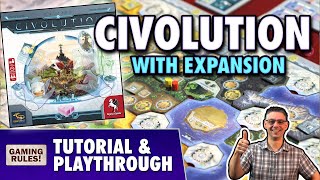













Civilization: A New Dawn Deep Dive
What the Community Thinks About Civilization: A New Dawn
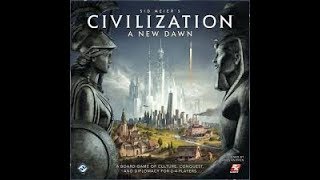
Civilization: A New Dawn has generated passionate debate among board game reviewers. While the base game impressed some for its streamlined approach to the civilization genre, the consensus among most reviewers is that the Terra Incognita expansion transforms it from a good game into an experience that genuinely delivers on the promise of the license. The game divides players: some praise its efficient two-to-three-hour playtime and tight mechanics, while others find it feels more like racing to randomized objectives than building a true civilization.
Core Mechanics That Define Civilization: A New Dawn
Focus Card System
The focus card system stands out as the game's mechanical centerpiece. Players select actions from a row of cards, with stronger activations available at higher positions. Once activated, a card slides to the back of the row while others shift forward. This elegant system means every card placement has real consequences, skipping actions now builds them up for later. When combined with tech upgrades that replace existing cards, players experience satisfying moments where they suddenly unlock powerful new options. The system rewards careful planning and creates meaningful turn-by-turn puzzles about when to activate each card for maximum benefit.
Terrain-Based Movement and Combat
Terrain plays a crucial mechanical role that genuinely affects strategy. Mountains carry difficulty 5, deserts difficulty 3, and grasslands difficulty 1, determining movement costs and action requirements. This terrain system creates real strategic depth beyond mere flavor, building a city on mountains grants whopping 10-point defensive bonuses. Barbarians on hills pose tougher challenges than those on grasslands. The expansion escalates this with forts that add another layer of control through terrain positioning. Players must think constantly about how geography constrains their options, making exploration and map control matter in tangible ways.
The Civilization: A New Dawn Experience
Streamlined Racing with Engine Building
The base game functions as a streamlined race toward randomized victory condition cards, which some reviewers found frustrating given the Civilization license. However, this racing structure creates an addictive core loop, players build toward four completed objectives from a randomized set, unlocking wonders and technologies that compound their advantages. The game shifts between turns surprisingly quickly once players understand it, with some experienced groups finishing in under an hour. This efficiency made it a refreshing contrast to lengthy civilization games on the computer, though it sometimes left players feeling like they were just chasing cards rather than building civilizations.
Satisfying Progression and Asymmetrical Factions
Players relish how wonders and technological upgrades create visible progression. Early-game decisions about resource focus pay off dramatically as engines churn through the game's arc. Eighteen asymmetrical factions (including expansion additions) mean each civilization plays meaningfully differently. The Japanese treat water-adjacent mountains as forests for easier navigation. The Inca chain control tokens together for exponential map influence. These asymmetries create genuine replayability, though some factions proved substantially more powerful depending on the randomized victory cards drawn, creating potential balance concerns.
What Makes Civilization: A New Dawn Stand Out
The Terra Incognita Expansion Delivers Missing 4X Elements
The base game earned respect for efficient design, but reviewers agree Terra Incognita elevates it substantially by adding exploration and forts. The expansion introduces unknown map tiles that players flip as explorers venture into new territories, creating genuine discovery moments reminiscent of 4X gaming. Forts now provide both contested military objectives and immediate cities upon capture, making conquest feel rewarding. Army units with actual strategic positioning replace the base game's simplified combat. These additions restored the civilizational feel that the original streamlining had sacrificed, making the combined product significantly stronger than either component alone.
Iconic Wonders with Genuine Abilities
Wonders function as more than just victory points, they grant permanent, often game-changing abilities. The Hanging Gardens let players place control tokens every turn for map pressure. The Oracle swaps adjacent focus cards to accelerate specific strategies. The Great Lighthouse opens water-based expansion routes. The Christ the Redeemer Statue (in the modern era) lets players literally replace enemy cities. These abilities tie thematically into real Civilization game mechanics while creating genuine reasons to invest resources toward specific wonders, giving players meaningful mid-game diversification away from pure objective chasing.
Potential Drawbacks
Randomness Compounds in Long Games
Despite mitigation systems, randomness can heavily punish players over a two-to-three hour playtime. Combat with barbarians involves straightforward dice rolls where defenders add terrain difficulty to defense values. Losing early fights leaves barbarians on the map destroying cities, consuming entire turns just to deal with them. Exploring can generate bad terrain combinations that create dead zones or awkward city placement options. Goal tiles appear randomly, meaning luck of the draw sometimes hands perfect objectives to specific players at critical moments. Starting tile quality varies wildly depending on faction-map combinations, with some factions (like America) depending heavily on specific resource spawns the player cannot control. In a game with only one simple action per turn, these randomness swings feel particularly impactful.
Unbalanced Victory Conditions and First-Player Advantage
The ten split victory objectives create scoring imbalances when the five randomized cards are drawn. Wonder-focused objectives are dramatically easier than positional ones, capturing early forts gives instant second cities for wonder production, while building eight cities across scattered terrain faces constant barbarian interference. Going first grants decisive advantage: first access to new wonders, earlier fort captures, and earlier resource hoarding. The game ends immediately when someone completes four objectives, and no mechanical way exists to block or contest most opponents' progress except through the brutal but unreliable fort system. This creates runaway-leader dynamics where one early advantage snowballs into inevitable victory.
If You Enjoy Civilization: A New Dawn
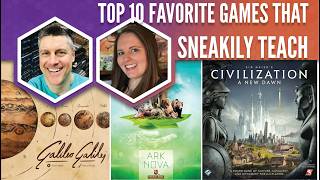
Fans of the Civilization: A New Dawn experience should explore Ark Nova, which features the same elegant focus card system that reviewers identified as the true mechanical innovation. Through the Ages offers deeper civilization progression for players willing to invest more time. The newer game Civilization VI: A New Dawn (if available) or Age of Civilization might appeal to those craving heavier 4X experiences. For streamlined civilization racing specifically, Eclipse offers excellent 4X pacing within a single session. Games like Shakespeare, Arkham Horror, and other Fantasy Flight Games products share similar card-activation systems that create satisfying decision puzzles turn after turn.
What Reviewers Are Saying
"The expansion adds more of the 4X feel of uncovering tiles and also critically it adds a better combat system. The initial combat system in the original game was okay. It's a lot better in the expansion, Terra Incognita."
— 3 Minute Board Games
"Civilization just has this satisfying progression of everyone building up their civilization. Everyone has more opportunities by building more cities, which expands the options where you can build from. Better tech for everyone is better focus cards, which means that individual actions you take are now stronger permanently."
— Shelfside
"I think you've got to get your head around that it's a shorter game but it is a great game. I still have fun even though I'm losing, and that's Civilization: A New Dawn."
— Allies or Enemies