/pic4059108.jpg)
/pic3714302.jpg)
The King is dead! What happened? Nobody really knows, but he was found face down in a wine barrel this morning. It could have been either foul play or his own thirst that did him in. Regardless, the King is dead without any known heirs, so it's up to the five factions of the realm to decide who will be the new king: Will it be you or your opponent? Do you have what it takes to win over the realm's factions?
Claim 2 is played in two distinct phases. In phase one, each player gets a hand of cards that they use to recruit followers. In phase two, they use the followers from phase one to compete and win over the five factions of the realms. Each faction has a special power that effects play, and powers can be different in each phase! At the end of the game, the player who has the majority of followers of a faction wins that faction's vote, and whoever wins the vote of at least three factions wins the game!
Claim 2 is a standalone sequel to Claim, featuring five new factions that can be played on their own or mixed in any combination with the factions in Claim.
/pic4059108.jpg)
- Two-player trick-taking with diverse factions
- Expansions create variability; base set recommended
- Claim
Mechanics (from transcript analysis)
Video topics + discussion points
Quotes (from this video)
- This is a game about acquiring mergers and things that happen as you're physically placing out these pieces onto the board and starting hotels and then you can spend money to buy stock.
- It's so good.
- It's a two-player game, so it's perfect for two players.
- Brass Pittsburgh does cool stuff. If you like brass, I think you're going to like Brass Pittsburgh. If you're not a fan of brass, it didn't change a dang thing.
- The wake and loadup stuff, there's this kind of thing with like fuel range where you can really only be in the air so long.
- This is Baby's first dog fight.
References (from this video)
- Innovative integration of follower recruitment within a trick-taking framework
- Clear thematic hook with a throne-room political dynamic
- Two-phase design can create escalating tension and strategic depth
- Potential complexity from managing factions and recruitment simultaneously
- Balance concerns if follower effects dwarf direct card play in late game
- politics, legitimacy, factional influence, throne room intrigue
- A medieval throne room and surrounding court during a contested succession; intrigue blooms as factions maneuver behind the scenes.
- two-phase vote-driven strategy with covert recruitment and public alliances
Mechanics (from transcript analysis)
- faction voting — Players vie to secure a majority of votes from five factions to crown a new king.
- hand/resource management — Players manage limited resources (followers, cards) to influence outcomes and avoid overcommitment.
- Resource Management — Players manage limited resources (followers, cards) to influence outcomes and avoid overcommitment.
- Trick-Taking — Standard trick-taking sequence is augmented by recruiting followers to bolster your standing with factions.
- trick-taking with recruitment — Standard trick-taking sequence is augmented by recruiting followers to bolster your standing with factions.
- Two-phase structure — Game progresses in distinct phases (recruitment and voting) that shape subsequent choices.
- Variable Phase Order — Game progresses in distinct phases (recruitment and voting) that shape subsequent choices.
- Voting — Players vie to secure a majority of votes from five factions to crown a new king.
Video topics + discussion points
Quotes (from this video)
- more games are now in Alpha and beta
- testing on board game arena in claim a
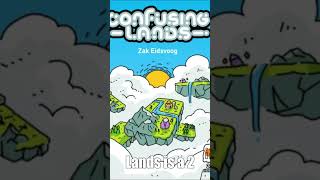
- two-player micro game where players build Whimsical floating Landscapes by playing cards with symbols and scoring conditions aiming to score the most points from both shared and individual scoring criteria after eight turns
- spring cleaning is a card game where players compete to declutter their houses by offering up excess items to neighbors while strategically reshaping their hand of cards aiming to be the first to shed all cards and minimize trash accumulation to win
References (from this video)
- tension and speed; accessible concept
- not the core focus of the session; mentioned in passing
- push-your-luck/power/dice-driven area control
- Istanbul (expansion context)
Mechanics (from transcript analysis)
- Pusher-luck area control — dice-driven control with area control elements and risk decisions.
Video topics + discussion points
Quotes (from this video)
- this is bonfire... kind of one of his more recent ones
- I thoroughly thoroughly enjoyed this two-player game
- it's remarkably fast as well I think I played it in about 75 minutes
- I think it's absolutely fantastic and one of the best two-player games I've played this year
- I love this game because the dice system in Bora Bora is great and the powers help balance outcomes
- expansion Mekka & Bah definitely did make a big change in the gameplay
- Caesar's Empire ... an evergreen feeling game that should be up there with Ticket to Ride
References (from this video)
- Two-player focused design
- Different from Fox in the Forest
- Can combine with Claim 1 for more players
- Modular power selection system
- Creates different experience each play
- Neat system implementation
- Limited to 2 players standalone
- Fantasy elements
- Dragons and giants
- Seers and treasure
- Claim 1
- Fox in the Forest
- Trickster
Mechanics (from transcript analysis)
- Combinable with Claim 1
- Compound Scoring
- Dragon Card (Lead Next Trick)
- Giant Card (Discard Opponent Cards)
- Hero/Power Card Selection
- Phase 1: Pared-Back Auction
- Phase 2: Trick-Taking
- Seer Card (Reveal/Choose Card)
- Simultaneous Reveal
- Suit Majority Scoring
- Three or Four Player Partnerships
- Trick-Taking
- Turn Order: Claim Action
- two-phase gameplay
Video topics + discussion points
Quotes (from this video)
- The Back Side is not destined to be a classic okay it's a fairly random sort of affair
- This is what happens when you mash a trick-taking game with uno
- You have to embrace the chaos and just enjoy those fun moments
- Trick and Trouble is a really interesting little puzzle it's really fun for a few plays
- Those declarations make it feel a little bit more serious a little bit more thinky a bit more strategic
- Fox in the forest is is really really good
- Crime Hotel is a really cute production I mean it shouldn't work but it works it's really fun
- There's nothing else that looks quite like this it feels like something that hasn't come out of western board games
- The game is really really good it's a really good take on trick-taking
- So much variety in that box I love that as a system
- Trickster is not just about chaos and special powers it's got a sophisticated system at the center of it
- This is an example of using trick-taking to drive a bigger system
- I love this one this is an instant classic
- A simple change that just makes everything different
- The strategies are different the timing the tension
References (from this video)
- tight, tense decisions with a clever twist
- short play-time with a satisfying payoff
- mechanics may feel different from traditional dice-rolling games
- bidding and placement
- raffle-like auction with area control and speed
- clever push-your-luck with strategic decision points
Mechanics (from transcript analysis)
- Area Control — placing on board spaces to control rows and columns
- Push Your Luck — dice-driven rows/columns determine action opportunities
Video topics + discussion points
Quotes (from this video)
- it's really tight this Bard is and the opportunity cost of doing one thing
- there are so many different ways you can score in this game
- it's punchy
- the game end really does rush up on you
- polished, refined, gorgeous to look at
- you can just take the pieces off the board and go again