/pic5594286.jpg)
/pic1351042.jpg)
Clash of Cultures: Monumental Edition brings back the classic game of exploration, expansion, and development with the Clash of Cultures base game and the Civilizations and Aztecs expansions in one box! Grow your civilization, advance your culture and tech, and leave your mark by building wonders, with this edition of the game including fully-sculpted miniatures of the Seven Wonders.
In Clash of Cultures, each player leads a civilization from a single settlement to a mighty empire. Players must explore their surroundings, build large cities, research advances and conquer those who stand in the way. The game features a modular board for players to explore, 48 distinct advances, seven mighty wonders, and loads of miniatures and cards. The winner will create a culture that will be remembered and admired for millennia.
Part of the Clash of Cultures family — see Clash of Cultures for the combined view.
/pic5594286.jpg)



- Really enjoyed the original edition
- Really excited for the new edition
- Monumental edition is a beautiful production
- Baked-in expansions add unique faction abilities
- Such a good game
- Great fun
- Enjoyed at every player count
- Fantastic game
- Beautiful to look at
- Original edition was given away
- New edition was delayed multiple times
- Civilization building and expansion
- Ancient civilizations
Mechanics (from transcript analysis)
- city building — you're building cities and monuments.
- civilization building — one of the great civilization building games.
- Combat — there is combat. You're building military units.
- Tech Tree — There is tech tree. You got this beautiful dual layered tech board.
- Territory Exploration — hidden terrain that you're uncovering
Video topics + discussion points
Quotes (from this video)
- I got threequarters of the way through one of my wife's audio books, and then I accidentally deleted it. I'm never going to hear the end of it.
- All right, ladies and gentlemen. So, we're getting further along in the list. We're completing the first half right now. So, let's go ahead and take a look then at uh my top uh well, my my number 60 through 51.
References (from this video)
- Monumental edition offers more monumentalism.
- A very hard category this was a winner.
- The mechanics and understanding the developing civilization flowed well.
- Easy to teach.
- Has incredible bling.
- Marty really, really, really liked it.
- Allows for historical gameplay with different factions.
- Skill trees for each faction are different, providing variability.
- Core rules are consistent, making it easier to pick up.
- Flows easily.
- Love the fog of war exploring tiles.
- Such a good game.
- A two-player game can be finished in 90 minutes to two hours.
- Love the board and the tech tree.
- Stayed on the host's shelf.
- Will be a game for Saturday afternoons.
- Enjoyable three to four hours of gameplay.
- Received the Game of the Year award.
- Received the 'It's Alive' award.
- Can take a long time to play (3-4 hours).
- Host initially thought it would be a 'grumpy Tony' experience due to length.
- Civilization Building
- Ancient Civilizations
- Tyrants of the Underdark
- Gravwell: Escape from the Ninth Dimension
- Maracaibo
Mechanics (from transcript analysis)
- civilization building — Players develop their own civilization through various aspects.
- Dice Rolling — Used for certain actions or outcomes within the game.
- Technology tree — Players advance through technology trees.
- Tile Placement — Players place tiles to expand their territory or actions.
Video topics + discussion points
Quotes (from this video)
- Brian Boru High King of Ireland as soon as you put that on the on the table and as soon as I saw trick taking I was like uh oh I'm all in I I pushed all the chips in I was fully engaged in this game
- Clash of cultures Monumental Edition I'd like to commend the design development and Publishing team behind K C it's varied in strategy epic in scale and thankfully foot powder free
- man it's one of those games for me that just created an experience every time I played and I've played with four player I've played with three player I've played with two player and every single time I enjoyed what that game brought to the table
References (from this video)
- Varied strategy
- Epic in scale
- Creates a memorable experience
- Satisfying gameplay loop
- Efficient two-player game
- Appealing board and tech tree
- Can take three to four hours for longer player counts
- Mar Nostrom
Mechanics (from transcript analysis)
- Area Control — trick taking an area control
- civilization building — let's do some tech trees
- Dice Rolling — let's der roll some dice
- Trick-Taking — trick taking an area control
Video topics + discussion points
Quotes (from this video)
- Brian Boru High King of Ireland as soon as you put that on the on the table and as soon as I saw trick taking I was like uh oh I'm all in I I pushed all the chips in I was fully engaged in this game
- Clash of cultures Monumental Edition I'd like to commend the design development and Publishing team behind K C it's varied in strategy epic in scale and thankfully foot powder free
- man it's one of those games for me that just created an experience every time I played and I've played with four player I've played with three player I've played with two player and every single time I enjoyed what that game brought to the table
References (from this video)
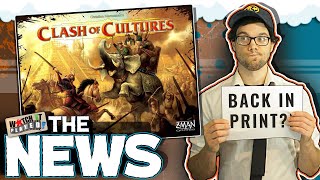
- Classic epic and definitive civilization game
- Reprint of a highly sought-after game
- Includes "Civilizations" and "Aztec" expansions
- Looks epic with great scale and depth
- Great jumping-in point for new players
- Has been out of print and difficult to find
- Civilization game of expansion, technology, wonders, combat.
- Seven Wonders
Mechanics (from transcript analysis)
- civilization building — A game of expansion, technology, wonders, and combat.
- expansion integration — The "Monumental Edition" includes the "Civilizations" and "Aztec" expansions.
- miniatures — Includes a large number of miniatures.
Video topics + discussion points
Quotes (from this video)
- root the game about cute cuddly critters kicking each other in the shins in a forest of death
- hate war cards my least favorite war card is hadrian's wall uncastable jank nonsense
- how hard can it possibly be to design a board game i mean really
- it's pretty hard keeping up with wizards of the coast release schedule kind of feels more like a tower defense game you know where all the different sets are trying to steal my wallet
- come on people to be open a new browser tab so you can go and buy the pdf right now or wait for the physical copy which is in the pipeline
References (from this video)
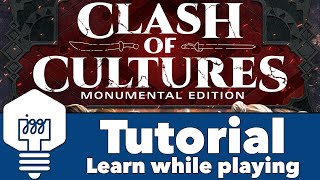
- Monumental Edition includes Clash of Cultures plus the Civilization expansion, with updated components.
- Includes a great, double-sided player aid for base game and expansion content.
- Adds new civilizations (e.g., Maya) and new buildings/wonders, expanding depth and options.
- civilization-building, exploration, and conflict
- civilization-style board game on a map with civilizations
- rule-teaching tutorial style
Mechanics (from transcript analysis)
- Advancement / technology tree — Advancements can be purchased by spending food, ideas, gold, or other resources; blue and yellow borders provide bonuses; advancing unlocks new abilities and sometimes expansion content (e.g., obelisks).
- Barbarians and pirates (expansion) — Barbarian spawn events release barbarians near cities; expansion introduces cavalry and elephants for barbarians; pirates can spawn on water with expansion.
- Card decks and actions — Game uses action and objective decks; cards provide various effects and objectives grant end-game points.
- City activation and resource collection — Activating a city allows recruiting units, harvesting resources from adjacent regions, or constructing buildings; city size and mood affect resource yields.
- Combat and battles — Battles occur when armies occupy the same space; combat uses dice, and can include clash abilities from action cards; casualties are calculated by combat value divided by five, rounded down.
- Culture and mood tokens — Culture and mood tokens are used to perform actions and improve city mood; mood affects resource yields and the ability to construct, with costs scaling by city size.
- End Game Bonuses — End-game scoring accounts for cities, advances, objectives completed, wonders controlled, and expansion-specific scoring; experience with volcano events and other conditional points can alter final tallies.
- End-game scoring — End-game scoring accounts for cities, advances, objectives completed, wonders controlled, and expansion-specific scoring; experience with volcano events and other conditional points can alter final tallies.
- exploration — Moving onto unrevealed tiles reveals them and requires placement decisions that must connect to water when possible; exploration rules differ for ships.
- Leaders and government — Leaders can be recruited and grant combat or location bonuses; governments can be changed spending resources after prerequisites are met.
- Monuments and wonders — Wonders require significant resources and provide end-game scoring and special effects; the edition includes new wonders (e.g., Great Arena) and other expansion content.
- Ports, fishing, and trade routes — Ports allow sea-based resource collection and ship recruitment; fishing enables food from sea spaces; trade routes generate food when paired with ships or settlers near enemy cities; currency via taxation.
- Tech Trees — Advancements can be purchased by spending food, ideas, gold, or other resources; blue and yellow borders provide bonuses; advancing unlocks new abilities and sometimes expansion content (e.g., obelisks).
- Terracing and terrain bonuses — Terracing allows harvesting from mountains and enables settlers and leaders to ignore certain terrain penalties; mountains and other terrain types interact with movement and collection.
- Turn structure — Each player takes exactly three actions per turn; there are six possible actions to choose from; the game runs for up to 18 rounds with a status phase after each set of three rounds.
Video topics + discussion points
Quotes (from this video)
- In this video, I'll be teaching you the rules to the game as it's being played.
- This edition has the original Clash of Cultures plus the Civilization expansion mixed into it to make this new edition, and all aspects of the game and expansion have been updated and improved for this edition.
- This is a civilization-style game where each player is in charge of a specific civilization.
- The game comes with this great player aid, and it's double-sided.
References (from this video)

- Favorite civilization game of all time
- Monumental Edition is a streamlined improvement
- A must-try for fans of civilization games
- Essentially the same game as the original, just a better edition.
- Civilization building
- Clash of Cultures
Mechanics (from transcript analysis)
- Area management — Implied by civilization building games.
- civilization building — The core theme and mechanics of the game.
- Resource Management — Implied by civilization building games.
- Technology trees — Implied by civilization building games.
Video topics + discussion points
Quotes (from this video)
- Man that really makes it sing
- All the other parts of the game just really make it a fun fun play
- This one boy Ankh is really good man
- This is one of my favorite games of all time now by far
- The solo app is freaking amazing
- It's like a subversion of about what power is
- The way that those all those things kind of swirl together is really really cool
- Don't sleep on this one if you can get it
- Heroquest is great
- The solo mode is really cool though
- The solo mode is really really well done
- Third edition has been great mostly like mostly great
- The narrative stuff is what sucks it and pulls it all the way at the top of the list again
- This is basically the same game as clash of cultures it's just way better
- Clash of cultures is definitely in my top 10 games of all time
- Which is totally new game but also kind of just Frostgrave in space
- I've had a really a lot of fun playing Stargrave
- The solo stuff is much better I think in Stargrave than it is in Frostgrave
References (from this video)

- Spectacular board evolution and civilization-building feel.
- Expanded content in Monumental Edition adds depth.
- Can be lengthy and heavy for casual players.
- Cultural development and empire-building across a mutable map.
- Civilization-building with a fog of civilization on the board.
- Tile revelation and expansion with modular maps.
Mechanics (from transcript analysis)
- district_development — Construct districts within cities that can be influenced by others.
- Engine Building — Competing civilizations evolve with technology and expansion.
- multiplayer_engine_building — Competing civilizations evolve with technology and expansion.
- tile_flipping — Flipping tiles to reveal new locations and opportunities.
- Tile/Map Shifting — Flipping tiles to reveal new locations and opportunities.
Video topics + discussion points
Quotes (from this video)
- I absolutely adore Carcassonne.
- It's incredibly fun to watch the board evolve.
- One of the best 4X games out there.
- Clank Catacombs is amazing. I love it.
- Mansions of Madness is a fantastic horror board game.
References (from this video)

Mechanics (from transcript analysis)
Video topics + discussion points
Quotes (from this video)
- clash of cultures is a civilization 4x game for 2-4 players
- over 6 ages of play players will advance their societies expand their own cities spread their culture to the cities of their opponents and go out attempting to conquer
- the player with the most cultural influence after six ages wins the game
- clash of cultures is played in six ages
- the monumental edition contains both the base clash of cultures game and the civilizations expansion
References (from this video)
- Includes base game and civilization expansion in Monumental Edition
- Six ages of play providing long-term strategic depth
- Multiple action types and nuanced combat and expansion options
- civilization-building, culture influence, and conquest
- civilization 4x world
- progressive era progression across six ages with event and advancement cards
Mechanics (from transcript analysis)
- Activate city — Choose a city and perform one of three sub-actions: collect, construct, or recruit; activating the same city multiple times has mood penalties.
- Advance — Gain one of the 48 different advances; costs two food or ideas; movement on the event tracker; top item must be the first in a section.
- Combat (in movement and battles) — Combat rounds with action cards, dice, and casualties; special rules for fortresses and barbarian combat; outcomes determine control of cities and resources.
- Found a city — Use a settler on a hex that is not barren, does not contain another city or enemy units; replace the settler with a city piece.
- Increase happiness — Spend mood tokens to raise happiness of a city; cost scales with city size; can perform multiple increases as tokens allow.
- Influence culture — Choose a city of another player within range; roll a die to influence buildings; you may swap buildings if successful; range can be extended by spending culture tokens.
- Influence Points — Choose a city of another player within range; roll a die to influence buildings; you may swap buildings if successful; range can be extended by spending culture tokens.
- Move — Move recruited units; gain movement points; exploration and combat can occur when moving into unexplored or enemy hexes; ships and special movement rules apply.
- Track Advancement — Gain one of the 48 different advances; costs two food or ideas; movement on the event tracker; top item must be the first in a section.
Video topics + discussion points
Quotes (from this video)
- clash of cultures is a civilization 4x game for 2-4 players
- over 6 ages of play players will advance their societies expand their own cities spread their culture to the cities of their opponents and go out attempting to conquer
- the player with the most cultural influence after six ages wins the game
- clash of cultures is played in six ages
- the monumental edition contains both the base clash of cultures game and the civilizations expansion
References (from this video)

Mechanics (from transcript analysis)
Video topics + discussion points
Quotes (from this video)
- variety is the spice of life
- i live inside boxes my brain has a hard time getting out of them
References (from this video)
- Strong tech-tree depth enabling varied playstyles and long-term planning
- Asymmetric cultures with distinct leaders creating replay variety
- Multiple viable paths to victory beyond military conquest
- High production value and clarity of components and rulebook in the Monumental Edition
- Dice-driven combat introduces randomness that can affect outcomes and perceived control
- Extensive rulebook and learning curve may slow initial entry
- Game length can feel long for a Euro-style title, especially with higher variability
- Cultural advancement through technology, governance, and influence; assimilation of opponents' pieces
- Ancient to medieval civilizations on a modular, variable map with exploration and expansion
- Euro-style 4X with asymmetric cultures and leader-driven dynamics
- Epoch (EPO) by Jeffrey CCH
- Risk
- Caverna
- Scythe
- Through the Ages
- Age of Empires (PC game)
- Wolves
- A Feast for Odin
- Fields of Ar a
Mechanics (from transcript analysis)
- action chaining — On a turn, players can perform up to three actions in sequence, enabling chaining to accomplish complex goals; conceptually similar to other action-selection systems
- Area Control — Cultural influence can swap or replace opponent pieces, which reshapes end-game scoring opportunities and board presence
- Area Control / Piece Replacement — Cultural influence can swap or replace opponent pieces, which reshapes end-game scoring opportunities and board presence
- Asymmetric Cultures and Leaders — Each civilization starts with four technologies and can recruit unique leaders with ongoing abilities; leaders can be lost in combat, and players can recruit different asymmetric leaders to vary play
- Asymmetric Teams — Each civilization starts with four technologies and can recruit unique leaders with ongoing abilities; leaders can be lost in combat, and players can recruit different asymmetric leaders to vary play
- Combat: Dice — Combat outcomes rely on dice, introducing luck that can influence clashes and resource/territory control, contributing tension and variability
- component quality — Monumental Edition features high-quality components and a substantial rulebook intended to support learning and immersive play
- Culture Influence / Assimilation — Players spend culture points to influence and replace opponent city pieces, creating a tension between control and the benefits opponents retain from the captured piece
- Dice-based combat — Combat outcomes rely on dice, introducing luck that can influence clashes and resource/territory control, contributing tension and variability
- End Game Bonuses — Typically ends after six ages (about 54 actions per player) with potential early end via various triggers such as dice results, constructing a Wonder, or event-driven rules
- endgame triggers — Typically ends after six ages (about 54 actions per player) with potential early end via various triggers such as dice results, constructing a Wonder, or event-driven rules
- Event and objective cards — Event cards and objective cards provide variability; many objective cards have multiple uses and can influence combat or non-combat aspects of play
- exploration and resource management — Map exploration and resource gathering drive the core of early and mid-game development; modular map adds variability between plays
- Resource Management — Map exploration and resource gathering drive the core of early and mid-game development; modular map adds variability between plays
- Tech Tree — A diverse technology tree ranging from agriculture to government that shapes early strategy and interacts with culture paths; varied tech paths increase replayability and synergy with player abilities and board situations
- Tech Trees — A diverse technology tree ranging from agriculture to government that shapes early strategy and interacts with culture paths; varied tech paths increase replayability and synergy with player abilities and board situations
Video topics + discussion points
Quotes (from this video)
- The sense of Discovery and exploration into what the different parts of the tech tree have to offer during the game is really intriguing and is something that I would want to come back to over and over again at least at the very minimum amount of plays and experience that I have with this game
- Learning the game was a little challenging because of how extensive the rules are, but it is well written and easy to learn from with time
- The expansion introduces leader units with ongoing abilities, built and recruited similar to how commanders work in Magic the Gathering; leaders provide tactical advantages but can be lost in combat
- There is enough variability and it would really depend on how strong those objective cards and event cards are in altering your play strategy
- dice based combat and cultural influence as well as other things and So that obviously that introduces some luck into the game
References (from this video)
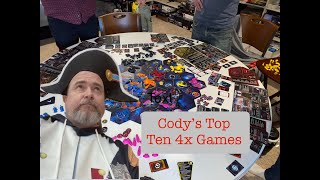
- epic feel and strong component quality
- expansion baked-in with Monumental Edition
- civilization-building with layered tech and city development
- Various ancient civilizations across the world
- epic, grand-scale civilization flourish
Mechanics (from transcript analysis)
- City-building and expansion — push forward with cities, gain resources, and attack rivals
- Dual-layered boards — tracks for technologies and other resources; complexity and depth
Video topics + discussion points
Quotes (from this video)
- Forbidden Stars is a great 4X game where you are the various factions from Warhammer 40k.
- The game is beautiful. You have these tiles that have the different planets and whatnot on there. You've got these minis that are these beautiful spaceships and tanks and forces.
- I love it. I think it's a fantastic game.
- this game more than anything, I would say is probably a take that game with the card playing stuff.
- it's a great civilization building game, but it would be a great civilization building game even if it wasn't Star Trek.
- it's absolutely 4X because again you are exploring.
- you are laying down warp lanes and you're actually laying down these like lanes that you do to travel to different planets and you're laying down the different planets and exploring them and then you're trying to take them over and build up your resources.
- Twilight Imperium is my number one.
- it's a grand epic space adventure. Again, you got a mountain of cards. You've got tons of plastic. I freaking love Twilight Imperium.
- this is a show. It's like a movie. It's like a book.
References (from this video)
- epic scale and depth
- immense thematic flavor
- beautiful components
- very long play time
- steep learning curve
- Cultural conquest and empire building across civilizations
- Ancient civilizations, epic conquest spanning multiple ages
- epic civ-style progression with tech trees and events
- Age of Empires (PC)
- Civilization (PC)
- Risk
Mechanics (from transcript analysis)
- area control / negotiation — control territories and resource management through city-building
- combat / battles — units in cities engage in battles resolved by dice/strength
- tech tree / civilization development — advance through tech cards to unlock abilities and units
- trading / diplomacy — negotiation with other players to gain resources and advantages
Video topics + discussion points
Quotes (from this video)
- absolutely loved it
- epic civ style, four to five hour epic game
- this is not solitaire at all
- two decks of cards provide variety
- it's gorgeous
References (from this video)
- Iconic, sprawling civilization game with grand scale
- Rich production and thematic depth
- Reworked edition clarifies and streamlines rules
- Long playtime and heavy setup
- Can be intimidating for new players
- Historical civilization development with tech trees and expansion
- Ancient civilizations with a grand civilization-building arc
- Epic and strategic, with long play sessions
- Cascadia
- Gravwell (Gravwell edition joke referencing editions with colons)
Mechanics (from transcript analysis)
- area control / influence — Compete for influence and scoring across regions.
- Tech trees / development tracks — Advance via technologies to unlock capabilities.
- Tile placement / map-building — Place tiles to develop a civilization map and connect regions.
Video topics + discussion points
Quotes (from this video)
- the puzzles were excellent as far as for our intellect being able to figure them out
- the card play is just so clever
- field rotation and having to clear the rocks
- six ways to score; putting out tiles; very competitive
- Clash of Cultures Monumental Edition … congratulations