/pic7884933.png)




















Conservas Deep Dive
What the Community Thinks About Conservas
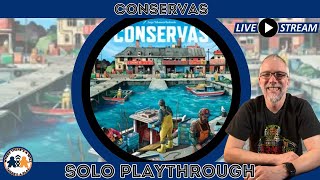
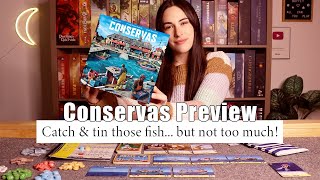
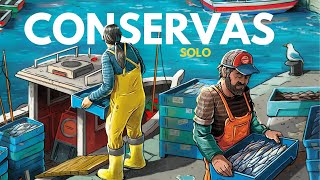
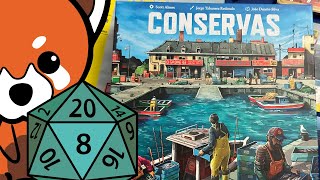
Conservas has captured the attention of solo board gamers seeking a compact, meaningful experience. Reviewers across channels like Crimsonboardgames and Our Family Plays Games consistently praise the game for its elegant design and the emotional weight of its theme, which frames resource management within a narrative of sustainable fishing. The game keeps bringing players back for repeat plays, a sign of a design that rewards both careful planning and experimentation.
Core Mechanics That Define Conservas
Bag Building and the Fishing Phase
At its heart, Conservas is a bag-building game where players pull tokens from a draw bag to simulate fishing from the ocean. Each round begins with an "at sea" phase where you draw tokens and decide whether to place them on your boat cards or return them to the open water area. The challenge lies in balancing immediate gains against long-term sustainability. Boat cards have a capacity limit, forcing difficult choices about which fish to keep and which to put back into the ocean to spawn later.
Resource Management and Market Sales
In the inland phase, players sell their caught fish at a market to earn money, purchase upgrades for their fleet, or buy additional boats. The market functions as a set-collection puzzle where you fulfill specific market spaces that require certain fish combinations. Each fulfilled space is gone permanently, creating the question of when to sell and when to hold fish in hopes of better breeding cycles. The tension between short-term profitability and long-term sustainability defines every decision. Reviewers point out that the fish you leave in the ocean are not wasted; they form the breeding stock that repopulates the sea between rounds, so a restrained early game can pay off with abundant catches later. Reading that rhythm, knowing when the sea can support another haul and when it needs a season to recover, is the puzzle that gives Conservas its identity.
The Conservas Experience
A Satisfying Loop of Planning and Payoff
Reviewers highlight how Conservas delivers a deeply satisfying gameplay loop that builds momentum across its rounds. Early rounds feel sparse as you establish your fishing operation, but the engine grows steadily. By the mid-game, players begin to see the fruits of their planning as fish populations increase and market opportunities compound. One reviewer described losing the first couple of games yet immediately wanting to try again, chasing the satisfaction of hitting all the end-game targets.
The Weight of Environmental Consequences
The game's clever core makes overfishing feel genuinely risky. If at any point during spawning you run out of fish tokens in the ocean and must draw water tiles instead, you lose. This creates constant pressure to maintain fish populations while extracting enough to meet financial goals. Players must resist the temptation to fish aggressively and instead work toward a delicate equilibrium between profit and conservation, making every draw tense with consequence.
What Makes Conservas Stand Out
Compact Design with Campaign Depth
Unlike many solo games that feel like puzzles with a thin coat of theme, Conservas integrates its mechanics with the experience of running a fishing company. The game offers a series of monthly scenarios that form a year-long campaign arc, with difficulty options that encourage multiple playthroughs. Each month brings a different market configuration and different winning conditions, so the strategies that work shift as you progress.
Thoughtful Component Design
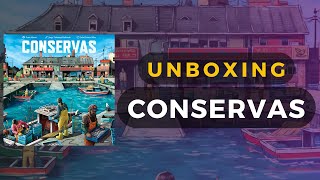
Reviewers repeatedly celebrate the elegance of the component design. Fish tokens carry a fish icon on one side and a miniature tin can image on the other, a visual metaphor that reinforces the theme of processing raw catch into packaged goods. The compact box belies the depth of gameplay, making it friendly to tables with limited space while maintaining a charming, hand-crafted aesthetic that invites repeated engagement.
Potential Drawbacks
Memory Demands of the Bag
The bag-building mechanic, while thematic and engaging, places a real cognitive load on players. You cannot easily track what fish remain in the bag without external notes, which runs counter to the spirit of the mechanic. Some players find this memory element adds a layer of difficulty beyond the strategic challenge, occasionally making it harder to plan effectively or predict spawning outcomes.
Variance From Blind Draws
Because the game involves pulling tokens blind from a bag, variance can sometimes feel harsh. A run of bad draws can force early losses, and conversely, lucky draws can occasionally make victory feel almost inevitable. While this keeps playthroughs fresh, players who prefer outcomes driven primarily by skill may bristle. Moving too fast with your fishing early on can also leave you short of resources midway through.
If You Enjoy Conservas
Players drawn to Conservas often appreciate other design-forward solo games with compact footprints and meaningful decisions. Oceanos offers a similar ocean theme with resource-balancing gameplay. For minimalist puzzles in a tiny package, Button Shy wallet games deliver a comparable economy of components, and Tiny Epic games pack engaging systems into small boxes. Those who enjoy the push-and-pull of harvesting a renewable resource without depleting it will find a kindred tension in Pax Porfiriana.
What Reviewers Are Saying
"I've been loving this game, I've been playing it a lot. It's a solo-only game, and I was looking forward to this for a very, very long time."
— Crimsonboardgames
"In this solo-only board game you make high-end canned fish delicacies. You must balance profits with sustainability, or if you overfish the ocean you'll lose."
— Totally Tabled
"It is a really cool game. Just don't overfish, because you lose the game if you overfish. It's a bag-pulling game, and if you have too much water and not enough fish, you've overfished the sea and you lose automatically."
— Our Family Plays Games