/pic7884208.jpg)
Lewis and Clark are tasked not only with exploring America, but with ridding the land of numerous invasive monsters that have appeared.
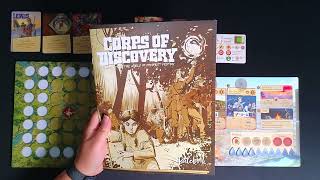
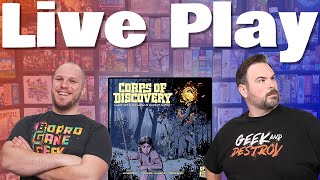
Corps of Discovery: A Game Set in the World of Manifest Destiny is a co-operative deduction game in which players each take the role of one of the crew on the expedition and set out to explore the land. The game board allows for different maps to be inserted into it, so you have many adventures ahead of you.
In addition to finding and killing monsters, you must also complete numerous daily challenges that require specific resources that you can find on the board. You have to use logic and deduction to reason out where the resources you need are located. Ally yourselves with Sacajawea and the indigenous people of the area to help you on your quest.
The game comes with two chapters: Fauna and Flora. Each has new mechanisms, a different goal, and new components to give each chapter a different feel.
—description from the publisher



- Cool mechanics involving a layered board and a sliding sheet to hide information.
- Combines logic deduction with survival elements.
- Only experienced the training mission.
- Rules were not as clear as they could have been, making it harder to learn.
- Exploration and survival
- Survival
- Minesweeper
- Sudoku
Mechanics (from transcript analysis)
- Deduction — Players use rules, such as 'water needs to be next to wood', to deduce the location of different elements.
- exploration — Players explore a map by uncovering tiles, trying to discover resources like water and wood, and identify dangers like enemies.
- Logic puzzle — A puzzle game described as similar to Minesweeper or Sudoku, involving deduction to uncover hidden elements on a grid.
- Resource Management — Players must manage resources, as they can run out of food and die.
Video topics + discussion points
Quotes (from this video)
- I think I might have reached my ceiling on how much I enjoy it, which is probably like a solid eight out of 10, but we'll see.
- I tend to like these shedding games more with more players.
- It's sort of like a mind sweep. Imagine like mind sweeper or sudoku style kind of it's a logic deduction puzzle that you can play solo or cooperatively.
- Ingenious was the definite highlight in terms of new games.
- Least favorite if I had to pick would probably be Lawyer Up. Not a bad game by any means, but just in a sea of like really excellent games, it was one that stood out as just kind of okay.
- Ultimately we're making the content that we'd like to watch and hear and that's something that we've always made clear.
- We're not making any grand declarations here of like what we think is right or wrong for other people.
- I don't have anything against paid content and in fact like anyone who does whether it's board game media or like any kind of media um as either like a journalist as a content creator as a reviewer whatever the case may be.
- You should never be getting paid for reviews and and and that's something I can say like across the board.
- If you are doing reviews of games and you're being paid like money for that, I just think that's ethically irresponsible.
- I just I personally I don't see the value in it. I understand why it exists.
- I just think it gets to the point where like if you as a content creator, and again I I want to stress I don't think you're doing anything wrong by taking paid previews.
- And so that that's sort of where I um landed on it.
- The amount of h usefulness that they that how useful they are to people, how many people watch how to play videos, how many people like swear by watching videos instead of reading rule books.
- I just did that because I wanted to know how to play for it.
- But I just think that from the perspective of like I'm a content creator, I'm doing my best to provide content for my audience, and I'm also trying to make a living. Like you're doing their marketing work that should be coming out of their marketing budget for free for them.
- It's it's it's it's tough. Like I from as someone who now was trying to like sort of do this full-time for like you know half a year for 6 months.
- There are a lot of different types of sources and there's creators out there who have done videos uh going into detail about this kind of stuff.
- I agree with you 100% that the review copy is there to provide access to the game.
- Previews weren't fun or enjoyable to make. They just weren't rewarding uh in the same way as most other videos.
- It felt like me just uh freelancing as uh on the marketing team of that company or for that game.
- You realize like I'm basically watching a commercial.
- It's not about that. It's not this isn't supposed to be an opportunity for us to like throw people under the bus or put a spotlight on people that might not want a spotlight on them.
- The other thing is just like a podcast is a better space to have this type of discussion.
- We've never actually paid ourselves yet. Um, in the six and a half years that we've been doing this.
- Quantity content a large part of the time usually means like much less effort content.
- I'm sick of like a news item comes out and it's like something that's really worth discussing, really worth like talking about.
- Rather than it being about like people putting out stuff to discuss it, it's like a 10-minute video of someone summarizing all the things I already know with barely any other insight.
- The quality content takes longer and in a board in a space like board games where you could do quality content and get like you know 5,000 6,000 views and that that's like good for the board game space but that is not good for your wallet.
- It's almost like there's even if I don't threaten it, it's almost like there is a perpetual threat because I made it known, well, we're only here because of Patreon.
- It's just not that there's anything maybe inherently like um disreputable necessarily about someone asking for that. I just I feel like it reminds me a little bit of like relying on customer tips at a restaurant to supplement low wages.
References (from this video)
- Unique game
- Interesting deduction mechanics
- Good for solo play
- Comes with many maps
- High replayability due to multiple maps, characters, and gear
- Outdated rulebook provided initially
- Potential for replayability to be low for players with excellent memory
- Host made a bad decision leading to failure due to not thinking through deduction
- Scouting unexplored lands for an expedition
- Manifest Destiny
Mechanics (from transcript analysis)
- Deduction — Players use revealed information (like resource locations) to deduce the location of other game elements and make strategic decisions.
- exploration — Players explore the map by revealing path tokens and uncovering resources or challenges.
- Modular Board — The game utilizes multiple maps, enhancing replayability.
- Push Your Luck — Players take risks in exploration, which can lead to penalties if they are wrong or cannot meet the requirements of challenges.
- Resource Management — Players must manage resources like water, wood, and food to survive and complete objectives.
- Set Collection — Players collect specific combinations of resources (e.g., wood and rock) to craft items or overcome challenges.
- Variable player powers — The game features different characters with unique abilities that affect gameplay.
Video topics + discussion points
Quotes (from this video)
- This is just a video of my experience playing the game and um uh pretty much my my uh first impressions, because I haven't really you know, dived into the rest of the game at all.
- This training mission will introduce you to the rules and deduction concepts used in Core of Discovery during a brief introductory scenario.
- The unexplored lands are unforgiving, but the search for water is far from the greatest challenge you will face.
- This is a going to be a very very much a resource management type game or and also exploration game.
- I find it to be one of the most unique games ever.
- I do think this is a very unique game.
- if you have really good memory, maybe the replayability won't be great for you. But uh for me, cuz my memory's not great, I think this would be a game that could last um me uh many play sessions.
References (from this video)

- Want to play more after first play
- Fun tactile components (wooden player boards, wooden board)
- Played mostly solo mode instead of multiplayer for sense
- cooperative deduction
- island
Mechanics (from transcript analysis)
- cooperative play — Players work together to achieve a common goal.
- Deduction — Players use clues and logic to figure out information.
- Tile Placement — The game involves exploring a map, which implies placing tiles.
Video topics + discussion points
Quotes (from this video)
- The board game hobby is very second half year focused.
- Which game do you want to take on a second date? Also known as impressed you most after a first play.
- Which game hit the table more than any other this year?
- What was your biggest surprise {question mark} and or disappointment?
- What games production or art has impressed you the most?
- Which is your most reliable introductory board game?
- Which cult of the old title, uh 10 plus years old, did you discover for the first time this year?
- What is currently at the top of your wish list?
- Shout-out hello to a creator, podcast, blog, or local game store that made your year better.
- What was a favorite piece of content that you made this year?
References (from this video)
- Deluxe edition has nice wooden player boards and a wooden board.
- Components make for a tactile and fun experience.
- Made the game better.
Mechanics (from transcript analysis)
Video topics + discussion points
Quotes (from this video)
- The board game hobby is very second half year focused.
- Which game do you want to take on a second date? Also known as impressed you most after a first play.
- Which game hit the table more than any other this year?
- What was your biggest surprise {question mark} and or disappointment?
- What games production or art has impressed you the most?
- Which is your most reliable introductory board game?
- Which cult of the old title, uh 10 plus years old, did you discover for the first time this year?
- What is currently at the top of your wish list?
- Shout-out hello to a creator, podcast, blog, or local game store that made your year better.
- What was a favorite piece of content that you made this year?
References (from this video)
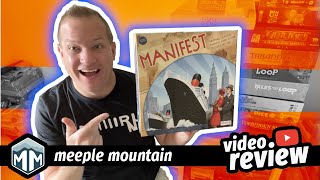
- Advanced version with deck building, action cards, and pirates improves the game.
- Public contract cards are liked because anyone can fulfill them and they don't require payment like private contracts.
- Good for introducing new players to mechanics.
- Kids enjoyed it and understood it quickly.
- The standard version is slow and boring.
- Some card abilities are mean.
- Traveling around the board is slow.
- Strategy is limited; the winner often depends on the luck of contract draws.
- For the reviewer, it was boring and lacked depth.
- Pickup and deliver
Mechanics (from transcript analysis)
- Action cards — Players use action cards for movement, money, or special abilities.
- Deck Building — The advanced version of the game adds a deck-building component where players start with basic cards and can buy more to improve their deck.
- Hand Management — Players manage a hand of contract cards and action cards.
- pickup and deliver — The core mechanic involves picking up goods or people and delivering them to a desired location.
- Push Your Luck — Encountering dangerous routes involves rolling dice, which can result in losing cargo or sinking the ship.
- Route Building — Players move ships around a map to various locations.
- Set Collection — Contracts require specific goods or people to be delivered.
Video topics + discussion points
Quotes (from this video)
- The advanced version adds a deck building portion which helps the slow and boring standard version.
- I wish the traveling part was faster it just feels like most of the game is putting cards out to move.
- it just seems like everyone pretty much progresses similarly there is not a strategy that speeds this up as planning only goes so far in this game which brings up the end of game as it just feels like the winner is a lucky winner due to the contracts that they got and the order that they got him in.
- Ultimately this is a pretty basic game which might be good for you introducing your kids to these mechanics.
- but for me it was kind of boring and it didn't have much to it it didn't let me use any brain power it's kind of slow
References (from this video)

- monster-hunting adventure during exploration
- Lewis and Clark expedition re-imagining with monsters
Mechanics (from transcript analysis)
- cooperative puzzle-deduction — players work together to meet challenges via logic puzzles
- timing puzzle — open spaces in a specific order to achieve objectives
Video topics + discussion points
Quotes (from this video)
- Papa in loving memory of Papa
- Please bear with us
References (from this video)
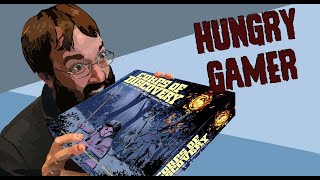
- Strong thematic coherence with the Manifest Destiny graphic novel
- Innovative puzzle-driven exploration that feels fresh
- High tactile/toy factor and clever components
- Blends crisis-management with euro-style resource management
- Niche appeal and potential AP/alpha gamer issues
- Can snowball and be punishing if you get unlucky
- Prototype rules and production vary; may cause confusion
- Requires commitment to puzzle style; not for casual players
- Array
- American frontier during Manifest Destiny era
- Cooperative, puzzle-driven exploration with strong thematic integration
- Frost Punk
- Lunar Rush
Mechanics (from transcript analysis)
- Character selection / Role-based play — Choose a character (e.g., Lewis Clark) with unique gear options.
- Combat: Deck/Hand — Threats and monsters appear via a threat deck and are dealt with through combat and placement.
- Cooperative Game — Players work together to achieve the objective rather than competing.
- cooperative play — Players work together to achieve the objective rather than competing.
- Encounter deck / Threat management — Threats and monsters appear via a threat deck and are dealt with through combat and placement.
- Exploration / Tile-placement — Players explore locations and place tokens to reveal terrain and resources.
- Grid Building — A sudoku-like grid with rules that vary by scenario to determine terrain placement.
- Modular Board — Board elements can be rearranged or revealed to form a map as exploration occurs.
- Modular board / dynamic map — Board elements can be rearranged or revealed to form a map as exploration occurs.
- Puzzle solving / Grid-based deduction — A sudoku-like grid with rules that vary by scenario to determine terrain placement.
- Resource Management — Managing water, food, shelter, fatigue and gear to survive days of exploration.
- Time counters / day-end sequencing — Turns involve time counters and day-end resolution, affecting rewards and penalties.
Video topics + discussion points
Quotes (from this video)
- this game is intensely clever and amazingly unique I have never played a hobby board game anything like it period
- the core of the game play will be the same with the exception of any time I talk about the V eater and how it's moving
- I think this game is intensely neat intensely fun the way this little toy thingy is going to work
- off the page do a really good job ... they feel like the core feeling of the comics
- this is a crisis management game but the puzzle exploration makes it feel unique
References (from this video)
- Intensely clever gameplay
- Unique puzzle-like deduction
- Well-done design
- Not for everyone due to its unique Sudoku-like mechanics
- Host admits to not being good at it
- Adventure
- Sudoku
Mechanics (from transcript analysis)
- Deduction — Players deduce the location of symbols and objectives based on rules and adjacency.
- Objective Fulfillment — Players work to achieve specific objectives, such as finding and defeating minotaurs.
- tile laying — The map is covered by tiles that are revealed during gameplay.
- Time Track — Time is a constant factor, ticking away as players try to complete objectives.
Video topics + discussion points
Quotes (from this video)
- if you took Sudoku and made it a board game with a little bit of adventure in it.
- This is an intensely clever game.
- It's super clever.
- Small game, quick filler, It's right up there with Mouse, Cheesecat, Cucumber for me.
- This is a bidding game where each of your different skyscrapers on this flying island has a different number on the bottom
- And the thing with this game is it's easy to teach. It's quick to play. And it is beautiful. Just beautiful.
- But it is exceptional.
- this is a crisis management game that has a little bit of RPG leveling up, a whole bunch of worker placement, and as I said, crisis management, and you're chucking some dice to do some fighting and all those kinds of things.
- This is to me my handsdown favorite deck builder out there. Period. I adore it.
- It's a dice placement game and I I loved it.
- It's just super asymmetric, which has that moment of, you know, some people don't know what you're doing, so maybe they don't know if you're cheating or breaking the rules or whatever it is.
- This is based on Dante's Inferno. The game's called Inferno, which is a very cool theme to me.
- And just it's a heavy game.
- In fact, I think this is the absolute top limit of how heavy a Euro game can be and I still would be interested in playing it regularly.
References (from this video)
- Great solo campaign
- Engaging gameplay
- Solo campaign
Mechanics (from transcript analysis)
- Solo Campaign — The game includes a specific campaign designed for solo play.
Video topics + discussion points
Quotes (from this video)
- This game has instantly become immediately become my favorite deduction game. It's so good.
- The logic rules for this one are going to be that water is always going to be orthagonally adjacent to wood and vice versa.
- This game is perfect.
- This game is great. I love to do things.
- We're going to lose. We're going to die.
- This game is so easy, y'all.
- Lord Pandemic is so hard. It is not easy.
- We all said that. We all We all heard that. We all said we all agree down in the comments after this video post. Please say, 'Wow, what a great victory.' Wow. Nick and Mike won so easily.
References (from this video)
- Cooperative mind sweeper/deduction game.
- Amazing scenario variety.
- Harsh, fun, varied, and brain-challenging.
- Core game only has a couple of scenarios; expansions or ultimate edition recommended for more.
- Harsh wilderness
Mechanics (from transcript analysis)
- Cooperative — This is a cooperative mind sweeper.
- Deduction — You are logically deducing where to go.
- Survival — Trying to survive in this harsh wilderness.
Video topics + discussion points
Quotes (from this video)
- It's the end of June, so it's time for one of my annual traditions, which is to talk about my favorite games of the year so far, six months in.
- This is a great game. If you like puzzles specifically for two-player play, uh, this is one of the best out there.
- Even without me playing the game correctly, even without me realizing that that was an option, this was still one of my favorite games of the year and that's just pushed it up even further.
- My other my last uh favorite game that is new to me but not new to 2025, although this one did get a big reprinting in 2025, so it's closer, is Wondrous Creatures.
- Pixel Tactics is a game that I always really enjoyed the core mechanics of, but I found it just like so harsh and mean.
- I just forgot what a good boss battle this is and what a good like representation of a JRPG combat system this is.
- This is a war game set in Vietnam that is a mix of narrative exploration and like choose your own adventure and this really crunchy combat mode that is actually pretty cool to play even by itself.
- Now, my one complaint that kept this from being like number one or number two is that the game can be uh pretty swingy.
- Now, y'all, if you watch the channel, know that I love like exploration games.
- This is a cooperative mind sweeper, if you want to call it that. you are logically deducing where to go while trying to survive in this harsh wilderness.
- I said that I like narrative games with an exploration feel. I said that I like uh choose your own adventure games. This is one of the coolest, best ones I've ever got that got me emotionally.
- This is my number one of 2025 so far. Unstoppable, the uh card deck, what is it? Deck building, card construction game.
- Let me know in the comments what some of your favorite games so far this year are.
- War Story Occupied France. I said that I like narrative games with an exploration feel. I said that I like uh choose your own adventure games. This is one of the coolest, best ones I've ever got that got to me emotionally. I had incredibly tough choices and these incredible cinematic battles that felt like I was playing a war movie. Yeah, this one is one of the greatest experiences I've had this year and I can still replay it a few more times and like show it to my family and stuff. So, even though it is like a choose your own adventure kind of narrative game, it's not just a one-off. Absolutely love this one.
- That's my number one of the year so far. Unstoppable, the uh card deck, what is it? Deck building, card construction game. The quick play time, the tactical action choices, the co-op and two players is fine. Not my favorite way to play the game, but it works. And even the boss variety is fun. Yes, I would like more bosses. Yes, I do hope they come out with an expansion, but honestly, I'm super happy with just the core game. And I would play that for years, I think, with just what's already in there. But yeah, Unstoppable easily my favorite game of the year so far. It's kind of far ahead of the other ones.
References (from this video)
Mechanics (from transcript analysis)
Video topics + discussion points
Quotes (from this video)
- Oo, that looks tasty.
- And whoever gets the most points will get first pick of all the amazing prizes that we talked about in the previous video.
- Old King's Crown knocked out.
- Jerry Hawthorne will be crushed.
- Beatric has always been a fan of Ivy Games.
- Aberration has had quite the run and not what was expected as Dan it.
- Definitely a surprise. I thought she was heading towards Aridia.
- Clearly after her midternament nap.
- Clearly allowing Beatatric to be multiple cards in your game is the path to victory.
- It legitimately makes Beatatric really, really happy.
References (from this video)

- Strong logic puzzle element
- Quick setup
- Lots of variety in adventures
- Not for players expecting an adventure-driven experience, despite appearances
- Exploration and deduction
- Uncharted lands of America during Manifest Destiny
Mechanics (from transcript analysis)
- cooperative deduction — Players work together to deduce where hidden resources are on the map.
- Modular Board — The game features a modular board with different maps for variety.
Video topics + discussion points
Quotes (from this video)
- You all know whose list is going to be better, it's obviously going to be mine.
- Sadly, if it did not have that, I think Colin would have really enjoyed this.
- I think there'd be any way you're ever going to beat any of these enemies in this game. But lo and behold, when I got the final copy, it is fantastic.
- Abandon all hope. Yehoo, enter.
- So, if you haven't seen it on the table, please check it out. It looks incredible.
- And then the shocker non-shocker of shockers, Nemesis Retaliation is number one.
- There's cheering all around and there's mass happiness. Or you could pull one word, oh I'm sorry, but you're actually super dead and not just dead. And now there's sadness and there's crying at the table.
References (from this video)

- It's a very solid deduction style resource management game.
- The company has supported it heavily with many scenario sheets.
- It offers a lot of replayability with different maps and objectives.
- The combination of deduction and resource management works well.
- It took the speaker by surprise and they really liked it.
- The rule book is not great.
- The player count of one to four seems off, as it feels like a solo game.
- The game is based on comic books the speaker doesn't know anything about.
- Deduction style resource management
- Alternate universe, mystical
- Mind Management
- Harrow County
- Final Girl
Mechanics (from transcript analysis)
- Deduction — Players try to figure out the location of objectives and manage resources based on clues about the map.
- Resource Management — Players manage water and other resources to pass challenges and avoid losing.
- scenario-based — The game features different scenarios with unique maps and rules, offering a high degree of replayability.
- threat mitigation — Players must manage a threat level that can cause them to lose if not mitigated.
Video topics + discussion points
Quotes (from this video)
- Grim Coven is an absolute amazing boss battler.
- This is a genre that I just absolutely love. It is so good.
- the stories that they tell are like nothing that we've seen, you know, and just just knowing that
- that's Bonkers the for foresight and thought that had to go into designing this.
- This just brings it into the into the Elder Scrolls universe.
- it makes it a much more in my mind deeper experience than like a Too Many Bones cuz it's got a it's like a campaign game.
- This game is a masterpiece in its design.
- This is the epitome of where exploration RPG and campaign games really need to be.
- It was a no-brainer at this case. I knew what my number one and number two were, you know, pretty pretty easily.
References (from this video)
- Definitely keep
- Great survival
- Amazing variety
- Top one of the year
Mechanics (from transcript analysis)
- exploration — exploring these maps
- Logic puzzles — exploring these maps and trying to find different types of terrain based on logic rules you're following.
- Set Collection — trying to find different types of terrain
Video topics + discussion points
Quotes (from this video)
- Hey everybody, welcome to the final episode of Shelf Life for December of 2025, where I look back at games I covered in May of this year and discuss which ones are still in my collection.
- It was fine. Nothing too amazing for me. I enjoyed my time with it, but not one I would come back to.
- Holy crap, I forgot about this one. This was so much fun.
- When is this game coming? I want to play this.
- Uh seven of them covered a lot of games all at once. And these were fine.
- This is also a call. I did enjoy the core gameplay pretty well.
- This is a game I called even though I love it.
- I adored this game, one of my favorites of the year.
- Take everything I just said about Life of the Amazonian. Repeat it.
- I should have kept it, but I just got too aggressive with my culling.
- And that's only because it fits in the same box.
- this one's just more tracks that are okay and have a bit of a cool mechanic on one of them.
- yes, this is not a high recommend. I would not buy this myself. I would not keep it if they hadn't sent it to me.
- this is what I really love the design of.
- So, it's still a recommended game. I think it's a great design. Uh but I am getting rid of it just because I don't really play it much.
- I don't remember this one spec it had the drowning mechanic. I know that where it would actually attach to your Phoenix and it's kind of like extra damage on your character unless you can get rid of it. I thought that was pretty interesting.
- Overall, this was a tough tough month just cuz I got a little call crazy. I actually loved a lot of the games for this month, but I only kept one, not counting the expansions for existing games.
References (from this video)

- Unique gameplay combining logic and survival
- High replayability due to varied scenarios
- Plays well solo and cooperatively
- Based on a good graphic novel
- Punishing and tough difficulty
- Some players may not enjoy it
- Reviewer is bad at it, affecting its inclusion in their personal top list
- Mechanically basic (board and tokens)
- survival
- logic puzzle, survival
- Robinson Crusoe
- Quest for Planet X
- Minesweeper
Mechanics (from transcript analysis)
- Logic puzzle — Incorporates logic puzzle elements similar to Minesweeper.
- Modular scenarios — Features drastically different scenarios that offer high variety.
- Solo/Co-op — Designed for solo and cooperative play.
- Survival — A survival game with resource management and exploration.
Video topics + discussion points
Quotes (from this video)
- If you are buttth hurt because you felt you were wronged previously, that is fair game.
- My my pitch is the joy of Mind Sweeper.
- It is a massively underrated game does have its issues.
- It's a modern masterpiece.
- It's it's it's an unsung hero.
- Ricky Royal has put you out of the competition.
- The name of the game is Unstoppable.
- So, do you want to have a game that can't be stopped or do you want to have an uprising?
- And an uprising back.
- Okay, so let's talk about pain points here.
- There's a gnarling process that happens.
- The winner is from a bunch of Europeans.
- It is a chunky thing. It is a lot of money, but no, it is fantastic.
References (from this video)
- I love this.
- Really like the deduction games.
- Have a lot of fun with later.
- It was really, really good game.
- Happy we finally got to play.
- It felt for me kind of like a Robinson Cruso evolved, but not in gameplay.
- Still has randomness in it.
- Manifest Destiny
- Robinson Cruso
Mechanics (from transcript analysis)
- Cooperative — Co-op game.
- Deduction — A deduction game.
- Solo Play — Can be played solo.
Video topics + discussion points
Quotes (from this video)
- The most fun I think was when you trade with another player and then you forgot that you just traded with that player and you get the same cards back.
- It felt like a boring tug of war kind of mechanism.
- This is mind sweeper the board game.
- The cake is a lie.
References (from this video)

- Logical deduction gameplay
- Clever dual-layer board with hidden maps
- Good replayability due to multiple maps and chapters
- Thematic survival elements
- Engaging cooperative puzzle
- Quick play time (around 45 minutes)
- Terminology confusion regarding 'supplies' vs. 'resources'
- Some players might find the deduction aspect challenging
- Newer art style on investigator cards might not appeal to all veterans
- Alternative history about Lewis and Clark's expedition to defeat monsters.
- Robinson Crusoe
- Pandemic
Mechanics (from transcript analysis)
- Campaign play — The game includes scenarios that form a campaign, allowing characters to progress and gain experience.
- Challenge Resolution — Challenges are resolved by spending specific resources or items, with pass or fail conditions.
- cooperative play — Players work together as a team to achieve a common goal.
- Deduction — Players use clues and a legend to deduce the locations of items and objectives on the map.
- Modular Board — The game uses a dual-layer board with tokens and hidden maps, creating a different play area each game.
- Resource Management — Players must manage limited resources, such as water, wood, and items in a shared backpack.
Video topics + discussion points
Quotes (from this video)
- If you protest too much, you are obviously it.
- When we were playing, I was able to say, 'Oh, I've generated these resources. Now I'm able to put maybe get two cards out where I could only get one out.'
- It is their second core set. It's kind of a new launching point.
- It's like, okay, I think it's like 40. I can't remember how much the two starter decks are.
References (from this video)
- Array
- Array
- cooperation, deductive problem solving, exploration, resource management
- Array
- Northern Australia survival/adventure with a Robinson Crusoe-inspired survival premise and hidden map exploration.
- Array
- Array
- Array
- positive
Mechanics (from transcript analysis)
Video topics + discussion points
Quotes (from this video)
- This game is actually more of a logical deduction game.
- I like this kind of format... it forces you to play with the same cards each week with a few new ones.
- The balance is... if you know the game and you’ve got the cards, you’re probably going to win.
- In Arkham, mythos and doom mechanics drive the narrative forward, and it feels like a living, breathing story.
- The core box is a great jumping-in point for new players, with five investigators and a three-scenario campaign.
- Star Wars Unlimited is a positive step for a new TCG, with accessible starter decks and an escalation league.
References (from this video)

Mechanics (from transcript analysis)
Video topics + discussion points
Quotes (from this video)
- the nomination lists are more important than the awards because you can go out and just buy any of these and play them.
- We're nominating them now, and as I always say, the nomination lists are more important than the awards because you can go out and just buy any of these and play them.
- These are going to be games that are fantastic to teach to someone who is not necessarily part of our fantastic little world of games. Something to get them in the door, get them excited about board gaming, get them introduced to all these amazing things you can do on the tabletop now.
- And so, we got together a group of 50 plus people, that's Dice Tower staff and the other reviewers, different reviewers, and we vote on the nominations, and so we're going to present them to you.
- Well, too bad to each of those nominations because you have to go up against the other four. That is a tough slate.
- if you enjoy heavy strategy games, you were eating well in 2024.
- This is a category for games that play really well with two. It doesn't mean they are exclusively two, although that's usually what is nominated, but it's just a great game for two players.
- This is something that for the last several, several years has become an increasingly large segment of the board gaming hobby.
- Not only are those like pretty strong solo games, but they're also some of the games that were mentioned in top lists of last year. That shows where the category has come.
- So, these are games that do something different. We see a lot of the same stuff, which isn't necessarily a bad thing because same can be good and comforting. But, something that does something unusual or different or feels fresh, here's some games that meet that category.
- My goodness, you now have to ask every time you sit at the table, 'Wait, is this cooperative or competitive?' That's something that was unheard of, you know, a decade ago even.
- I used to not really appreciate how good party games can be.
- So, this is going to be just that implementation of the theme, really immersing you into this world and this setting, uh doing something cool, or maybe just showing you a different kind of light on a thing that you're familiar with.
- I always find it odd how the new designer category often also every year seems to dominate best games of the year category, and I like that a lot.
- Artwork is something that just walking by a table, you can convince me to play a game just by showing me a good box cover. And I think that it's something that can We talked about the theme, can really sell that, but it's that first entry point in the game, and can grab your attention.
- Games are a total production, and what this category is about is saying, 'This is the most impressive full productions of a board game we've seen this year.'
- Now, in this category, we have 10 um 10 nominees, and they kind of encompass the whole package here. You know, we're we're looking at the mechanisms, we're looking at the theme, we're looking at the artwork, just all of it. Which one brought its best to the table?
- Games that are fantastic
- Then our next one is Codenames, a game that really brought party games back into the light, especially word team party games.
- This has sold a gazillion copies.
- And that is Pandemic Legacy Season 1.
- But this is the game. It wasn't the first legacy game, but it was definitely the one that people that kind of exploded and changed
- changing the landscape.
- Talk about a game that truly shook everything up.
References (from this video)
- What a good deduction cooperative deduction style game
- Very excellent game
- Deduction
- Manifest Destiny
Mechanics (from transcript analysis)
- Cooperative — A 'cooperative deduction style game'.
- Deduction — A 'cooperative deduction style game'.
Video topics + discussion points
Quotes (from this video)
- Hey everybody, I'm Tom Vasel and welcome to look back, a series where I go through and take a look at the reviews that I did last year this time and 5 years ago and 10 years ago and 20 years ago and tell you what I think about them now.
- So those are the reviews I did 1, 5, 10, and 20 years ago.
- Thanks for watching. I'm Tom Vasel. We'll see you next time.
- Hey. Uh thanks for watching another video here on The Dice Tower. Uh we really appreciate you stopping by and checking our things out.
- And hey, if you really like what we're doing here at The Dice Tower, then there are different ways to support The Dice Tower. One of those ways is through Patreon.
References (from this video)
- Really, really like it
- Really enjoy this game
- Had a hard time getting into
- Really punishes you for making mistakes
- Robinson Crusoe
Mechanics (from transcript analysis)
- Deduction — It's like a deduction game that is quite tough.
Video topics + discussion points
Quotes (from this video)
- This is just my opinion, right? Yours may very well differ, so let me know in the comments what you think about the games that I will be talking about today.
- It's possible that I will rank a game differently next month.
- So usually my rankings seem to be a little bit more on the more positive side.
- It's not really a game. It's more like an activity, so I would give it a good C.
- This is an amazing small box cooperative game where you like play cooperative poker.
- I urge you if you play this, you should play real time.
- Um it works turn-based, but it's much better real time and it's even better when you speak with a few people with people somehow.
- It's like really great in person, right?
- Wingspan is a number one game.
- It's a good social deduction game that is a kind of um that is like paired with Who Am I?
- Similar to a fake artist goes to New York, just with words instead of drawing.
- It's a very solid game.
References (from this video)

- Plays fantastic cooperatively
- So much fun
- Keep coming back to it
- Tight resources
- Different mission leads to different deduction rules
- Survival aspects
- Amazing comic book theme
- It's really hard
- Survival deduction
Mechanics (from transcript analysis)
- Deduction — Features deduction as a core mechanic, likely involving uncovering hidden information.
- Resource Management — Players must carefully manage limited resources, which are described as 'tight'.
- Survival — Incorporates survival elements where players must manage resources and overcome challenges.
Video topics + discussion points
Quotes (from this video)
- We're all in this together. And that's exactly what today's video is all about.
- I'm going to be giving you seven amazing co-op games I just can't get enough of.
- It's just an absolute delight to play.
- You always feel like you're teetering on the edge of winning or losing.
- When you manage to work it out and you figure out the puzzle and you get across the finish line, oh, it's just so satisfying.
- My god is that easier said than done.
- It's one of those really really stressful ones where at first it feels like all good and nice, but then by the end of it when you're on like four floors high and you're trying to put the thing on top and your hands are like shaken and it's, you know, it's all on you and you've got everybody watching you. Oh, it's just so delightful.
- This game is just absolutely, sorry I say absolutely a lot, but this one really deserves it. It's just spectacular, man.
- I have never played a game like this before.
- And then my brain kind of exploded because I was like, 'Wow, the design of this game is really, really unique.'
- It deals with like war in a very interesting way because it really makes you think about the decisions that you're making.
- It's easily one of the best games I've played and and and one of if not my favorite games of the year so far.
- I am not a campaign style person. It's just not my jam normally.
- It's organized like a dream. It takes 10 minutes to start playing.
- I just have nothing but good things to say about this game.
- It's just one of those amazing games where I know it's very expensive, don't get me wrong, but I am happy that I bought this and I think it's worth every single penny that I've paid for.
- Co-op games weren't my thing, but now easily one of my favorite genres of all time.
References (from this video)
- gateway-friendly and easy to teach
- thematic map-based flavor with 1920s flavor
- deck-building options add depth
- multi-player interaction around contracts
- risk of cargo loss when encountering pirates
- more interaction with more players; potentially solo with few players
- pickup and deliver, shipping contracts
- 1920s-themed world with map, newspapers, immigrants, and resource imagery
- map-based logistics and contracts
- Space Race
- Colt Express
- Splendor
- Ticket to Ride
- Pipeline
Mechanics (from transcript analysis)
- card actions — cards in hand determine actions; four random cards drawn each turn; cards can be combined to gain movement or money
- Deck Building — deck builder option allows purchasing cards to customize the deck
- deck-building variant (optional) — deck builder option allows purchasing cards to customize the deck
- Pick-Up and Deliver — players fulfill contracts by picking up cargo or passengers and delivering to destinations
- pick-up-and-deliver (contracts) — players fulfill contracts by picking up cargo or passengers and delivering to destinations
- pirates and dockside bonuses — pirate spaces impose risk; pirates can cause cargo loss; some cards provide bonuses or free cargo
- two ships per player — each player controls two ships with separate actions
Video topics + discussion points
Quotes (from this video)
- it's a neat little game
- it's engine-building which i love
- get it be part of your collection project L
- gateway to the genre
- it's all about getting cargo and fulfilling contracts
References (from this video)

Mechanics (from transcript analysis)
Video topics + discussion points
Quotes (from this video)
- this is a fully Cooperative exploration and deduction Style game for one to four players that is comprised of several chapters
- players will be using deduction in order to try to find specific types of terrain
- once you've resolved the third challenge that marks the end of the day and players will need to pay one food in order to continue playing
References (from this video)
- Fully Cooperative Exploration and Deduction Style game
- Engaging deduction component to find specific terrain types
- Chapter-based objectives provide variety
- Shelters mitigate penalties for fatigue when facing consequences
- Fatigue penalty (paying water) if backpack has 5-6 resources when resolving a challenge
- Losing the game if unable to pay water when required
- Starving and losing the game if unable to pay one food at the end of a day
- Monsters have an effect that requires discarding a resource to explore paths in the same row or column.
- Exploration and facing challenges
- Western frontier
Mechanics (from transcript analysis)
- Action Point Allowance — Players have turns where they explore a space and resolve its effect, with various free actions available.
- Challenge Resolution — Players face challenges that require spending resources, with success leading to rewards and failure incurring penalties.
- cooperative play — Players must work together to achieve common goals.
- day/night cycle — The game progresses through days, with actions like paying food to continue and a night phase for revealing new threats.
- Deduction — Players use logic and given clues to determine the location of specific terrain types on the map.
- exploration — Players reveal hidden map tiles to discover terrain and locations.
- Hidden Movement — The location of monsters (minaur) is not immediately known and needs to be discovered.
- Modular Board — The map is constructed with path tokens, and the layout can vary, with a unique map provided for spoiler avoidance.
- Resource Management — Managing collected resources within a limited backpack space and using them for various actions and challenges.
- Set Collection — Collecting specific resources (e.g., bones, food, wood) to complete objectives or actions.
Video topics + discussion points
Quotes (from this video)
- this is a fully Cooperative exploration and deduction Style game for one to four players that is comprised of several chapters
- players will be using deduction in order to try to find specific types of terrain
- once you've resolved the third challenge that marks the end of the day and players will need to pay one food in order to continue playing
References (from this video)
- Much better when playing with others than solo
- Beautiful wooden components (ultimate edition)
- Engaging logic puzzles
- High replayability with different maps/scenarios
- Satisfying to figure out the logic
- Tight resource management adds to the fun
- Scenario 'Flora' felt easier than 'Fauna'
- Finding Sak Jia early was very helpful
- Works great solo and two-player
- Can be difficult solo
- May need training gear for logic puzzles
- Retail version might have cardboard tokens (though functional)
- Water runs out fast
- Some challenges are not great
- Supply tokens block backpack space and require resources to remove
- Fire takes up backpack space
- Potential for quarterbacking in higher player counts
- logic puzzle exploration
- Mind Sweeper
Mechanics (from transcript analysis)
- Challenge cards — Players work to resolve challenge cards by meeting resource or exploration requirements before a turn limit.
- character abilities — Players choose characters with unique abilities, such as gaining additional resources.
- Deduction — A core element involves using the rules and revealed information to deduce the types of unrevealed terrain.
- exploration — Players explore a map by revealing adjacent path tokens, gradually uncovering the terrain and resources.
- Gear cards — Players can bring gear cards (like satchel, compass, flint) that provide special actions or benefits.
- Logic puzzle — The game is described as a 'logic type game' where players need to deduce locations based on adjacency rules and limited information.
- Resource Management — Players must manage various resources like wood, water, food, and stone, as they are crucial for survival and completing challenges.
- scenario-based objectives — The game features different scenarios, each with unique starting locations, objectives, and challenges, like killing a giant plant.
- Set Collection — Players collect specific resources and items (like Greek fire) to achieve scenario objectives.
- Threat cards — Drawing threat cards introduces negative effects, such as monsters or misfortunes, that players must deal with.
Video topics + discussion points
Quotes (from this video)
- I've discovered I'm much better at this game when I'm playing with someone than solo.
- This is made of wood. It's beautiful.
- The resources in this game is super duper duper duper tight, which is part of the fun of the game.
- If you don't find her, you are screwed.
- I almost forgot. We defeated a flora, so we can move over here. And now, as long as we pick up that Greek fire, I believe we'll move to here and we can flip these cards over.
- I've played now seven times because that was my seventh time. I have won three times and I've lost four times. But it is so fun.
References (from this video)
- Very good solo game
- Challenging and rewarding
- High replayability
- Publisher is actively improving rules with FAQs and updated rulebooks
- Rulebook could be better
- Very hard and punishes mistakes
- Water is a scarce resource
- Exploration based on Louis and Clark's expedition
- Uncharted American frontier
- Robinson Crusoe
Mechanics (from transcript analysis)
- Card Drafting — Players can draw 'destiny cards' as rewards, and starting items are chosen.
- cooperative deduction — Players work together to solve puzzles and defeat enemies.
- exploration — Players explore a map by revealing path tokens.
- Push Your Luck — Players take risks to explore and gather resources, sometimes with negative consequences.
- Resource Management — Players must manage resources like water, wood, and food to survive and achieve goals.
- Set Collection — Players collect specific resources (e.g., mud, vine, wood) to overcome challenges or defeat enemies.
- Worker placement (implied) — Characters and gear can be 'exhausted' to perform actions, and later refreshed.
Video topics + discussion points
Quotes (from this video)
- I'm really looking forward to showing you Core of Discovery today, a game set in the world of Manifest Destiny.
- This is a very, very tough survival deduction game. It is very hard and it really punishes you for making mistakes.
- I really like this game a lot.
- I wouldn't be surprised to see this at the end in my top 50 at the end of the year.
References (from this video)

- Smart deduction; solo-friendly
- solitary puzzle solving and discovery
- deduction/exploration world
- deduction-driven solo experience
- Robinson Crusoe: Adventures on the Cursed Island
Mechanics (from transcript analysis)
- deduction / hidden map exploration — randomized board setup; uncover tokens to infer location
Video topics + discussion points
Quotes (from this video)
- I cannot stop playing it
- This is the better version
- Ultimate comfort cozy game right now
References (from this video)
- Engaging deduction puzzle with a strong, thematic flavor
- Very high replayability via scenarios and expansions
- Strong solo experience; enjoyable crunch and puzzle feeling
- Rulebook clarity issues in hedge cases and edge scenarios
- Timing in multiplayer can feel less focused or less contributory
- Complexity may deter casual players
- survival, exploration, deduction within a historical-expedition frame
- Louisiana Purchase-era North American exploration with mythic/minotaur threats
- narrative-driven exploration with scenario-based objectives and monster threats
- Robinson Crusoe: Adventures on the Cursed Island
Mechanics (from transcript analysis)
- character abilities and gear cards — Choose characters; exhaustible gear and abilities modify actions and rewards.
- combat/kill-minotaur prerequisites — Defeat three minotaurs by achieving prerequisites (ammo, fire, and terrain-based clues).
- Cooperative Game — 1-4 players work together to explore and achieve objectives.
- cooperative play — 1-4 players work together to explore and achieve objectives.
- Deduction — Players deduce resource locations and pathways using a layered board and scenario clues.
- deduction/puzzle — Players deduce resource locations and pathways using a layered board and scenario clues.
- Modular Board — Two chapters with multiple scenarios; the board is layered and cards are revealed to drive play.
- modular/scenario-based board — Two chapters with multiple scenarios; the board is layered and cards are revealed to drive play.
- monster threat system — Threat and monster cards introduce minotaur encounters and penalties when revealed.
- Pattern Recognition — Terrain clues and board patterns guide where resources and threats can appear.
- pattern recognition and map deduction — Terrain clues and board patterns guide where resources and threats can appear.
- replayability and expansions — Multiple scenarios, chapters, and printable expansions maximize content depth.
- Resource Management — Manage a shared backpack of water, food, sticks, stones, and other resources.
- timed/day-night and fatigue mechanics — End-of-day consequences and fatigue affect options and survival; day count drives tension.
Video topics + discussion points
Quotes (from this video)
- Deduction games are some of my favorite types of board games.
- This is the perfect deduction solo game.
- I would personally only ever play this as a solo game.
- I love the goals.
- The more you play it, the more it will really come like the puzzle will kind of reveal itself to you.
- Robinson Crusoe vibes... this feels like Robinson Crusoe.
- Replayability level in this game is very high.
- There's a lot of variability; you could replay scenarios endlessly.
- The rule book could be clearer on hedge cases.
References (from this video)
- Clear emphasis on cooperative play and puzzle/deduction elements
- Chapter-based structure with multiple maps and scenarios
- Resource management and trade-offs add strategic depth
- Destiny cards and special rules introduce variety and replay potential
- Some components/rules described as prototypes and not final
- Potentially punishing if resources run out or if wrong consequences are chosen
- monster hunting and exploration with frontier survival
- Explorers and crew in a world inspired by Manifest Destiny, joining with Louis and Clark to defeat supernatural beings encountered during exploration
- chapter-based progression with chapter-specific rules and wind conditions
Mechanics (from transcript analysis)
- chapter-based rules — Each chapter has its own logic for determining findings and a wind rule for victory conditions.
- cooperative play — Players work together to handle challenges and manage resources to survive the day.
- destiny/identity cards — Destiny cards are acquired as you explore and can be used once per day or once per game to gain advantages.
- map exploration with adjacency — Active player reveals spaces adjacent to already uncovered areas; some spaces are blocked by inaccessible obstacles like rocks.
- puzzle deduction — Players solve challenges using logic to determine what is likely to be found, guided by chapter-specific rules.
- Resource Management — Managing food, water, and other resources; failing can lead to losing conditions.
- trading post — Finding a trading post allows exchanging resources to support progression.
Video topics + discussion points
Quotes (from this video)
- Monster Hunters are you ready to face the challenge of the core of Discovery
- the game plays one to four players
- the components featured in this video are prototype so rules and artwork are not final
- check out the core of Discovery project page I'll put the link in the description below
References (from this video)
- Two-sided map for replayability
- Multi-use cards add depth and balance
- Deck-building variant improves control and pacing
- Solid component quality (large cubes, nice meeples, good insert)
- Pick-up-and-deliver core is well-executed
- Pirate/attack mechanics can be overly punishing and disruptive
- Visual differentiation of ships/units is weak leading to confusion
- Base game may feel less engaging without the deck-building variant; personal playstyle may differ
- mercantile shipping, cargo and passenger transport, piracy risks
- Roaring 1920s, global shipping routes, ports
- economic, competitive, semi-cooperative with conflict
- base game version without deck-building
- deck-building games in general
Mechanics (from transcript analysis)
- Action cards with multiple aspects — Each card provides money, movement, and a bottom ability; cards are multi-use.
- Contract bidding / fulfillment — First-come-first-served for public contracts; players compete for fulfilling contracts.
- Contract fulfillment / route planning — Public and private contracts yield points; deliver goods to locations.
- Deck Building — Players gain and customize a personal deck to perform actions.
- deck-building — Players gain and customize a personal deck to perform actions.
- Dual-map board / map variety — Two map sides with different orientation for replayability.
- Hand Management — Draw up to four cards; balance resources across turns.
- Multi-Use Cards — Each card provides money, movement, and a bottom ability; cards are multi-use.
- Pirate/attack events — Attack cards and pirate dice inflict loss on cargo or ship, adding risk.
- Resource Management — Manage cargo and passenger tokens limited by cargo holds.
Video topics + discussion points
Quotes (from this video)
- the maps so the board had it two sides maps now the routes and everything were the same it was just that the placement of north america was different than the placement
- i love pick up and deliver in games and this did pick up a delivered part of it very very strongly it was great
- the deck building it solved a whole lot of the problems for me it became a much more enjoyable experience
- the attacks were very strong and too strong and in fact it was very destructive to other opponents systems
- i felt like i had more control
- this is still not a game that i'm gonna like choose on like a nightly basis
- definitely jump right into the deck building
- not a game for me
References (from this video)
- Stellar, unique, with high replayability
- Expansions look promising
- Heavy; learning curve and complex rules
- deduction, resource management, and tense decision-making
- exploration and survival in a mythical landscape
- rich theming with a strong sense of discovery
- Off the Page's catalog
Mechanics (from transcript analysis)
- Deduction — Use logic to deduce landscape and threats while exploring the map
- deduction + map-driven exploration — Use logic to deduce landscape and threats while exploring the map
- Resource Management — Tight resource use across chapters with escalating stakes
Video topics + discussion points
Quotes (from this video)
- Visually overstimulating and a bit noisy, but the art is fantastic.
- The Dutch auction element is fascinating and well-implemented with the app.
- This is extremely unique in and of itself as a game.
- I think this is the best horrified yet, and a great choice for folks who may not have jived with past versions.
- This is one of those games that covers all its bases.
References (from this video)

- cooperative logic/deduction with many maps
- replayability from multiple included maps
- engaging card interactions and special abilities
- potential learning curve due to complex rules and multiple maps
- cooperative logic/deduction
- world of manifest destiny
- cooperative deduction with map revelation
Mechanics (from transcript analysis)
- character abilities — special abilities per character influence actions
- Cooperative Game — players work together to deduce and achieve objectives
- cooperative play — players work together to deduce and achieve objectives
- Deduction — reveal map symbols and deduce the correct actions
- logic and deduction — reveal map symbols and deduce the correct actions
- Tile/map exploration — reveal pieces from a map to progress
- Tile/Map Shifting — reveal pieces from a map to progress
Video topics + discussion points
Quotes (from this video)
- this is a game based on this world of manifest destiny
- it's not a fighting game. It's not a survival game
- I thought it was a nice dance of cards.
- The idea of the game is fresh, invigorating, and neat.
References (from this video)

- Cooperative, replayable, and puzzle-rich
- Beautiful graphic design and production values
- High potential for solo play
- Not available yet at time of recording
- Subject to supply constraints and release timing
- Discovery through deduction
- Exploration along Lewis and Clark journey
- Historical adventure with a puzzle-solving angle
- Journey-based exploration games
- Other cooperative deduction games
Mechanics (from transcript analysis)
- Cooperative Game — Players cooperate to accomplish missions.
- cooperative play — Players cooperate to accomplish missions.
- Deduction — Pattern recognition and deduction guide exploration.
- Variable Map — Exposed maps reveal different challenges as you play.
- Variable map with map flipping — Exposed maps reveal different challenges as you play.
Video topics + discussion points
Quotes (from this video)
- it's easy to teach and bring out at parties, has a lot of replayability
- this is an incredible gift idea for folks who love music
- a tour de force of how to make an asymmetric two-player game
- Not available yet but when it is I highly recommend checking it out
- the greatest card game of all time is a bold claim, but Flip 7 is one of the best
- the rule book is dripping with these vibes
References (from this video)

Mechanics (from transcript analysis)
Video topics + discussion points
Quotes (from this video)
- spoiler alert, one of my current favorite games.
- I cannot wait to play this one.
- The Luna expansion for Galileo Galilei is my number one thing I had to grab at Pax Unplugged.
- This is probably the game or one of the games that I'm most excited about coming home with from Packs Unplugged.
References (from this video)
- Stunning artwork and components
- Cooperative puzzle with deep deduction
- Compact, slim box design with good storage for maps
- Rich map variety with Fauna and Flora packs
- Strong tactile components (sliding board, dots for time, cheat sheets)
- Very challenging; high difficulty and potential for repeated failures
- Steep learning curve and memorization needs for map layouts
- Long setup and preparation time for maps (49 map tiles and organization)
- Tension between race and deduction can cause stress
- cooperation under resource-management pressure with exploration and deduction
- Expedition across unknown terrain on a hidden map revealed through exploration and deduction.
- puzzle-driven, discovery-focused
Mechanics (from transcript analysis)
- Cooperative Game — All players work together to complete their respective fauna or flora objectives before end-of-day.
- cooperative play — All players work together to complete their respective fauna or flora objectives before end-of-day.
- hidden map tiles reveal terrain — Players uncover a grid by removing tokens and exploring adjacent tiles to reveal terrain and objectives.
- map adjacency rules and terrain logic — Exploration rules depend on orthogonal and diagonal adjacency and special terrain interactions (rocks, water, vines, etc.).
- Real-Time — Each day reveals a set of challenges with time limits that drive risk and urgency.
- resource and water management — Players manage a backpack of items and water, with starvation and thirst as fail conditions.
- Resource Management — Players manage a backpack of items and water, with starvation and thirst as fail conditions.
- risk of threats and fort interactions — Threats like minotaurs require forts and specific actions to defeat or avoid, integrating combat-style elements.
- time-pressured exploration — Each day reveals a set of challenges with time limits that drive risk and urgency.
Video topics + discussion points
Quotes (from this video)
- visual stunner in this game for you, but also a very challenging puzzle experience.
- cooperative puzzle adventure
- the joy of this game is not knowing what any of the puzzles are, not being able to see anything really.
- it's a fantastically delightful challenging game.
- This is a razor's edge.
- A nice slim box compact game.
- I love it. I love working together.
- you really, really need to make sure that you are not losing water.
References (from this video)
- Strong emphasis on cooperative play and discussion
- Engaging link between map exploration and puzzle solving
- Exciting memorable moments when correct deductions align
- Less individual player autonomy; decisions feel collaborative rather than roster-driven
- Map variability can produce uneven experiences depending on the layout
- cooperative exploration and deduction
- Wilderness exploration on a grid-based map
- survival/puzzle narrative with mission objectives
- Mind Management
- Har County
- Spectral
Mechanics (from transcript analysis)
- Cooperative decision-making — Players discuss and jointly decide on actions, relying on table talk to drive the plan.
- Deduction — Rules tie together adjacent and diagonal relationships to inform educated guesses.
- grid-based exploration — Players uncover spaces on a grid to reveal resources or hazards and use layout rules to navigate.
- Logic deduction — Rules tie together adjacent and diagonal relationships to inform educated guesses.
Video topics + discussion points
Quotes (from this video)
- it's blown me out of the water. I'm like really addicted to this
- and it really blows us away
- one of the best puzzle things I've ever played
- the website is really terrific
- I really like how there is some logic to it
- you are expected to Google things and use the internet
- it's a bit more interactive than most rolling rights
- you could crack it out when you got some friends around
References (from this video)

- high replayability
- art style appeals to me
- varied maps and chapters
- unclear solo mode viability
- cooperative adventure/deduction with monsters
- Louis and Clark expedition across America; world of Manifest Destiny comic universe
- Variability with 22 maps and two chapters
Mechanics (from transcript analysis)
- cooperative_deduction — Players work together to deduce monster threats while pursuing expedition goals.
- map_variability — 22 different maps can be swapped in and out for replayability.
- two_chapter_structure — Two chapters introduce different mechanisms and progression.
- Variable Map — 22 different maps can be swapped in and out for replayability.
Video topics + discussion points
Quotes (from this video)
- I'm a big fan of the game.
- It's an open-world cooperative exploration game for one to six players.
- This is an app-driven experience. You'll need to download a free app from Apple, Google Play, or Steam.
- There seems to be quite a lot of variability with 22 different maps that can be switched in and out each session.
- Card dancing is the act of sliding cards into and out of a small tableau to trigger skills and create powerful combos.
- The Weird West Edition comes with solo rules.
References (from this video)

- strong thematic tie to Manifest Destiny universe
- cooperative logical reasoning is satisfying
- well-executed deduction framework
- Deduction and teamwork against dangerous discoveries
- Universe of Manifest Destiny (graphic novel/pubilishing-inspired world)
- Story-driven deduction with mission variations
Mechanics (from transcript analysis)
- Cooperative Game — Players collaborate to deduce the correct course of action
- Cooperative problem solving — Players collaborate to deduce the correct course of action
- Deduction — Rules govern how clues and placements work to avoid dangers
- deduction with placement rules — Rules govern how clues and placements work to avoid dangers
- Mission-based play — Different missions with specific rules govern each game session
- Scenario / Mission / Campaign Game — Different missions with specific rules govern each game session
Video topics + discussion points
Quotes (from this video)
- I really like this.
- It's just a fantastic game.
- The artwork from Vincent Drey does not hurt the matters at all. It's a nice small package.
- This is a cooperative, hilarious, fun adventure that's unlike most games that are out there.
- It's almost a role playing game.
- This is not a silly little game. It looks kind of silly on the front of it, but I found it to be very fun.
- There's a wheel of cards in the middle. Trying to refill those cards at a critical point is a pretty big deal.
- Recall definitely feels like a cousin of Revive.
- it's a back and forth nailbiter.
References (from this video)
- high potential for strong late-game payoff
- cozy fall vibe with deep strategic options
- still early in its development; may need more playtesting
- discovery and resource management
- garden/forest exploration with autumnal visuals
- exploratory, with strong thematic cues
- Everdell
- Spirit Island
Mechanics (from transcript analysis)
- Asymmetric Player Powers — different powers or starting conditions for players
- asymmetry — different powers or starting conditions for players
- Resource Management — gather and allocate resources to explore and develop paths
Video topics + discussion points
Quotes (from this video)
- I am going to unfairly subjectively tier rank every single one of the winners.
- This is also the very first one.
- We've got 14 days to create the most spooky list of board games of all time.
References (from this video)

- Upcoming title with exploration theme
- Honorable mention; not a confirmed top 10 entry at the time of recording
- Exploration-focused discovery game
- Exploratory, discovery-driven play
Mechanics (from transcript analysis)
- discovery-driven play — Players uncover discoveries and progress the narrative through exploration.
Video topics + discussion points
Quotes (from this video)
- Enthrone could be the sleeper hit of 2025, who knows—I'm calling it now.
- These five look genuinely interesting with everything from racing and tile placement to auction abstract strategy and area majority.
- I am very excited for this, and the ocean is an incredible realm to dive into for that kind of game.
- Hadrian's Wall is one of my all-time favorite games and this is taking Hadrian's Wall to the next level.
- The artwork looks fantastic and the cover alone tickled me.
References (from this video)

- tight integration with source graphic novel material
- clever, original twists not seen in other games
- complexity may deter casual players
- depends on appreciation of the graphic novel material
- supernatural investigation and deduction
- graphic-novel-inspired expedition with supernatural twists
- cooperative deduction with risk management
Mechanics (from transcript analysis)
- cooperative deduction — teamwork to deduce threats and solve mysteries
- Deduction — teamwork to deduce threats and solve mysteries
- exploration — map exploration mirrors graphic-novel journey
- Risk Management — manage threats as the story unfolds
- risk management and threat assessment — manage threats as the story unfolds
Video topics + discussion points
Quotes (from this video)
- It's a small game. I think it's one that unfortunately is going to fly under the radar, but for what it does, I really enjoyed it.
- If you want that light combat game set in Star Wars, you can't go wrong with this one.
- Production quality as you can expect from this company is through the roof.
- It is big. It is epic.
- This is a standalone core box that came out this year before all of the DC Superheroes United stuff hopefully shows up in 2026.
References (from this video)

- esteemed design duo behind a deduction-forward title
- potential for a fresh twist on deduction genre
- could be dense for newcomers
- requires familiarity with a lineage of deduction games
- deduction with pedigree of mind management themes
- puzzle-driven deduction interplay set within a thematic framework
- clever, twisty deduction flavor
- mind management
- junk art
Mechanics (from transcript analysis)
- Deduction — players deduce information and actions to progress
- Engine Building — upgrades and progression feed the deduction engine
Video topics + discussion points
Quotes (from this video)
- Origins Game Fair is right around the corner and I am pumped
- legacy games, I love a great legacy experience
- The ancient Greek theme is right up my alley
- it's kind of like Crokinol meets engine building
- I love beigeos. It's what I live for
- the central track that drives your action, and it combos with other stuff on the board
- these expansions are number one on my list
References (from this video)
- grows with play group and requires no expansions
- beautiful components and tidy organization
- complex enough to require careful teaching
- tile-laying and discovery-driven pacing
- multi-map exploration with dual rule sets
- streamlined collection of ideas into one package
Mechanics (from transcript analysis)
- tile placement with map expansion — two different maps and rule sets provide variety and scalable depth
Video topics + discussion points
Quotes (from this video)
- This is one of those games because of the abstract kind of classic nature that I could see a lot of people having as their go-to game that gets highly replayed.
- Stock Exchange gets an easy recommend.
- I think a lot of folks will like it.
- Mind Management deserves exceptional praise for accomplishing.
- Harrow County is one to check out.
- Hutan for me is a 9 out of 10.
References (from this video)
- strong blend of familiar themes into a novel mix
- intriguing mystery atmosphere
- state of clue reveal can be opaque early on
- expedition + folklore mashup
- Louisiana exploration meets American folklore
- mysterious, detective-like
- Louis & Clark expeditions
- Folklore-driven deduction games
Mechanics (from transcript analysis)
- cooperative exploration — teams uncover clues across a partially revealed map
- Deduction — gate-style deduction with hidden truths
Video topics + discussion points
Quotes (from this video)
- Storm Raiders takes this post-apocalyptic kind of MadMax theme that we know and throw in stormchasing as well.
- I love the stormchasing element of it and that's why Storm Raiders is my actual number ten.
- This game is going to focus on the reporting, the ethics, as well as just kind of the newsroom tension of that time.
- I love that it's focused on this unique little piece of culture and it brings it to life.
- The Voinich puzzle is one that I think has a really unique theme and I'm super excited to see it entering our board game hobby.
- I remember reading and learning about the Voyage manuscripts... that I now love.
References (from this video)

- In-store search; core of discovery mentioned
Mechanics (from transcript analysis)
- unknown — Details not provided in transcript.
Video topics + discussion points
Quotes (from this video)
- it's awful. I really think it's barely a game, frankly, if you're asking me.
- I hated it on BGA.
- I'm going to challenge myself.
- I often come to Barnes & Noble just to see what's going on.
References (from this video)

- strong solo puzzle potential
- clear training path to learn the game
- modular maps and chapters offer variety
- rule complexity can be a barrier without careful reading
- not 100% sure about all map/map-chapter relations
- logic puzzles, exploration, and resource management
- distant dreamscape exploration with fauna/flora themes
- puzzle-forward, exploratory
- Onirim
- Shallow Sea
Mechanics (from transcript analysis)
- Deduction — deduce hidden information from tokens and map-like charts
- deduction / logic rules — deduce hidden information from tokens and map-like charts
- Resource Management — manage wood/food/water to survive days and complete objectives
- training mission structure — progress through a series of three challenges per day
Video topics + discussion points
Quotes (from this video)
- It's a nice casual little tile placement game.
- I fear that this game would be very, very analysis paralysis inducing when playing multiplayer.
- This is a cute little compact game that I can play solo and two-player with friends.
- This one is a banger, guys.
- I think I might come back to this again and again.
References (from this video)
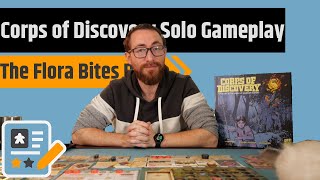
- Deep, puzzle-like deduction woven into a thematic survival context.
- Strong scenario-based structure that changes objectives and threats per map.
- Rich interaction between exploration, resource management, and risk assessment.
- Engaging live-play narrative with clear identification of threats (flora/fauna) and consequences.
- High difficulty with frequent potential for quick failure or 'death' based on resources.
- Rule clarity can be challenging in the moment; some interactions require careful interpretation.
- Tension and time pressure may reduce accessibility for new players or casual watchers.
- Survival, exploration, ecology of flora and fauna on a map-driven island
- A hostile, resource-constrained environment where explorers map, harvest, and survive against flora, fauna, and environmental hazards.
- scenario-driven exploration with deduction and resource management
Mechanics (from transcript analysis)
- Combat/defeat flora — Spend fire tokens to defeat flora and progress; Greek fire is a key objective to defeating flora threats.
- Fatigue and shelter — Carrying too many items causes fatigue; building a shelter reduces fatigue effects and improves survivability.
- Grid exploration — Players explore a map grid, revealing terrain and resources as they move orthogonally.
- Resource Management — Manage water, food, wood, mud, berries, vines, stone, and other resources to survive and complete objectives.
- Row/column rewards — Exploring a full row or column yields rewards and increases available actions or resources.
- Scenario / Mission / Campaign Game — Each scenario has a distinct goal (e.g., locate Greek fire and defeat flora) with specific win/lose conditions.
- scenario-based objectives — Each scenario has a distinct goal (e.g., locate Greek fire and defeat flora) with specific win/lose conditions.
- Terrain-adjacency and linear rules — Certain resources must be adjacent to particular terrains; wood is adjacent to water; map edges and connectivity matter.
- Threat and misfortune system — Skulls, misfortune cards, and monsters introduce risk; skulls trigger misfortune or monster events.
- Tools and special abilities — Abilities like Mortar and Pestle convert resources; tunable exchanges via tents and tracking guides.
Video topics + discussion points
Quotes (from this video)
- This is a solo or cooperative deduction game.
- In this specific scenario, we are trying to find and defeat the giant hive mine flora with Greek fire.
- We start the game with fire.
- If you fail, you have a cost, usually losing water.
- The shelter is next to berries and wood, and building it helps you avoid fatigue.
- Fire tokens are essential towards taking out the flora as we discover them.
- Disrupting the line is terrible.
References (from this video)

- strong cooperative play
- excellent solo mode
- thematic and thinky
- beautiful artwork
- some players may find the deduction components challenging
- mission-driven objectives with resource management
- survival and exploration scenario
- cooperative with exploratory deduction
Mechanics (from transcript analysis)
- cooperative deduction — tokens are removed to reveal information, guiding movement toward missions
- information revelation — revealed information informs strategic positioning to complete objectives
- Simultaneous Reveal — revealed information informs strategic positioning to complete objectives
Video topics + discussion points
Quotes (from this video)
- It's one of those lovely puzzle games and I always find myself coming back to it.
- The board is so small, you feel an intense pressure come on top of you and it's on straight away.
- I'm the biggest Teenage Mutant Ninja Turtles fanboy of all time.
- Turtle Power.
- Easily the best co-op game of the year for me.
- The amount of replayability from the start is insane.
References (from this video)

- blends survival with deduction for a richer puzzle
- exploits maps and potential expansions well
- training mission helps new players accelerate
- unforgiving at times
- survival meets deduction in a map-rich experience
- deduction with exploration
- puzzle-driven with survival elements
- Search for Planet X
- Lost Species
Mechanics (from transcript analysis)
- Deduction — Players deduce and map out solutions with hidden information.
- deduction / logic puzzles — Players deduce and map out solutions with hidden information.
- Survival mechanics — The game adds survival pressures and resource/trait considerations.
Video topics + discussion points
Quotes (from this video)
- This is fantastic.
- I love everything about this.
- There's deep resource management, good choices.
- This is themed the worlds of Dungeons and Dragons.
- The catch-up mechanic is great because this makes every race close.
- It's like So Clover meets Code Names.
- Cuphead style artwork is visually striking.