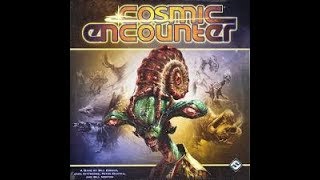
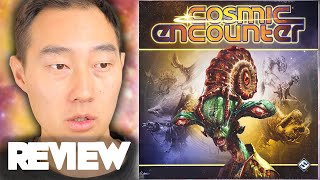
Build a galactic empire...
In the depths of space, the alien races of the Cosmos vie with each other for control of the universe. Alliances form and shift from moment to moment, while cataclysmic battles send starships screaming into the warp.
This classic game of alien politics returns from the warp once more!
In Cosmic Encounter, each player becomes the leader of one of dozens of alien races, each with its own unique power. On a player's turn, he or she becomes the offense. The offense encounters another player on a planet by moving a group of his or her ships through the hyperspace gate to that planet. Both sides can invite allies and play cards to try and tip the encounter in their favor.
The object of the game is for players to establish colonies in other players' planetary systems by landing their ships on the other players' planets. The winner(s) are the first player(s) to have five colonies on planets outside his or her home system. The players must use force, cunning, and diplomacy to ensure their victory. And, because alliances are a key part of the game, multiple players can win together!

- deep social interaction
- lots of replayability with aliens
- diplomacy, negotiation, and asymmetric powers
- spacefaring civilization conflicts in a storied sci-fi setting
- highly social and interaction-driven
- Arkham Horror
- Pandemic
Mechanics (from transcript analysis)
- Asymmetric abilities — each alien race has a unique ability that heavily influences play.
- asymmetric player powers — each alien race has a unique ability that heavily influences play.
- negotiation / alliances — players negotiate deals and form temporary alliances with asymmetric powers.
Video topics + discussion points
Quotes (from this video)
- They are what I would call omniamers.
- El Grande seems to be the forgotten game because to me that is still the most perfect board game ever made.
- I absolutely love all of the work that Tom does.
- Cosmic Encounter is just so so much fun.
- The complete lack of El Grande.
- The minis are way too big. Just ridiculous.
References (from this video)
- High player interaction and conflict
- Strategic negotiation and alliance dynamics add depth
- Described as not that fun by the speaker
- Complexity and learning curve may hinder accessibility
- Array
- Space
- Competitive interaction with alien species and negotiation
- Twilight Imperium
- Coup
- Gloomhaven
Mechanics (from transcript analysis)
Video topics + discussion points
Quotes (from this video)
- now this is youtubing i just uh really like to have games with high conflict and a lot of interaction for players
- this game was not that fun but everyone seems to like it
- hello everybody welcome to my board game unboxing channel
- coo a bluffing game set in a dystopian universe
- what if we uh we filmed ourselves playing groomhaven for uh for content
- ti4 as a backdrop
References (from this video)
- Negotiation, alliances, and alien powers
- Galaxy-spanning diplomacy and space exploration
- Open-ended, player-driven diplomacy
Mechanics (from transcript analysis)
- Alien power cards — Each player has a unique ability that modifies interactions and outcomes.
- Conflicts and colony establishment — Players attempt to establish colonies on others' planets, often via negotiation and power cards.
- negotiation — Players form temporary alliances and negotiate terms to establish colonies.
- negotiation and alliance-building — Players form temporary alliances and negotiate terms to establish colonies.
Video topics + discussion points
Quotes (from this video)
- Hey everybody, I'm Tom Bassel. Many economic and I like that. Also has great graphic design. Looks good. Pretty fast game.
- Cool theme.
- That's it. That's what Tom wanted me to say.
- Take it away, guys.
References (from this video)
- Distinct sci-fi flavor with a memorable centerpiece like the hyperspace gate that makes the game visually and tactilely engaging.
- High replayability due to a large roster of aliens and a wide variety of flares and artifacts that alter interactions each game.
- Rich social dimension: politics, alliances, deception, and negotiation create dynamic group interactions.
- Clear, if colorful, visual cues for phases and turns; aliens display the phase triggers, which helps new players grasp the flow.
- Hand management provides meaningful decisions and bluffing opportunities; players can bluff to manipulate opponents' perceptions.
- Endgame variability and multiple potential paths to victory prevent monotony across games.
- Rulebook text is dense and ambiguous; a lack of diagrams and limited indexing can hinder quick reference and edge-case rulings.
- No dedicated player aids; players must reference card text and rulings repeatedly, which slows play and raises friction.
- Alien powers can be overpowered or unbalanced, creating potential imbalance and chaos that may tire some players.
- The complexity and wordiness of card text makes learning and teaching the game arduous, especially for new groups.
- Component labeling inconsistencies (e.g., flares not always labeled clearly) can cause memory lapses mid-game.
- Weird edge-case interactions and the possibility of very long durations with certain group dynamics can be a pacing issue.
- Not ideal at very low player counts (3 players) and the base game scales differently than expansions intended; time may stall.
- Some players may view the game as 'the game plays itself' in certain group dynamics, which can be off-putting for Euro-first players.
- Array
- Space
- Expository analysis with examples
- Rising Sun
- Game of Thrones Second Edition
- Twilight Imperium Fourth Edition
- Eclipse Second Edition
- Secret German
- Coup
Mechanics (from transcript analysis)
- Alien powers (asymmetry) — Fifty different alien powers introduce asymmetry and unique triggers that can alter the flow of encounters, diplomacy, or scoring.
- Alliance invites and turn order — Invitations to ally are resolved in clockwise order, influencing who can join which attack or defense as the table dynamics unfold.
- alliances — Attacker and defender can invite other players to join their side as allies, contributing ships and affecting combat outcomes.
- asymmetric player powers — Fifty different alien powers introduce asymmetry and unique triggers that can alter the flow of encounters, diplomacy, or scoring.
- Destiny and graveyard system (warp) — Destiny cards determine attack targets and the warp acts as a graveyard where ships are revived or moved before battles.
- Encounters (combat resolution) — Encounters are the core combat mechanism where attacker and defender each commit ships and play encounter cards to resolve a fight.
- Endgame scoring and multi-winner dynamics — Victory can be achieved by players via multiple simultaneous paths (multiple players can reach 5 VP or meet other house rules), emphasizing group dynamics and political maneuvering.
- Faction/reaction variety (flares and artifacts) — Flares and artifacts provide flexible, reusable tools that can shift control of a battle or defensive outcomes and encourage resource management decisions.
- hand management — Players manage a hand of encounter cards, flares, artifacts, and reinforcements; drawing up to eight when possible and discarding when hand is zero;
- negotiation — Players use negotiation as a core mechanic to trade planets or cards and to form or break alliances during encounters.
- take that — A variety of cards and alien powers can modify outcomes or negate other players' actions, creating swings and counter-swings.
- Take-that / power negation — A variety of cards and alien powers can modify outcomes or negate other players' actions, creating swings and counter-swings.
Video topics + discussion points
Quotes (from this video)
- 50 included aliens. 50 aliens. Like, this is insane.
- No two games are the same, but that could also mean that you have an awesome game with it that you may struggle to recreate in your next match.
- Cosmic Encounter is a high conflict party game for really four to five players. It can take up to two plus hours or it could be done in 30 minutes and someone is probably going to get backstabbed.
- Unpredictability is good, but maybe this sounds like too much, but actually when you take a closer look at the numbers inside the deck, the outcomes are actually mathable.
- This hyperspace gate is memorable and visually dominates the table; it helps convey where the action is happening.
- There are many prisoner’s dilemmas every turn as you add up and alliances shift around the table.
- No two games are the same, but that could also mean you have an awesome game with it that you may struggle to recreate in your next match.
References (from this video)
- Strong multi-psychographic appeal through negotiation and asymmetry
- Fits well with TI4-style diplomatic play and long-term strategy
- Complex to teach due to asymmetric powers
- Potentially chaotic due to player-driven negotiations
- Array
- Space diplomacy and alien species confrontation
- Social negotiation-driven with asymmetric powers
Mechanics (from transcript analysis)
- asymmetric player powers — Each alien species has unique abilities that influence strategic choices.
- Asymmetric powers — Each alien species has unique abilities that influence strategic choices.
- negotiation — Players negotiate alliances and use special abilities of different alien species to influence outcomes.
- Negotiation / alliance formation — Players negotiate alliances and use special abilities of different alien species to influence outcomes.
Video topics + discussion points
Quotes (from this video)
- "Patchwork, right? Very popular two-player game."
- "This game is actually a very spike game."
- "The Timmy is really into it because oh, the concept is oh we get to have a bunch of birds and they all have abilities and they have like Latin text on them."
- "There are a lot of ways you can pilot your faction"
- "negotiation is a big appeal for all three archetypes"
- "What better game to talk about negotiation than Twilight Imperium?"
- "Pandemic Legacy is the quintessential Johnny game"
- "The Crew cooperative trick taking game"
- "one straight line. There's one optimal way to solve it"
References (from this video)
- The asymmetric powers create rich, replayable permutations for every session, especially when multiple players bring different alien abilities to the table.
- Social dynamics and negotiations are central to the experience, offering deep, memorable moments that linger long after the game ends.
- Cosmic Encounter scales surprisingly well to seven players, amplifying storytelling, alliance formation, and dramatic swings in fortune.
- The thematic flavor and the idea of rival cosmic civilizations deliver a strong sense of wonder and stakes that encourages bold moves and creative diplomacy.
- The game rewards strategic risk-taking and clever timing; small missteps in negotiation can shift momentum in dramatic ways, making each game feel unique.
- With a large group, the amount of talking and negotiation can produce downtime and slower pacing between turns.
- New players may feel overwhelmed by the sheer number of powers and potential interactions, requiring a gentler onboarding and quick-reference guidance.
- The chaotic potential of multiple alliances and betrayals can lead to moments that some players perceive as unfair or unpredictable, depending on group culture.
- Diplomacy, betrayal, alliance-building, and high-stakes negotiation, driven by asymmetric powers that tilt the balance of power in unpredictable ways.
- Interstellar diplomacy and conflict across a vast cosmos inhabited by diverse alien civilizations, each with its own agenda and unique capabilities.
- Emergent and player-driven narratives shaped by alliances, power plays, and the evolving treaties that players negotiate during the game.
Mechanics (from transcript analysis)
- Asymmetric alien powers — Each player adopts a unique alien power that can dramatically alter standard rules, creating distinctive playstyles and unexpected synergies or counterplays. Powers incentivize creative problem solving and imaginative tactics.
- asymmetric player powers — Each player adopts a unique alien power that can dramatically alter standard rules, creating distinctive playstyles and unexpected synergies or counterplays. Powers incentivize creative problem solving and imaginative tactics.
- Council/vote-based resolution — Conflict outcomes are determined by votes and influence, requiring players to assess loyalties, power balances, and the strategic value of supporting or opposing different factions.
- Dynamic board state and draw-ins — The game state is shaped by simultaneous player actions and the unpredictable interactions of alien abilities, leading to a constantly evolving political landscape with multiple paths to victory.
- negotiation — Players continuously negotiate deals, forge temporary alliances, and maneuver opponents through verbal persuasion, promises, and strategic timing. The social layer often eclipses raw randomness as the primary driver of outcomes.
- Negotiation and diplomacy — Players continuously negotiate deals, forge temporary alliances, and maneuver opponents through verbal persuasion, promises, and strategic timing. The social layer often eclipses raw randomness as the primary driver of outcomes.
- Player Board | Main Board — The game state is shaped by simultaneous player actions and the unpredictable interactions of alien abilities, leading to a constantly evolving political landscape with multiple paths to victory.
- Temporary alliances with shifting loyalties — Alliances are fluid and can be broken or reformed as the game state evolves, producing tense moments where trust is tested and strategic commitments are renegotiated on the fly.
- Voting — Conflict outcomes are determined by votes and influence, requiring players to assess loyalties, power balances, and the strategic value of supporting or opposing different factions.
Video topics + discussion points
Quotes (from this video)
- I played Cosmic Encounter today.
- Cosmic Encounter, my favorite game.
- sevenplayer game of it that I ran and taught and it was just a fantastic game
- it's hard to get upset when you get Cosmic Encounter in a seven-player game, because the chaos and diplomacy are part of the charm
- the power of negotiation in this game is what makes it memorable, not just the factions on the board
- emergent stories emerge from conversations and deals as much as from the table dynamics
References (from this video)
Mechanics (from transcript analysis)
Video topics + discussion points
Quotes (from this video)
- Bollocks.
- This is a Splatter game that got a reprint a few years ago.
- I'll probably jump off a [ __ ] bridge or something.
- Stop [ __ ] lying.
- I'll personally come around your house with a slapstick and whack you around the head.
References (from this video)
- immense variability and interaction
- great for five with lots of deals
- balance can feel uneven with power combos
- takes time to settle into strategy
- negotiate, form temporary alliances, and outwit opponents
- galactic civilizations with alien powers
- highly variable social gameplay per game
- Diplomacy
- Blood Rage
Mechanics (from transcript analysis)
- alien powers / player powers — each player has a unique ability that shapes interactions
- negotiation — alliances shift as objectives change
- negotiation / alliance-building — alliances shift as objectives change
- Unique player powers — each player has a unique ability that shapes interactions
Video topics + discussion points
Quotes (from this video)
- five is perfect because you've got that bluffing negotiation.
- This is a sandbox game. One of my favorite games.
- The clacking of dice on the table. It's pretty neat.
References (from this video)
- High replayability and dynamic player interactions
- Lively social experience
- Can be chaotic or imbalanced depending on powers
- Expansions can add complexity
- negotiation, alliances, diplomacy, and conflict
- space with alien civilizations
- social, chaotic, humorous
Mechanics (from transcript analysis)
- Alien powers — Each player has a unique special power that drives interaction.
- Conflict and encounters — Encounters trigger bidding, alliance choices, and shifting control.
- negotiation — Players form and break alliances to gain advantage in encounters.
- Negotiation and alliances — Players form and break alliances to gain advantage in encounters.
Video topics + discussion points
Quotes (from this video)
- for once I'd like to tell you about a few games that I'm excited about
- these are all games that have been reprinted so many times that not only can you find them right now but you'll probably be able to find them long into the future
- it's one of the most yoy Euro games that I know
- the thing that I really like about it is that it's not a point salad game
- the game has this tightness to it that I really enjoy
- it's a game that involves a lot of laughter
- the crypto highly recommend it
References (from this video)
- high replayability via many aliens and expansions
- strong party vibe that still appeals to gamers
- steep learning curve for newcomers
- diplomatic players can slow gameplay
- Diplomacy, alliances, and asymmetric powers
- Space opera with alien civilizations negotiating and warring over planets
- Asymmetric powers drive emergent negotiation-driven outcomes
- Dominion
Mechanics (from transcript analysis)
- asymmetric player powers — Alien races grant unique abilities that shape strategy.
- Asymmetric powers — Alien races grant unique abilities that shape strategy.
- Encounter-based combat — Attack/negotiate cards resolve planetary conflicts with other players.
- negotiation — Players form and break deals to advance on the board.
- negotiation and alliance-building — Players form and break deals to advance on the board.
Video topics + discussion points
Quotes (from this video)
- it's a perfect fit for this list that's Cosmic Encounter
- I had to have a card game
- this is a collectible SL living card game so you're going to be building your own deck
- this is the absolute definition of a minute to teach a lifetime to master
- it's Star Wars in a box
References (from this video)
- highly interactive with a strong emphasis on negotiation and diplomacy
- great replayability due to variable alien powers
- fits a classroom-like, collaborative learning environment when moderated
- rules can be complex and may require guidance or prior exposure
- learning curve for new players due to power interactions
- alliances, negotiation, power dynamics
- space diplomacy; colonies on opponent's solar systems
- QE
- Evolution
Mechanics (from transcript analysis)
- negotiation — players negotiate deals, form alliances, and collaborate to attack or defend, influencing score and control.
- negotiation and alliance formation — players negotiate deals, form alliances, and collaborate to attack or defend, influencing score and control.
- rulebook consultation — the combination of alien powers often requires players to consult the rulebook to resolve interactions and objectives.
- unique alien powers — each player has a distinct power that can modify the standard rules, creating variability in each session.
Video topics + discussion points
Quotes (from this video)
- board games counters these negative effects
- the lesson is teaching the rules and the application is playing the game
- unless you actually test a student on the skills that you want them to learn they will not learn it
- board games are naturally collaborative
References (from this video)
- fits the game's theme and allows unique interaction
- creative flavor that supports negotiation and social dynamics
- interrupts are a frequent source of negative interaction and can derail turns
- negotiation, alliance-building, and conflicts
- space factions with alien encounters
- thematic chaos with negotiation-driven play
Mechanics (from transcript analysis)
- Action Interruption — other players can interrupt your turn with a card that stops or alters your actions
- interrupts — other players can interrupt your turn with a card that stops or alters your actions
Video topics + discussion points
Quotes (from this video)
- Terrible mechanism interrupts.
- I despise memory in board games.
- The absolute worst board game mechanism is in the game Hit Zero.
- I love that these are like jobs and missions where, you know, you're maybe escorting somebody to a different planet or you're carrying contraband.
References (from this video)
- High social interaction and memorable moments
- Asymmetric play can be confusing for new groups
- negotiation, alliances, and backstabbing
- Alien species contest for control of the galaxy
- Social interaction-driven with shifting powers
- Arkham Horror: The Card Game
- Diplomacy
Mechanics (from transcript analysis)
- alliances and negotiation — Players form and break alliances to gain advantage.
- asymmetric player powers — Each alien species provides a unique ability.
- negotiation — Players form and break alliances to gain advantage.
Video topics + discussion points
Quotes (from this video)
- Killer Bunnies really opened our minds and then we found more games like Small World and Dominion.
- 320 plus plays later, we got over that.
- Time has been the bigger constraint on our hobby than money.
- Production quality matters, there is this toy factor and tangible aspect of board games.
- We grew into a taste for simpler, shorter games and still love our heavy titles, but the curve shifted.
- We want a collection that can serve up our favorites for any scenario.
References (from this video)
- Huge variety of asymmetrical powers
- Accessible core rules with deep strategic depth
- Influential on hobby and game design
- Destiny deck can constrain player choices
- Some power interactions can be 'screwy' or contentious
- Diplomacy, negotiation, and conquest in a space opera setting
- A populated galaxy after warp technology discovery
- Competitive, asymmetric, high interaction
- Circadian Chaos Order
- Sidereal Confluence
Mechanics (from transcript analysis)
- card management — Players manage a hand of encounter cards to play during encounters
- Combat/resolution via encounter cards — Encounters are resolved by playing encounter cards and special abilities
- negotiation — Players negotiate with others to support or oppose attacks and defenses
- Unique player powers — Each player has a unique power that can drastically alter play
- Variable Powers — Each player has a unique power that can drastically alter play
- Warp/colonies victory condition — Players move ships, establish colonies, and aim to reach five colonies to win
Video topics + discussion points
Quotes (from this video)
- The core rules of Cosmic Encounter are a pretty simple, draw a card, encounter a world and playing encounter cards to hope to win
- the secret to Cosmic Encounter's longevity and influence on board gaming are the huge amounts of variable player powers
- it's pretty accessible and has a lot of depth suitable to a wide audience
- the best thing about this game is its influence on the hobby it's 45 years old and the granddaddy of all variable power games
- Cosmic Encounter as old as me and still going strong
References (from this video)
- Rich negotiation and social interaction
- High replayability due to many alien powers
- Epic swings and dramatic turnarounds
- Strong thematic flavor and table dynamics
- Can be complex for new players
- Potential for player-dominant dynamics if not moderated
- Diplomacy, negotiation, alliances, and betrayal among rival civilizations
- A war-torn galaxy where alien races vie for galactic real estate and dominance
- Dynamic, player-driven storytelling with shifting loyalties and evolving powers
- Blood on the Clocktower
- Two Rooms in a Boom
Mechanics (from transcript analysis)
- Alien powers — Each race has a unique special ability that can dramatically alter combat, bidding, or negotiation
- Conflict resolution by card totals — Players choose ships to commit and reveal cards; higher total wins the encounter
- Cosmic events and power-towers — Various event-based powers and location-specific rules modify the game flow
- Destiny deck and encounters — Destiny cards determine who you must fight, the objective, and special effects each turn
- negotiation — Players negotiate, form alliances, and trade resources to influence outcomes
- Negotiation and alliances — Players negotiate, form alliances, and trade resources to influence outcomes
Video topics + discussion points
Quotes (from this video)
- We bloody did it!
- The kissing planet
- Tick tock and we simply wait until the universe dies
- Parasite joins alliance at will
- Marry your opponent
References (from this video)
- Alien Colonization
- Interstellar Space
Mechanics (from transcript analysis)
- diplomacy — Players use special alien powers to establish colonies
- negotiation — Players use special alien powers to establish colonies
Video topics + discussion points
Quotes (from this video)
- Christmas and gifts are not only to please the people around us but primarily they give us an opportunity to convince them to start playing board games
- One great thing about picking smaller board games apart from the fact that they are cheaper is that they can fit anywhere
References (from this video)
- deep social interaction
- strong thematic flavor
- can be chaotic/long play sessions
- alliances, negotiation
- space, alien diplomacy
- player-driven diplomacy
Mechanics (from transcript analysis)
- Alien powers — each player has a unique power that shifts play
- colonies/expansion — establish colonies to win, interactions across planets
- negotiation/alliances — form and break alliances to influence outcomes
Video topics + discussion points
Quotes (from this video)
- we surpassed our 200th episode, now we're at 201
- the triumphant return
- this is a lifestyle and it can really help a lot of people
- table presence for days
- it's a cute game
- we are totally in love with White Castle
References (from this video)
- high social interaction and memorable moments
- great variability with different alien combinations
- rules complexity can be intimidating
- learning curve for new players is non-trivial
- diplomacy, negotiation, and alliance-building
- space-faring civilizations with alien species
- highly variable due to alien powers and player interaction
- Dune: Imperium
- Talisman
Mechanics (from transcript analysis)
- Alien powers — each player has a unique special ability that can drastically reshape turns
- hand management — managing cards to bid for deals and form fleets
- negotiation — players form and break alliances to gain advantage in conflicts
- negotiation/alliances — players form and break alliances to gain advantage in conflicts
Video topics + discussion points
Quotes (from this video)
- the sandbox of what's going to happen in this epic Cooperative experience
- the bane of Arkham Horror's existence was the stupid gate burst
- best bang for the buck
- 75 plays
- epic 3D maps
- nostalgic for me
References (from this video)
- rich player interaction and negotiation
- extremely replayable due to many alien powers
- memorable group-centric moments when groups click
- highly dependent on the right group; can fall flat with passive players
- steep learning curve for newcomers due to many rules and powers
- diplomacy, alliance, and upheaval through alien powers
- Space age with alien civilizations exploring the galaxy
- player-driven negotiation with variable alien abilities
Mechanics (from transcript analysis)
- Alien powers — each player has a unique power that modifies core rules
- alliances and betrayals — alliances are negotiated and broken across the table to influence outcomes
- colony conquest — players expand by forming colonies on other players' planets and compete to reach five colonies
- negotiation — alliances are negotiated and broken across the table to influence outcomes
Video topics + discussion points
Quotes (from this video)
- the variety of the aliens is just incredible
- it's not only the mechanics of what's happening but a lot of what's happening between players at the table
- it's pretty group dependent
- I just love the pressure when a team is on you
- you need four people exactly four that are going to want to play a card game
- the strategy of it is so much deeper
- you've got to take off the training wheels for you Daniel, it's time for ride the Mage Knight bike on your own
- the rule book is dense and hard to learn
- it's a doozy
- it's eight hours long and an all day experience
- you really want six people, that's the ideal
References (from this video)
- timeless theme
- deep strategic options
- negotiation and asymmetric powers
- Cosmic diplomacy and alien races
- role-based powers with diplomacy
- Quacks of Quedlinburg
- Star Wars Unlimited
Mechanics (from transcript analysis)
- asymmetric player powers — Each alien race has unique abilities.
- Asymmetric powers — Each alien race has unique abilities.
- negotiation — Alliances and deals influence outcomes.
Video topics + discussion points
Quotes (from this video)
- Welcome back to the top 100 games of all time.
- I am not a crook.
- Continuity. Continuity.
- Let's get started. Here we go.
- The people love it.
References (from this video)
- High replayability due to many alien powers
- Engaging social interaction and negotiation
- Complex for new players
- Rules interactions can be dense for beginners
- negotiation, alliances, and variable player powers
- Space with alien civilizations and unique powers
- dynamic interaction with shifting alliances
- Twilight Imperium
- Diplomacy
Mechanics (from transcript analysis)
- asymmetric player powers — Each alien race has a distinct ability that alters standard rules.
- Asymmetric powers — Each alien race has a distinct ability that alters standard rules.
- Auction / Bidding — Players negotiate with others to form alliances and to win battles.
- Secret bid/negotiation — Players negotiate with others to form alliances and to win battles.
Video topics + discussion points
Quotes (from this video)
- There are four of us. Uh this we were three for four. 75% pretty good.
- I like to be the ghost. I like True. I like to give the clue giving and figure out ways to uh help my fellow players guess their person, their place, and then their object.
- Push your luck and in this game you can do that.
- Eight out of 10 for Dune.
- This is Times Up title recall.