/pic1818617.jpg)
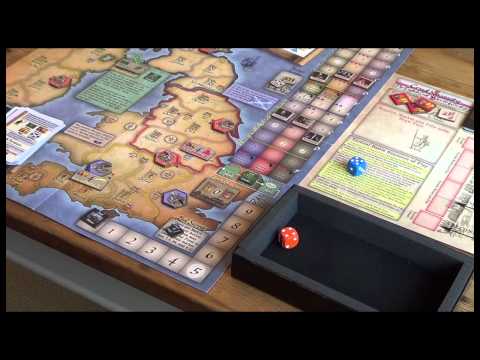
Cruel Necessity is solitaire game, suitable for group and classroom cooperative game play, tells the story of the English Civil Wars (1640-53) through its key events and decision points. You attempt to stop the advance of four armies bent on destroying Parliament and Puritanism, whom you represent; simply holding on to London is not enough.
Each of the three English Civil Wars are replayed through the use of separate card decks that recreate the historical military and political events that could spell doom to the Parliamentarian forces. There are civil wars going on not just in England, but in Scotland and Ireland too; and each will have varying impact on the play of the game at different times.
The title comes from the purported response to the beheading of King Charles by his implacable foe, Oliver Cromwell, who remarked that this act of regicide was a “cruel necessity.” Part of the States of Siege collection.

Cruel Necessity: EP02
Cruel Necessity: EP06
- Deep historical simulation of civil war politics
- Engaging decision points every turn
- Clear feedback on political consequences
- Steep learning curve
- Ambiguity in rules due to transcription
- Sometimes brittle balance with historical events
- Political power struggles between Parliament and monarchy with religious faction dynamics
- England and Ireland during the English Civil War (1642-1649)
- Historical political strategy simulation
- Twilight Struggle
- Here I Stand
Mechanics (from transcript analysis)
- Alliance and religious faction shifts — Shifting Presbyterian, Puritan, loyalties affecting scores
- Political track manipulation — Managing zeal/party influence through track movement
- Region control and siege decisions — Moving armies, besieging cities, fortifications
Video topics + discussion points
Quotes (from this video)
- I quite like that. And I'll tell you why.
- Doesn't look good.
- We've got an achievement, a political achievement.
- Join me next time as we continue cruel necessity.
References (from this video)
- Rich historical flavor with period-specific events
- Engaging tactical battles with a detailed map
- Multiple action paths (achievements, deck-building style) giving strategic depth
- Flavorful components (roundheads, cavaliers, zeal, devil tree) and period references
- Complex rules and heavy setup
- Steep learning curve for new players
- Requires tracking many tokens and modifiers to play effectively
- Political and religious conflict, faction warfare between Parliamentarians and Royalists
- English Civil War era (1640s England and Scotland)
- Historical, campaign-style with event/achievement card mechanics
Mechanics (from transcript analysis)
- Achievement cards — Acquired for meeting conditions, grant rewards and victory points.
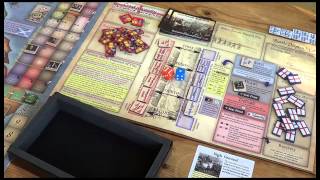
- Battle sequence and map battle display — Turns-based tactical combat with dice resolution and unit placement.
- Combat: Dice — Turns-based tactical combat with dice resolution and unit placement.
- Devil tree markers — Markers representing unrest and political consequences that affect future actions.
- Dramatic punitive outcomes — Outcomes like disordered units and zeal reduction for strategic risk.
- event cards — Resolve historical events that affect the political and military state, triggering map actions or modifiers.
- Events — Resolve historical events that affect the political and military state, triggering map actions or modifiers.
- Fortifications and sieges — Defend cities and besiege to shift control, with dice rolls and zeal modifiers.
- Naming units and flags — Named units with potential special outcomes in battles.
- Zeal tokens — Resource used to influence actions and combat outcomes.
Video topics + discussion points
Quotes (from this video)
- the self-denying ordinance deprived mps from holding commands in the army or navy
- achievements by purchasing achievements is one of the actions you can take during the action phase
- the battle of cheraton march 1644 outmaneuvered parliamentary forces turned from a retreat to fight a battle
- the battle is declared a draw