/pic4551004.jpg)
Game Info
Year
2018
Players
1
Age
14+
Playtime
180 min
Collection
Ratings
Creator Score
Mechanic profile
Not enough video data yet
Vibe profile
Not enough video data yet
Description
Crypt is a small-box set collection game with a unique dice placement mechanic for 1 to 4 players.
Place your servant dice on treasure cards, choosing any value on each die. Choosing a higher value can ward off your opponents, but it also increases the odds that your servant will become exhausted. After everyone has placed their servant dice, everyone rolls. If you roll less than your chosen value, you lose the die.
Sets of treasure can be pawned off to collectors that offer bonus coins and special abilities. The player with the most valuable collection wins!
—description from the designer
Featured Videos


Ask a Rules Question
All mentions
Browse transcript mentions, sentiments, pros/cons, mechanics, topics, quotes, and references.
Total mentions: 10
This page: 10
Sentiment:
pos 7 ·
mix 1 ·
neu 2 ·
neg 0
Showing 1–10 of 10
Video mUnCc-E1xY0
Rolling Dice & Taking Names Discussion at 46:42 sentiment: neutral
video_pk 93475 · mention_pk 317725
Click to watch at 46:42 · YouTube ↗
Overall sentiment (raw)
neutral
Pros
none
Cons
- Can get lengthy with eight players
Thematic elements
Comparison games
none
Mechanics (from transcript analysis)
- Eight Player — Can be played with eight players, divided into four on four.
Video topics + discussion points
No key topics recorded for this video.
Quotes (from this video)
- If you're judging this group and you're on the sheepdog and you're digging through all that fur and you only see one eye then you've got the wrong end
- Ugly on a moose have you ever heard that
- the investigators are dogs and you're investigating like evil cats and everything like that
- this game is a brain burner
- it really is and it's very mathy
- it was surprisingly faithful to the game in how you play it
- we were debating like would it be better to put down this card and take a hit to our water if it meant getting some money back for it
References (from this video)
No references stored for this video.
Video UwiZweRUk6o
Meeple University Rules Teach at 0:10 sentiment: positive
video_pk 64943 · mention_pk 158548

Click to watch at 0:10 · YouTube ↗
Overall sentiment (raw)
positive
Pros
- Relatively rapid auction gameplay
- Strategic depth through dice management and bidding
- Satisfying bonuses from collectors
- Interesting end-game scoring with leftover dice bonuses
- Variants for solo, co-op, and larger player counts
Cons
none
Thematic elements
- Players are offspring of a deceased king attempting to recover treasures and relics from his crypt.
- A crypt
Comparison games
none
Mechanics (from transcript analysis)
- Auction — Players use dice as bids to claim treasures, with the highest bid winning the item.
- Dice Placement — Players set the value of their dice to use as bids for treasures.
- Player Elimination (partial) — Servants (dice) can become 'exhausted' and unavailable for bidding in a round, simulating a temporary reduction in a player's ability to act.
- Push Your Luck — Bidding high risks losing dice to the 'exhausted servants box', creating a push-your-luck element when deciding bid values.
- Set Collection — Collecting specific types of treasures allows players to earn bonus points from collector cards.
Video topics + discussion points
No key topics recorded for this video.
Quotes (from this video)
- the higher you bid the more likely you will lose your dice into the exhausted servants box
- strategy and crypt comes from the collectors
References (from this video)
No references stored for this video.
Video 6RexMIb5_2k
Meeple University Rules Teach at 0:11 sentiment: positive
video_pk 64944 · mention_pk 158549
Click to watch at 0:11 · YouTube ↗
Overall sentiment (raw)
positive
Pros
- Light complexity
- Includes a solo mode
- Variants available on publisher's website
Cons
none
Thematic elements
- recovering treasures from a recently deceased king's crypt
Comparison games
none
Mechanics (from transcript analysis)
- Auction — Players bid using dice pips to win treasure cards.
- Dice Rolling — Dice are used to represent servants and are rolled to determine outcomes after bidding.
- Player Elimination — Players can choose to pass their bidding face to retrieve exhausted dice, gaining no treasure that round but having a full complement for the next.
- Push Your Luck — Players roll dice after bidding and lose dice that roll lower than the bid number.
- Set Collection — Players collect treasures to match requirements for bonus coins.
Video topics + discussion points
No key topics recorded for this video.
Quotes (from this video)
- hi I'm Stella a knight-errant and this is maple University's what to expect from Crypt released in 2018 after a successful Kickstarter campaign
- it was designed by Andrew Durga and Jeffrey chin and published by road to infamy
- The player with the most gold coins wins the game
- we'd like to hear from you
- please consider subscribing to our channel
- it will really help us in monetizing the channel so that we can invest back into it and bring better quality content to you
References (from this video)
No references stored for this video.
Video cUDwVI23lX8
Meeple University Playthrough at 0:21 sentiment: neutral
video_pk 64942 · mention_pk 158547
Click to watch at 0:21 · YouTube ↗
Overall sentiment (raw)
neutral
Pros
none
Cons
none
Thematic elements
Comparison games
none
Mechanics (from transcript analysis)
- bidding — Players bid dice to claim cards, with higher bids potentially leading to higher costs or loss of dice.
- Dice Rolling — Dice are rolled to determine success in acquiring treasures or to achieve specific outcomes.
- Resource Management — Players manage a limited number of dice and treasures, making strategic decisions about their use.
- Set Collection — Players aim to collect sets of treasures (e.g., bones) to gain advantages or points.
Video topics + discussion points
No key topics recorded for this video.
Quotes (from this video)
- hi I'm Taryn
- enough Stella and this is people University wander and play through off Crypt
- so this is our one round playthrough for crypt
- we're on the second round of the game so we've each gathered a couple of treasures in the first round and we've each lost one died so he only have two dice available for this round
- so for the reveal phase in a two-player game we do two treasures face-up and one facedown
- that's one round play true of crypt
- we hope this video was helpful and if you'd like to learn the rules to the game in full you can click on the link in the description to check out our how to play video for this game which includes some tips and strategies direct from the game's designers Andrew nurture and Jeffrey Chen
References (from this video)
No references stored for this video.
Video CtoKIgZX_ok
Meeple University Analysis at 8:14 sentiment: positive
video_pk 64865 · mention_pk 158450

Click to watch at 8:14 · YouTube ↗
Overall sentiment (raw)
positive
Pros
- Players can strategically place dice to force opponents to pay more.
- Playing two dice of the same value can prevent losses.
- Playing three dice of ones can displace opponents and secure cards.
- Acquiring early collector cards can secure later ones.
- Combining Manuscript B and Pottery B allows for unique card acquisition.
Cons
- Placing a semi-low number might result in losing the dice if not pushed out.
- Playing two dice restricts spreading them across multiple cards.
- Opponents might try to block players from completing collector sets.
Thematic elements
Comparison games
none
Mechanics (from transcript analysis)
- card abilities — Specific cards like Manuscript B and Pottery B have abilities that interact with gameplay.
- Dice Placement — Players place dice onto cards, with risks of being pushed out or kicking out opponents.
- Push Your Luck — Players might place dice strategically, anticipating being pushed out to make opponents pay more.
- Set Collection — Collecting remains cards to fulfill collector goals.
Video topics + discussion points
No key topics recorded for this video.
Quotes (from this video)
- if you haven't check the link in the descriptions below this video sorry more coming your way from these lovely designers who are willing to send me the tips
- if anyone is to give you to teach then the designers would be the one that does the best job for you
- I hope these help you I hope you're having fun with wingspan thanks so much for playing
- being the designer of the game doesn't necessarily mean I'm that good at playing it but I do have some thoughts about how to get better
- well I hope they're helpful tips for you and that you enjoy playing gizmos thanks
- well hopefully these tips are useful to you if you've discovered the tips yourself for any of these port games please feel free to write in the comment sections below
References (from this video)
No references stored for this video.
Video dnCdDiGz6EE
Shelfside Top List at 0:33 sentiment: positive
video_pk 60775 · mention_pk 153217

Click to watch at 0:33 · YouTube ↗
Overall sentiment (raw)
positive
Pros
- easy for non-gamers to grasp
- high replayability with different clue interpretations
- facilitates inside jokes and social dynamics
- balanced team setup (non-gamers on opposing team can level the field)
Cons
none
Thematic elements
- communication, clue interpretation, strategy
- team-based word/clue guessing with a fixed word pool
- competitive, playful, social
Comparison games
- Code Names
Mechanics (from transcript analysis)
- Action Timer — Play can be with or without a timer.
- opponent clue interception — The opposing team tries to deduce which clues correspond to which words.
- reusing the same word pool across rounds — The same set of words is used across rounds, enabling inside jokes and references.
- team-based clue giving with numbered clues — Clues are encoded as three-digit numbers; teams attempt to map numbers to words within a fixed pool.
- timer option — Play can be with or without a timer.
- Word Deciphering — Clues are encoded as three-digit numbers; teams attempt to map numbers to words within a fixed pool.
Video topics + discussion points
No key topics recorded for this video.
Quotes (from this video)
- the theme is so cool you don't really see a lot of games with this fast-food burger
- the decision space is really good I really like how my decisions feel like they have weight
- it's so addicting that's just so fun
- there's just something about a route where the asymmetry just works and it plays very smoothly
- the biggest complaint about this game is that there's a lot of king-making but for me honestly that's what makes it
- I've played this game 20 30 plus times at this point
References (from this video)
No references stored for this video.
Video PpZ-c1D1uDY
Rolls in the Family Top List at 4:57 sentiment: positive
video_pk 33651 · mention_pk 148213

Click to watch at 4:57 · YouTube ↗
Overall sentiment (raw)
positive
Pros
- great social game with tension
- replayable with different clueing strategies
Cons
- teaching can be tricky for new players
Thematic elements
- codes and clues
- team word-guessing duel
- competitive word puzzle
Comparison games
none
Mechanics (from transcript analysis)
- opponent-interference via clues — clues must avoid revealing too much about the other team's words
- word clue deduction — teams clue four target words while others try to crack the code
- Word Deciphering — teams clue four target words while others try to crack the code
Video topics + discussion points
No key topics recorded for this video.
Quotes (from this video)
- this is where it's at
- Scout has this really interesting aspect of you can only play cards that are next to each other in your hand to try to beat things
- it's a great escalation
- such an amazing feeling of like oh my gosh we're gonna go another round
- you either lose because you miscommunicate with your own team twice or you win because you intercept the other team's code
References (from this video)
No references stored for this video.
Video AuOZaxqFdhc
The Broken Meeple Review at 0:34 sentiment: positive
video_pk 10049 · mention_pk 102225
Click to watch at 0:34 · YouTube ↗
Overall sentiment (raw)
positive
Pros
- Accessible gateway-level party game
- Engaging deduction and cross-team interaction
- Low setup cost and compact components
- Reasonably quick playtime (roughly 4–6 rounds typical)
- Encourages tactical thinking and creativity in clue-giving
Cons
- Downtime and learning curve can be long or fiddly
- Rulebook is text-heavy and can be unclear without a tutorial
- Not flashy; may look unappealing on a shelf
- Odd-numbered player counts require adjustments and can reduce pacing
Thematic elements
- encrypted word deduction across teams
- Casual game night / living room
- informal, observational, opinionated
Comparison games
- Code Names
- Decrypto
- Crosstalk
Mechanics (from transcript analysis)
- Interception of opponent clues — On each turn, teams listen to the opposing team's clues and attempt to deduce their four target words, aiming to intercept and gain tokens if successful.
- Scoring tokens and miscommunication penalties — Interception tokens lead to victory for one side; miscommunication tokens penalize a team and can end the game prematurely if accumulated enough. The balance of clues and deductions drives the outcome.
- team-based clue giving — Each team has an encrypter who draws cards with four words and gives three clues intended to guide their teammates to guess the correct four-word code. Clues must avoid revealing the code to the opposing team.
- Turn-based and round-based deduction — Turns rotate among players (an encrypter at a time), with a fixed number of rounds and a mix of forward and interception moves until a win condition is met.
- Word-card constraint and clue specificity — There are four target words per team; clues must relate to those words without reusing clues, forcing players to craft precise yet non-obvious hints.
Video topics + discussion points
No key topics recorded for this video.
Quotes (from this video)
- it's gateway level
- not flashy you don't get fancy components or anything
- this is a very quiet game and what is meant to be a party game
- it's a simple little party game
References (from this video)
No references stored for this video.
Video 2871h9HAndk
The Cardboard Herald Review at 0:14 sentiment: mixed
video_pk 9048 · mention_pk 26695
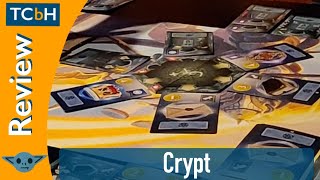
Click to watch at 0:14 · YouTube ↗
Overall sentiment (raw)
mixed
Pros
- Innovative dice bidding mechanism that creates tension between immediate gains and longer-term planning
- Tight, tactical decisions where every action matters and round-to-round planning pays off
- Balanced immediacy versus long-term goals, resulting in a smart, tense core loop
Cons
- Low variability after several plays; the game can become predictable
- Articulation of card types and effects may be opaque to new players without a thorough teach
- May not satisfy players seeking a heavy thematic experience or deep engine-building
Thematic elements
- dice bidding, resource control, risk versus reward, and social interaction as cards are claimed and stolen.
- Fantasy/medieval crypt and tomb setting with dungeon-crawl vibes, where power and jewels drive conflict among rivals.
- abstract
Comparison games
- Other dice-bidding or set-collection titles with similar tempo and risk mechanics
Mechanics (from transcript analysis)
- Auction / Bidding — Players place dice values as bids on cards. The same value can be placed on multiple cards during a turn, and values can be modified between rounds to calibrate risk and influence opponents. If a bid is successful, the bid die returns to the player's pool with no immediate penalty, but it cannot be replaced this round, creating a resource-scarcity dynamic that shapes future decisions.
- card type diversity and scoring channels — Score cards are diverse and come in multiple types, with specific interactions depending on which card type is active. This multipath design encourages players to adapt their strategy to the evolving card pool.
- dice bidding — Players place dice values as bids on cards. The same value can be placed on multiple cards during a turn, and values can be modified between rounds to calibrate risk and influence opponents. If a bid is successful, the bid die returns to the player's pool with no immediate penalty, but it cannot be replaced this round, creating a resource-scarcity dynamic that shapes future decisions.
- End Game Bonuses — Endgame scoring clusters determine who wins, and players must time their bids to maximize late-round scoring opportunities, rather than exhausting all resources too early.
- endgame timing and scoring clusters — Endgame scoring clusters determine who wins, and players must time their bids to maximize late-round scoring opportunities, rather than exhausting all resources too early.
- hidden information and reveal strategy — Some card effects or points may be held in reserve and revealed later, rewarding players who manage information thoughtfully and read opponents’ risk tolerance.
- Memory — Some card effects or points may be held in reserve and revealed later, rewarding players who manage information thoughtfully and read opponents’ risk tolerance.
- resource exhaustion — Some dice become exhausted after use, reducing the number of dice available in subsequent rounds. Exhaustion creates a cascading effect where early-round decisions constrain future options, adding depth to planning and tempo.
- Risk Management — High-value servants can lead to stronger round outcomes but increase the risk of overreaching and triggering counter-moves from opponents. Players must weigh the benefits of claiming a powerful card against the danger of giving opponents more leverage.
- risk management and pressure — High-value servants can lead to stronger round outcomes but increase the risk of overreaching and triggering counter-moves from opponents. Players must weigh the benefits of claiming a powerful card against the danger of giving opponents more leverage.
- round pacing and tempo — The structure emphasizes a tight tempo where each round builds on the previous one. The pacing rewards careful sequencing of bids and efficient use of dice, while still allowing moments of bold risk-taking.
- set/collection of points and activated abilities — At various points in the game, players reveal points on cards to unlock additional abilities or to increase scoring potential. This creates a layered payoff where players must balance immediate scoring with the risk of exposing stronger effects later.
- steal/deny interactions — Opponents can respond by taking or denying access to coveted cards, creating social friction and strategic tension. This adds a friction layer beyond solitary optimization.
- two-sided scoring cards — Each card has two faces, representing different scoring opportunities or abilities. Depending on which face is active, players gain points or trigger special effects. The system encourages long-term planning and situational decision-making as the board state evolves across rounds.
- variants and promos — Promotional editions and online variants introduce new cards and scoring options, expanding the game’s strategic envelope and extending its replayability beyond the base set.
Video topics + discussion points
No key topics recorded for this video.
Quotes (from this video)
- Crypt at its core is an innovative game
- utilizing dice as bidding tokens
- balance of immediacy versus long-term goals makes the overall structure of the game feel very smart
- it's not all luck it's not all strategy
- pressing your luck and pressure on opponents to misstep
- the balance between risk and reward keeps the game tense
- you'll see everything the game has to offer after a few plays
- promos expand what the base game can do without overhauling the core
- the mechanic is elegant in its simplicity yet rich in payoff
- design choice that rewards careful planning while leaving room for bold plays
- the social layer is where the game shines against more solitaire bidding experiences
- the pacing and card variety make a strong first impression
References (from this video)
No references stored for this video.
Video 83KFSPfuH8w
Good Time Society Discussion at 0:07 sentiment: positive
video_pk 7050 · mention_pk 92681

Click to watch at 0:07 · YouTube ↗
Overall sentiment (raw)
positive
Pros
- Team-based
- Competitive
- Communication challenge
Cons
- Potentially confusing
- May cause conflicts
Thematic elements
- Code interception
- Team-based communication
Comparison games
none
Mechanics (from transcript analysis)
- Code scrambling — Players jumble and unjumble codes while trying to intercept opponent's communication
Video topics + discussion points
No key topics recorded for this video.
Quotes (from this video)
- good time Society is not responsible for any in-game or out of game shenanigans
- heavy metal concert typewriter evil mastermind and drunk people fighting
References (from this video)
No references stored for this video.
Transcript Navigation
Showing 1–10 of 10