















Cutthroat Caverns Deep Dive
What the Community Thinks About Cutthroat Caverns
Cutthroat Caverns is a semi-cooperative fantasy dungeon battler from Smirk and Dagger Games. Reviewers tend to describe it the same way: a party of adventurers has to kill monsters together, but the player who lands the killing blow collects the prestige, so every ally is also a potential rival. Reviewers discuss it as a game for groups that enjoy teasing and betrayal more than tight tactical planning. The most consistent praise is for its humor and its willingness to let friends turn on each other. The most consistent criticism is that a player who dies early can end up waiting a long time for the game to finish.
Several reviewers also place it in a wider conversation about mean games. BoardGameBollocks and Board Games UnLocked both rank it among their most backstabbing picks, and both stress that the experience depends heavily on the table. Reviewers from Board to Death TV and Shelfside give it solid scores, while the podcast The Broken Meeple treats it as a take-that title that has not aged especially well.
Core Mechanics That Define Cutthroat Caverns
Encounters, Life Points and Prestige
Each game moves through a deck of large encounter cards, and each card represents a monster or trap that the party must defeat. Every creature has a life total that depends on how many players are at the table. At the start of each turn, a new encounter is flipped and the encounter counter moves up. Creatures list their own attacks and the character each attack targets, so the party always knows what the monster will do if it survives a round. Defeating an encounter awards the prestige printed on the card, plus bonus prestige on later encounters. The surviving player with the most prestige after the final encounter wins.
The prestige rule is the central tension. Because only the player who delivers the final blow gets the reward, a player who is badly hurt may hold back damage on purpose so that someone else takes the hit, or so that they can strike the killing blow later. Reviewers describe this as the reason the game feels so social, since every turn invites negotiation, bluffing and quiet sabotage.
Combat Rounds and Cards
A combat round starts with initiative. Each player draws a numbered initiative card, and the lowest value acts first. Players then secretly choose one card from their hand, which is either an attack card with the red combat icon or an action card with the blue icon. Attacks resolve in initiative order and deal damage to the creature. Action cards are interrupts that usually modify or cancel attacks, and their timing is printed on the card. Some attacks show a character portrait. Playing one of those lets a player add double damage, and that attack cannot be countered.
Potions add a second layer. Potion cards are revealed when drawn and can be used once, which adds a small element of risk to the turn. Reviewers note that the hand of cards is a source of much of the game's luck, but that managing the cards you keep and discard still gives players room to plan. After every creature attack, damaged players draw cards, which means the monsters themselves help keep the game moving.
The Cutthroat Caverns Experience
Table Talk and Negotiation
Reviewers consistently describe the table talk as the best part of the game. Players make promises they have no intention of keeping, claim they will heal someone and then do nothing, and pile attacks onto whoever happens to be in the lead. Because the rules let a player spend a turn sacrificing their own health to save a rival or to set up a later betrayal, every decision is open to interpretation. Groups who enjoy shouting, joking and accusing each other tend to have the most fun.
The game also rewards careful reading of the room. Players with the most prestige attract more attacks, so the leader's position is always shifting. Reviewers point out that this keeps the endgame tense without the long bottlenecks that slow other games in the same genre.
Expansions and Component Variety
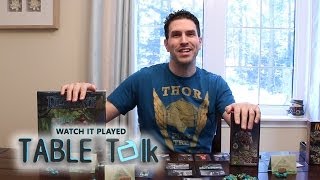
The base game is supported by several expansions, including Deeper and Darker, Relics and Ruin, Tombs and Tomes, Savage Arena, Errand of Evil and Fresh Meat. Rodney Smith, Watch It Played walks through the rules and explains how the extra monsters and item cards slot into the base structure. Reviewers who have played the expansions say they add variety to the encounter deck and new traps that make the table more unpredictable. Those who prefer the base game argue that the core loop is strong enough on its own.
What Makes Cutthroat Caverns Stand Out
The Final-Blow Twist
The defining feature is the final-blow rule, which turns cooperation into a race. BoardGameBollocks highlights the way this creates a constant pull between helping the group and protecting your own chance at prestige. A player may want an ally to survive, yet also want that ally to be too weak to finish off the monster. Reviewers who enjoy social deduction games often name this as the moment the game clicks.
Monster Design
Monster abilities are another frequent point of praise. Shelfside calls out the variety of creatures and the way their attacks fit their themes. BoardGameBollocks likewise praises the monster abilities, which add surprise to each encounter and make the game feel different from one session to the next. Reviewers agree that this variety is one of the strongest reasons the game stays fresh across repeated plays.
Potential Drawbacks
Player Elimination and Downtime
Player elimination is the most common complaint. A player whose health reaches zero is out of the game until it ends. Board Games UnLocked makes this point directly, arguing that the game almost always needs to be short for elimination to feel acceptable. Groups who are already close to losing can end up watching a long finish. Reviewers suggest that a revive option, a shorter game length or a house rule could ease the problem.
Theme, Components and Initiative
Some reviewers find the theme thin. BoardGameBollocks says the setting does little to make the characters feel distinct, and it criticizes the initiative draw as unfair when one player consistently draws better cards than the others. Shelfside raises concerns about component quality and about art that does not always match the monsters on screen. Reviewers also say the rulebook can feel awkward during the first game, which makes teaching harder. Sleeving the cards is recommended because they are shuffled often.
If You Enjoy Cutthroat Caverns
Cutthroat Caverns suits groups who like loud, social games with a lot of betrayal and laughter. It is a good fit for players who enjoy games such as Munchkin, City of Horror or Spartacus, where alliances are temporary and the table is always watching. Reviewers suggest choosing an even number of players when possible, since odd counts can leave one person ganged up on more than the others. Players who want a lighter, quicker experience may prefer a different title, and those who dislike elimination should look for games with less direct player removal. Reviewers who want a more strategic take on backstabbing often point to Cosmic Encounter as the stronger choice.
What Reviewers Are Saying
"Cutthroat Caverns is a great game especially for bigger groups who like to laugh and backstab their friends and not to take their game too seriously."
— Board to Death TV
"Once you're dead you're dead, go play something else."
— Board Games UnLocked
"It's fun and it's a blast but only if you're in it."
— Board Games UnLocked