/pic1355432.png)
/pic1747908.png)
/pic2454379.jpg)
/pic2454366.jpg)
/pic1355432.png)
/pic2503082.jpg)
/pic3062097.png)
/pic5255083.png)




















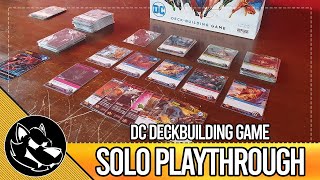





DC Deck-Building Game Deep Dive
What the Community Thinks About DC Deck-Building Game
DC Deck-Building Game has earned its place in the competitive deck-building landscape through accessible mechanics paired with beloved superhero flavor. Reviewers consistently praise its straightforward design, competitive energy, and the unique twist that each DC hero comes with their own special ability that subtly shifts strategy. While some note that the theme occasionally takes a backseat to gameplay, the game's fast pace and variety make it a reliable choice for both newcomers and experienced deck-builders.
Core Mechanics That Define DC Deck-Building Game
The Fundamental Deck-Building Loop
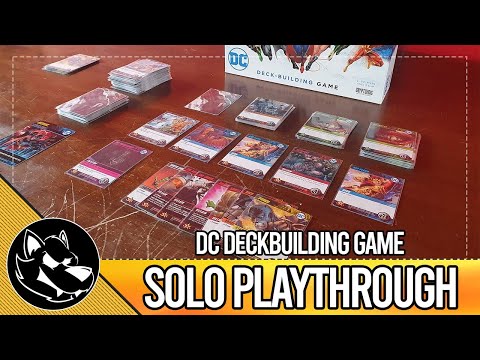
The core experience mirrors traditional deck-building: players start with basic punches and vulnerabilities, acquire stronger cards from the center lineup, and gradually construct more powerful decks. Each turn, players generate power (the game's main resource) and spend it to purchase equipment, heroes, superpowers, locations, and villains. Victory points printed on cards determine the winner once all eight supervillains are defeated. The elegance of this loop lies in its clarity: there are no hidden mechanics or fiddly interactions. Players who can adapt quickly when the available cards don't match their strategy typically outperform those locked into a single approach.
Hero Powers as Strategic Anchors
Each player receives a random DC hero character at the start, and that hero's unique power fundamentally shapes their optimal card purchases throughout the game. Batman rewards equipment acquisition; Superman excels when collecting superpowers; Wonder Woman synergizes with villain defeats. This asymmetry provides immediate direction without railroading: players can always pivot if the board offers better opportunities. Reviewers note this feature separates DC Deck-Building Game from purely generic deck-builders, though the power variance remains modest enough that flexibility still wins games.
The DC Deck-Building Game Experience
Fast, Punchy Gameplay with Surprising Depth
Reviewers describe the game as quick and simple on the surface yet containing surprising strategic texture. Turn structure moves rapidly around the table, and a typical game concludes in a reasonable timeframe. The press-your-luck element arrives when villains attack at the end of rounds, creating tension without bogging down play. Card interactions feel intuitive enough for casual players yet reward clever sequencing: using location cards to unlock bonus abilities, chaining hero effects, or timing destruction of weak cards from your deck at critical moments.
Player Interaction Through Competitive Tension
While not a cooperative game, DC Deck-Building Game includes meaningful player conflict through attack cards and the shared center lineup. Some cards directly harm opponents; others let you defend against those attacks. The race to acquire the highest-value cards in the lineup before opponents creates organic conflict without explicit player-versus-player mechanics. One reviewer noted that some games can experience steamrolling, where a lucky early draw of powerful cards allows one player to run away with victory, though rotating who plays which hero across multiple games mitigates this concern.
What Makes DC Deck-Building Game Stand Out
The DC Universe Theme and Component Design
The integration of DC Comics IP elevates what would otherwise be a competent but generic deck-builder. Reviewers consistently highlight the appealing card art (drawn from DC's New 52 era), color-coded card types for quick recognition, and thematic card names that reinforce the superhero fantasy. Location cards that remain in front of players throughout the game and provide ongoing bonuses feel particularly satisfying. For DC fans, assembling rosters of their favorite heroes transforms the game from abstract resource management into a fantasy fulfillment experience. Reviewers praise this accessibility for teaching deck-building to newcomers who might find pure mechanics-first designs intimidating.
Extensive Expansion Support and Cooperative Variants
One of the game's greatest strengths is its ecosystem. Crisis expansions convert the competitive base game into cooperative variants where players must work together to defeat super-villains against the clock. This transformation is not a reskin: the cooperative mode introduces real strategic sacrifice, where individual deck optimization must yield to team survival. Reviewers report that Crisis mode elevates the base game significantly, making it a worthwhile inclusion on "top deck-builders" lists specifically because the cooperative variant adds engagement layers most competitive deck-builders lack. Multiple expansions also introduce new heroes, villains, and mechanics while maintaining the game's core identity.
Potential Drawbacks
Luck and Lineup Variance
The central card lineup, which refreshes each turn, introduces randomness that some players find frustrating. If the cards you need never appear, or an opponent snaps up every synergistic card before your turn, the experience can feel like punishment by chance rather than outmaneuvering. Reviewers note the game remains winnable through adaptation, but acknowledge that games can feel swingy. Advanced variants exist to reduce this variance (playing with a larger lineup), but they are not built into the base rules.
Modest Mechanical Innovation
No reviewer identified DC Deck-Building Game as mechanically groundbreaking. The game follows well-established deck-building templates without introducing novel systems. For players seeking innovative mechanics, the draw lies entirely in the DC theme and the cooperative expansions. Mechanically, it sits comfortably alongside established peers like Legendary Marvel and Hero Realms, solid and functional rather than revelatory.
If You Enjoy DC Deck-Building Game
Players drawn to DC Deck-Building Game typically enjoy fast, competitive deck-builders with accessible rules and thematic flavor. The comparison titles that appear across reviews include Legendary Marvel (deeper mechanical complexity, similar theme), Hero Realms (pure mechanics, less theme), and Star Realms (two-player card combat). For fans seeking cooperative gameplay, the Crisis expansions transform the experience entirely. Solo variants exist on BoardGameGeek for players wanting campaign-style play. The game also serves as an excellent entry point for players new to deck-building, teaching the core loop without overwhelming complexity.
What Reviewers Are Saying
"You start with a deck of basic cards, mostly punches and vulnerabilities, and you'll use those to buy better cards from a lineup in the middle of the table. Each player gets a DC character with a unique ability, which gives them a bit of direction. The strategy mostly comes from managing what comes in the lineup, buying the best card for your strategy and your hero."
— JestaThaRogue
"This core game is so much fun and I've taught this game to people who have never played deck-building games and they loved it. They went out and bought it right away for themselves to give it to somebody else. I've bought all these expansions because you know why? DC deck-building game. The core game, which is, I believe, the one from the back, gets a Boring Coffee Seal of Approval."
— Board Game Coffee
"If you're looking for a two-player game this plays really great, especially the cooperative version. I bought all these expansions. DC Deck-Building Game, the core game gets a Boring Coffee Seal of Approval. It's not only because it's a good game but I've taught this to people who have never played deck-building games and they loved it."
— Board Game Coffee