
Dead Cells: The Rogue-Lite Board Game is a dungeon-crawler that offers a cooperative rogue-lite experience inspired by the Metroidvania genre, playable with 1-4 players, and with a gameplay of around 45 minutes. Explore the ever-changing island of Dead Cells in this ruthless dungeon crawler. Explore. Kill. Die. Mutate. Repeat.
Choose one of the four Beheaded (Woah, hold on... Isn't it supposed to be only one of these guys? Is this one of those stupid time-loop plots?) As you resurrect with very little clue of what’s going on, you will...
• Explore Biomes. Choose your path wisely within a sprawling, ever-changing castle! Will you upgrade one of the character powers with a scroll? Or will you choose a chest to equip a new weapon? Will you find the hidden runes that will open new paths and access new biomes? This won’t be a walk in the park, though. Because the island is infested with the abominations born from the Malaise, be ready to…
• Kill Enemies. Each character class has unique power sets and a deck of action cards. For each enemy encounter, you will only need to pick one action card to cover all three phases of a fight. Loot equipment, gold, scrolls, and Cells from the corpses of your enemies and get stronger, but beware... Your health pool is limited and sooner or later you will...
• Die. Wandering through enemy-infested dungeons isn't the safest activity, even for your beheaded heroes. There will eventually be one monster too many, or you could step on a fatal trap and lose all your scrolls, equipment, and accumulated gold. But this is far from the end for you! Even in death you will be able to keep your precious Cells to…
• Mutate. The Collector will let you spend your Cells to buy permanent mutations that will give you more power... forever! Choose cards to buy from three different decks: Brutality, Survival, or Tactics. Get action cards to enhance your card deck. Find blueprints to grow your loot deck. Increase your health pool. Unlock additional item slots, and much more… Unless you prefer to throw your Cells into this mysterious well... It seems like a pretty stupid thing to do with your hard-earned Cells, but hey, you do you, bud... Death is no excuse to take a nap, so...
• Repeat. Death is not the end either! You’ve already lost your head, remember!? As the day starts again in a new loop, use your new permanent mutations to exact revenge on whatever killed you last time. Go further and deeper into the island and kill the bosses to access new starting biomes. Previously-played biomes keep changing as stronger monstrosities spawn in them, along with powerful new items. (Damn! Will this game ever end?)
Official Dead Cells page for FAQ / Rules / Player Aids downloads: https://deadcellstheboardgame.com/FAQ/


Images



- intrigue around translating a video game roguelike into a board game
- cooperative rogue-lite deckbuilding
- roguelike fantasy
Mechanics (from transcript analysis)
- cooperative roguelite progression — explore biomes; fight enemies; character class with unique powers; deck of action cards; die, mutate, repeat loop
Video topics + discussion points
Quotes (from this video)
- I'm incredibly biased and I'm not going to sit here and tell you to back the Kickstarter campaign for this one
- I wrote the rulebooks for all these four games
- distilled two-hour 18nxx experience
- I judge games by their cover; Katamino Tower looks cool
- Clover really surprised me with how much I've enjoyed it
References (from this video)
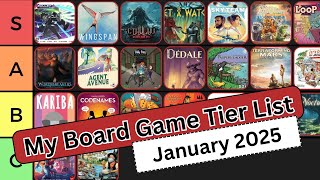
- Did not enjoy myself.
- Progress is almost non-existent.
- It's really really tough.
- Host prefers 'Scythe's Souls' for a tough game with no progress.
- Scythe's Souls
Mechanics (from transcript analysis)
- Card Drafting — Mentions getting a few cards that you might draw in the future.
Video topics + discussion points
Quotes (from this video)
- this one is an abstract game that actually worked pretty well
- oh boy oh boy this is a game I don't have to think about it I I I could even think about giving it lower than a d but I will give it a d now
- the design doesn't work at all it's so specific there's like so much text on the cards it's i' I've I've never seen cards like that
- this is we have the suspicion that this is AI generated or at least some of it uh like what the regarding the rules in the design because wow this is really cumbersome
- it's a solid game this is like a game that is has a cool premise it works very well but it's nothing special but still I keep coming back to it because the Bame Marina implementation is so great
- Kaber of course uh this needs to be an S tier because it's my top three game in both my list solo and general
- Secret identity I will also give an a yeah it works really well
- it's very very tough but I like it it's always fun
- very good Abra game I can just I just recomend can recommend that to pretty much everyone
- Not turn I just reviewed on my channel uh I like this game I will give this a B I think B is fine uh it's a good game it has a very interesting Bing mechanism and a it has a few mechanisms that are very unique
- Missana uh I'm still really torn now that I played the cave of Gins which is really good um I might rank this higher I would also give this a B I don't know this game I think this game like will become even better like when you have more expansions right the base game is okay it's fine probably just a b Toc
- just one srank one of the best party games out there definitely srank uh I always like to pull it out it's one of my most favorite party games
- K grip also clear srank let me just put it up here clear srank game is one of my most most favorite portable solo games ever
- Kites Kites I will give a H A or B uh it's a very good game but I think I will give it a b it's also like a fun time you play like one two three four games and then you're over it and then you don't want to play it for a few weeks right at least that's how I feel but every time I pull it out it's very very fun I like it
- fun facts also clear S rank I like this a little bit more than just one uh but they're both incredible party games so definitely also S rank
- belati um a game that is not very well known I think internationally but a very cool deduction party game I also have to give this an S it's always a fun time like really really fun party games
References (from this video)

- Enjoyed unlocking content
- Became unstoppable towards the end
- Beat the boss many times
- Frustrated by content lock
- Started dead, became unstoppable
- roguelike with unlockable content
Mechanics (from transcript analysis)
- Combat — Players engage in combat, with the user noting they 'beat the boss many times'.
- progression — Players unlock weapons and abilities as they play.
- Roguelike — Features procedural generation, permadeath, and unlockable content.
Video topics + discussion points
Quotes (from this video)
- It's like, I I I I like milk you know I mean I I can drink cre soda is not like milk it's cream something different I don't know it's taste I wouldn't I think the cream of the cream soda is a misnomer it is not nothing like cream well fair enough but I don't like or vanilla it's more vanilla yeah and I'm not I'm not a big like people say oh D Coke and vanilla or you know Vanilla Coke and I'm not
- When you have a toddler you know and they they're not pie trained I could smell he'd had an accident and he was upset and he started he's like and he was like yo daddy daddy and I was like okay just give me a second you know food's coming soon then we'll race home get you cleaned up you know take care of everything and and you know like two minutes turned into five like 5 minutes turned into like 7 8 9 10 minutes and he's just now beside himself
- This is like a big disappointment so disappointed because all the early side all the a a lot of content creators this is a kind of a problem the content creators were just Gaga over this game right and I was like oh my God it looks so good doesn't it look like from the graphics and the art style and the lot it's packed with content it's like each scenario like each book it's called is like what two inches thick of cards of like boards to play through and it's sort of like the the map is interesting you lay
- the moment that you're saying my Paladin goes and checks out the well it's like you're not you're not role playing then you're just you're just moving your character you're you're so you're making a move and so then if you get into that habit then when you speak to people like like your mannerisms at the table can be interpreted as like your character that you're playing
- man I just had no fun with that game I do not understand that game like it's got promise yeah has interesting things huh but the game just sort of makes you not want to play it
- the rules are not well done unfortunately they're really rough and uh and I assume that's from a translation issue
- the story that it creates is basically the game the the player agency is low though okay yeah it's not that in depth with that kind of stuff you you you shoot you hope for the best yeah yeah and you roll dice and that's it right
- no box full of cardboard plastic and wood will ever be able to compete with that
- the moment that there it it it pulls them out of their character all of a sudden now I'm tell you're telling them what you did yeah you're telling them what you did so you just so if yeah you can still convey a message to them but you never like do a verb for them
- the ratio of Good To Mediocre is yeah not as good as you want it to be
- Patrick mes is just he's just he just knows how to win yeah somehow he does
References (from this video)

Mechanics (from transcript analysis)
Video topics + discussion points
Quotes (from this video)
- This is not a you know, 4D camera, but if you could feel the heat right now, it is hot.
- This looks like the setting of a movie about to go wrong.
- I bet you their games aren't so great.
- Small little place, but with some pretty Ooh, I see some cool games in there.
- Wow, there's a lot of really cool stuff here. This is a pretty neat store here. Pretty small. Some good stuff.
- So so all of this we we keep changing except that the match over there.
- This is the first mall I've been to that has a church in it.
- Found another mass market store, and this one has some actual decent games in it.
- Well, it's kind of what I've always dreamed of.
- This is lunch!
- So, you can see lots of games. You can see they're setting up a lot of different games. Here's a whole pile here. This is going to look fantastic once it is all set up.
- I hate werewolves.
- This is going to look fantastic once it is all set up.
- The library is probably or that is where you go buy games is probably set up.
- Isn't all the volunteers, there's a bunch of them.
References (from this video)

- The game is cool
- Played for almost a year
- Had fun with it
- Unlocked everything
- Grind is not fun
- Stuck, cannot progress
- Not interesting enough to keep trying
- Not fun to play over and over without progress
- roguelike
Mechanics (from transcript analysis)
- Combat — Combat involves fighting monsters, leveling up, and theoretically getting more powerful.
- Random drops — Progression relies on random drops that are not occurring.
- Unlocks — Players have unlocked everything, but still cannot progress.
Video topics + discussion points
Quotes (from this video)
- Can we have the 90s back, please? Can we like start can like rewind back to like 89 90? Like just start there and like I'll take 10 years of the 90s again.
- The songs that remind us of the best times. The songs that remind us of the bad times.
- I drink a whiskey drink. I drink a vodka. I drink a drink. I drink a drink.
- I want to get out of here.
- They're still going around.
- What a [ __ ] horrible song.
- It's so really terrible. Like, but it was so great. Like, at the time it was like everybody listened to it was like that's the song. So catchy though. So catchy. So good.
- Doesn't have to be good. It just has to sell.
- You're an idiot then.
- I mean, no, he's uh the John Spencer Blues Explosion uh album Orange uh was R was rated by I think it was I think it was Playboy rated it the number one album to have sex to.
- Everybody should listen to the Reverend Horton Heat.
- That's fair.
- And I am whenever nobody's like I've never even heard of the replacements. I was like, are they on someone's roof?
- Well, you [ __ ] suck.
References (from this video)

- Fun and engaging gameplay loop of dying and re-trying
- Rewarding progression through unlocks and upgrades
- Challenging and varied biomes
- Satisfying combat mechanics
- Good replayability
- Difficulty in progressing through certain biomes
- Running out of potions
- Receiving malaise tokens
Mechanics (from transcript analysis)
- Blueprint Cards — These cards, when acquired and brought to the inter-biome, are permanently added to the equipment deck.
- Character Selection — Players can choose different 'beheaded' characters, each with unique starting stats and card sets.
- combat cards — Players choose combat cards each round to perform actions, with effects like dealing damage, looting, or applying status effects.
- Constraint Tiles — Optional zones in biomes can have 'constraint tiles' that impose restrictions, like not being able to use potions, but reward players with keys upon completion.
- Cursed Treasure — Choosing a cursed treasure tile results in losing potions but gaining dead cells, equipment, and blueprint cards.
- Darkness/Lanterns — The 'Forgotten Sepulchre' biome features darkness, where enemies are revealed face down, and players can light lanterns to reveal them.
- Deck Building (Limited) — While there are many unlockable cards, the host notes that 'You have to use all of them,' implying a limited form of deck construction where all acquired cards must be utilized.
- Double Biome — The 'High Peak Castle' is described as a 'double biome' board, indicating a larger and more complex area to navigate.
- During Game Cards — Cards like 'exploration' can be used during the game to provide flexibility in biome setup, such as placing two tiles instead of one for treasure or door locations.
- Exploration Rune — This rune allows tiles in a biome to be placed face up, giving players knowledge of upcoming locations.
- Keys and Shortcuts — Collecting keys in optional zones can unlock shortcuts to boss encounters.
- looting — Players can choose to loot for gold teeth, equipment cards, or other rewards during combat.
- Malaise Cards — Active 'malaise cards' can impose negative effects, such as preventing round zero actions, until removed or the player moves out of the biome.
- Merchant — A tile where players can spend gold teeth to acquire equipment cards or heal.
- Mutations/Skills — Players can choose active skill cards like 'soul recovery' to gain benefits during a run, such as gaining dead cells for killing elites.
- runes — Active runes like the teleportation rune, vine rune, exploration rune, and spider rune grant players new abilities to traverse the game world and interact with its elements.
- Scrolling/Boss Fight Mechanics — The game involves progressing through biomes and facing bosses like the 'Time Keeper' and the 'High King' with unique mechanics and challenges.
- Scrolls (Brutality, Tactics, Survival) — Players can upgrade scrolls that provide passive bonuses or new abilities, such as the ability to fire an enemy when they inflict damage.
- Spider Rune — Grants a golden shield to the first player at the start of combat when there is a wall.
- Start of Game Cards — Players can choose cards at the beginning of each run that provide starting advantages, like drawing and equipping equipment cards or increasing starting health.
- Teleportation Rune — Allows players to move to a revealed teleportation tile, resolve its effect, and return to their original space.
- Vines Rune — Allows players to pass through corridors marked with the vine rune.
- Worm Checks — In the 'Stilt Village' biome, players can gain worm tokens that can lead to negative consequences like losing health, downgrading scrolls, or instant death if not managed.
Video topics + discussion points
Quotes (from this video)
- this game is all about dying and re-trying anyways.
- We're going to die.
- I love games that are hard and you have to replay them to win.
- This is so fun and tight and tense.
- See how much better we're doing on this one?
References (from this video)
- Strong roguelite appeal
- Interesting programming aspect and thematic tie-in
- Some component and rule-book issues reported by players
- May have complexity that clashes with other table dynamics for some groups
- permadeath, progression via new abilities and items
- Roguelite dungeon exploration inspired by the Dead Cells video game
- campaign-like roguelite progression
- Slay the Spire
- Gloomhaven
Mechanics (from transcript analysis)
- character with unique powers — Runs yield new abilities and equipment
- deck-building-like programming — Card-based actions with programmable effects
- Dungeon Crawl — Simple dungeon exploration with random encounters
- dungeon navigation with enemies — Simple dungeon exploration with random encounters
- Roguelite progression — Runs with progression, new abilities on each run
- Unique Player Powers — Runs yield new abilities and equipment
Video topics + discussion points
Quotes (from this video)
- it's a very mechanically sound game with an interesting theme
- it's a pretty cute theme
- the most interesting part about this game is the programming
- I really enjoyed this game I'll just say despite my I guess not as high score
- I would play this again
References (from this video)

- Faithful to the addictive progression of the video game
- Engaging, accessible entry into a roguelike in board game form
- Strong flavor text and thematic flavor
- As with any roguelike, potential for run-length variance and grind
- Cooperative dynamics can hinge on player coordination
- Action-Roguelike progression and escalating upgrades
- Dark fantasy roguelike adventure adapted from a video game
- Tight, arcade-like progression with escalating challenges
- Mansions of Madness
Mechanics (from transcript analysis)
- Cooperative Game — Players work together through runs, upgrading and adapting to threats.
- cooperative roguelike progression — Players work together through runs, upgrading and adapting to threats.
- Track Advancement — Constantly improving capabilities and gear as runs progress.
- Upgrade progression — Constantly improving capabilities and gear as runs progress.
Video topics + discussion points
Quotes (from this video)
- it's a deck building uh like Civilization game where you take on a civilization
- your turns are very long they're very intricate uh you know a number of minutes if not more than that
- it's probably the most solo game we've ever played that is a multi play a game
- we would play it and then when someone was taking their turn the other person would get up and start doing chores around the house
- it's just funny that that's what's ended up happening exactly
- it's an absolute favorite of your mother
- we're not Co-op people
- mindspace is a little small box roll and right basically where you're drawing different shapes
- it's just very relaxing and soothing
References (from this video)

- Nice progression concept and short play time
- Gameplay grind outweighed by repetitive tasks; did not enjoy overall
Mechanics (from transcript analysis)
Video topics + discussion points
Quotes (from this video)
- Great games don't stay. Great games do leave. There's just too many games.
- I am a little behind on giveaways from this series. I'm trying to catch up.
- I'm Alex Radqu from Board Gameco. Hope you enjoyed this video and as always, I hope you have a good one.
- I love the progression that Dead Cells gives you, both in the video game and the board game, but I didn't like the gameplay.
References (from this video)
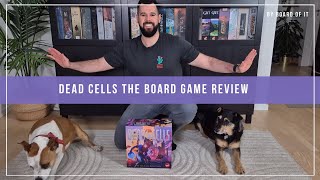
- Impeccably replicates the Dead Cells roguelite vibe and feel
- Rich combat system with varied monster behavior and turn-based rhythm
- Strong replayability through many cards, decks, and biomes
- No quarterbacking thanks to individual, semi-unique decks
- Beheaded characters provide unique playstyles and upgrades
- Encourages table discussion and cooperative planning
- Rulebook is not the strongest; communication rules are vague or loose
- Bulkier setup and table presence due to biome tiles and Boxes; not ideal for quick sessions
- Randomness can yield punishing early runs or imbalanced monster combinations
- At four players, dynamics can be less optimal due to turn order and upgrade pacing
- Rogue-lite progression: die, unlock upgrades, attempt new run with more power and new paths
- Dungeon-crawl inspired by the Dead Cells video game with biomes, tile-based progression, and run-based structure
- Cooperative, puzzle-like exploration with temporary progress between runs
- Dead Cells (video game)
Mechanics (from transcript analysis)
- Beheaded character boards — Each player controls a beheaded character with a unique upgrade track and set of powers, encouraging varied play styles.
- Boss encounters and run termination — A run ends after key boss encounters; death ends the run, though success can unlock new biomes and continue progression.
- Combat card system with left-to-right action flow — Players each play combat cards in a sequence; rounds progress from leftmost to rightmost, with actions triggering per round.
- Combat: Deck/Hand — Players each play combat cards in a sequence; rounds progress from leftmost to rightmost, with actions triggering per round.
- Deck Building — Cells earned in runs are spent to acquire new cards from several decks (Abandoned Well, Brutality, Tactics, Survival) to improve future runs.
- Deck-building and upgrade economy using cells — Cells earned in runs are spent to acquire new cards from several decks (Abandoned Well, Brutality, Tactics, Survival) to improve future runs.
- No quarterbacking due to private decks — Each player has a private combat deck and cannot fully reveal cards to others, fostering discussion without full disclosure.
- Randomized monster decks per biome — Monsters come from biome-specific decks, created to produce varied and sometimes punishing combat encounters.
- Status effects and shields alter combat — Status effects (freeze, fire, poison) interact with monsters; shields function as damage mitigation, influencing strategy.
- Tile-based map with semi-randomized biomes — Players navigate a map comprised of biome tiles that are shuffled into a playable path, with rewards and enemies on various tiles.
- Unique Player Powers — Each player controls a beheaded character with a unique upgrade track and set of powers, encouraging varied play styles.
Video topics + discussion points
Quotes (from this video)
- impeccably replicates the feeling of dead cells and rogue-lites in general
- no quarterbacking because you have your own deck
- this game is potentially both of our favorite Cooperative game
- the main thing I’d want to say is that this game impeccably replicates the feeling of dead cells and rogue lights in general
- it’s addictive and you want to do another run
References (from this video)

- cooperative roguelite with quick, repeatable runs
- permanent upgrades that carry forward across runs
- strong video game IP appeal
- limited information available in the video
- permadeath and progression through upgrades earned between runs
- cooperative roguelite dungeon crawl inspired by the Dead Cells video game
- short, repeatable runs with looping progression
- Slay the Spire (board game)
- Frost Punk
Mechanics (from transcript analysis)
- Card-based actions — players play cards to perform actions during runs
- cooperative roguelite dungeon crawl — players explore a dungeon together with randomized encounters and progress through runs that end when characters die
- Dungeon Crawl — players explore a dungeon together with randomized encounters and progress through runs that end when characters die
- permanent upgrades between runs — defeating enemies yields cells that can be spent to upgrade for subsequent runs
Video topics + discussion points
Quotes (from this video)
- It's an Allstar cast of designers led by Antoine Boza of Seven Wonders and ghost stories Fame
- absolutely my most anticipated game of the year
- Slay the Spire the board game is incredible
References (from this video)
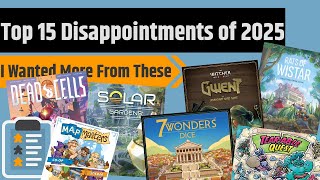
- nods to the video game feel rewarding at times
- tedious grind
- combat system not engaging
- Grindy, loot-driven progression
- Familiar video-game roguelike theme adapted to board form
- video-game-inspired
- Dead Cells (video game)
Mechanics (from transcript analysis)
- grind-based progression — Progression is heavy on repetition with incremental gains.
- luck/combat synthesis — Combat feels luck-based and not particularly challenging.
- Track Advancement — Progression is heavy on repetition with incremental gains.
Video topics + discussion points
Quotes (from this video)
- I don't love the game, but it is it's one of those things where if the game looked different, had a different theme, (or) presentation, it may well have made it into my collection.
- It looks flat. It looks almost like bad clip art.
- It's basically a video game adaptation that should have been adapted and wasn't.
- I bounced hard off Anachrony.
- I would rather just play Small World.
References (from this video)

- surprisingly faithful roguelite feel in a board game format
- tight cooperation with meaningful choices and upgrades
- strong variety and high replayability
- rulebook clarity has some misprints and FAQ needs
- some players may find the rogue-like grind a bit repetitive
- co-op pressure can lead to quarterbacking in some groups
- roguelite progression with evolving biomes and boss lines
- Roguelike dungeon crawling translated from the Dead Cells video game into a cooperative board game context
- procedural, run-focused progression with upgrade decks
- Gloomhaven
- Return to Dark Tower
Mechanics (from transcript analysis)
- Cooperative Game — Teamwork is essential, but players must avoid dominating the flow of play.
- cooperative play with limited quarterbacking — Teamwork is essential, but players must avoid dominating the flow of play.
- Deck Building — Collect and spend Dead Cells to improve your card pool and capabilities.
- deck-building and upgrade decks — Collect and spend Dead Cells to improve your card pool and capabilities.
- randomized boss and biome encounters — Replay value is driven by variability in enemies and encounters.
- roguelike progression — Players run through scalable biomes, collecting Dead Cells to upgrade decks and unlock power.
Video topics + discussion points
Quotes (from this video)
- Undaunted is an incredible system that we love.
- it's a two-player head-to-head game and it is tense and stressful but a real testament that it's always come very close to who's won.
- Worm Span is the new reimplementation of Wingspan with worms or dragons.
- Pampero has everything I love: big chunky euro, heavy energy production.
- Sweet Lands is a prototype that exists somewhere; it could be transformative if it becomes a real game.
References (from this video)
- Nostalgic homage to the video game
- cooperative play adds a new dimension
- fast setup and teardown
- clear roguelike progression feel
- combat system feels grindy and luck-based
- not rewarding, lacks player agency
- solo mode is underwhelming
- mutations and adaptation limitations constrain design
- roguelike progression with persistent upgrades across runs, coop dungeon-crawl
- Prisoner's quarters, toxic sewers, ramparts, and other interconnected biomes in a dungeon-crawl arc
- episodic advancement with boss encounters and biome progression
- Slay the Spire
- Astronauts
- Leviathan Wilds
Mechanics (from transcript analysis)
- biome decks and area progression — areas are represented by decks; players choose routes and unlock new ones through advancement
- Cooperative play with limited communication — players coordinate actions with minimal explicit talking
- Deck-based combat — players draw and play cards to resolve combat with enemies and bosses
- leader mechanic — the leader token changes as players progress through the scenario
- loot and blueprint system — loot cards and blueprints can upgrade equipment and unlock future access
- roguelike progression — permanent upgrades gained during a run that persist between sessions via cell economy
- rune and mutation progression — runes unlock after upgrading cards; mutations provide additional options but are limited by a board
Video topics + discussion points
Quotes (from this video)
- The progression, easily the best part of the game.
- The combat system is incredibly grindy and not rewarding.
- I hate the combat system in Dead Cells.
- Setup and tear down is quick.
References (from this video)
Mechanics (from transcript analysis)
Video topics + discussion points
Quotes (from this video)
- we have no plans of making board games at this time.
- Just treat treat people kindly.
- Print Print and Play Arcade is closing its web store on January 29th.
- the more the more the smaller you are and the more likely a boycott or noise can affect change
- I love what I do.
- Dominion holds up.
References (from this video)

- strong co-op experience
- engaging progression loop
- faithful feeling to the video game
- complex translation for non-video-game fans
- length can vary by group
- video game to board game translation
- cooperative roguelike adaptation
- Slay the Spire: The Board Game
Mechanics (from transcript analysis)
- Cooperative Game — players push further in runs, then die and retry with unlocks and upgrades
- cooperative roguelike progression — players push further in runs, then die and retry with unlocks and upgrades
Video topics + discussion points
Quotes (from this video)
- it's by far the best puzzle game we've played
- the highs are highs and the lows are lows
- it's a really brilliant package
- negotiation makes it easier for people to get in
References (from this video)

- strong roguelike vibe in a board game
- high replay through runs and upgrades
- rules can be dense for newcomers
- depends on run luck and randomization
- high-octane, run-based dungeon exploration
- roguelike video game adaptation
- campaign-driven, run-based
Mechanics (from transcript analysis)
- Cooperative Game — multiple runs with evolving abilities and goals
- cooperative roguelike campaign — multiple runs with evolving abilities and goals
- Tile Placement — board layout adapts per run outcomes
Video topics + discussion points
Quotes (from this video)
- it's basically you're kind of competing to make Trails out of little cards and you're connecting different types of trails together
- we played the entire campaign
- it's a two-player game but we swapped sides for the 9th play
- there's not a lot of well, at least at two players a lot of time investment needed; but it's quick to set up and play
References (from this video)

- Encapsulated experience reminiscent of video game loops
- High replayability in the moment
- May lose novelty when revisiting after edge-case campaigns
Mechanics (from transcript analysis)
- Rogue-lite campaign play — Legacy-like experience in a campaign style with repeat runs.
Video topics + discussion points
Quotes (from this video)
- Very interesting. I put at number 10 the Imperium series.
- I stand by it.
- This is it was my favorite kind of main Undaunted game. I just thought what it did uh was very interesting to me.
- I think it's fair placement. I do really like Worms Span.
- Just One. I absolutely love just one.
- Pamperro. And I completely stick by this.
References (from this video)
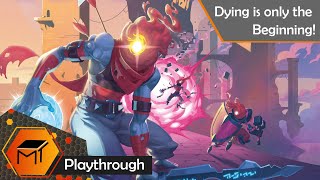
- The mutation board is a standout feature enabling meaningful, persistent progression between runs
- Playable in cooperative groups and as a considered solo mode with Serenity; multi-character play is engaging
- The miniatures are visually striking and the overall aesthetic is a strong thematic fit
- The insert and organization for biomes, beheaded decks, and blueprints are well-conceived and intuitive
- Combat mechanics balance choice, timing, and resource management in a satisfying way
- Solo mode can feel restrictive due to equipment slot limits and campaign pacing
- The setup and management of multiple decks, runes, and mutation slots can be complex and lengthy
- Even with a strong insert, some components do not fit perfectly in all configurations, suggesting room for improvement in storage
- Difficulty ramps quickly in later biomes; for smaller groups, the escalation can make survivability challenging
- roguelite progression with embodied combat, upgrading via persistent resources
- Prisoner quarters leading into multiple biome areas, culminating in toxic sewers; campaign progression with unlocks between runs
- campaign-based with evolving mutation and equipment options; note-driven exploration and unlocks
- Kingdom Death: Monster
Mechanics (from transcript analysis)
- biome progression and rune access — Biomes provide new cards, equipment, blueprints, and runes; moving between biomes unlocks further options
- boss and elite monster dynamics — Elite monsters introduce tougher abilities and greater health; bosses have two-sided fights with unique blueprints
- Boss Battler — Elite monsters introduce tougher abilities and greater health; bosses have two-sided fights with unique blueprints
- campaign squaring and internal economy — At the end of runs, spent resources and upgrades feed into future runs or biome-specific decks; the mutation board evolves
- Combat: Damage Based — Some attacks and effects are zone- or range-specific; positioning and targeting matter for damage distribution
- Cooperative Game — Players can play as multiple Beheaded (three in this playthrough) or use Serenity as a solo proxy; solo mode exists but has idiosyncrasies
- Cooperative or solo play — Players can play as multiple Beheaded (three in this playthrough) or use Serenity as a solo proxy; solo mode exists but has idiosyncrasies
- deck check and rune-triggered effects — Certain crossroads trigger deck checks; runes can unlock new traversal options and bypass some penalties
- deck-building and combat card play — Each combat uses action cards drawn from beheaded decks; discard mechanics, purge options, and bottom-deck draws for blueprints
- loot, currency, and equipment economy — Dead cells are persistent upgrades; gold teeth are spent for equipment; blueprints can become equipment over time
- mutation board (tuckable upgrade tracking) — Upgrade paths slot into a mutation board; progress persists across runs and different campaign configurations
- range-based combat and targeting rules — Some attacks and effects are zone- or range-specific; positioning and targeting matter for damage distribution
- roguelite, run-based progression — Each run is finite; if a character dies the run ends, but dead cells and upgrades persist into future runs
Video topics + discussion points
Quotes (from this video)
- this mutation board is amazing
- I love this because as we play through our campaign we're going to be slotting in Cards into this board
- One of the coolest miniatures ever
- The insert for the box is actually quite good
- I love that mutation board
References (from this video)

- Solid core combat system
- Tile/dungeon reveal adds variability
- Expensive price
- Longevity concerns after a single run
- Perma-death, repeat runs
- Dungeon exploration with roguelike structure
- Procedural, tile-based dungeon exploration
Mechanics (from transcript analysis)
- boss fights — Encounter bosses with escalating health thresholds
- Card-based combat — Use cards to perform attacks and track health of enemies
- tile-based exploration — Reveal dungeon tiles to form the layout as you progress
Video topics + discussion points
Quotes (from this video)
- IP isn't there for me
- I would be an instant back in if IP slapped on it
- longevity wise you'd be bored after that
- the core gameplay of this is really enjoyable
- not enough here in the standard box
- price is high for what you get
- nine cases in the main box
- it's a one-and-done game
- cost you 399-511; nearly 700 quid with VAT