/pic6972703.jpg)
Deal with the Devil is a deeply thematic competitive Eurogame set in a fantasy medieval era. Each of the four players takes on a secret role of a mortal, a cultist, or even the Devil. Due to the asymmetrical roles, players experience the same game but with different game goals every play.
During the blind trading phase, players can offer their resources in exchange for money from another player. The Devil will tempt mortals with goods for a piece of their soul, while the cultist's nature is to sell their soul easily. Only the accompanying app knows who is trading with whom.
But beware! Showing off how well you are doing can attract unwelcome attention and the suspicion of other players. It also may pique the interest of the Inquisition, which is eager to punish those who cannot prove their souls remain intact.
There are many dynamic strategies to experiment with across each playing. Will you sell pieces of your soul early on to boost your city-building prowess at the risk of future punishment from the Inquisition? Or will you carefully manage loan and debt repayment while waiting for others to inadvertently reveal their nefarious nature? Every choice has a consequence, and each role has its own unique strategic approach to explore.
—description from the publisher

Deal with the Devil - How does it play?


Czech it out! Two new games from CGE

- Unique theme and art style
- Innovative cooperative poker mechanics
- Playing poker against the devil and trying to cheat to win
- Cooperative poker style
- Cuphead
Mechanics (from transcript analysis)
- Cheating mechanics — There's all sorts of ways you can cheat. You can do things to manipulate the cards and get make sure you have the hand that you need to survive.
- cooperative play — It's a cooperative poker style game where you're going to be playing Texas Holdem against the devil himself.
- Poker — Largely Texas Holdem style poker.
- Push Your Luck — The more you cheat, the more you're maybe making future problems for yourselves because you're going to, you know, you're be you're dealing with corruption. Temptation and things like that.
Video topics + discussion points
Quotes (from this video)
- Fall is coming. And the best way to enjoy the fall foliage is from inside while playing a board game and looking out the window.
- It's September. That means it's Christmas, basically.
- This is hell of a deal.
- I love, again, I love board games. Board gamers nerding out about their nerdy hobby. It's my favorite thing to do.
- The best gateway games aren't that. If they're just like light with no depth, that's not a good gateway game.
References (from this video)

- Very interested in a copy and trying to get one.
- The production on this is next level.
- It has been sold out every single day.
- Glad I got to find and secure a copy.
Mechanics (from transcript analysis)
Video topics + discussion points
Quotes (from this video)
- Hell of a deal. Hell of a deal.
- I want to upgrade everything, as you know, because I I have a terrible problem making everything deluxified.
- So, I'm going to get the metal next. I'm going to get these action tokens for Scythe.
- This one was really funny because it's a one versus many one person is this creature because you crash landed onto a planet.
- I honestly really wanted because I just saw the cover art and I'm like, 'Wow, this is this is beautiful.'
- This one is a cooperative poker game where you are playing against the devil along with like different bosses and everything and it is a co-op, but still I think it'd be really fun.
- So, I've been looking for a lot of different solo games. I think I got more way more than I was expecting.
- Gen Con this year was next level. The booths were insane. I feel like everyone leveled up their production for the booth overall.
References (from this video)

- Deeply thematic
- Asymmetrical roles offer different experiences
- Interesting mechanics like secret roles, deals, inquisition, city building, deduction, and voting.
- Occultists, the Devil, secret roles, city building
- Medieval era
Mechanics (from transcript analysis)
- city building — Players engage in city building.
- Deduction — Players engage in deduction.
- Secret roles — Each of the four players takes on a secret role of immortal occultist or even the devil.
- Voting — Players engage in voting.
Video topics + discussion points
Quotes (from this video)
- trailblazers where one to eight adventurers will create the longest hiking biking and kayaking paths by the ageless medium of tile length with a catchy is that you can't get lost as you always have to find your way back to camp and you only score points for paths that begin and end at matching colored campsites
- you're gonna get stabbed in the back it's just i mean it's a guarantee
- point city a sequel to the wonderful hit game point salad which i linked to my friend beth now i think about it not important in point city your drafting cards similar to the original point salad but you're building a city and as such there's a little more going on with resource management and engine building aspects but gosh if i'm not excited for it when it's out next year
- board game day which is written by amy valdez from the board game blitz podcast and illustrated by rachel kramer from the semicolo internet comic and they've teamed up to create board game day a 16 page fully illustrated children's book the game follows a group of friends two pandas a cat a bird and an octopus as they prepare for and have a board game day illustrations include many actual children's games so the kid might recognize them and i think this is a lovely project to finish on
References (from this video)

- Alchemists
Mechanics (from transcript analysis)
Video topics + discussion points
Quotes (from this video)
References (from this video)

Mechanics (from transcript analysis)
Video topics + discussion points
Quotes (from this video)
- it was our first trip to gen con in indianapolis also known as the best four days in gaming
- we have a very expensive toll highway in our neck of the woods so we always tell our map apps to ignore toll roads which means it's also going to ignore the toll tunnel and the toll bridges that would get us across the border in a reasonable amount of time so instead we drove through buffalo which i mean i don't recommend it that means we took the scenic route down to indianapolis which we are expecting to be about an eight-hour drive it was 13.
- gencon was being super safe this year by requiring masks and proof of vaccinations so the first task was to wait in this unbelievably long line to show our vaccination papers
- if you want to go hit the comment section complaining about masks and vaccines don't even bother because i'm going to delete it
- we thought for sure that attending a conference of 50 000 people will get the job done but we stayed masked all week and when we got home look at that no covid it's funny how that works
- if you're gonna go to gen con i definitely recommend eating first and lining up later
- multiple cge reps described as bonkers so i can't wait
- i thought the component quality was a little crummy even in this deluxe version
- indianapolis wound up being my least favorite city that starts with i and ends in indianapolis
- Match madness duo turned out to be a compelling hit
- i just could close my eyes for a little bit
- this was my favorite mask of the show by the way
- detroit seemed way cooler than indianapolis by the way let's have gencon there next year
- cheryl jerry rigged these tim hortons cups as rain barrels to keep us dry
References (from this video)

- Intriguing gameplay and concept
- Optimized for 4 players
- Only plays 4 players
- Was initially not sold on the concept
- null
- null
- null
Mechanics (from transcript analysis)
- Player Elimination — The game is optimized to play at four players, with a specific concept around that.
Video topics + discussion points
Quotes (from this video)
- that game is very fun even if you have no idea what the answer is
- it is a gorgeous gorgeous gorgeous game
- there's a lot of instant gratification in this game which I loved because every single turn you would score points
- it gives you a sense of a bit more freedom in the decisions you make
- I think the expansion makes the game better
- this game is absolutely beautiful you can tell right by looking just at the cover
- single action on your turn makes it very very smooth and very very quick paced
- I'm in awe this is probably one of the most gorgeous games I think I've seen
- watching the gameplay and having the game explain to me I'm like I really need to play this
- Starship captains just looks incredible
- and the cube Tower in that game oh my God that's incorporated into the box wonderful
- the folks from AEG and flato just high energy really great at just making that an experience
- Rolling dice it's just like hilarious
- just like no one remembers who wins it's always just the experience of it
- the game is just so wonderful too
References (from this video)

- secret roles with moral choices and manipulation
Mechanics (from transcript analysis)
- Hidden Roles — Each character has its own goals; an app tracks trades and reveals consequences of choices.
- hidden roles with asymmetric goals — Each character has its own goals; an app tracks trades and reveals consequences of choices.
Video topics + discussion points
Quotes (from this video)
- it's survival of the fittest
- you good at making predictions I knew you'd say that
- care for what you wish for
- the game where blank minds think alike
- "Sabika implements three interrelated rondelles"
References (from this video)

- dedicated to find two other friends to play
- game shines when played more and more
- respect the four player only dedication
- excited to get this to the table
- difficult to find two other friends to play
- finding the four people together will be tough
Mechanics (from transcript analysis)
- Four Player Only — The game is strictly designed for exactly four players, with variants not recommended.
- Metagame — The game shines when played numerous times, allowing players to build an in-game meta.
Video topics + discussion points
Quotes (from this video)
- the fact that me and Ilia can just pull that game out and play it as a two player only game very excited
- this is not a light no it's not like I think I've seen some people compare to like for like Terra Mystic or for toddlers like that is not the case whatsoever this is still a heavy game but it is within that like hour to hour and a half chunk where Terra Mystika can be two to four hours
- Board game universes yes there's more games in the same universe which is one of my favorite things and you know that about me because I've said it in every video that we can I want to see more universes I want to see universes grow within the game so this is really cool
References (from this video)

- It's a big game.
- Four player only.
- You can't really talk about your role.
- You can't really ask questions.
- Tough to play even for experienced gamers.
- dealings with the devil, cultists, and villagers
Mechanics (from transcript analysis)
- asymmetric factions — Mentioned as a characteristic of the game that makes it confusing.
- Hidden Roles — Players have hidden roles (Devil, cultist, villagers) and cannot talk about them.
Video topics + discussion points
Quotes (from this video)
- So, we're going for maximum psychological damage.
- Um, so to start, I got to do it. I got to start big. I got to start big.
- So, we're go with Deal with the Devil, a big chunky Euro game that is tough to play even for experienced gamers.
- I'm going to then crack open the rule book for the first time, sit there and read the rules in front of them, and then try my best to then explain the game, which will require several more references to that rule book. And I think that will really add to the uh torture factor.
- And now we have sand timers and you have to be quick and you have to yell and stuff and I think that will be such a wild shift in the other direction.
- We're going to play this game to completion. You cannot end the game once you start the game until the game ends.
- It's the same thing like the entire box. The entirety of Oath Sword at the end of the night. Huge campaign game. Really complicated. Tough to learn. Tough to play. Great game.
- So, down in the comments, let us know who had the best worst game day for new gamers.
- We want more board gamers, not less. So, don't do this to anybody, but have a thought about what you would if you did do it to somebody you didn't like.
- Hamlet. Um, Mike does not like this game. Hate to say it. Hate to say it. It's not a good game.
References (from this video)
- Cooperative poker game against the devil
- Good deluxe production with poker chips
- More character and originality than initially apparent
- Would play this game
- Pricey at $65
- Cooperative poker game against the devil
- Balatro
- Sushi Otter
Mechanics (from transcript analysis)
- cooperative play — A cooperative poker game.
- Poker — A cooperative poker game.
Video topics + discussion points
Quotes (from this video)
- This game is about trade, and you do get to trade in this game. This game is about the medieval Mediterranean and you get to trade.
- I want to try and win because I want to place myself in the number one spot.
- You need to get to the end of the game as the first player and a lot of players don't like that.
- And now you have a chance to mix a bit of stock market with Greek Gods.
- Back it to get the neoprene board and these really beautiful components.
References (from this video)
- Fantastic cover art
- Cool app integration idea
- Asymmetrical roles
- Hidden information
- Requires exactly 4 players
- Huge disconnect between art and board
- Too heavy for its mechanics
- App integration can ruin game for others
- Deal with the devil
Mechanics (from transcript analysis)
- app integration — it has this really cool idea where you have your resources that you place in this little box. It closes it up and then you scan it with a little QR code reader and it tells you who to hand the box to.
- Asymmetrical roles — you've got all these different asymmetrical roles
- Hidden Information — it's all hidden
- Negotiation — to make cool deals with each other
Video topics + discussion points
Quotes (from this video)
- The game mostly speaks for itself. We've all experienced it. We all want to forget about it. Sorry I brought it up here.
- I think I think we live in a more innocent time and I miss that.
- This was a huge, huge disappointment for me because I wanted to like it so much.
- Seal is one of the biggest hype to reality moments that I've ever had. Just that that gut check of like, yeah, you still live in a in a messed up earth. You lost faith in humanity.
- There's so many mistakes and so many disappointments and we still tried to play through so much.
- my number one is what my clear number one because it was the worst execution possible of any game.
- And so on top of the fact that it didn't work, which is a huge problem, but if you didn't enjoy assembling them and if you assemble them just like a teeny bit off, not only would the marble like roll down and get stuck, but it would roll off the side of the first piece and just fall on the floor.
References (from this video)
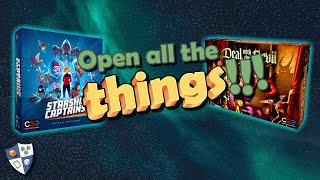
- Rich thematic elements rooted in European art history
- Complex and meaty gameplay
- Intricate and functional player screens
- App integration adds to the experience
- Requires assembly, providing an 'arts and crafts' element
- Four players only
- Requires a companion app
- No insert provided by the publisher
- Requires significant component assembly
- Bartering for souls, indulgences
- App-driven
- Alchemists
- The Garden of Earthly Delights (painting)
- Terracotta Army
- Space Base
- Lords of Waterdeep
- Viscounts of the West Kingdom
- Scythe
- Ziya: Legends of the Drift System
- Everdell
- Isle of Skye
- Golems of Raq
Mechanics (from transcript analysis)
- app-driven — The game requires a companion app for gameplay, including scanning QR codes.
- bidding — The host states that players 'bid and barter your souls to do things.'
- Dice Rolling — The host briefly mentions scanning dice in the context of the app.
- Hidden role — The host mentions that players have souls except for the devil, and everyone wants souls to do different things. It's described as a hidden identity game.
- Set Collection — The host mentions collecting resources like wood, grain, crowns, and coins.
- Worker Placement — The host mentions players having acolytes or church heads that act as workers.
Video topics + discussion points
Quotes (from this video)
- I love the artwork in the game it's cartoony, you know I like cartoony stuff.
- if you played Arnac and you found Arnac a little too heavy for your liking this is a little bit lighter than Arnac.
- Deal with the Devil... that game is crazy.
- this is very funny, very wry satire is what I'm hoping for
- It is four players only. You cannot play three players you cannot play five players two players no one player right out forget about it four players are nothing.
- if you're pressed you can get a nice press kit with Box shots in the lobby
- they do things that other Publishers don't do and I wish that other Publishers would follow suit and do these things
References (from this video)
- Really good party game.
- Doesn't take itself too seriously but has brinksmanship and strategy.
- Leads to laughs.
- Components are awesome.
- It's cool how it's functional and matters.
- Provides a pressure luck feeling similar to games like Quacks of Quedlinburg.
- In later stages, players in lower positions might only have the option to 'high roll' with no real strategic choice.
- Can be longer than expected.
- Wagering and risk assessment in a devilish game
- Lifeboats
- Quacks of Quedlinburg
Mechanics (from transcript analysis)
- bidding — Players place secret and simultaneous wagers on their expected performance or outcome.
- Player Elimination (partial) — Busting or failing to meet a bid can result in significant penalties, effectively removing a player from contention or severely hindering them.
- Push Your Luck — Players repeatedly draw cards or take actions, deciding when to stop before exceeding a limit or facing negative consequences.
- Set Collection — Collecting specific cards (like 'Devils') or combinations of cards impacts the game's outcome and penalties.
Video topics + discussion points
Quotes (from this video)
- Justice for Ken
- It's expensive to bust
- I'm not getting paid enough to shuffle
- Dad's on a map says uh kids don't gamble
- I don't hate any of you
References (from this video)
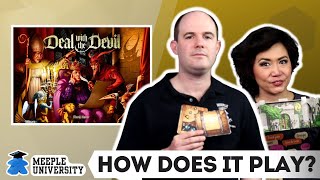
- Ambitious combination of modern Euro action planner with hidden role, negotiation, and social deduction.
- Careful and collective interplay of deals sets the game apart.
- Offers negotiation, bluffing, and social deduction in a heavy game context.
- Several interesting and powerful combinations of buildings to explore.
- App is simple to use and does not take a prominent place at the table.
- Mortals struggle to build without loans, risking church's bad graces or selling souls.
- Consequences of too many loans or sold souls can be dire.
- Devil cannot score big set collections like others, but collective sold souls benefit the devil and increase inquisitors.
- Non-devil players need to be wary of being too generous with their souls.
- building kingdoms and winning the favor of the church
- medieval times
- Alchemists
Mechanics (from transcript analysis)
- Action Point Allowance — Players plan actions, with each action after the first two costing an extra 'weight'.
- app-assisted — An app is used for managing secret chests, facilitating anonymous deals and tracking game state.
- Engine Building — Constructing buildings is a key action that delivers victory points and provides ongoing abilities, contributing to an engine.
- Hidden role — Players are assigned roles (Mortals, Cultist, Devil) with different starting resources and objectives, influencing their strategy and interactions.
- Loan System — Players can take out loans for money, but face compounding interest and potential penalties if debts are not managed.
- Negotiation — A major part of the game involves making deals with opponents to exchange resources for money or souls anonymously.
- Reputation system — Players manage their reputation with the church, which can be gained or lost through certain actions or buildings, affecting rewards and penalties.
- Resource Management — Players manage money, resources, and souls, trading, buying, and selling them to achieve objectives.
- Set Collection — Players gain victory points through set collection bonuses from buildings and acquiring resources.
- Social Deduction — Players attempt to deduce each other's roles through actions, deals, and accusations during Witch Hunts and Inquisitions.
- Worker Placement — The Euro element involves planning a maximum of four actions per round, with later actions costing extra 'weight', similar to worker placement.
Video topics + discussion points
Quotes (from this video)
- eight years ago Mata tree was arguably the first designer to effectively combine a modern Euro style worker placement game and a fully comprehensive logic production puzzle into a single functional product with the game Alchemists
- now in 2022 coffee returns with deal with the devil an ambitious combination of a modern Euro action planner with a hidden role negotiation and social deduction engine
- The potential for a mutually beneficial trade is obvious
- The game allows for negotiation bluffing and social deduction in a heavy game context.
- but it's the careful and collective interplay of the deals which sets it apart
References (from this video)
- Interesting hidden-role dynamic with app-driven trading
- Thematic depth around village politics and church influence
- Smart balance between resource management and strategic timing
- Very long, potentially three hours plus with four players
- Requires careful group suitability and rules familiarity
- App component adds complexity and potential learning curve
- Demonic/political intrigue; church vs. devil vs. cultist dynamics
- Medieval village under surveillance by inquisitors and hidden roles
- Highly thematic, narrative-driven with hidden roles and app integration
Mechanics (from transcript analysis)
- app-assisted resource management — An app handles crate trades, distribution of requests, and some event resolution to guide negotiation.
- Hidden Roles — Each player has a role (cultist, devil, mortal) with private goals and hidden information.
- micro-management of resources and buildings — Players collect resources, build village infrastructure, and interact with inquisitors to influence scoring.
- Resource Management — Players collect resources, build village infrastructure, and interact with inquisitors to influence scoring.
- trade and negotiation — Players trade resources through chest tokens managed by the app, adding indirect negotiation and bluffing.
Video topics + discussion points
Quotes (from this video)
- Village Rails is a cool little filler you know, a tight drafting game that still feels substantial.
- Revive is actually pretty damn good yes it is definitely one of my favorites this year.
- Unconscious Mind is a heady puzzle; it is a very entertaining puzzle but man this is going to drive AP players up the wall.
- Deal with the Devil is very niche; you need a very specific group to get the most out of it.
- Coffee Traders is good but not great; at the price point it’s hard to justify without an extensive base game experience.
References (from this video)

- unique/delicate teaching challenge
- thematic intrigue with a party vibe
- rules and setup can be complex to teach
- hidden roles and deception
- Demonic negotiation/deduction
- darkly thematic, deduction-focused
Mechanics (from transcript analysis)
- hidden roles/deduction — one player acts as the devil while others deduce information
- Social Deduction — players infer information from limited clues
Video topics + discussion points
Quotes (from this video)
- 1,198 games it's too many
- 768 that's I don't care what people say that's really good
- we have 394
- we're still playing games and taking names
References (from this video)
- engaging negotiation dynamics
- strong theming in a demo context
- limited information in transcript; not all rules discussed
- negotiation and risk management
- Demo session at GridCon
- competitive negotiation with demonic theme
Mechanics (from transcript analysis)
- Auction / Bidding — players bid resources or rights in a deal
- bidding — players bid resources or rights in a deal
- Negotiation — players negotiate offers and deals with demonic entities
- Resource Management — manage scarce resources to maximize deals
Video topics + discussion points
Quotes (from this video)
- it's the board game convention about 300 people
- click that that's that that's the point that makes it worthwhile
- obviously without you gridcon can't happen
- it's the financial contributions of my Patron supporters which are actually contributing not to gridcon they're contributing to me keeping the channel going
- Beck gave up her weekend to basically come and help support the event
- we raised four thousand five hundred and five pounds actually
- grid con 4 as I mentioned earlier on we're hoping to announce the dates for that early next year
References (from this video)
- ingenious physical gimmicks (boxes that open and reveal contents)
- thematic, negotiation-heavy play
- overwhelming complexity and lots of components
- four-player requirement may limit groups
- negotiation-driven bargaining and chest-treaty mechanics
- mythic/occult negotiation with devil and cultists
- cardboard chests and layered cardboard mechanisms evoke a treasure negotiation feel
Mechanics (from transcript analysis)
- hand-off and box-open reveal — players pass chests with surprises, hidden content revealed via app/scan
- hidden roles with QR app elements — one player plays the devil; others are humans; app-based chests reveal contents
Video topics + discussion points
Quotes (from this video)
- the matrix mechanic changes how you buy and when you fight—adds tension
- it's cool that you must exit the matrix to buy and upgrade—adds tension
- the Goooddies minis look great on the table
- hourglass mechanic in kite game is a tension-builder
- the art and components feel premium in Gutenberg
References (from this video)
- Strong thematic concept
- App integration potential
- Co-design pedigree
- Requires exactly four players
- Two-hour playtime could be long
- Hidden roles, temptation, and soul-trading
- App-driven, 4-player social deduction/resource management
- Dark, thematic, with app integration
Mechanics (from transcript analysis)
- App-assisted trading — In-app blind trading between players
- Hidden Roles — Devil vs bystander with secret agendas
Video topics + discussion points
Quotes (from this video)
- this could be his twist on something like the quax equivalent bug
- I'm definitely I'm gonna give this game a look
- the app integration the four player strict Play account and the idea that this is going to take probably at least two hours to play
- going into the more traditional European Renaissance theme
- the dice only has two meanings so if you're drafting say a dice of the value five on it the five is going to represent the number of resources you'll take of that type but the higher the number of resources you take it means the weaker action you'll have in association with that
References (from this video)
- Aiming for grand scale with robust player choice
- Requires four players; heavier on rules and setup
- City-building with grand schemes and rival factions
- Civilization-building with mythic and demonic elements.
- Strategic, big-game scope with multiple paths to victory
Mechanics (from transcript analysis)
- City-building / resource engine — Develop districts and manage a production network.
- Worker-placement / action selection — Players assign actions to develop their city and resources.
Video topics + discussion points
Quotes (from this video)
- let's buckle up, get you some coffee, stay tuned
- we're going to share 20 games from 2022 we missed
- Black History Month—five authors you should know
- we love you family