
























Deckers

Game ID: GID0089721
Collection Status
Description

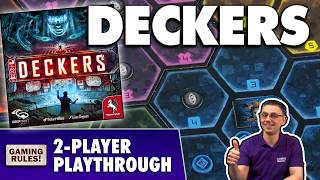
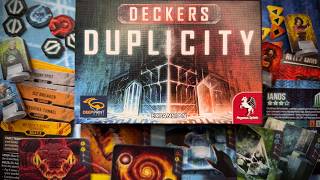
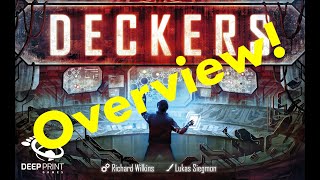
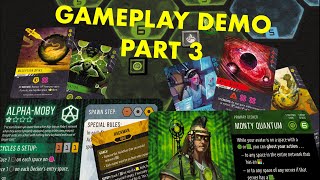
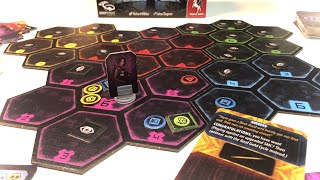
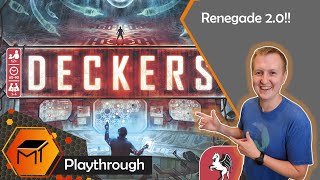
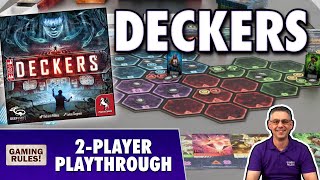
As Deckers, you will hack into a network of five servers, either solo or cooperatively as a team of up to four, winning or losing together.

The network is operated by one of the available Super-Massive Computers (SMCs), each with a different level of complexity and its own unique style of defenses that you will need to overcome.

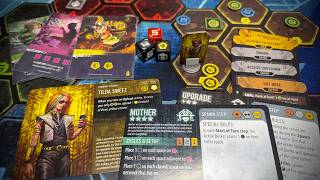
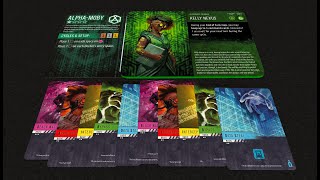
Once jacked into the servers, you will assume Decker profiles, each with a special ability, moving across the server's spaces and uploading Decker pieces onto the network to expand your control while removing as many of the SMC's pieces as possible. Each round you get a new objective you try to fulfill to gain the upper hand. If you manage to complete the final objective, you ultimately claim victory.

Year Published
2025
Transcript Analysis
Browse transcript mentions, sentiments, pros/cons, mechanics, topics, quotes, and references.
Total mentions: 15
This page: 15
Sentiment: pos 12 · mix 2 · neu 1 · neg 0
Mentions per page
Top
Showing 1–15 of 15
Video jKAKnktd3_g Unknown Channel playthrough at 0:00 sentiment: positive
video_pk 60830 · mention_pk 153273
Unknown Channel - Deckers video thumbnail
Click to watch at 0:00 · YouTube ↗
Overall sentiment (raw)
positive
Pros
  • Small footprint and easy to manage
  • Feels thematic with the campfire setting
  • Good solo puzzle and action economy depth
Cons
  • Can get thinky and complex in later rounds
  • Deck can run thin, impacting options and planning
  • Requires forward planning to avoid suboptimal outcomes
Thematic elements
  • Array
  • campfire survival
  • Solo narration
Comparison games
none
Mechanics (from transcript analysis)
  • Character Promotion / Leveling — Heroes/defenders can be promoted to higher levels to gain more powerful abilities.
  • Deck building — The game uses a managed deck of campfire cards that are drawn, shuffled, and cycled back into the deck.
  • Event Card / Encounter Card Handling — Event cards influence actions and outcomes, with some events ignored based on exclamation marks.
  • Events — Event cards influence actions and outcomes, with some events ignored based on exclamation marks.
  • hand management — Players hold and use cards from their hand to perform actions (defend, bolster, move).
  • Monster Spawning / Encounter Phase — Monsters are drawn and spawned in different locations with phases for attacks and reinforcements.
  • Movement / Maneuver — Characters maneuver or slide between spaces to engage monsters or reposition.
  • Resource management — Flame/the forge pile is managed as a resource to fuel actions and survivability.
Video topics + discussion points
No key topics recorded for this video.
Quotes (from this video)
  • Very fun game.
  • it's really just managing this flame
  • I like that it's not it's a pretty small footprint. You do have like the eight different locations around the fire. But easy to manage.
  • If you're into solo games, this one's for you.
References (from this video)
No references stored for this video.
Video Vi3RGk5DoH4 Unknown Channel analysis at 0:41 sentiment: positive
video_pk 60660 · mention_pk 153062
Unknown Channel - Deckers video thumbnail
Click to watch at 0:41 · YouTube ↗
Overall sentiment (raw)
positive
Pros
  • Easy entry for players to understand the timer concept
  • Low setup and quick rounds make it suitable as a warm-up
Cons
  • Very light, may not stress-test timing for longer games
  • Limited complexity could underutilize timer features
Thematic elements
  • Array
  • abstract
Comparison games
  • Patchwork
  • Brass Birmingham
  • Monolith Arena
Mechanics (from transcript analysis)
  • Capture — capturing opponent pieces by jumping over them
  • Movement — players move pieces across the board on their turns
Video topics + discussion points
No key topics recorded for this video.
Quotes (from this video)
  • I love playing with the chess timer
  • it's addicting
  • my final say is to at least try using a chest timer for one of your two player games
  • we could finish brass Birmingham under 75 minutes
  • this chest timer is My Little Secret Weapon to use with a handful of friends to get through our favorite games faster
  • I definitely think we could do it more games less time
References (from this video)
No references stored for this video.
Video uo1oCNr4eNM Meet Me at the Table playthrough at 0:06 sentiment: positive
video_pk 39843 · mention_pk 120399
Meet Me at the Table - Deckers video thumbnail
Click to watch at 0:06 · YouTube ↗
Overall sentiment (raw)
positive
Pros
  • Excellent art upgrades over the Renegade version; clearer rulebook
  • Deep and variable gameplay with strong deckbuilding and upgrade feel
  • High replayability with multiple SMCs and boss-like Mother Ghost mechanics
Cons
  • Steep learning curve for new players
  • Complex interactions with guardians and upgraded sparks can be punishing
  • Dice luck can heavily influence outcomes in key battles
Thematic elements
  • digital intrusion, infection, guardians, ghosts, and boss-level AI adversaries
  • Cyberpunk network hacking against super massive computers (SMCs) within a modular network of servers
  • procedural playthrough with live commentary and strategic explanation
Comparison games
  • Renegade
Mechanics (from transcript analysis)
  • Command Cards — Players use a hand of 15 command cards to perform actions; upgrades replace cards; you discard paid cards to upgrade.
  • Deck building — Upgrades are purchased from a visible upgrade deck and added to the hand; upgrading cards improves capabilities and reduces clutter.
  • deckbuilding/upgrade deck — Upgrades are purchased from a visible upgrade deck and added to the hand; upgrading cards improves capabilities and reduces clutter.
  • Engine Building: Triggered/Cascading — Sparks spawn, guardians can trigger explosions, and cascades can affect large areas, creating high-stakes moments.
  • ghost installations and greens — Green installations allow actions to be ghosted from anywhere within a server, enabling flexible, long-range plays.
  • infection and combat — Infect actions use red programs and dice to defeat Sparks and the SMC; outcomes determine removal of sparks or loss of programs.
  • network and servers layout — The board is a network of server tiles; spaces are open or closed; movement and placement depend on adjacency and openings.
  • sparks, guardians, and cascade effects — Sparks spawn, guardians can trigger explosions, and cascades can affect large areas, creating high-stakes moments.
Video topics + discussion points
No key topics recorded for this video.
Quotes (from this video)
  • This game is absolutely a brain burner.
  • The art is so much better in this game.
  • The rule book is way better than the original one.
  • It's a brain burner; I love it.
  • I can't wait to see what it's like going against level two.
References (from this video)
No references stored for this video.
Video gm2k7rRpLKs OneTop Co-op Shop playthrough at 0:03 sentiment: mixed
video_pk 34479 · mention_pk 102692
OneTop Co-op Shop - Deckers video thumbnail
Click to watch at 0:03 · YouTube ↗
Overall sentiment (raw)
mixed
Pros
  • Core action system and hero-movement variety remain engaging.
  • New Guard expansion adds new hero options and unlocks, increasing replayability.
  • Core deck-building/tower-defense puzzle remains fun and accessible.
Cons
  • Hard to get level-two heroes active consistently; balance can be swingy.
  • Hard mode can feel punishing; the event system can create inconsistent difficulty.
  • Some balance and design choices may allow snowballing and less tension in non-hard modes.
Thematic elements
  • Survival and cooperative defense against invading monsters, with a focus on positioning and resource cycling.
  • A small camp surrounded by eight attack zones with monsters spawning from a central deck; players defend the camp across a night cycle.
  • Abstract, puzzle-like with a timer/deck-management mechanic rather than a narrative-heavy story.
Comparison games
  • The Last Lighthouse
Mechanics (from transcript analysis)
  • Combat and foraging — Heroes can attack, forage, bolster, or level up. Attacking uses a single action; foraging pulls from a forage pile; bolstering grants a teammate an extra action; leveling up improves survivability and unlocks new abilities.
  • Deck cycling and the knight timer — Defeated or forged cards are placed on the bottom of the deck; a knight card acts as a timer that flips to higher values as the game progresses, giving players more time if more cards are drawn.
  • Event effects and difficulty modifiers — Events on top of the deck can alter rules for the round (e.g., increasing forge limits, restricting maneuvering, or applying special effects).
  • Events — Events on top of the deck can alter rules for the round (e.g., increasing forge limits, restricting maneuvering, or applying special effects).
  • Expansion-driven objectives — The New Guard expansion adds three new level-two heroes unlocked via battlecry quests, introducing new ways to tune difficulty and deck cycling.
  • Monsters spawn per turn — At the start of each round, spawn a monster for each surviving hero based on the top card of the deck and its eight-space indicator.
  • Movement and positioning — Heroes move according to unique movement patterns (e.g., war dancer diagonal, forager through empty spaces until adjacent to another hero, fire tender jumping across fire).
  • Turn-based hero actions — Each hero gets two actions per turn; players must finish one hero's actions before starting the next.
Video topics + discussion points
No key topics recorded for this video.
Quotes (from this video)
  • Embers is awesome
  • New Guard is a good addition
  • Three more heroes with new powers and new movement is really cool
  • the core combat is fun
  • not a full recommend
References (from this video)
No references stored for this video.
Video XXogAYt8r0E B stupid general_discussion at 3:58 sentiment: positive
video_pk 33800 · mention_pk 100579
B stupid - Deckers video thumbnail
Click to watch at 3:58 · YouTube ↗
Overall sentiment (raw)
positive
Pros
  • strong cyberpunk vibe and theme
  • cooperative deck-builder with teamwork emphasis
  • modular scenarios and evolving mainframe arc
  • conceptually appealing, jack-in theme worthy of Netrunner fans
Cons
none
Thematic elements
  • cyberpunk, hacking, cooperative deck-building
  • cyberpunk hacking mainframe environment
  • thematic, action-driven cooperation against a central system
Comparison games
  • Renegade
  • Netrunner
Mechanics (from transcript analysis)
  • Cooperative Game — players work together to push back against the mainframe guardians
  • cooperative play — players work together to push back against the mainframe guardians
  • Deck building — players build and customize hacker decks to perform actions
  • deck-building — players build and customize hacker decks to perform actions
  • Modular board — a modular mainframe map with scenarios provides replayability
  • modular map / mainframe framework — a modular mainframe map with scenarios provides replayability
  • upgrades / character progression — players acquire upgrades to their hacker, enabling stronger abilities
Video topics + discussion points
No key topics recorded for this video.
Quotes (from this video)
  • a 3D tile placement environment. Very lovely.
  • cozy Japanese style
  • each turn, you're going to be meditating
  • it's a deck building cooperative game.
  • we love a deck builder and deck builder doing like cooperative sounds super cool.
  • Let's jack in.
  • this is a deck building dice allocation rally game like racing game
  • the action cards and the dice allocation is going to tell you how good your pilot is going to be
References (from this video)
No references stored for this video.
Video DqP7qDDWkxM Unknown Channel playthrough at 0:00 sentiment: positive
video_pk 13168 · mention_pk 38519
Unknown Channel - Deckers video thumbnail
Click to watch at 0:00 · YouTube ↗
Overall sentiment (raw)
positive
Pros
  • Rich, puzzle-driven gameplay with deep strategic options
  • Dynamic scaling based on number of players
  • Engaging asymmetrical decker mechanics and ghosting
  • Exciting, tense play sessions with meaningful decisions
Cons
  • Steep learning curve and heavy rule-set
  • Occasional risk of analysis paralysis during setup
  • Complex interactions can be overwhelming for new players
Thematic elements
  • Hacking, infiltration, and cooperative puzzle solving against a hostile AI (Glom)
  • Cyberpunk hacking networks and server installations
  • Puzzle-driven, objective-based with asymmetric roles
Comparison games
  • Mother
  • Sentinel
  • Tempest
  • Viking
  • Spider
  • Tsunami
Mechanics (from transcript analysis)
  • ghosting/movement — Program avatars move by ghosting through installations to other servers.
  • Hidden movement — Program avatars move by ghosting through installations to other servers.
  • installations and ghost paths — Installations enable moving/ghosting, with Monty's green-program special rules.
  • objective scaling and deckers — Objectives scale with number of deckers, altering requirements per objective.
  • program upgrades and modifications — Upload and modify programs using yellow/green/red tokens to create better tools.
  • sparks, guardians, and explosions — Sparks accumulate on open spaces; guardians defend spaces; explosions propagate hazards.
  • spawn and SMC attack phases — Cycle-based turns with spawn steps, end-of-turn moves, and a final SMC attack to determine success.
Video topics + discussion points
No key topics recorded for this video.
Quotes (from this video)
  • This game is very much a a puzzle and learning the puzzle.
  • To win the game, you need to complete gold.
  • First spawn step is skipped.
  • Green is safe.
  • We managed to have no sparks on the same space as programs.
  • You have won.
References (from this video)
No references stored for this video.
Video EnOMKLo9kOM BoardGameGeeek top_10_list at 5:49 sentiment: positive
video_pk 11196 · mention_pk 32929
BoardGameGeeek - Deckers video thumbnail
Click to watch at 5:49 · YouTube ↗
Overall sentiment (raw)
positive
Pros
  • strong deep-paint/production value
  • liked as a deep print collaboration; solid fit for Spiel origins
  • engages with solo and group play well
Cons
none
Thematic elements
  • cyberpunk / matrix-like intrusion into mainframes
  • infiltration of a digital network as hackers
  • techno-noir, high-stakes hacking
Comparison games
none
Mechanics (from transcript analysis)
  • co-op / solo play with asymmetric powers — players take on roles of hackers with unique abilities to complete objectives.
  • mission-based objectives with evolving rules — each round has new objectives and the final objective determines the win.
  • network navigation / hacking theme — you explore a network and interact with various supercomputers as you progress.
Video topics + discussion points
No key topics recorded for this video.
Quotes (from this video)
  • This is a fun one. It's cozy. It's relaxing but there is strategy and stuff like that and it looks like super beautiful.
  • I love this game so much. It's a perfect big group family game.
  • Inish is back in hotness and that's because there is a big box version with a new expansion that's on crowdfunding right now.
  • The art and the production value seems so top tier.
  • It's a solo campaign now, and that makes me color me more intrigued.
  • Fate of the Fellowship is so good. We played a four-player game and it was freaking incredible, y'all. Epic, man.
References (from this video)
No references stored for this video.
Video TvVeSW1Zdxs Box Delights general_discussion at 1:06 sentiment: positive
video_pk 10868 · mention_pk 32052
Box Delights - Deckers video thumbnail
Click to watch at 1:06 · YouTube ↗
Overall sentiment (raw)
positive
Pros
  • clear rulebook presentation and readability
  • strong thematic flavor with immersive cyberpunk world
  • high component quality and readable texts on SMC cards
  • significant asymmetry and deck-building depth
  • upgrade area expands strategic options and planning
  • modular board and boss variety support replayability
Cons
  • learning curve due to new terminology and rule changes from Renegade lineage
  • early setup can be verbose and may slow initial play
  • some players may find initial card-color taxonomy complex
Thematic elements
  • Cybersecurity, hacking, network infiltration, and boss battles
  • Cyberpunk network environment where hackers battle a series of SMC bosses
  • Tech-noir flavor with flavor text that enriches worldbuilding
Comparison games
  • Renegade
Mechanics (from transcript analysis)
  • asymmetric boss fights — each SMC boss has unique setup, difficulty (stars indicate how hard it is), and rules that affect gameplay.
  • color-coded command cards — cards are color-coded (red, yellow, blue, green, purple) with distinct roles and interactions; purple is a wildcard that can substitute for other colors.
  • deck upgrading and program deployment — upgraded cards replace basic cards in the deck; players install and operate programs on the network to perform actions.
  • deck-building — each deck has 15 base cards; players upgrade cards to replace or augment their hand, creating asymmetry and progressional power.
  • hand management — the upgrade area acts as an extension of the hand; players must consider cards in hand and in the upgrade area together.
  • modular board / setup variability — board is composed of five server tiles with different layouts; each SMC boss presents different setup conditions.
  • objective cards / countermeasures — gold objectives end the game upon success; copper and silver objectives provide rewarded outcomes or penalties, affecting endgame strategy.
  • token spawning and progression — rounds spawn black circle tokens (sparks) that scale by copper, silver, and gold levels; tokens can flip to white and have different spawn rules per deck.
Video topics + discussion points
No key topics recorded for this video.
Quotes (from this video)
  • Sebastian, who's been focusing on the graphic design and the clarity and the rule book and all that stuff, has done a fantastic job trying to lay everything out in such a much clearer way for players.
  • The deck is always 15 cards.
  • You're pirating up your Deca through its deck, his deck of 15 cards.
  • It's a real multi-dimensional game.
References (from this video)
No references stored for this video.
Video g2UDvKFMsbs Unknown Channel top_40_list at 1:24 sentiment: positive
video_pk 10169 · mention_pk 29911
Unknown Channel - Deckers video thumbnail
Click to watch at 1:24 · YouTube ↗
Overall sentiment (raw)
positive
Pros
none
Cons
none
Thematic elements
Comparison games
none
Mechanics (from transcript analysis)
Mechanics unknown.
Video topics + discussion points
No key topics recorded for this video.
Quotes (from this video)
  • Unstoppable is my number one of 2025.
  • Is it as good as Exceed? Heck no. But it's good enough that we'll play it sometimes.
  • The core card play is so good. The combos and cooperation are great.
  • My son and I have really enjoyed the 1v1 mode in Yomi 2.
References (from this video)
No references stored for this video.
Video 4m8x9i7xxHg Unknown Channel analysis at 6:25 sentiment: neutral
video_pk 10187 · mention_pk 119852
Unknown Channel - Deckers video thumbnail
Click to watch at 6:25 · YouTube ↗
Overall sentiment (raw)
neutral
Pros
  • quick plays
  • easy entry for new players
Cons
  • limited depth
  • predictable decisions
Thematic elements
  • simple capture and piece advancement
  • abstract strategy
  • minimalistic
Comparison games
  • Chess
  • Go
Mechanics (from transcript analysis)
  • simple capture rules — forced capture and simple movement
Video topics + discussion points
No key topics recorded for this video.
Quotes (from this video)
  • Candyland there is no depth there really isn't even a game
  • it's a real puzzle that can be optimized
  • the depth is nine out of ten Blood on the Clock Tower is extremely deep and becomes progressively more skill dependent
  • Twilight Imperium is a big freaking game; it's got 25 factions
  • Dune Imperium Uprising pulls from a lot of prerequisite game knowledge which makes it something more complex than Settlers or Katan
  • Root is an excellent game it's deeply strategic and emergent
References (from this video)
No references stored for this video.
Video gEgJ6nG5z4g Shut Up & Sit Down general_discussion at 1:31 sentiment: positive
video_pk 9384 · mention_pk 27671
Shut Up & Sit Down - Deckers video thumbnail
Click to watch at 1:31 · YouTube ↗
Overall sentiment (raw)
positive
Pros
  • Cooperative mechanics
  • Deck building
  • Compact package
Cons
  • Visually unpleasing board design
  • Empty/sparse aesthetics
Thematic elements
  • Hackers infiltrating computer systems
  • Digital/Hacking
  • Thematic
Comparison games
none
Mechanics (from transcript analysis)
  • cooperative gameplay — Players work together as team of hackers
  • Deck building — Tech building to hack into systems
Video topics + discussion points
No key topics recorded for this video.
Quotes (from this video)
  • We're back from SL with one of the biggest board game holes we have ever had
  • hottest Euro game of the fair
  • engine building and playing out cards and taking them back
  • racing game without racing
  • one of the best covers illustrations
  • really thinky game
  • This is a really fun and simple game
  • don't judge board games from their cover
  • makes your turn feel great if you have great cards
  • they're actually really, really good
  • don't know what's going on in that game right now
  • There aren't a lot of good pirate games out there
  • I'm always a sucker for cool historical themes
  • unique twist to the already known detective genre
References (from this video)
No references stored for this video.
Video jck3n4dY11c The Brothers Murf top_10_list at 4:07 sentiment: positive
video_pk 5955 · mention_pk 17641
The Brothers Murf - Deckers video thumbnail
Click to watch at 4:07 · YouTube ↗
Overall sentiment (raw)
positive
Pros
  • timely cyberpunk premise with an evolving system tension as AI/friction increases
  • avatar/identity mechanic adds thematic flavor
Cons
none
Thematic elements
  • corporate cybersecurity battles in a sci-fi world
  • futuristic, cyberpunk hacking scenario
  • story-driven hacking perspective with avatars
Comparison games
  • generic cyberpunk hacking games
  • Ark Nova-style team coordination (not explicit in text, but implied by team play)
Mechanics (from transcript analysis)
  • cooperative card-driven hacking — players collaborate to hack into a central system via cards
  • identity-based abilities — the persona you assume during a hack grants unique bonuses
Video topics + discussion points
No key topics recorded for this video.
Quotes (from this video)
  • Look at this cover. For that reason alone, I immediately went, 'Cool. That's my most anticipated game from Essen.'
  • I'm judging a game by its cover, but your cover is massive real estate. Don't tell me to not judge games by their cover because it is important.
  • Oh my gosh, this is that game at Essen every year that I'm immediately just like, do I pay someone to buy it at Essen and then ship it to me? I shouldn't.
  • Sanctuary is kind of a smaller version of Ark Nova. I really, really like Ark Nova, but this is... a tile-based version that's quicker to table.
  • This feels kind of like a Terramystica kind of game because there are four tracks and you invest to boost different aspects.
References (from this video)
No references stored for this video.
Video 29nDnSsIbjc Broken Mele game_review at 1:46 sentiment: mixed
video_pk 3472 · mention_pk 10295
Broken Mele - Deckers video thumbnail
Click to watch at 1:46 · YouTube ↗
Overall sentiment (raw)
mixed
Pros
  • Good production quality for the price (~30 pounds).
  • Thoughtful storage design with tuck boxes and organized inserts.
  • High replay value: ten deckers, varied objectives, and upgrade options.
  • Strong thematic artwork and cohesive cyberpunk aesthetic.
Cons
  • Steep learning curve from a 27-page rulebook and heavy wall-of-text explanations.
  • Rulebook is dense; learning to play can take multiple sessions.
  • Two big random elements (card draws and upgrade availability) can drastically impact outcomes.
  • Starter scenario is punishing and not beginner-friendly.
  • Limited time to upgrade cards; not enough opportunities to diversify decks in a typical game.
  • Dice introduce a notable luck factor in key actions like infecting guardians.
Thematic elements
  • Cyberpunk hacking and program management
  • Cyberpunk network/server hacking scenario
  • Procedural, objective-driven puzzle
Comparison games
  • Civolution
Mechanics (from transcript analysis)
  • area influence / push and ghosting — Colored programs influence movement, push enemies, or ghost actions from different positions on the board.
  • Combat: Dice — Red and other colored dice resolve attempts to defeat or disable enemy defenses/guardians.
  • Deck building — Each player uses a personal deck of cards to perform actions by spending symbols on cards; upgrading cards gradually changes options.
  • deck-building / card drafting — Each player uses a personal deck of cards to perform actions by spending symbols on cards; upgrading cards gradually changes options.
  • dice-based combat for defenses — Red and other colored dice resolve attempts to defeat or disable enemy defenses/guardians.
  • Gold/Silver/Bronze Scoring — Gold objective is mandatory to win; silver and bronze are optional bonuses that mitigate negatives or grant rewards.
  • grid / token placement on a server map — Players move an avatar and manipulate programs on a randomized server layout while defending against mainframe defenses.
  • objective-driven puzzle structure with tiered objectives — Gold objective is mandatory to win; silver and bronze are optional bonuses that mitigate negatives or grant rewards.
Video topics + discussion points
No key topics recorded for this video.
Quotes (from this video)
  • The gameplay loop with the puzzle is pretty intriguing and a good little bit of fun.
  • Massochist game where the difficulty setting from the get-go is already set to hard.
  • If you want a challenge this one will give it to you, but if you're looking for something that's more of a 50/50 win rate, you're not going to get that here.
  • The starter scenario punches you in the face.
  • This is a solo puzzle and it's not a massive negative.
References (from this video)
No references stored for this video.
Video JZK_zPsacRM Board Game Geek Podcast top_10_list at 1:04:20 sentiment: positive
video_pk 621 · mention_pk 1816
Board Game Geek Podcast - Deckers video thumbnail
Click to watch at 1:04:20 · YouTube ↗
Overall sentiment (raw)
positive
Pros
  • Stylish production and accessible rules
  • Support for solo play and varied modes
Cons
  • Can feel similar to other cyberpunk card/board hybrids
Thematic elements
  • Salvage and competition in a server world
  • Cyberpunk servers and digital heists
  • Loose theme integrated with mechanical play
Comparison games
  • Renegade
  • Netrunner
Mechanics (from transcript analysis)
  • Cooperative/competitive play — Can be played solo or in teams; decision space adapts to player count
  • Tile/map-based server spaces — Modular board or map elements representing networks
Video topics + discussion points
No key topics recorded for this video.
Quotes (from this video)
  • Three years. That's just crazy to me.
  • It's always a challenge looking through the preview list to pick out games for this.
  • You can definitely feel the excitement for Spiel Essen 2025.
References (from this video)
No references stored for this video.
Video 1TVpJ_ujsaU Unknown Channel top_10_list at 3:54 sentiment: positive
video_pk 400 · mention_pk 1190
Unknown Channel - Deckers video thumbnail
Click to watch at 3:54 · YouTube ↗
Overall sentiment (raw)
positive
Pros
  • tough cooperative puzzle with meaningful choices
  • progression feels rewarding as you improve
Cons
  • crunchy puzzle with some luck elements
  • hard on newcomers to grasp depth
Thematic elements
  • cooperative hacking thriller
  • cyberpunk-hacking scenario against an AI overlord
  • deck-building progression with strategic planning
Comparison games
  • Primal the Awakening
  • Horrified
Mechanics (from transcript analysis)
  • Card-driven actions — cards enable movement, attacks, and system interactions
  • deck-building — build and play cards to advance objectives
Video topics + discussion points
No key topics recorded for this video.
Quotes (from this video)
  • it's my turn. The thing is that it is also one of the worst things about this game cuz sometimes you'll be waiting forever to take your turn.
  • I really love this set because I love Teenage Mutant Ninja Turtles.
  • This stands out because it's a very tough cooperative board game with tons of choices and you most likely will lose a few times before figuring it out.
  • This game is freaking fantastic.
References (from this video)
No references stored for this video.
Transcript Navigation
Top
Showing 1–15 of 15
View on BoardGameGeek