/pic649329.jpg)



















Defenders of the Realm Deep Dive
What the Community Thinks About Defenders of the Realm
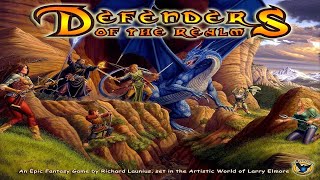
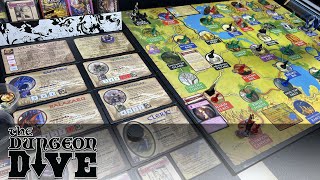
Defenders of the Realm holds a special place in cooperative gaming. The Secret Cabal Gaming Podcast praises it for taking Pandemic's core concept and transplanting it into a fantasy setting, where players fight monsters and tyrants instead of diseases. Across the community, reviewers consistently highlight its thematic depth and emergent storytelling. The artwork evokes the nostalgic feeling of classic 1980s fantasy, drawing players into a world that rewards cooperation and careful planning. From The Dungeon Dive's detailed gameplay analysis to Drive Thru Games' streamlined euro-coop perspective, Defenders of the Realm is recognized as a cooperative experience that has aged gracefully and continues to engage groups looking for a fantasy answer to Pandemic.
Core Mechanics That Define Defenders of the Realm
Action Points and Multi-Use Cards
At the heart of Defenders of the Realm lies a tightly designed action economy. Each hero begins with a fixed pool of action tokens that represent both their health and their ability to take actions on their turn. Spending one action token allows a hero to perform one action, meaning wounded characters must choose their moves carefully. This dual mechanic creates meaningful tension, as taking damage literally limits what you can do next turn. Heroes build their tactical options around multi-use cards, where a single card can serve several purposes. Cards bear color and symbol banners that unlock different abilities. You might discard a card with a horse banner to move quickly, spend a card matching a location's color to sanctify corrupted land, or gather colored cards to mount an attack against an invading general. This design forces players to constantly evaluate trade-offs between immediate needs and long-term positioning, keeping decision-making fresh throughout the game.
Four Generals and Advancing Minions
The game's core threat comes from four generals and their minion armies, mirroring Pandemic's layered difficulty. Each general leads a faction that marches toward the central city along distinct paths. As minions move and accumulate in locations, they corrupt the land itself. Players lose if too many minions reach the capital, if any general enters the city, if a faction runs out of minions to place, or if the darkness spreads too far. The only path to victory is defeating all four generals outright. This structure constantly forces difficult choices between addressing immediate minion threats and gathering the resources needed to eliminate a general before it regenerates. The asymmetry of different minion types adds texture, as some corrupt land faster than others, making certain regions more dangerous and demanding specialized tactics.
The Defenders of the Realm Experience
Emergent Narrative and a Living World
One of Defenders of the Realm's greatest strengths is how naturally stories emerge from the intersection of card draws, quest resolutions, and board state. The Dungeon Dive describes a moment where a failed sea quest triggered a cascade of minion placements, which then thematically led into the next quest about recruiting pirates as privateers to help reclaim the ports. No authored narrative forced this sequence, yet it felt perfectly coherent. When quests ask you to visit specific locations and accomplish thematic objectives, the board becomes a storytelling engine. A hero might end a turn where minion activity forces a choice between immediate defense and pursuing a distant objective. These emergent conflicts create memorable moments where players feel they are part of an unfolding legend rather than executing a predetermined script.
Meaningful Hero Variety and Specialization
The game offers a wide roster of characters, each with distinct abilities that encourage different playstyles. The Cleric gains a bonus die against Undead and Demons, can push minions away, and can sanctify corrupted land on a successful roll. The Monk triggers special effects when rolling sixes in combat, draws additional quests, and can negate wounds on a strong defensive roll. These are not decorative ribbon abilities but core mechanics that fundamentally shape how you approach challenges. A player choosing the Cleric naturally gravitates toward defending the city and clearing Undead, while the Monk becomes the questing specialist. This depth means you can revisit Defenders of the Realm repeatedly with different character combinations and experience genuinely different tactical puzzles. Expansions add special powers that further customize heroes, letting groups fine-tune difficulty or build thematic teams.
What Makes Defenders of the Realm Stand Out
A Cooperative Game Where Everyone Has Value
The Secret Cabal Gaming Podcast emphasizes a critical design principle: in a cooperative game, every player must feel like they contribute meaningfully to success or failure. Defenders of the Realm achieves this through its action economy and diverse hero abilities. No single hero can do everything, so specialization is both rewarded and necessary. One player focuses on eliminating a general while another manages minion containment and a third completes quests for resources and card cycling. The pacing prevents any one person from becoming a dictator; you cannot do enough in a single turn to solve every problem, forcing real negotiation about priorities. Even losing feels collaborative, because the group collectively learns what went wrong and how to adjust. This emotional quality separates a well-designed cooperative game from one that feels like a puzzle solved by a single player.
Extensive Expansion Support and Modularity
Defenders of the Realm shipped with rich expansion options that can be mixed and matched to tune difficulty and experience. The Legends expansion grants each hero a special power to customize their playstyle. A companion expansion adds a tavern visit mechanic where heroes can recruit allies like seasoned scouts or outcast witches, adding another layer of resource management and thematic flavor. A push-pull module lets players spend special cards to power up heroes, which triggers increasingly dangerous environmental effects, forcing players to weigh short-term power against long-term consequences. A dragon-focused expansion introduces new generals with unique abilities, fresh quests, and global effects that reshape the entire board. Groups can start with the base game and gradually add modules that appeal to them, ensuring the game grows in complexity and novelty over time without becoming overwhelming.
Potential Drawbacks
Complexity and Decision Paralysis with Larger Groups
Defenders of the Realm scales from one to four players, but the game's depth creates a challenge at the higher end. By midgame, each hero can hold a substantial hand of cards, so a four-player game generates a large pool to track, evaluate, and sequence. The Dungeon Dive notes feeling occasionally overwhelmed managing four characters, a concern many newer cooperative players may share. The multitude of card combinations, special powers, quest effects, and minion positions means there are often dozens of legal moves, each with subtle implications. Groups prone to analysis paralysis might find themselves taking lengthy turns debating optimal play. Some players love this depth, while others find it exhausting, particularly in casual settings. Starting with fewer heroes can mitigate this, but it remains a consideration for groups that prefer snappier play.
Outcome Variance and Occasional Runaway Games
Like many cooperative games, Defenders of the Realm is susceptible to swingy starts. If the group draws the right cards to mount an early attack on a general, momentum can shift decisively in their favor. Conversely, a brutal string of darkness cards at the start can cascade into defeat before meaningful options emerge. The game's difficulty modulation through expansions and special cards helps address this, but a pure base game can occasionally feel dominated by the luck of the draw rather than skill. Drive Thru Games notes the extensive use of expansions to fine-tune challenge levels, suggesting the base difficulty curve benefits from additional modules to feel perfectly balanced across all player counts and experience levels.
If You Enjoy Defenders of the Realm
If Defenders of the Realm resonates with you, explore Pandemic and Pandemic Legacy Season 1 for the cooperative fundamentals and escalating stakes that inspired this game. Where Pandemic emphasizes tense resource management and cascading crises, Defenders of the Realm adds the thematic satisfaction of fantasy combat and the emotional investment of named heroes with distinct personalities. Both games demand tight teamwork, but Defenders' magic items and quest rewards create moments of hope and progression that pure Pandemic sometimes lacks. Gloomhaven offers a deeper campaign experience if you want persistent character progression and a sprawling narrative arc, though it trades the elegant simplicity of Defenders for substantially more rules overhead. All three games share the core appeal of standing together against overwhelming odds, but Defenders of the Realm carves its own identity through fantasy theming, emergent storytelling, and a modular design that respects both newcomers and veteran cooperative gamers.
What Reviewers Are Saying
"Defenders of the Realm is one that takes Pandemic and makes it tons cooler because it's fantasy and you're fighting monsters and tyrants that are descending upon your city. It has the Pandemic concept of all the minions of those creatures piling up on different territories and locations on the board that you have to clear out, or they expand in a Pandemic kind of way."
— The Secret Cabal Gaming Podcast
"It's fascinating to me how fast the game can turn on you. You can feel like you have everything under control, and then all of a sudden you're like, oh, we didn't even think about that. There's so many things you have to pay attention to in this game that it never feels boring to me."
— The Secret Cabal Gaming Podcast
"This is a game that has this very co-op feeling to it, sort of a euro co-op, which is kind of what Pandemic spawned. Simple, elegant euro co-op. There's not a very strict narrative campaign story, but it's a world that you can revisit, and the adventure just kind of comes off the board, and it's very easy and streamlined to play."
— Drive Thru Games