/pic3469246.jpg)
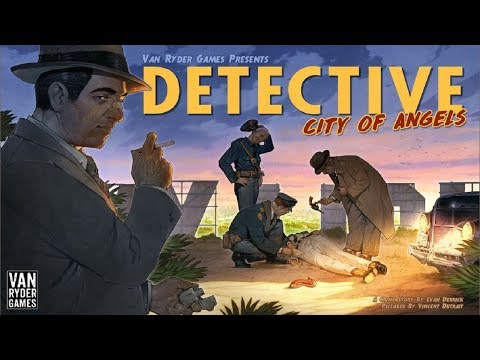




























Detective: City of Angels Deep Dive
What the Community Thinks About Detective: City of Angels
Detective: City of Angels inspires strong reactions from the board gaming community, and for good reason. Reviewers consistently praise it as one of the most thematic deduction games ever created, while simultaneously acknowledging that its ambitious design carries real trade-offs. The game captures something special: the tension of a noir detective story where every clue matters and deception is always possible. Yet it also asks something unusual of its players, particularly whoever takes on the role of the Chisel.
Core Mechanics That Define Detective: City of Angels
Asymmetric Deduction and Questioning
At its heart, Detective: City of Angels centers on questioning suspects to uncover a murder. One player, the Chisel, acts as a game master who oversees the case file and chooses what information to reveal through response cards. The other detectives must ask strategic questions about the evidence, the victim, the weapon, and the suspect. What makes this unique is that the Chisel can lie. They can give detectives false information, forcing players to challenge statements and spend leverage tokens to verify the truth. This creates a cat-and-mouse dynamic where detectives must decide who to trust and when to press for answers.
Area Movement and Evidence Discovery
Detectives move around a map of 1940s Los Angeles, visiting locations to search for evidence and interview suspects. Movement is deliberate: you can only cross between adjacent regions or move within your current region. As you travel and search, evidence is revealed gradually, creating a narrative that unfolds in real time. Reviewers highlight how satisfying it is to watch pieces of the puzzle connect as new evidence comes to light. The physical movement combined with the mystery creates a strong sense of location and tension as time ticks down.
The Detective: City of Angels Experience
Noir Atmosphere and Moral Ambiguity
Detective: City of Angels immerses players in the gritty world of 1940s Los Angeles. The game's presentation is deliberately dark and noir-inspired, from the artwork and components to the optional voice-acted case files that bring suspects and witnesses to life. You are not playing as a heroic detective pursuing justice; you are a morally flexible cop willing to intimidate suspects, conceal evidence, and hire snitches. Reviewers describe getting a genuine sense of dread as the clock ticks down and you scramble to piece together the truth. The thematic integration is so strong that it shapes every decision you make.
Intense Time Pressure and Desperation
The game creates sustained tension through its clock mechanic. Cases have limited time to solve, and players report feeling genuine panic as the minutes slip away. Reviewers mention fumbling final guesses under pressure and kicking themselves afterward. This desperation is intentional and thematic, it mirrors the pressure felt by detectives racing to close a case. Unlike more puzzle-focused deduction games, Detective: City of Angels doesn't reward pure logic; it rewards confident decision-making under uncertainty.
What Makes Detective: City of Angels Stand Out
Beautiful Production and Immersive Voice Acting
The physical presentation of Detective: City of Angels is striking. The card artwork, the board design, and the overall package convey a strong noir aesthetic. The voice-acted case files (available for a small additional cost) elevate the experience significantly. Professional voice actors deliver suspect interviews and case briefings with conviction, making the world feel lived-in. Reviewers note that these production touches, combined with the thematic design, create an experience closer to an interactive noir story than a traditional board game.
Suspect Deception Creates Genuine Surprise
Unlike other deduction games where all information is fixed and discoverable, the Chisel's ability to lie introduces real uncertainty. Reviewers appreciate that this forces detectives to make educated guesses rather than simply accumulate information. The mechanics of challenging suspects and spending leverage tokens to verify truth create moments of genuine revelation. Players describe the satisfaction of correctly calling out a lie and the sting of wasting resources on a false challenge.
Potential Drawbacks
One-and-Done Cases and Replay Value
Detective: City of Angels comes with nine cases, and once you have played through them all, the game is largely exhausted. The Chisel role is particularly affected: after you have memorized a case, there is no mystery left to maintain. Reviewers express frustration that nobody wants to replay as the Chisel once they have learned the solution. This mirrors the old problem with Dungeons & Dragons, where one player is forced to be the game master and never gets to be a player. The one-and-done nature means Detective: City of Angels, despite its excellence, offers limited long-term value compared to games with replayable scenarios.
The Chisel Role Can Be Tedious
While detectives move pieces, search locations, and make deductions, the Chisel largely manages information. They respond to questions by choosing true or false responses, with limited agency beyond that choice. Reviewers report that the Chisel role can become boring, especially in the back half of a case when the outcome feels decided. There is no mystery for the Chisel, no hidden information or sense of discovery. The role reduces to selecting true or false and occasionally offering bluffs to slow the detectives down. For someone who enjoys the tension of a hidden-information game, being Chisel feels more like serving than playing.
If You Enjoy Detective: City of Angels
If Detective: City of Angels resonates with you, consider exploring other games in the mystery and deduction genre. Sherlock Holmes Consulting Detective offers a very different experience: pure deductive logic with no game master role, perfect for cooperative play. Chronicles of Crime uses app integration and 360-degree crime scene exploration for a modern take on mystery solving. If you want another asymmetric hidden-information game, Police Precinct and the Designer's other work, Hostage Negotiator, both offer tense, thematic experiences. L.A. Noire (the video game) shares Detective's noir setting and moral ambiguity, though it plays in a completely different medium. For fans who want the Chisel-like role in other contexts, consider games with strong game-master mechanics like Arkham Horror: The Card Game, though it trades the deception element for investigative puzzle-solving.
What Reviewers Are Saying
"Detective: City of Angels is an admirable attempt at a clue-based deduction game, but the need for a DM type character lets it down heavily. The Chisel Role is dull and can be relegated down to selecting a true or false choice."
— BoardGameBollocks
"This game is a riot when played with friends. It's a fascinating little puzzle where the chisel is basically an evil DM working to make sure that no one cracks the case, while everything looks like the stars that didn't mean anything and gosh this game is cool though."
— No Rolls Barred
"Detective: City of Angels is the most thematic game in the detective genre. It creates a sense of dread, the clock is ticking, and the narrative weaves together beautifully as evidence is revealed."
— BoardGameBollocks