/pic8722892.png)
Game Info
Year
2026
Players
2-4
Age
10+
Playtime
40 min
Collection
Ratings
Creator Score
Mechanic profile
Not enough video data yet
Vibe profile
Not enough video data yet
Description
Our territory was limited, and ressource were scarce, we marched from camp to camp in pursuite of victory.
-Traditional Dewan song
Dewan is a competitive area placement game for 2 to 4 players. Collect Terrain cards and spend them to strategically place your Camps on the Territory. Make the best use of terrain and resources so that you can satisfy the requirements on your Story tiles. Along the way, gather Berries and master Fire to earn additional valuable victory points.
A fast-paced strategic board game featuring racing, placement, and hand strategy.
—description from the publisher
Featured Videos

Playthrough

Dewan - Tutorial & Playthrough
Ask a Rules Question
All mentions
Browse transcript mentions, sentiments, pros/cons, mechanics, topics, quotes, and references.
Total mentions: 22
This page: 22
Sentiment:
pos 13 ·
mix 2 ·
neu 3 ·
neg 0
Showing 1–22 of 22
Video 9Fb53pRCOd8
Actualol Review at 0:11 sentiment: positive
video_pk 116681 · mention_pk 329953
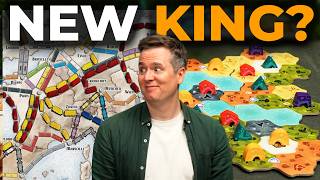
Click to watch at 0:11 · YouTube ↗
Overall sentiment (raw)
positive
Pros
- Simple premise, great for gateway introductions.
- Rhythm similar to Ticket to Ride (draw cards, play cards).
- Competition on a shared board is vital and engaging.
- Allows for guiding new players effectively.
- Rule of taking two adjacent cards prevents overthinking and embraces imperfection.
- Clear objectives provide focus and direction.
- Sense of constant progress, never waiting for something to happen.
- Satisfying choices and room for personal strategy.
- Helpful board design prevents forgetting actions.
- Gradual introduction of goals eases players in.
- Flexible and fun with different player counts.
- No plastic components, uses printed wooden tents and cardboard insert.
- Perfect combination of old and new game design.
Cons
- Doesn't stretch to five players like some OG games.
- Potential for players to intentionally hinder others ('being a dick').
Thematic elements
- rival tribes venturing out to set up camps
- the wilderness
Comparison games
- Ticket to Ride
- Carcassonne
- Katan
- Lake Villages
- Chronologic
- Pixies
- Touring Machine
- Wingspan
- Everdell
- Ark Nova
Mechanics (from transcript analysis)
- area control/influence — Players place tents to claim spots on a shared board, competing for the best locations.
- Card Drafting — Players take cards, with a rule forcing them to take two adjacent cards to avoid overthinking.
- Objective Fulfillment — Players place tents to meet specific objective tiles for points.
- Route Building (implied) — Playing cards to travel through spaces from a home camp to place tents.
- Set Collection — Players collect cards to play to place tents and meet objectives.
- Variable Player Powers (Implied) — Tucking cards under the board counts as visiting a region, helping to get around problems of blocked spots.
Video topics + discussion points
No key topics recorded for this video.
Quotes (from this video)
- For the last 22 years, if you were looking for a gateway game to introduce you to modern board games, the answer was always ticket to ride. But we need a gateway game for this vicenium. And I think it should be Dwan.
- It has the same rhythm as Ticket to Ride. Draw cards, draw cards, play cards, draw cards, draw cards, play cards.
- Having that competition on a shared board is vital.
- I want you to curse my name when I pitch a tent in your bad lands and take your berry, not a euphemism. That playful competition is one of the best things about board games.
- It's holding your hand because of this board. You'll never forget to take a tile or tuck a card. It's great product design.
- It's like we've come full circle. It all started with cardboard and wood in the '90s, and now we're back there, but with a modern take on it. And that's what Dwan is. It's the perfect combination of old and new.
- For me, Dwan is a bright pink flower sprouting in a dead garden. It's a sign that people still want to make games like this.
References (from this video)
No references stored for this video.
Video 0cGLc6bRWuQ
Meeple University Vlog at 47:24
video_pk 88341 · mention_pk 232668
Click to watch at 47:24 · YouTube ↗
Pros
none
Cons
none
Thematic elements
- He-Man IP
Comparison games
none
Mechanics (from transcript analysis)
Mechanics unknown.
Video topics + discussion points
No key topics recorded for this video.
Quotes (from this video)
- look how cute this is fabulous game as well
- look how great this is like components like just soing amazing
- look at this like amazing amazing
- this is a really fun social deduction
- it's really like you you should bit shy on social deduction you can you can like a little bit of a puzzle deduction as well
- this is a very popular game when it was out
- it's a logic game
- puzzle deduction game
References (from this video)
No references stored for this video.
Video JS-4Ijo5mww
Gaming Rules! Other at 4:03 sentiment: positive
video_pk 84047 · mention_pk 212959
Click to watch at 4:03 · YouTube ↗
Overall sentiment (raw)
positive
Pros
- Replaced Tower Up as a game to play with brand new gamers
- Plays really nicely
- Core system with different scenarios is interesting
- Team-based scenario was found really interesting
Cons
- Slightly more rules than Tower Up
Thematic elements
Comparison games
- Tower Up
Mechanics (from transcript analysis)
- scenario-based play — Features different scenarios like a volcano changing the map or a flood spreading water.
Video topics + discussion points
No key topics recorded for this video.
Quotes (from this video)
- So yes, if you think my voice is a little bit deeper and a little bit croakier than normal, that's because of it.
- So, please don't think that my channel is now 100% sponsored playthroughs. It's not.
- I wanted to support the game because it was really good game and I didn't want people to have uh to, you know, to get caught out uh in the same position as I was in.
- Yep, that's right. For the second year running, I didn't play a single game at Essen Spiel.
- So, yes, that's just what I wanted to say quickly before we move on to the next game I want to talk about, which is Severton, which is a sponsored playthrough video.
- Um, so yes, that's just what I wanted to say quickly before we move on to the next game I want to talk about, which is Severton, which is a sponsored playthrough video.
References (from this video)
No references stored for this video.
Video O9NFzyGl0Kg
Meeple University Haul at 1:54
video_pk 83796 · mention_pk 320026
Click to watch at 1:54 · YouTube ↗
Pros
none
Cons
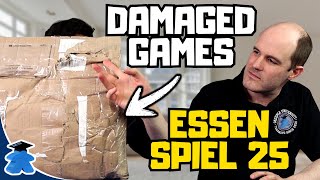
- water damage
- bitten up
- dented box
Thematic elements
Comparison games
none
Mechanics (from transcript analysis)
Mechanics unknown.
Video topics + discussion points
No key topics recorded for this video.
Quotes (from this video)
- Yes, maybe we knew there were still some games in transit.
- It's like 300 plus 150. I can't remember how much I pay about that much. 450 €450 something like it's about 500 Australian dollars.
- Sadly, they didn't survive the post.
- It's probably because actually no not the Pacific Ocean cuz that's the least direct ocean to get to Australia.
- So some people who really likes to care of their board games, please do not yell to anyone.
- It's still playable, although it's like bitten up like really bad, especially on the side.
- So, this is uh this is Space Cowboys. Sorry, Space Cowboys. We haven't been able to display a perfectly square box, but rest assured you at home, if you purchase from your friendly local game store, it will be square.
- This is by the people who did Ghost Lift who we uh which we shown last time.
- I am excited to play Recall.
- So, there are more that or three more actually games.
- If you have heard of Startups, please let us know if you enjoy it or if you don't like it.
- Um, this is Fman Frey's game called Floss, which is Fearless.
- I think I'm okay with this. Like, looks like everything is intact.
- I like this art here. I like this angular very stark angular uh geometric shape.
- So, this is like um a draft.
- This is very sad. This is uh I can't really give these toys to Teran.
- So, this is Limit. It's about environmental and this is the last games I think.
- Um, yeah, maybe it is rare. Maybe it's going to worth a lot in the chart, but it's dented a little bit.
- So, this is um yeah, maybe it is rare. Maybe it's going to worth a lot in the chart, but it's dented a little bit. Right.
- And this one I remember the preview from last year's Essen. So I remember being quite interested in this one.
- So, this is um yeah, maybe it is rare. Maybe it's going to worth a lot in the chart, but it's dented a little bit.
- This is a two-player game kind of like push and pull by uh Korea board Korea board games.
- So, this is the only one that I got from Korea Board Games and hoping this is going to be a fun two-play game that we got we can bring to Bali in our family visit soon.
- So, those are these are um little wooden potatoes.
- What do you call it? The laser cut.
- Laser rocks. Laser.
- Is it laser rocks or just general? No, just general general laser cut.
- Yeah, laser cut. And including the potatoes. It's very good.
- Caution signs is one of the one that we got from Essen.
- This is again, this is not new, but this is a good party game plays a lot of people, which is what is it now? Nine players up to nine players where one person is a guesser, the other one is drawer. You have 20 seconds to draw a combination of stuff and the guess I will need to and the cards would get mixed.
- You will get an adjective and a noun and draw them together.
- Very good there.
- Yes. And then it's kind of so clovery you have to or a guesser has to align them correctly. Yes.
- Good fun. So this is uh we've got three things from Delicious Games this year.
- One you've seen last time which is the underwater city expansion. Second one is Aquaria. This is a Thomas Hollik game.
- Yes. So obviously he had the very also slightly broken on the corner. He had the very big show last year with Seti Galileo and uh the tea.
- Yeah. I heard good things about this one as well. Yeah.
- And his release this year. Yes. So, and then the second one from delicious games is Aperna. This is Vladimir Sushi. The only Vladimir Sushi's game. Suhei. Vladimir Sui's game.
- That's what I've been singing in my head. Now you've got it.
- Yeah. Yeah. So, this is um our only Vladimir Suhi's game. And this is a smaller box. So, yeah. Nice little cute box.
- We've been enjoying these games including last year's release for Safa. Oh yes, he's he's had uh many classic releases over a long time. So many. So many.
- So before we move on to the next games, these magazine I got handed over magazine which is called Joy.
- Fort is it for depends what language it is. Yes. So there's not a lot of magazines around these days, but this is one of them. Um, why the first RPG season is the most important, challenging, and satisfying. Part two.
- So, a mix of things there and then a bag. I don't know if you know that I collect bags. So, on my birthday, please give me bags. Backs.
- Yes, Hobby tote bag. Yes, tote bag. And it's got two handles.
- Um, over there is a And it's got two handles.
- Yeah. It's actually a thoughtful review of the bag.
- Yes. There's the Soros. This is from Super Mele. Now, Super Meles distribute lots of games and this is one of their release games. It's actually sold out at Essentville. So, yes, it was one of the bigger games. Yeah. Shri Mill. Yes.
- So, it's looks beautiful. Look at that.
- And it has these dingies.
- I think somebody mentioned this game as well to me. Pretty sure it is like in my shopping list somewhere.
- Yes, it was pretty uh pretty well hyped going into the show.
- Very heavy. Lots of things in here. H they are okay the box the bit day if you want to please grab it first. So this is by Brett Spiel podcast. So look at this. It's cute right? It made it home.
- nice little 3D printed bit.
- Which clicks together.
- Clicks together. Hooray. Uh two more games. Well two more games that we can show. Oh yeah. I forgot about this. Whoops. There's a space lab. You would have seen the slideshow photo. Maybe you're not in the first part of essence build game. This is engine building game and it's very pretty. Like you want to Okay, it's shiny as well.
- Happy.
- Not as shiny as the other one.
- Well, the in the inside's also shiny, Taran. Well, you can play a bit um a bit later if you like. Look. Shiny.
- That is shiny.
- Yeah, shiny. Anyways, trust me, it's shiny. So, this is by Studio H. And this is a kind of like yeah as I say uh engine not engine building but tile placement you're trying to meet objective in a different way and this is my fault chemist lookout games
- now if you look back at the fortunes of scandal way it is a euro game but a euro game but looks like a marit
- very uh very thematic looking art. Yes, that this one is um well, look at Games brought out things like Oh, we've got the Forest Shovel one as well, the D Mall, the new version, but I didn't get it from Essence Spiel. I got it from Gen Con. Uh and this one is the lookout games one. So, would be interesting um to to play like this looks like not a Euro game, right?
- No, it looks like a battle card type of game. It's what I would generally imagine. I mean, it is to play two players.
- So, and so the Marvel characters we have here, it's I don't recognize many of them. That's Iron Man. That's the Hulk.
- That's all you know about Marvel. I'm the big fan of Marvel bigger.
- I'm more of an I'm more of an X-Men.
- That's actually true.
- So, I would recognize X-Men of which those I'm not
- which I will need to give you quiz. This is Hercules and the 12 labors. So this this is a solo game. This is uh the the publishers just got a few copies. So I got this from Essen
- and that is Envy Born Games.
- Yeah, it seems like a really fun uh solo game with with dice to dice to allocate to the cards.
- There's not really a lot of explanations there. Sorry. This is Punikica which we talked about in the previous vlog which is a two-player battle game with card play.
- Yes, Punic War game from Felank.
- And over there we have Children of Coloss. This might have the most heft to it. This is Yes, it is quite heavy. Children of the Colossi which I also show in photos um that it's kind of like a there's a area control but also there's uh you want to send your work in here for your control. want to send it up there in the mountains to give you more powers. So that difficult decision.
- Um they've got lots and lots of them but and by the end of essence spill I see that they almost none. So I don't know maybe they sold out as well.
- And this is not new. I don't know if this is this year's release. I'm pretty sure this was kickstarted.
- So they're very big this year though. Jaggi. Yes.
- Yeah. And we also had a alternative rule to some of using some of the components for
- It needs more love.
- I'd rather it be damaged than not arrive at all.
References (from this video)
No references stored for this video.
Video PDXJplqCXeY
Chairman of the Board Discussion at 0:35 sentiment: positive
video_pk 82586 · mention_pk 334367
Click to watch at 0:35 · YouTube ↗
Overall sentiment (raw)
positive
Pros
- Clean evergreen feel
Cons
none
Thematic elements
Comparison games
- Far Away
Mechanics (from transcript analysis)
- Card Drafting — Players are collecting cards from a row.
- contract fulfillment — Players are trying to fulfill contracts which offer victory points and show terrain and symbol requirements.
- territory building — A territory building style game where players collect cards to skip over territories and place new tents.
Video topics + discussion points
No key topics recorded for this video.
Quotes (from this video)
- So, you're going to get some good bargains if you keep an eye on the website as they uh as they close their doors.
- So, just a brief spoiler. But it does certainly have a clean evergreen feel to it.
- Normally a bit of a um you know, two words that kind of butt head. You know, two players and area controls don't normally go well together.
- I no spoiler alert this game is fantastic. It's so good.
- Sometimes just a roll and move game can be a lot of fun.
- My only bug bear with this game is or this expansion is that it doesn't fit in the base box which is really frustrating.
- It's just more cards to play with with some extra little tweaks to the rules which are so easy to digest that they're not going to muddy the waters at all.
- I just thought, you know, why not say some good things about their really good products.
References (from this video)
No references stored for this video.
Video navw8T9-GE0
Chairman of the Board Other at 4:05 sentiment: positive
video_pk 82279 · mention_pk 206763
Click to watch at 4:05 · YouTube ↗
Overall sentiment (raw)
positive
Pros
none
Cons
none
Thematic elements
Comparison games
none
Mechanics (from transcript analysis)
- territory building
Video topics + discussion points
No key topics recorded for this video.
Quotes (from this video)
No quotes stored for this video.
References (from this video)
No references stored for this video.
Video A_D2gIZTV0Y
BoardGameCo Top 10 List at 16:07 sentiment: neutral
video_pk 81480 · mention_pk 345324
Click to watch at 16:07 · YouTube ↗
Overall sentiment (raw)
Neutral
Pros
- Fun enough to play on Board Game Arena
- Straightforward gameplay
Cons
- Doesn't do anything particularly special
- Not compelling enough to own
Thematic elements
Comparison games
none
Mechanics (from transcript analysis)
- Area Control — You're trying to draft these goals in synergy with the cards you draft while trying to build out on a board that you're all competing over.
- Card Drafting — You're building camps on this board by drafting cards from a display and then trading those cards in to move around the board creating camps.
- Set Collection — You have these other cards up top that say, "Oh, you want to have camps on these symbols or these terrain types." You're trying to draft these goals in synergy with the cards you draft while trying to build out on a board that you're all competing over.
Video topics + discussion points
No key topics recorded for this video.
Quotes (from this video)
- But you're basically gathering movies. That's what you're doing. You're kind of a you're taking a turn to either buy better seats for your theater or buying movies to play in your theaters.
- The first game on its own would have been like a 2.5, maybe a three. Without the cards that make the game interesting, it's a forgettable yatsi-ish game where you get one reroll, not two. It's an okay game. Nothing bad about it, just like it's been done before. The cards made it interesting. and the Cars made it fun.
- It's straightforward. It's straightforward. It's fine. I don't think again definitely didn't wow me. Like the more I talk about it, the more I'm like, I will never buy this game. Nothing against it. I just I think it's a fun enough game to play on boardame arena. I don't think it does anything particularly special to make it a game that I feel the need to own in my collection.
- Overall, you're going around a rondell. You're kind of working around this map. It's basically it's it's a rondelle, but it's a map. You move around the board. You stop at various locations. You place down your crew. You buy various cards. You engage in combat. It's kind of reminiscent to Pirates of Marbo, just less fun so far. It really feels like Pirates of Marabo is just a straightup better game
- It's just such a good game of just trying to figure out how to optimize.
- My most favorite game on this list is Darwin's Journey.
- It is not the easiest game to learn, but it's also not the hardest game to learn. one of my favorite games of all time. Incredible game. Absolutely amazing.
References (from this video)
No references stored for this video.
Video k0fx8wpRVPw
Board Stupid Review at 0:32 sentiment: positive
video_pk 81345 · mention_pk 201384
Click to watch at 0:32 · YouTube ↗
Overall sentiment (raw)
positive
Pros
- Beautiful production and artwork
- Intuitive and clear iconography/design
- Fast-paced gameplay
- Beginner-friendly and easy to teach
- Interesting player interaction through blocking
- High value for the price
- Modular setup and scenarios
- Smooth and clean gameplay
- Well-developed and tuned design
Cons
- Some might find the game too 'cute' or non-confrontational
- The base scenario setup is always the same
- The team variant doesn't significantly alter the game
- Could have benefited from more spice, like secret objectives or additional modules for complexity
Thematic elements
Comparison games
- Ticket to Ride
- Quest for El Dorado
- Far Away
Mechanics (from transcript analysis)
- Area Control — Placing camps in various locations on the board helps with contract fulfillment and spreading out across different areas.
- Card Drafting — Players can pick up two new cards from the available cards or blind from the deck.
- contract fulfillment — Players collect cards and spend them to fulfill contracts (called 'stories') which grant points.
- Modular Board — The game features different setups for player counts and optional scenarios like floods or lava zones that change the board state.
- Resource Management — Resources like gems are found on the map, and players need camps in those territories to collect them for contracts.
- Route Building — Players create routes across the land by spending cards that match the terrain styles of the connected locations.
- Set Collection — Fulfilling contracts requires collecting specific combinations of resources (like gems) or terrains.
Video topics + discussion points
No key topics recorded for this video.
Quotes (from this video)
- It's a contract fulfillment game where you're going to be collecting cards and spending those cards to create routes across this beautiful land and then placing camps out in various places.
- Simple and beautiful.
- This game has a very interesting Ticket to Ride type feeling.
- The game rewards you for being in people's way.
- For the price point, this is staggering.
- It feels one of those games where during the design process instead of adding stuff, they've been remove cut.
- Overall, we do recommend this game.
References (from this video)
No references stored for this video.
Video xwoYD9LwIZw
The Dice Tower Analysis at 53:03
video_pk 80681 · mention_pk 197263
Click to watch at 53:03 · YouTube ↗
Pros
none
Cons
none
Thematic elements
none
Comparison games
none
Mechanics (from transcript analysis)
Mechanics unknown.
Video topics + discussion points
No key topics recorded for this video.
Quotes (from this video)
- If we transform what's happening into a Q&A, maybe we this would be be what's happening.
- Halfway through, if you guys don't entertain me enough, I will pull out a game and start playing. That's That's the threat.
- I'll never understand it.
- I understand it. I'm just kidding.
- Please don't don't explain it to me.
- Looks toxic.
- Some of the stuff they put out definitely looks like nuclear runoff.
- Okay, everybody. What's going on?
- I hope you're having a fantastic Monday so far, folks.
- Good morning, good afternoon to some of you.
- I guess some of you are in places where it is already afternoon.
- What is that about?
- Question colon and then something that will help me spot your questions.
- I'm also going to make this a little bit bigger here so I can see.
- Volume is okay. You guys can see me
- The area of the hobby I feel is being squeezed out is actually the middle. Those 45 minute to an hour and 15 minute family weight games are the ones that I think have a much harder time making a splash because they require a lot of production.
- I can't review a prototype. So, no, I don't have the time.
- It's not normally the math I'm concerned about because the the the arithmetic is not that complicated. I think it is the a a heavy rules dense euro game tends to be harder to reconstitute the abstractness into concrete thoughts.
- I'm looking to buy an unmatched game, but I don't have much funds to buy multiples. If I had to invest in just one, which one would you recommend?
- Donkey juice. You can really make a meal out of those two words. That's a big part of it.
- It's part of the collective unconscious, says Mike Delisio.
References (from this video)
No references stored for this video.
Video CRHtdL61Y_A
UndeadVikingVideos Discussion at 248:38:16 sentiment: positive
video_pk 80184 · mention_pk 194723

Click to watch at 248:38:16 · YouTube ↗
Overall sentiment (raw)
positive
Pros
- The story is very good and can branch in many ways.
- The app integration with narration is excellent.
- Considered one of the best campaign games played.
Cons
- The rules were difficult to understand.
- The game system allows for more scenarios to be made.
Thematic elements
- Building out an island
- Island
Comparison games
none
Mechanics (from transcript analysis)
- app-assisted — The game is enhanced by a fully narrated app.
- Event/Calimity cards — Players must plan for calamities that occur at certain points.
- Tile Placement — Players build out their island by placing tiles.
Video topics + discussion points
No key topics recorded for this video.
Quotes (from this video)
- I have tons of like RPG books that I'm like, why did I buy this?
- we end up in situations where there's diamonds in the rough.
- I found the complete book of necromancers. I forgot that I ever owned that.
- if you try to auction that now, um, you can get a few hundred for it, which is ridiculous.
- I'm actually excited to have like Aldi on cuz I want to talk cuz he's one of those guys that, you know, obviously he runs conventions.
References (from this video)
No references stored for this video.
Video NBiugoNxm7U
People University Top 10 List at 9:15 sentiment: positive
video_pk 74197 · mention_pk 178565

Click to watch at 9:15 · YouTube ↗
Overall sentiment (raw)
positive
Pros
- works very well on BGA
- short and tight game
- can see everything at once
- not complex to remember where you were
- can get a game out efficiently in turn-based
- scales well with player counts
- enjoys all player counts
- small board, no need to zoom
- very well suited for BGA
Cons
none
Thematic elements
Comparison games
none
Mechanics (from transcript analysis)
Mechanics unknown.
Video topics + discussion points
No key topics recorded for this video.
Quotes (from this video)
- This is a long game, but I feel like Terforming Mask is longer.
- I enjoy Arknova on BJ as much as I do in person, I think.
- It's a game that on paper shouldn't actually work as a turnbased game because of how much you have to remember from turn to turn, but it's always been a nice one.
- it's a very very great game on board game arena because there's less maintenance like because otherwise there are some maintenance there are some icons that can be just explained easily on board game arena mouse hovering action
- Such a great game. Like it's such a great game in real but then the maintenance also less. So in board game arena.
- A two-player cooperative game of limited communication which is that's what happened in Board Game Arena.
- We pretty much had a game of The Crew going non-stop for a year, a year and a half.
- BGA gives us the chance, even in slow turn-based version, to play those tough scenarios. I've had a lot of fun with many of those scenarios.
References (from this video)
No references stored for this video.
Video d7Z9M0mdzek
Meeple University Discussion
video_pk 69835 · mention_pk 166724
Pros
none
Cons
none
Thematic elements
none
Comparison games
none
Mechanics (from transcript analysis)
Mechanics unknown.
Video topics + discussion points
No key topics recorded for this video.
Quotes (from this video)
- Dwan is a tight and tactical game in which players take on the roles of tribes, racing to spread out over the land in search of resources, regions, and points.
- On your turn, you must take one of two options. either take two cards or place a camp.
- The story your tribes hand down across the generations will be a major part of your scoring.
- The game end is triggered as soon as any player has placed all of their camps.
References (from this video)
No references stored for this video.
Video d7Z9M0mdzek
Meeple University Discussion at 0:00 sentiment: neutral
video_pk 69835 · mention_pk 206074
Click to watch at 0:00 · YouTube ↗
Overall sentiment (raw)
neutral
Pros
- tight and tactical gameplay
- varied mode options with modules
- story tiles provide meaningful, thematic scoring
Cons
- potentially complex setup and learning curve
- multiple modes may increase setup time
Thematic elements
- territory expansion, resource management, and storytelling through story tiles
- tribal migration across a modular land map with regions, rivers, and resources
- shared narrative through evolving stories and regional control
Comparison games
none
Mechanics (from transcript analysis)
- Camp placement — players place camps by paying costs from their hand, connecting routes across the map
- Card Drafting — players draft terrain and story cards from adjacent rows to build their options each turn
- Multi-mode structure — game includes standard mode plus three modules and a two-versus-two partnership mode
- Network/Route Building — players plan journeys across hexes, incurring costs for terrain and blocks from opponents
- Resource Management — berries and terrain icons are collected and spent to advance on the map and complete stories
- route building / path optimization — players plan journeys across hexes, incurring costs for terrain and blocks from opponents
- scoring and endgame resolution — points come from completed stories, camp clusters, berries, fire, and tiebreakers
- Set Collection — players slot terrain cards under their board to meet the requirements of story tiles for scoring
- set collection / story tiles — players slot terrain cards under their board to meet the requirements of story tiles for scoring
Video topics + discussion points
No key topics recorded for this video.
Quotes (from this video)
- Dwan is a tight and tactical game in which players take on the roles of tribes, racing to spread out over the land in search of resources, regions, and points.
- On your turn, you must take one of two options. either take two cards or place a camp.
- The story your tribes hand down across the generations will be a major part of your scoring.
- The game end is triggered as soon as any player has placed all of their camps.
References (from this video)
No references stored for this video.
Video p7Pyxk1zYZE
Get into games Review at 0:00 sentiment: mixed
video_pk 61670 · mention_pk 154317
Click to watch at 0:00 · YouTube ↗
Overall sentiment (raw)
mixed
Pros
- Excellent production quality
- Mechanically sound and accessible
- Good gateway game; easy to teach
- High replayability via modules and scenarios
- Multiple exploration paths; not a single, rigid strategy
- Best experienced with 3-4 players; strong social interaction
- Helpful for new gamers while offering depth with repeated plays
- Incorporates quasi worker-placement elements with resource management
Cons
- Some story cards can be impossible to fulfill due to modular tile setup
- Can be underwhelming for players seeking heavier depth
- Two-player experience is less exciting; best at 3-4 players
- Randomized tile setup can create unsatisfiable cards and pacing frustrations
- If you expect more from the game, you may be disappointed
Thematic elements
- Resource management and area control driven by story goals; the progression of story tiles unlocks capabilities and shapes endgame scoring.
- Modular hex-based landscape with land types where playersplace encampments; rivers, mountains, and various terrain influence options. Scenarios introduce events like floods or volcanoes that alter positioning and scoring opportunities.
- Story-card driven objectives that prescribe where campsites can be placed and which resources matter, with board progression influencing available actions.
Comparison games
- Ticket to Ride
Mechanics (from transcript analysis)
- Card Drafting — On a turn you take two cards from the card grid, and the two cards you choose must be neighbors on the grid before adding them to your hand.
- Card drafting from a grid with adjacency constraint — On a turn you take two cards from the card grid, and the two cards you choose must be neighbors on the grid before adding them to your hand.
- End-of-round and endgame scoring — Points come from story tiles, berries on the board, fire symbols on cards or tiles, and strategic endgame placements; fulfilling criteria slides story progress and can unlock extra cards.
- Modular Board — The map is built from modular hex tiles; setup variability impacts which strategies are possible in a given game.
- Passing toll when traversing an opponent's campsite — As you move through regions controlled by others, you must give a card of the corresponding color to that opponent, adding a cost to movement.
- Replayability through modules — Multiple modules and scenarios create diverse setups and strategic options, preventing one-note gameplay.
- Resource-based placement — Colored cards are spent to place encampments/campsites on land types indicated by the cards and the story tiles.
- Scenario variability — Different scenarios change rules or add special conditions, increasing difficulty and variety.
- Story progress and card unlocking — As you fulfill criteria, you slide a story tile up your board, unlocking the ability to gain an extra card.
- Tiles and modular board setup — The map is built from modular hex tiles; setup variability impacts which strategies are possible in a given game.
- Worker Placement — Colored cards are spent to place encampments/campsites on land types indicated by the cards and the story tiles.
Video topics + discussion points
No key topics recorded for this video.
Quotes (from this video)
- it's an upgraded version of Ticket to Ride.
- This is your toll. This is what you're having to pay.
- This is a gateway game, an entry into the hobby.
- Dwan is a good little game if you are bored of playing Ticket to Ride.
- If you're new to board games, then this one I would probably recommend to you.
- There are multiple scenarios that you can play in the game that change up the rules in some fashion.
- Four is probably absolutely the best.
References (from this video)
No references stored for this video.
Video PvrnH5wtQkI
The Dice Tower Discussion at 2:05 sentiment: positive
video_pk 38657 · mention_pk 116504
Click to watch at 2:05 · YouTube ↗
Overall sentiment (raw)
positive
Pros
- punchy, fast pacing
- high interaction and a satisfying turn sequence
Cons
- may require some getting used to; medium-heavy feel
Thematic elements
Comparison games
- Urban Sketchers
Mechanics (from transcript analysis)
- card drawing and hut placement — draw cards and place huts to fulfill recipes and earn bonuses
Video topics + discussion points
No key topics recorded for this video.
Quotes (from this video)
- This is punchy and fast and really enjoyable.
- An excellent, very welcoming, family, approachable kind of a game.
- The chest is a single box to house everything and it comes with that final expansion in it.
- Came in at a 7.5. I found it to be a very pleasing experience.
References (from this video)
No references stored for this video.
Video HO3J-S7WbQg
Brains On Games Review at 0:09 sentiment: positive
video_pk 38262 · mention_pk 208054
Click to watch at 0:09 · YouTube ↗
Overall sentiment (raw)
positive
Pros
- fast play with notable strategic depth
- easy to teach and quick to learn
- high replayability due to modular boards and scenarios
- excellent component quality and compact footprint
- the gifting mechanism adds a thoughtful layer of interaction
Cons
- terrain and story cards are drawn randomly, introducing variance
- zones vs. spaces distinction can be confusing for new players
- the two-player experience may feel less tight than higher player counts
Thematic elements
- Exploration, route-building, and resource management under a race-the-limit scoring pace.
- Modular map with terrain types (forest, desert, mountains, water) where players place camps to complete story-driven objectives.
- Story cards provide mission-like goals; scoring includes terrain symbolism and adjacency bonuses.
Comparison games
none
Mechanics (from transcript analysis)
- area/zone control with pathing — Camps occupy zones on the board; crossings and blockages influence route selection and resource flow, with points for adjacent camps and zone diversity.
- Drafting and hand management — Story cards are drafted in reverse order; players manage a hand of terrain and story cards to optimize routes and placements.
- dynamic scoring through goals and icons — Completing goals grants points immediately and sometimes triggers additional draws; endgame scoring includes most fire symbols and scenario-specific bonuses.
- resource gifting as a strategic tool — When moving through an occupied space would require a discarding resource, players can give that resource to the occupying opponent, shaping opponent options.
- set collection and symbol scoring — Story cards require specific terrain symbols and berries to earn points; fire symbols contribute to bonus scoring rules.
- tile-based movement and placement — Players place camps on a modular map by spending terrain cards that match the destination terrain; placement creates paths and blocks for others.
- tuck-under mechanic for future play — After certain placements, players can tuck a card under their player board to set up future moves; this requires planning and hand management.
Video topics + discussion points
No key topics recorded for this video.
Quotes (from this video)
- If you're in the market for a great strategy game that plays in under an hour, have I got a game for you.
- This is a game that can be played by two to four players.
- It's a race to place those camps.
- There is huge replayability here.
- This is a game that's strategic, but it's easy to teach and understand.
- Just fantastic to have a game that has some strategic depth, but it is so fast and easy to understand.
- Price point is pretty low on this thing.
References (from this video)
No references stored for this video.
Video SQ8GIPT6owo
The Dice Tower Review at 0:00 sentiment: positive
video_pk 34374 · mention_pk 102350
Click to watch at 0:00 · YouTube ↗
Overall sentiment (raw)
positive
Pros
- High amount of gameplay and strategic depth for a 40-minute game
- Excellent artwork and top-tier component quality
- Solid, old-school midweight Euro feel with modern polish
- Very good insert/boxing for storage and setup
- Scales well from 2 to 4 players with meaningful interaction
Cons
- Theme is fairly weak or non-immersive
- Rules can be somewhat quirky or fiddly around adjacency and space costs
- Two-player variant can feel slightly underwhelming compared to higher player counts
Thematic elements
- tribal survival and resource management
- tribal huts on a modular landscape
- abstracted/medieval fantasy
Comparison games
- Attica
- Alhambra
- Ride
Mechanics (from transcript analysis)
- area/region requirements — Huts must meet color/region constraints to fulfill tile bonuses.
- endgame scoring variety — Score from huts, fruits, flames, medallions, and fulfilled tile bonuses.
- hut placement — Spend resources to place a hut on the board, paying for origin, traversal, and target spaces.
- Resource Management — Collect fruits and manage tokens to meet tile requirements and endgame scoring bonuses.
- tile drafting — Draft two adjacent cards from a six-card draft to add to your hand.
- tile progression / upgrade — Slide tiles up to reveal end-game bonuses and trigger scoring opportunities.
- two-path turn structure — On your turn you either draw two cards or deploy a hut, each with its own costs and options.
Video topics + discussion points
No key topics recorded for this video.
Quotes (from this video)
- This game has a lot of gameplay for 40 minutes.
- The artwork is tremendous and the component quality here is very, very good.
- This is one that has just impressed me to no ends and I think this is one I'll be very happy to continue playing for a long time.
- This feels like a wonderful throwback in all the right ways and a wonderful modern game in all the right ways.
- If your first blush with this game is at two player, you might look at the set of there's like two tiles out there and you say, 'This is it.'
References (from this video)
No references stored for this video.
Video wAXnBBs1TaY
BoardGameGeek Discussion at 18:17 sentiment: positive
video_pk 34314 · mention_pk 102198

Click to watch at 18:17 · YouTube ↗
Overall sentiment (raw)
positive
Pros
- Visually appealing with an attractive cover
- Engaging area/territory mechanics with multi-layer objectives
- Encourages tactical planning and long-term strategy
Cons
- Very heavy box and potential solo/low-player count balance questions
- Mechanics may be unfamiliar to casual players
Thematic elements
- Territorial development, landscape control, and story-driven objectives.
- Area control with land-type cards and dynamic camps.
- Crunchy Euro with strategic planning and spatial planning.
Comparison games
- Feast for Odin
- Teotihuacan
Mechanics (from transcript analysis)
- Area Control — Players compete for control by placing camps and managing regional influence.
- area_control — Players compete for control by placing camps and managing regional influence.
- camp_and_symbol_combo — Score based on building camps in regions with certain symbols and landscapes.
- card_based_actions — Cards depict land types and symbols used to move and place camps.
- restricted_movement_and_trade — Movement and interactions constrained by regions and the need to cooperate or block others.
Video topics + discussion points
No key topics recorded for this video.
Quotes (from this video)
- It's very cool to have kind of a BG Hall of Fame.
- The cover is striking. It's very beautiful.
- This is going to be one of those classic Euro games by Uwe and their DNA is there.
- Man, I love the cover of Thessaloniki.
- Dewan looks real pretty.
- What the heck is in this box? What the heck this game is?
References (from this video)
No references stored for this video.
Video 3eShWxzdtKU
Gaming Rules! Playthrough at 2:33 sentiment: positive
video_pk 11120 · mention_pk 97439
Click to watch at 2:33 · YouTube ↗
Overall sentiment (raw)
positive
Pros
- Family-weight and quick to learn (can teach in under 5 minutes)
- High replayability due to semi-random map layout and multiple scenarios
- Beautiful artwork and tactile components
- Clear and meaningful decision space with map zoning and card drafting
- Supports team play variants without adding complex rules
Cons
- Some thinky moments; not purely light-family weight
- Tactical competition can lead to 'blocked paths' and giving cards to opponents
- Deck can run out requiring reshuffles mid-game
- Two-card draw restriction can force suboptimal early picks
- End-game can feel rushed if players blitz to finish
Thematic elements
- Resource collection, territory development, and storytelling through story tiles
- Modular-map exploration across forest, desert, mountain, water zones; frontier settlement
- Procedural, objectives-driven with evolving story tiles and artifacts
Comparison games
- Arax
Mechanics (from transcript analysis)
- Card Drafting — On a turn, players either draw two adjacent cards from the offer or place a camp by paying terrain cards.
- End-game scoring bonuses — Flame icons and set features award additional points; groups, berries, fire icons impact final score.
- End-of-game trigger — The game ends when a player removes their last settlement; all players get one final turn.
- Resource tokens and berries — Berries placed on berry-icon spaces; they are worth points; other tokens (artifacts, crystals) used in story tiles.
- Rulebook consultancy and sponsorship — Video was a sponsored playthrough; rules were tested from a prototype through rulebook consultancy.
- Story tiles and tucked cards — Story tiles provide end-game objectives; when a space is reached, you may gain a story tile; some cards can be tucked to fulfill future objectives.
- Terrain movement and boat travel — Movement uses sequences of terrain cards; water allows boat travel between zones.
- Tile/camp placement — Place camps on the map by paying cards with specific terrain; first camp from home base; subsequent camps can start from any owned space.
- Zone system — The map is split into zones; scoring depends on how many camps you have in a zone (groups of two or more) and unique zone counts.
Video topics + discussion points
No key topics recorded for this video.
Quotes (from this video)
- I really liked the game.
- It's a family weight game
- The artwork is really nice.
- January 2026, this game is going to be available.
- The main way you're going to score points is for these.
References (from this video)
No references stored for this video.
Video c7D1QR-hqrU
Rolling Dice & Taking Names Discussion at 33:39 sentiment: positive
video_pk 9909 · mention_pk 117949

Click to watch at 33:39 · YouTube ↗
Overall sentiment (raw)
positive
Pros
- surprisingly engaging with strong performances
- tight editing and pacing for a horror hit
Cons
- horror fatigue might limit cross-audience appeal
Thematic elements
- artificial intelligence danger and human-robot relationships
- modern-day domestic tech-noir horror
- horror-thriller with dark humor
Comparison games
- Naked Gun
- 28 Years Later
Mechanics (from transcript analysis)
- techno-thriller pacing — uses AI-centric premise to drive tension
Video topics + discussion points
No key topics recorded for this video.
Quotes (from this video)
- Lilo and Stitch was the number one movie this summer.
- Superman was awesome. It was everything that I wanted it to be, probably more.
- Fantastic 4 was the Fantastic 4 that I wanted to see.
- There is a sequence in the middle and Marty you'll know what I'm talking about where they go on this weekend retreat—it's the most surreal and hilarious thing I've seen in a long time.
- Mortal Kombat 2 could go back to what you’re thinking—worldwide box office potential.
- Doomsday is going to be a hot mess. I don't know how you cram everybody that's ever put on a Marvel costume into one movie.
References (from this video)
No references stored for this video.
Video yM6xb5MGhPU
The Dice Tower Discussion at 17:36 sentiment: mixed
video_pk 5460 · mention_pk 56598
Click to watch at 17:36 · YouTube ↗
Overall sentiment (raw)
mixed
Pros
- Strategic depth
- Beautiful production
Cons
- Complex rules
- Not widely available yet
Thematic elements
- Dragons/heroes synergy
- Fantasy world
- Strategic combat, engine-building components
Comparison games
none
Mechanics (from transcript analysis)
- Worker placement / engine building — Place workers to advance on tracks, potentially combine with dragons
Video topics + discussion points
No key topics recorded for this video.
Quotes (from this video)
- This is why I come to Germany.
- I want to show people what my culture can do as through board games.
- They've got those very adventurous components for a very reasonable retail price.
- Space Cowboys, two to four players, they'll want really good stuff.
- I'm here at the All Play booth demoing Soda Jerk. My game just finished playing with a few guys here.
- This is the kind of thing you expect at the Dice Tower booth.
References (from this video)
No references stored for this video.
Video asPaDvRXqUE
BoardGameGeek Discussion at 6:45 sentiment: neutral
video_pk 2161 · mention_pk 46670

Click to watch at 6:45 · YouTube ↗
Overall sentiment (raw)
neutral
Pros
- Seemed like his type
Cons
none
Thematic elements
Comparison games
none
Mechanics (from transcript analysis)
Mechanics unknown.
Video topics + discussion points
No key topics recorded for this video.
Quotes (from this video)
- This is so much to my taste and I played it a half dozen times really dig it and it's got fewer than 100 thumbs on the preview it's just like your tastes are not necessarily going to match up with anyone else's
- The perfect thing is something you're only going to find through repeated play. It's not going to hit you instantaneously
- It's more about playing something, liking it, you play it again, you play with different people, you want to introduce it to people, and over time it becomes the thing you love
- The good and bad of this job is that you play something, review it, do a video, and then never touch it no matter how much I like it
- You can do anything in games
- I value sleep there more than I value getting a post out
- It's just the cover the cover seems pretty funny to have around and just show people
References (from this video)
No references stored for this video.
Transcript Navigation
Showing 1–22 of 22