/pic4812860.jpg)




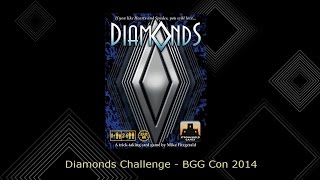
























Diamonds Deep Dive
What the Community Thinks About Diamonds
Diamonds has earned genuine appreciation from reviewers who recognize it as an elegant trick-taking game with a smart twist. Voices like Beyond Solitaire and The Broken Meeple consistently highlight its accessibility, its clever reward system, and its potential to introduce traditional card players to a mechanism that feels both familiar and fresh. The game strikes a balance between simplicity and strategic depth, making it appealing to both casual and experienced players.
Core Mechanics That Define Diamonds
The Trick-Taking Foundation
Diamonds follows the standard trick-taking format: the highest card of the led suit wins the trick. The game uses cards numbered 1 to 15 across four suits, with no royalty cards to complicate the deck. Each player plays one card per round, and the highest matching card takes the win. This straightforward structure makes the rules approachable for anyone who has played Hearts or Spades.
Suit Actions and the Diamond Reward
The mechanical genius of Diamonds lies in its suit actions. Each suit carries its own action: some add diamonds to your showroom, some move diamonds from your showroom into your secured vault. These actions give winning tricks purpose beyond mere victory. The real innovation emerges when you fail to follow suit: instead of being shut out, you trigger a suit action of your own, often the valuable diamond action that places crystals directly into your vault. This means there is strategic value in not winning tricks, creating a delightful tension between competing for tricks and pursuing the vault rewards. Crystals sitting in your showroom are vulnerable to being lost, while crystals locked in your vault are safe and count toward the final score, so reviewers stress that timing the move from showroom to vault is as important as winning the right tricks. A player who hoards crystals in the showroom too long risks watching them slip away, while one who secures them early sacrifices flexibility. That constant weighing of safety against opportunity is what gives a familiar trick-taking shell its distinctive bite.
The Diamonds Experience
Quick Play with Real Engagement
Diamonds plays quickly, fitting neatly into a 30-minute window across its 2 to 6 player range. The pace keeps players engaged without overstaying its welcome. Multiple rounds move briskly, letting players develop loose strategies across a series of hands. The game works best with four to five players; with six the play time extends noticeably, and solo play is not supported.
A Gateway to Trick-Taking
Reviewers particularly value Diamonds as a bridge game. For households where only traditional card games like Hearts or Spades are known, Diamonds introduces the hobby concept of trick-taking while teaching players that departing from standard play can yield rewards. The lesson that not following suit can be advantageous gives newcomers conceptual fluency with trick-taking ideas, preparing them to appreciate more complex games in the genre while still enjoying a relaxed family session.
What Makes Diamonds Stand Out
Components and Presentation
The physical presentation is clean and purposeful. The cards are clearly numbered and suit-coded, and the plastic diamond crystals you slip into your vault create a satisfying tactile element. While the first edition had a certain charm, later editions earned praise for improved aesthetics without sacrificing the game's functional elegance. For its modest retail price, the quality-to-cost ratio stands out as strong value.
An Accessible Twist on a Classic Format
What separates Diamonds from countless other trick-taking variants is that its central innovation is genuinely clever rather than superficial. The mechanic of rewarding a failure to follow suit encourages different thinking. Players must consider not just winning the hand but managing their collection path. You might avoid winning certain tricks to access a vault-building action, or push hard on a suit action that aligns with your current crystal stockpile. This layer of tactical choice transforms trick-taking from purely positional play into something richer.
Potential Drawbacks
Length at Higher Player Counts
The main friction point emerges at five or six players, where downtime between turns and the accumulation of rounds can stretch the experience. The game begins to feel longer than its elegant rules justify, particularly if players are still learning the action system.
Limited Two-Player Depth
Diamonds shines with three to five players. At two players, the game loses some of its tension; with only one opponent to position against, the strategic complexity flattens. Solo play is not supported, so players seeking a solitaire experience should look elsewhere.
If You Enjoy Diamonds
Players drawn to Diamonds often gravitate toward other trick-taking games that reward unconventional play. The Crew: The Quest for Planet Nine and its sequel The Crew: Mission Deep Sea share Diamonds' appreciation for the trick-taking core, though they invert the dynamic by making players cooperate under communication constraints. Both prove that the format remains fertile ground for innovation, and both reward players willing to rethink what winning a trick actually means.
What Reviewers Are Saying
"I love Diamonds because it's a trick-taking game, so kids who have played Hearts or Spades tend to like it because they already pretty much know what's going on, except that it has some interesting little scoring mechanisms that give it a little extra oomph."
— Beyond Solitaire
"For ten euros this was an absolute bargain for a trick-taking game, so I'm going to hang on to this one in my collection as a nice gateway game to teach people who have only really played with a deck of cards in their lives."
— The Broken Meeple
"Diamonds is a trick-taking game for two to six players where you try to get tricks, but you can also get rewards based on the different suits of the cards, and they do different things. I feel like that's just a great entry game."
— Our Family Plays Games