


























Dice Miner Deep Dive
What the Community Thinks About Dice Miner
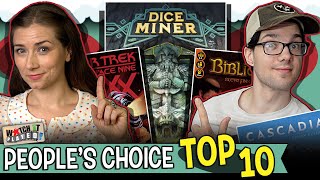
Across the channels that have covered it, Dice Miner comes up again and again as a light, fast filler that overdelivers for its weight. Get into games calls it "the perfect filler game" and pushes back on how hard it can be to find a copy. Watch It Played holds it up as one of the games it would most like to see get an expansion, praising the "fantastic feel" of drafting from the mountain. The Brothers Murph put it on a list of ten games to build a new collection around, and both Foster the Meeple episodes describe it as an easy, almost instant hit at the table. The Board Game Garden and Our Family Plays Games echo the same read: a strategic-but-approachable dice game that keeps landing back on the table.
The one dissenting voice is Chairman of the Board, who liked the game well enough on a first play but found that repeated sessions wore on the appeal. The channel still calls the drafting mechanism cool and the length forgiving, but singles out the swinginess of the dice and the unevenness of the starting powers as reasons the game stopped getting requested. That mixed take sits alongside the otherwise uniform enthusiasm and is worth naming directly, since it is the only channel that walks back its own early impression of the game.
Core Mechanics That Define Dice Miner
Drafting dice off the mountain
Every channel describes the same central action: a shared supply of dice sits stacked into a cardboard, or in the deluxe version plastic, mountain, and players draft individual dice off it rather than rolling their own. Get into games explains that a die can be taken from the very top of the stack, or from anywhere on the outside as long as two of its sides are visible. The Brothers Murph frame it as digging: players are dwarves excavating the mountain, pulling dice out from the top as they are exposed. Chairman of the Board calls it dice drafting with a set collection layer on top, since several die types score for building runs or matching sets rather than for a single roll.
Scoring different dice types and the beer trade
Reviewers consistently break the dice down into families with different scoring jobs. The Brothers Murph describe tunneling dice that need to be collected in order from one through five for up to fifteen points, gems that are worth a point each and score double for whoever has the most, and hazard dice that subtract points unless a defensive die cancels them out. Foster the Meeple adds that every die type carries a beer icon on one face, and a player holding one can pass it to another player and say cheers, letting the giver take two dice from the mountain instead of one. The Brothers Murph note the same trade: giving up a die nets out to zero but buys more control over which dice end up in a player's collection. Foster the Meeple also points out that each player's asymmetrical power is built directly into a die they always have access to, so the variety does not add teaching overhead.
The Dice Miner Experience
A quick, tactile session
The physical act of handling dice comes up unprompted in more than one review. Get into games calls rolling a big handful of the custom dice "really therapeutic," and pairs that with how quick and easy the game is to run between heavier titles. Chairman of the Board clocks a three-player game at around twenty minutes and calls it a lightweight, family style game. Foster the Meeple frames the whole rule set as something that only takes explaining the icons on the dice, since everything a player needs to know is visible on the table.
Building toward a bigger finish
The Brothers Murph describe a structure that escalates: the game runs three rounds, and at the end of each round every collected die gets rolled again and stays in a player's growing hoard before the mountain refills. That means each round hands a player more dice than the last, which the channel calls "a great kind of build up" with "a really nice crescendo." The same channel points out the game does not scale dice counts down for two players the way many games trim content at lower counts, so a two-player game plays with the same dice totals as a four-player one.
What Makes Dice Miner Stand Out
Custom dice and a mountain that looks the part
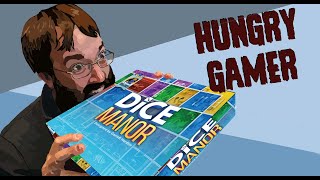
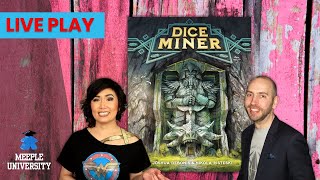
The physical production draws specific praise. The Brothers Murph single out the custom dice made for the game and call the whole set "well constructed," and describe building an actual pyramid-shaped stand for the mountain out of the components. Get into games likewise contrasts the standard cardboard mountain with the plastic version in the deluxe edition, noting either one gives the drafting a tactile centerpiece the game is built around.
The cheers mechanic as built-in interaction
Several reviewers point to the beer-die trade as the feature that keeps an otherwise solitaire-feeling drafting game social. Foster the Meeple describes rolling a beer die to another player and saying cheers as a small addition that still lets a player hand off a die that could hurt its new owner, which the channel calls a mean but welcome bit of interaction. The Brothers Murph describe the same trade as giving up one die to gain two, turning a simple pass into a real tactical choice about which dice to keep close.
Potential Drawbacks
Getting a copy at all
Get into games flags availability as the game's biggest practical problem, describing it as a title from Atlas Games that is "sometimes available" and otherwise "rocking horse poo to find," adding that it can disappear from shelves for long stretches before coming back.
Swinginess that can wear thin
Chairman of the Board is the clearest voice on the game's downside, pointing to the dice-driven randomness and uneven starting powers as the reason a game once spoken of highly stopped getting requested. The channel notes that being at the mercy of the dice while chasing a specific set can turn frustrating, even though the game stays light enough that a single round is over quickly.
If You Enjoy Dice Miner
Foster the Meeple draws a direct line to a familiar classic, describing the scoring as "very Yahtzee like" and summing the whole game up as "basically playing Yahtzee with a bit of a draft element to it." Players who enjoy chasing runs and sets in that dice classic and want a bit more table interaction layered on top are the audience Foster the Meeple points toward.
What Reviewers Are Saying
"It's just a really easy dice game. It feels really nice when you have to roll a huge amount of dice. It's just like really therapeutic, just have a big load of dice in your hands and just chuck them, but it's quick and easy."
— Get into games
"Dice Miner, it plays great with just two players. It plays great with three, with four. But the really fun thing with the two players is there's no scaling in the amount of dice."
— The Brothers Murph
"As time's gone on, I think maybe the randomness and the swingy nature of it has made my enjoyment of it diminish slightly, or maybe more than slightly. I think it's nothing I'd overtly request to play anymore because it is so random."
— Chairman of the Board