/pic4490309.png)
/pic3962955.jpg)
/pic4441140.jpg)
/pic4457040.jpg)
/pic4490309.png)
/pic4455600.jpg)
/pic4455104.jpg)
/pic4457038.jpg)
/pic7486291.jpg)
/pic7486290.jpg)
/pic6018347.png)
/pic6018341.png)
/pic6937964.jpg)
/pic6937963.jpg)
/pic6937962.jpg)
/pic6948439.jpg)




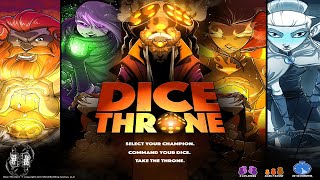
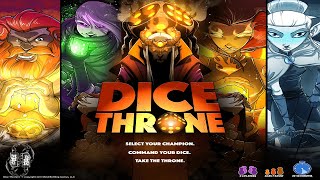
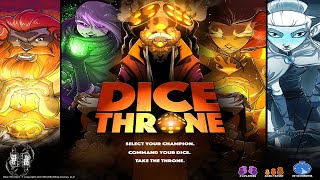
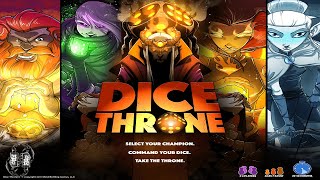
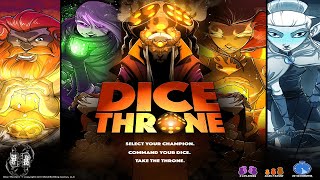






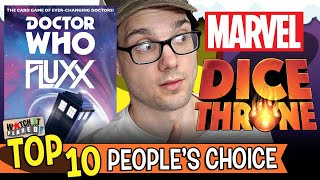

Dice Throne Deep Dive
What the Community Thinks About Dice Throne
Dice Throne generates consistent enthusiasm across the board gaming community. Reviewers consistently praise it as a fast-paced, accessible dueling game that delivers pure strategic fun wrapped in a competitive dice-rolling experience. The game earned repeated comparisons to Yahtzee, but with the crucial addition of card play, character asymmetry, and head-to-head combat that keeps players engaged throughout. From casual players to dedicated hobbyists, the consensus is clear: Dice Throne occupies a unique space in the modern board game landscape as a legitimate tactical alternative to classic roll-and-pray dice games.
Core Mechanics That Define Dice Throne
The Dice Rolling and Re-Rolling System
At its heart, Dice Throne runs on a straightforward but engaging dice economy. Each player has five custom dice unique to their character, and the core action involves rolling, evaluating results, and choosing to re-roll up to three times. Watch It Played's comprehensive tutorial emphasized that players roll their five dice, then may re-roll any combination of them once, then again one more time, giving each turn a push-your-luck tension. After settling on a roll, players announce which of their character's offensive abilities they can satisfy with their dice faces. Meeple University noted that the system heavily emphasizes luck in the early moments of play, though this becomes more manageable once players internalize the rules and understand their character's attack patterns. The random nature means outcomes vary significantly, but the re-roll mechanism provides some agency to shape results toward more powerful attacks.
Card Play and Hand Management
Beyond dice, cards form the secondary pillar of Dice Throne's strategic layer. Players gradually accumulate cards throughout the game by gaining combat points, which function as a resource for purchasing upgrades to their abilities and playing action cards. 3 Minute Board Games highlighted that cards can be used defensively (played by opponents to disrupt attacks), used to modify dice results mid-roll, or played as main phase actions to strengthen character powers. Cards add meaningful decisions around when to spend combat points on stronger cards versus when to hold back. The Dice Tower noted that Dice Throne Missions expands this by allowing cooperative play where players use the same card play mechanics against boss enemies, transforming the game into a team experience while preserving the dice-rolling core. Foster the Meeple emphasized that card play prevents the game from being pure luck, introducing an element of strategy around deck management and moment-by-moment decisions about card expenditure.
The Dice Throne Experience
Quick, Social, Confrontational Play
Reviewers consistently described Dice Throne as delivering a confrontational but light experience. Matches move fast, typically resolving in 30 minutes or less for two players. Board Game Dad characterized it as "battle Yahtzee," capturing the essence of quick back-and-forth exchanges without the downtime that plagues longer games. Meeple University noted that team-based variants feel more social and engaging than head-to-head free-for-all multiplayer formats, particularly when playing with children. Watch It Played's detailed breakdown showed that turn structure keeps momentum high: income phase, main phase, offensive roll phase, defensive roll phase, second main phase, and discard phase. Each turn offers multiple windows for decision-making while keeping the pace brisk.
Asymmetric Characters with Distinct Play Styles
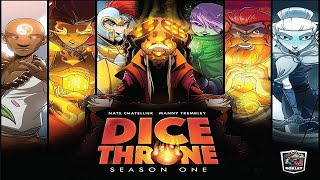
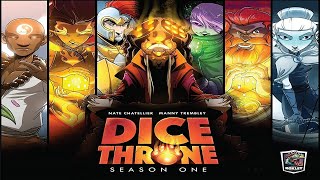
Each hero in Dice Throne brings completely unique dice faces, abilities, and playstyles. Meeple University emphasized that characters like the Samurai, Gunslinger, and others have dice and abilities perfectly themed to their identity: the Samurai's bushido and katana slice match their character fantasy, while other heroes feature entirely different icon systems and attack patterns. This asymmetry means players cannot simply apply the same strategy to different heroes. Watch It Played's guide demonstrated that different characters unlock different ability combinations, requiring players to understand their specific hero's power set before executing effectively. The variety encourages replay with different character selections and enables players to discover playstyles that match their preferences. 3 Minute Board Games noted that each class provides different ways of playing the same core system, and while early editions had adequate art, later versions significantly improved visual presentation and component quality, making each character collection feel premium.
What Makes Dice Throne Stand Out
Immediate Accessibility Without Sacrificing Depth
Dice Throne achieves a rare balance: it teaches in minutes yet reveals strategic layers across multiple plays. 3 Minute Board Games emphasized that the core rules leverage the classic Yahtzee roll-three-times-and-keep system, which virtually all gamers understand instantly. This familiar foundation lets players jump into their first game with minimal explanation overhead. Yet once seated, players discover that card play, character abilities, and tactical positioning create genuine strategic moments. Meeple University noted that team-based play (two versus two, three versus three) serves as an excellent entry point for new players while remaining engaging for experienced gamers. The game scales beautifully from casual family gaming to competitive tournament play, as evidenced by Foster the Meeple's mention of actual tournament streams featuring Dice Throne matches.
Beautiful Component Design and Presentation
Watch It Played highlighted that Dice Throne's components feel premium and well-designed. Each character comes in their own individual case in the second season, making storage and retrieval straightforward. The hero boards stand upright during play, the dice feature custom faces unique to each character, and the overall presentation commands attention on the tabletop. Meeple University noted that the art and visual design have improved significantly from season one to season two, with vibrant illustrations that bring each hero to life. Foster the Meeple's first-time player experience emphasized the sheer visual appeal of the component quality, from the chunky dice to the well-laid-out boards.
Potential Drawbacks
High Variance and Luck-Dependent Outcomes
While speed is an asset, Dice Throne's heavy reliance on favorable die rolls can frustrate players who prefer deterministic gameplay. Board Game Dad noted that sometimes the game feels like "the game is playing you" when unlucky rolls prevent execution of planned strategies. 3 Minute Board Games acknowledged that if players hate dice-rolling randomness, they will dislike Dice Throne significantly. Watch It Played's in-depth explanation revealed numerous damage types with complex defend-ability rules, which can slow play if players are uncertain whether specific damage can be reduced. The push-your-luck tension is intentional design, but it means outcomes remain volatile regardless of skill level.
Multiplayer Pacing and Targeting Mechanics
While two-player games maintain excellent pacing, larger player counts introduce complexity that slows momentum. Watch It Played dedicated a significant portion of their rules explanation to the targeting roll phase required with three or more players, signaling its procedural weight. Board Game Dad expressed a mild preference for team-based play, suggesting that free-for-all multiplayer games feel less satisfying. 3 Minute Board Games noted that the multiplayer system works adequately but slows the rapid-fire nature of what is fundamentally designed as a dueling game. The random targeting system, while preventing gang-ups on one player, creates unpredictability that some players may experience as unsatisfying.
If You Enjoy Dice Throne
The community recommends several games with similar appeals. Star Realms offers fast deck-building dueling without the dice elements. King of Tokyo and King of New York similarly feature dice rolling as a core mechanic with tactical card play and monster asymmetry. Reckoners delivers dice-rolling cooperative combat for players seeking teamwork. Unmatched: Battle of Legends provides head-to-head asymmetric combat with characters possessing distinct abilities, though it replaces dice with cards. For cooperative variants, Dice Throne Adventures transforms the base game into a campaign where players team up against themed bosses.
What Reviewers Are Saying
"Dice Throne is quite simply a fantastic wee dueling game that plays fast and doesn't overstay its welcome. It's great for people who just want the fun of a good head-to-head fight without a ton of setup and rules."
— 3 Minute Board Games
"It is a Yahtzee-style game where you're basically just trying to knock out the other person. It's kind of very head-to-head in that way, with great Manny Trembley art. It's really, really fun and a great dice chucker."
— BoardGameGeek
"This was so much fun. It's one that I can legitimately and honestly say I'm itching to play again. Dice rolling is always fun, and exploring the asymmetric characters and different special abilities makes every game feel fresh."
— Game Night Picks