/pic7763582.png)

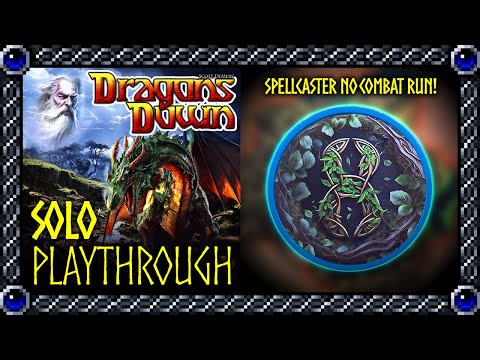












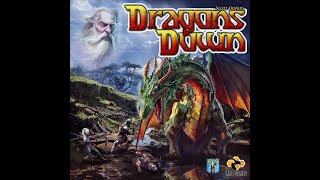
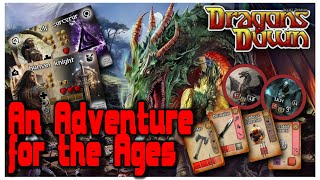
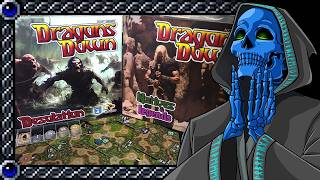


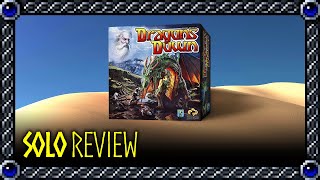
Dragons Down Deep Dive
What the Community Thinks About Dragons Down
Dragons Down arrived in 2024 to enthusiastic acclaim from solo gaming circles, with reviewers recognizing it as a standout adventuring experience. AzureDeath of Solo Board Gaming names it the best adventuring game of the year, and Robert, posting an update on the game, calls its emergent narratives unparalleled. The game draws openly on a classic lineage while offering something fresh for players who want open-ended adventure, and reviewers consistently highlight its ability to generate memorable, surprising stories from a single playthrough.
Core Mechanics That Define Dragons Down
Randomized Overland Exploration
Each game generates a unique, randomly constructed overland map, ensuring no two adventures feel the same. Players pick a character by combining a race and a class, then venture across the procedurally created landscape to discover loot, complete missions, and navigate encounters. AzureDeath stresses how robust the map generation is, describing how every map you generate feels like a different world, which keeps exploration fresh across many sessions and drives the game's replayability.
Dice-Driven Resolution with Optional Journaling
Dragons Down uses dice to resolve combat and skill tests, grounding the adventure in chance and consequence. The game also includes optional journal pages for players who want to track their character's story and discoveries in pen-and-paper form, letting solo players engage with narrative-building at whatever depth they prefer. This flexibility means the game can be played as a tight mechanical challenge or as a personal storytelling canvas, depending on the mood at the table.
The Dragons Down Experience
Emergent Storytelling at the Center
The heart of Dragons Down lies in how it generates unexpected moments and branching narratives through play. Reviewers emphasize that the game excels at creating emergent narratives naturally, without heavy-handed scripting. Robert recounts how the intersection of character abilities, map layout, and mission requirements sparks genuine surprise, from approaching a challenge with a creative use of a flight spell to a run of quests turning a character into a notorious outlaw. These moments arise organically rather than from a fixed story, which is exactly what reviewers treasure about it.
Solo-Friendly Design with Real Depth
Dragons Down stands apart by playing well with only a single character. Unlike many adventure games that require controlling a party or compromise their systems in solo mode, AzureDeath emphasizes that Dragons Down plays perfectly fine with just one character and is not campaign-based. Players pick a scenario, generate a random map, and begin immediately, with no need to juggle multiple character sheets or party synergies. That accessibility does not come at the cost of strategic depth, since the emergent systems still reward careful, clever play.
What Makes Dragons Down Stand Out
Classic Fantasy Grounded in Real Adventure Design
The game delivers the fantasy setting players expect from tabletop adventuring: classic Dungeons and Dragons-style classes like Druids, Rangers, and Clerics, and iconic adversaries like Orcs, dragons, and Kobolds. AzureDeath traces its inspiration directly to the classic game Magic Realm, framing it as a bona fide adventuring game in that tradition. Rather than feeling generic, these elements are woven into a system that lets players engage with high-fantasy adventure at the table without a Dungeon Master or a regular play group.
No Campaign Commitment Required
Dragons Down invites flexible play. Each session is a self-contained adventure: pick a scenario, generate the map, and dive in. AzureDeath highlights that the game is not campaign-based, so players can return whenever they wish without tracking a long arc or managing persistent progression. This low barrier to entry makes it ideal for unpredictable schedules or for sampling a quick adventure, all while preserving the narrative satisfaction reviewers praise.
Potential Drawbacks
Rules Density and Relearning Friction
Dragons Down includes numerous nuances and subsystems that reward careful study. Robert reports needing to reread the rulebook even after earlier plays, noting that the rules contain many edge cases and interactions that are easy to forget. While a revised rulebook has improved clarifications, the game remains challenging to bring back to the table after time away, and rulebook consultation can interrupt the flow of early sessions.
Visual Presentation via AI Art
The game uses AI-generated artwork throughout. While this does not affect the mechanics, Robert, an enthusiastic fan of the design, openly wishes for proper hand-drawn illustration instead, feeling that genuine artwork would elevate an already strong game. This is not a dealbreaker for players unconcerned with art direction, but it is a noted gap that keeps the game from ranking even higher on some reviewers' lists.
If You Enjoy Dragons Down
Reviewers connect Dragons Down most directly to Magic Realm, the classic open-world adventure game it draws inspiration from, offering a more streamlined path into that style of emergent exploration. Players who love the solo overland adventure of Fallout from Fantasy Flight Games will recognize the same emergent storytelling, here focused on fantasy rather than the wasteland and with stronger single-character support. And for procedurally generated solo dungeon delving, Etherfields and other narrative-driven solo titles scratch the same itch for discovery and surprise.
What Reviewers Are Saying
"This is a modern game that is heavily inspired by the classic game Magic Realm, so it is a bona fide adventuring game where you're going to have an overland map that is randomly generated each game. The way this generates maps, you'll never see the same map again; every map you generate will feel like a different world almost, and it's just so good at creating those emerging narratives."
— AzureDeath (Solo Board Gaming)
"Oh man, it's just amazing. The emergent narratives here are just unparalleled. It's just so much fun, and really the only hurdle is the rulebook. This game is just so freaking amazing. Top 10 solo board games of all time material."
— Robert
"For my money, this year when I voted, I voted this as my number one adventuring game. As of this year, I consider this the best adventuring game you can buy. It plays perfectly fine with just one character, and it is not campaign-based; you simply pick a scenario and you generate a map and you're good to go."
— AzureDeath (Solo Board Gaming)