/pic3324136.jpg)
















DVONN Deep Dive
What the Community Thinks About DVONN
DVONN occupies a unique place in modern board gaming: it is one of the most highly rated pure abstract games available today. Reviewers like The Board Gaming Doctor and Chairman of the Board consistently praise its elegance and timeless design, placing it alongside classics like chess and checkers as a game that feels like it could have existed for centuries. Its sophistication belies an elegant simplicity, making it approachable to new players while rewarding deep strategic thinking.
Core Mechanics That Define DVONN
Stacking and Movement
DVONN's core loop centers on a deceptively simple action: players move stacks of their colored pieces across the 49-space board. The twist is that the height of a stack determines how many spaces it can move. Pick up a stack of three pieces, and you move three spaces in a straight line, landing on another piece to create an even taller stack. This creates a cascade of tactical decisions where every move simultaneously advances your position and reshapes the board geometry. Designer Kris Burm built the entire experience around this single, elegant relationship between height and movement. Because only the top piece of a stack determines ownership, a tall tower can change hands in an instant when an opponent lands on it, so reviewers describe the board as a constantly shifting ledger of control rather than a fixed accumulation of points. Tall stacks are powerful because they move far, yet that same mobility makes them tempting targets, a trade-off that sits at the center of every decision.
The Red Piece Connection Rule
The game's defining constraint is what makes DVONN brilliant: all of your pieces must remain connected to at least one red DVONN piece on the board. Fail to maintain that connection, and entire clusters of your pieces are removed permanently. This single rule transforms DVONN from a simple stacking puzzle into a game of spatial awareness and positional mastery. Players cannot simply chase their opponent's pieces; they must constantly balance aggression with the structural integrity of their own position.
The DVONN Experience
Elegant Strategy With Visible Tension
What emerges from these mechanics is a study in tension. The board starts populated and quickly becomes congested as stacks build. This congestion is intentional: options narrow rapidly, forcing players into increasingly difficult decisions. Early turns feel spacious; later rounds become a careful dance of maneuvering. Reviewers describe the flow as crisp and clean, with each turn carrying real weight and consequence.
The Risk of Catastrophic Loss
DVONN introduces a psychological element rare in abstract games. A single miscalculation can isolate clusters of your pieces, and watching them vanish from the board is a visceral penalty. This is not a gradual points loss; it is the immediate removal of strategic assets. The result is genuine tension as players weigh aggressive play against the danger of cutting off their own pieces from the red anchors that keep them alive.
What Makes DVONN Stand Out
Timeless, Pure Abstraction
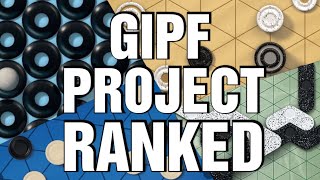
DVONN belongs to the GIPF Project, Kris Burm's celebrated series of abstract strategy games. Among these, DVONN is recognized as capturing something timeless in its design. Reviewers note that it has the quality of games that feel like they could have been played a hundred years ago and still be played a hundred years from now. There is nothing trendy about DVONN; it is pure strategy stripped to its essentials.
Sophisticated Yet Approachable
Despite its depth, DVONN remains remarkably teachable. New players grasp the movement and stacking mechanics within minutes, and the consequence of the red-piece rule becomes intuitive through play. This balance between accessibility and strategic richness is rare; most abstract games either sacrifice depth for accessibility or make learning feel like work. DVONN achieves what few abstracts do: immediate playability paired with years of depth.
Potential Drawbacks
Head-to-Head Intensity
DVONN is a strictly two-player game, and reviewers note that it is genuinely cerebral and intense. This is not a relaxing afternoon filler; it demands focus and forward planning. Players who prefer lighter or more social experiences may find the relentless tactical pressure draining rather than engaging.
Board State Complexity
As the game progresses, the board becomes a maze of interlocking stacks and clusters. Tracking which pieces remain connected to which red pieces requires sustained attention. Early moves feel decisive; late-game moves can feel constrained by the topology of the board itself. This is by design, but players seeking a more open, exploratory experience may read it as a limitation rather than elegance.
If You Enjoy DVONN
Players who love DVONN typically gravitate toward other games in the GIPF Project, including YINSH and ZÈRTZ. Beyond the series, abstract enthusiasts often reach for Chess, Checkers, and Chinese Checkers for their timeless mechanical purity. Those who appreciate the spatial tension of stacking and area control will also find a great deal to chew on in Torres and Medina, two acclaimed designs that reward the same kind of long-range positional planning.
What Reviewers Are Saying
"DVONN is a pure abstract strategy game, and for a modern design this is quite spectacular. You have this big board full of these discs and you can pick up a stack of discs and move the amount of spots equal to the height of that stack, landing on another one, and basically you're trying to gobble up your opponent's pieces that have the highest stacks."
— Chairman of the Board
"DVONN is one of the most highly rated pure abstract games there is. What you're trying to do is move your own colored pieces a couple of spaces following these lines and stack them on top of another piece, and the point is to keep all of your own color connected to these red pieces without having them be overtaken by your opponent."
— The Board Gaming Doctor
"The twist on this game is that you have to be connected to one of these special red pieces on the board. If you can never trace a route to a red piece, then all of those pieces will be removed from the board. You can leave your opponent's pieces high and dry and just force a whole cluster of them off the board entirely."
— Chairman of the Board