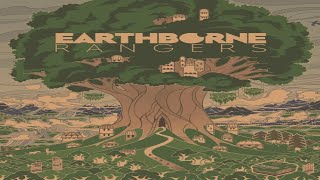
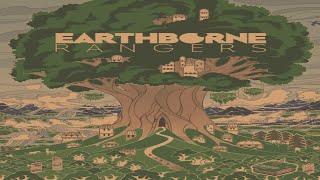
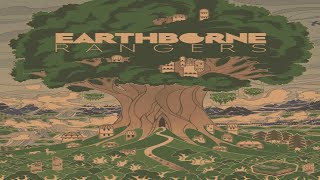
Earthborne Rangers is a customizable, co-operative card game set in the wilderness of the far future. You take on the role of a Ranger, a protector of the mountain valley you call home: a vast wilderness transformed by monumental feats of science and technology devised to save the Earth from destruction long ago.
You begin by building a deck that reflects your Ranger's interests, personal history, and personality. Then, as you explore the open world and your story takes shape, you augment your deck with improved equipment, refined skills, and the memories of your journey.
The story of Earthborne Rangers is presented as a branching narrative campaign consisting of a main storyline and a multitude of side stories. In it, you can choose to follow the critical path or to strike off on your own to discover the Valley's many engaging characters, mysterious ruins, and beings both familiar and strange.
Each game session represents one day in the Valley, and you'll pick up in the same location on the map where you rested the night before. Your goal is to either complete one of your available missions or to explore the open world. The session ends when you're either forced to rest (through either fatigue or injury), or you choose to rest for the night.
An individual game session is played in rounds, and those rounds consist of turns. On your turn, you perform one action: either play a card from your hand, or choose an action from a card on the table. Each action allows you to interact thematically and narratively with the world, and each time you take an action, the world comes to life around you. Predators stalk their prey, rain pours from the sky, rocks tumble down the mountain to block your path, and much more.
—description from the publisher
- Deep, thematic exploration of a unique wilderness setting
- Rich deck-building and fatigue/energy interaction mechanics
- Intricate flora/gear system with fatigue mitigation options
- High difficulty in solo play with heavy rule nuance
- Complexity can be intimidating for new players
- exploration, nature, mentorship, survival, and personal growth
- Lone Tree Station in a frontier wilderness leading toward White Sky
- campaign/story-driven with emphasis on atmosphere and player immersion
- Magic: The Gathering
Mechanics (from transcript analysis)
- Biscuit basket mission and travel choices — Quests such as delivering biscuits drive travel to new locations and award progress when completed.
- Common tests and challenge cards — Tests can be modified by challenge cards; success generally yields progress and advances the journey.
- Deck as day timer — Your primary deck acts as the daily timer; when it runs out, the day ends unless you reset via travel, camping, or other effects.
- Energy management — Energy tokens are spent to pay for cards and abilities; certain gear (e.g., infusion canteen) can replenish energy.
- Equipment limits and gear — Equipment takes up slots; there is a five-slot limit; certain items grant abilities like traversing obstacles or soothing fatigue.
- Fatigue — A fatigue deck represents ongoing weariness; interacting with features adds fatigue; injury discards the entire fatigue pile.
- Flora interactions and gear synergies — Flora cards can be attached to gear to modify thresholds or provide effects; some flora yield fatigue soothing or healing effects.
- Obstacles and progress tests — Obstacles require gaining a certain amount of progress, often via tests that use effort. Failure increases fatigue.
- Path deck and terrain exploration — Path cards determine what you encounter along the way and where you can travel; terrain may affect tests and movement.
- Predators/prey encounters — Predators or prey appear via the path deck and require avoidance or combat via tests; they interact with the world state.
- Resource management — Energy tokens are spent to pay for cards and abilities; certain gear (e.g., infusion canteen) can replenish energy.
- Track advancement — Trail markers attach to locations or features, transforming them into trails with added effects and progress bonuses.
- Trails and trail markers — Trail markers attach to locations or features, transforming them into trails with added effects and progress bonuses.
- variable map — Path cards determine what you encounter along the way and where you can travel; terrain may affect tests and movement.
Video topics + discussion points
Quotes (from this video)
- Fatigue is like honestly one of my favorite mechanics about this game.
- This game is hard.
- The world moves, the world evolves. Things are happening around you while you're doing stuff, and you have to react to it.
References (from this video)
- Art on the insert fits the vibe of the game
- Holds base game and multiple expansions in two boxes
- Coaster provided to prevent spills
- Sleeved cards fit and dividers fit well
- Helps organize and get the game to the table
- There is lid lift despite claims of no lid lift
- Not everything fits in a single box; requires the extra box
- Some fit issues with wooden upgrade bits
- The insert adds significant weight to an already heavy game
- Adventure, exploration, organization
- Campaign-driven fantasy world; story-driven progression
- Campaign/story-driven
Mechanics (from transcript analysis)
- Campaign — Players cooperate to explore and advance through a story arc.
- Card-driven actions — Cards are used to perform actions and drive the campaign narrative.
- cooperative exploration with campaign progression — Players cooperate to explore and advance through a story arc.
Video topics + discussion points
Quotes (from this video)
- Earthborn Rangers is a game that I've really been enjoying over the last couple years.
- At the end of the day, I find it to be not perfect, but absolutely essential.
- I really wish it had two things. I wish one, everything fit in one box.
References (from this video)
- Strong narrative focus with rich art and story cards
- Co-op oriented with clear thematic appeal
- High production value on map, cards, and artwork; expansions included in edition
- Packaging uses a sticker on the box instead of paper wrap; potential packaging waste
- Some cards were punched/damaged in transit; cards warped
- Non-standard card sizes and lack of organizer/storage considerations; sleeves recommended
- cooperative exploration and story-driven adventure
- Valley of Adalon, a cooperative narrative campaign
- story-driven campaign with hub world and card-driven events
Mechanics (from transcript analysis)
- campaign hub world — A hub world mechanic (Adalon) links narrative arcs and progression.
- card-driven narrative — Story and event cards drive progression and determine outcomes.
- Cooperative Game — Players work together to navigate a narrative campaign and resolve events.
- cooperative play — Players work together to navigate a narrative campaign and resolve events.
- Modular board — Map boards, punch-out tokens, and double-sided cards with dividers for organization.
- modular components — Map boards, punch-out tokens, and double-sided cards with dividers for organization.
Video topics + discussion points
Quotes (from this video)
- the lure of the valley
- I really like the texture look of it
- since this is a co-op game I don't think there's a special solo mode
- I heard a lot of buzz about this game especially for Co-Op solo
- this is not really a new game this is just a second edition
- I was very drawn to backing the game
References (from this video)
- premium components
- ambitious thematic execution
- eco-friendly, nature exploration
- fantasy world with nature exploration
- cooperative exploration with a nature-forward theme
- Lords of Ragnarok
- Lords of Hellas
Mechanics (from transcript analysis)
- card_or_tile_exploration — exploration mechanics guiding terrain and encounters
- Cooperative Game — players work together to achieve shared goals
- cooperative_play — players work together to achieve shared goals
Video topics + discussion points
Quotes (from this video)
- "the most wholesome themes ever like I loved dog park and forever home"
- "Split Ho is a really fun game how it works is you're trying to meet conditions that are on opposite sides of you"
- "I absolutely love Scythe"
- "I'm very excited with this overall and to compare this versus Lords of helles"
- "Forever Home... Kickstarter is launching September 4th"
References (from this video)
- Rich, evolving narrative with engaging in-world dialogue and lore
- Deepened gameplay through expansions and new moments
- Cooperative play fosters teamwork and shared problem solving
- Active discussion and rule clarifications during playthrough improve understanding
- Rule complexity and frequent clarifications can slow the game
- Fatigue/injury management adds downtime and strategic overhead
- Expansion content requires additional reading and integration during play
- Cooperative survival and exploration in a contested valley ecosystem, balancing exploration, negotiation with beings, and danger from predators.
- Valley setting with Bowl of the Sun, Tumble Down, Green Bridge swamp, and the looming Spire; interactions with valley beings (Videsian, Spirit Speaker Null) and reclaimers.
- Campaign-style, episodic live-play narrative with expansions teased and introduced (Spiring Bloom, Moments in the Valley) and in-world lore driving the quest.
Mechanics (from transcript analysis)
- Cooperative Game — Players commit effort and use items/gear to meet or exceed challenge icons; success yields progress on features.
- Cooperative skill tests — Players commit effort and use items/gear to meet or exceed challenge icons; success yields progress on features.
- deck-based action economy — Players pull and play cards (sketchbooks, translator, observations) to add progress, modify tests, or trigger abilities.
- Environmental effects — Weather (downpour, sunshine) and terrain affect tests and movement; some effects persist across rounds.
- Exhaustion and fatigue management — Test and travel sequences induce fatigue; resting/meditation reduces fatigue or recovers energy.
- expansion integration — Spiring Bloom and Moments in the Valley add new maps, locations, and moment cards that alter deck-building and timing.
- Exploration and traversal — Locating and moving through map locations via path cards and traversal tests; encountering wildlife and obstacles.
- Narrative quests and discovery — Story entries (e.g., Deeper Motives, Spirit Speaker Null) drive objectives and unlock conversations with beings.
Video topics + discussion points
Quotes (from this video)
- Spiring Bloom is the first of four Valley expansions
- Moments in the Valley expansion is interesting because it contains cards that you use when you visit one of the four Valley expansion locations
- The fundamentalist reduces the presence of all other beings in the same area by one
- We are not sponsored. If we make any mistakes during the video
References (from this video)
- Strong thematic cohesion and atmospheric setting
- Open-ended exploration with multiple paths
- Rich encounter variety and emergent storytelling
- High complexity and punishing difficulty spikes
- Rule density can slow pacing and learning
- Some encounters feel random or unforgiving without optimal deck access
- eco-bioregional exploration, frontier settlement, and environmental ethics with human and non-human actors
- A perilous swamp valley with floating vine bridges, ruins, hydra worms, and reclaimers; a roving cohort of rangers traversing a modular narrative landscape
- open-world, modular narrative driven by card draw, location hazards, and emergent encounters
- Lost Runes of Arnack
Mechanics (from transcript analysis)
- Cooperative exploration and action resolution — Two or more players cooperate to draw path cards, test skills, manage fatigue, and place progress on features to advance
- Gear, support cards, and disposables — Players manage equipment, deliverables, and temporary abilities that modify test outcomes
- Obstacle and travel phases — Locations present hurdles (e.g., bridges, sinkholes) that shape travel and demand strategic detours
- Test and resolve system — Tests involve resource costs, skill checks, and potential fatigue or injuries with cascading effects
- Weather and environmental effects — Conditions like downpours alter fatigue and test difficulty, influencing risk management
Video topics + discussion points
Quotes (from this video)
- This is an open world adventure game and this is our opportunity.
- We are not going to get to tumble down today.
- This is an open world adventure game, and this is our opportunity.
- It's an open-world adventure with emergent storytelling that shifts with your choices.
- This is very thematic for where I live.
- We could have done a lot more and it would still be thematic—it's punishing in a good way.
References (from this video)
- emergent storytelling and character growth
- accessible setup and pack-away
- open-world exploration with meaningful discoveries
- vivid art and table presence
- systems support player agency without being prescriptive
- not for everyone; some may dislike Euro-style pacing or open-ended exploration
- requires the right mindset to avoid grind/frustration
- campaign length and commitment may be daunting for casual players
- emergent storytelling through character growth and meaningful moments
- open-world fantasy setting with exploration and discovery
- emergent narrative driven by player choices and card-driven events
- Lands of Galer
- Sleeping Gods
Mechanics (from transcript analysis)
- camping / day-night cycle — in-game days regulate pacing and deck rebuild as you travel between locations.
- connection energy / Spirit energy — use energy tokens and connection icons to perform actions and gain cards.
- deck-building / hand management — manage a Ranger's deck to enhance actions, with new cards gained via events.
- environmental interactions — obstacles and creatures interact with each other and the player, shaping outcomes.
- moment cards and permanent deck changes — spend a moment card to permanently add cards to the deck.
- Reclaim as Action — rest actions to draw or refresh cards and open up locations.
- rest and hand refresh — rest actions to draw or refresh cards and open up locations.
Video topics + discussion points
Quotes (from this video)
- this is what Earthborne Rangers is all about
- the world feels lived in and uncovered its Mysteries and history is satisfying
- open world full of possibilities rip for exploration
- it's glorious
References (from this video)
- Casual-friendly and table-friendly
- Easy to pop back onto the table
- Limited by the speaker's current playthrough cadence
Mechanics (from transcript analysis)
Video topics + discussion points
Quotes (from this video)
- I still absolutely love this design
- the AI system is so smart
- it's on the totally table Todo list
- Frost Punk is incredible
- I absolutely plan to get to the table this year
- the slide puzzle mechanism I love
- Weather Machine remains one of my favorites
- Sleeping Gods no reason to believe that I won't love this one as well
References (from this video)
- Amazing artwork
- Narrative-driven gameplay
- Exploration focus
- Exploration and storytelling
- Post-apocalyptic
- Campaign-based
Mechanics (from transcript analysis)
- Deck building — Players can upgrade and level up their deck
- Narrative choice — Choices affect the narrative
- Story-Driven — Choices affect the narrative
Video topics + discussion points
Quotes (from this video)
- Let's talk about the hottest and most popular board games right now.
- We're going to rank them in two categories: how well we liked the game or how badly we want to play it.
References (from this video)
- Rich, dark thematic atmosphere with a heavy narrative feel
- Engaging cooperative puzzle solving and exploration
- Strong table presence and space for large campaigns
- High complexity and learning curve
- Rule interpretation can be opaque and require reference to manuals
- Campaigns can be lengthy and require careful time management
- Dark, atmospheric survival with cooperative mission-based play
- Underground archology ruins, survival-focused exploration
- Story-driven, mission-based with evolving objectives
- War of Mine
- Frost Punk
- Mass of Darkness 2
- Descent: Legends of the Dark
- Descent
- Star Wars: Rebellion
- Cloud Spire
- Tainted Grail: Kings of Ruin
Mechanics (from transcript analysis)
- Energy, power, and adapters — Machines require power and adapters; managing tokens influences machine behavior and progress.
- Gears, gear cards, and pockets — Gear management with pockets (pouch) and equipment upgrades affecting actions and tests.
- Illumination and darkness — Weather/lighting conditions affect visibility and trigger tests or penalties.
- Mulligans and card draw — Gentle mulligans allow redraws with varying degrees of flexibility.
- Path cards — Path cards define routes between locations, with events and obstacles that shape exploration.
- Predators and binary threats — Predator/prey dynamics with cards representing threats that can attack or fatigue players.
- Spirit interaction (Spirit Speak, Commune, etc.) — A spirit-based action layer where a player uses spirit abilities to influence tests and move tokens.
- Tests (focus/dodge/one-versus-one) — Tests determine success for actions affecting features, beings, and traversal; some tests are solo or duo.
Video topics + discussion points
Quotes (from this video)
- This is Earthborne Rangers.
- I really really like the game actually because like that's my kind of game.
- This is what spirit speaking is all about.
- Join in next episode where I don't see a single spirit in my first 20 cards and I want to rage quit the game.
References (from this video)
- Highly flavorful world with memorable locations
- Elegant reaction/trigger system enabling dynamic turns without heavy bookkeeping
- Reward cards effectively tie progression to objectives
- Deep deck-building interactions with flavor and flavor-icons
- Open-ended exploration encouraging multiple playthroughs
- Campaign too long and pacing can feel deliberate/dragging
- Deck progression can be slow; starting decks can feel weak
- Encounter/biome variety can feel repetitive across sessions
- Heavy reliance on reading/story elements may deter some players
- Steep learning curve for new players; few reset options mid-campaign
- Ecology, survival, community resilience in a living world
- A magical, perilous valley with distinct biomes and environmental hazards.
- Story-driven campaign with evolving narrative and quests
- Arkham Horror
- Eldritch Horror
- Kingdom Death Monster
Mechanics (from transcript analysis)
- Attribute-based action system — Character attributes (Awareness, Spirit, Might, Focus) determine actions and influence card draw and outcomes.
- Campaign-based progression — Long-form campaign with mission-specific objectives and location interactions that shape the story.
- Deck building — Your deck is your life: actions fuel the campaign; upgrading decks is central to progression, but can be slow and fragile.
- deck-building — Your deck is your life: actions fuel the campaign; upgrading decks is central to progression, but can be slow and fragile.
- Events — Zones trigger effects and required actions; responses depend on card symbols and player choices.
- Location and event cards with triggers — Zones trigger effects and required actions; responses depend on card symbols and player choices.
- Resource/hand management and risk — Manage a finite resource pool; spending resources triggers consequences and potential setbacks.
- Reward/discovery system — Rewards are earned by completing objectives; they modify and upgrade decks.
Video topics + discussion points
Quotes (from this video)
- Oh my god, I would happily play this game. If they released an expansion that was like, we're dropping the main campaign, your goal is to visit every location and complete something there.
- The world is open enough that they could release a campaign that uses the exact same map but just comes in with a pack of new cards.
- My general thought on Earthorne Rangers? My general thought on this is good, occasionally great.
- I think it's a very hard thing for me to answer, right?
References (from this video)
- Thematic depth and integration of nature spirits and environmental storytelling
- Cooperative play that rewards planning and coordination
- Powerful Spirit-based options that become more effective as the game progresses
- High early difficulty due to a punishing deck and frequent predator encounters
- Steep learning curve and complex rule interactions for new players
- Pacing can be slow as players accumulate resources and resolve multiple tests per turn
- Survival, exploration, nature-bound spirits, cooperative problem-solving within a narrative-driven expedition
- A wilderness expedition along a river canyon surrounding Headwater Station, with sapphire pools, waterfalls, and shifting weather. The journey features rapids, predators, and spiritual ecosystems.
- Campaign-like, episodic progression driven by mission cards and location-based encounters, with reader-led worldbuilding through deck interactions
Mechanics (from transcript analysis)
- Campfire and embers management — Campfire mechanics and ember tokens provide healing or other effects, but maintaining embers and triggering fire effects adds tension and pacing decisions.
- Cooperative deck-building and resource management — Players manage decks of gear, pockets, path cards, and energy/ink-based resources to influence actions, tests, and movement during a shared expedition.
- Energy, ink, and sketches system — Tokens such as energy/ink and tools like sketches power actions (traversal, tests, card draws) and some gear interactions; there are limits and trade-offs.
- Fatigue and injuries system — Rangers accumulate fatigue and may suffer injuries; resting and healing opportunities exist, but these come with strategic costs and potential penalties.
- Obstacle and feature interaction — Rangers interact with obstacles and features along the path; decisions about testing, exploiting abilities, or bypassing are central to progress.
- Predator and wildlife encounters — Encounters with predators (e.g., bears, Ursus) drive tension and require card-driven responses to mitigate harm or reposition threats.
- skill tests and checks — A suite of tests (focus, awaken, fitness, climb, commune) whose results determine outcomes and trigger abilities or hazards, with consequences on fatigue and injuries.
- Spirit-based special abilities — Spirits and related abilities (e.g., Spirit Speaker) provide unique interactions that alter tests, movement, and fatigue management, often at a resource cost.
- Weather and environment effects — Weather cards and environmental features (rain, sun, wind, water features) influence fatigue, travel costs, and actions available on a given turn.
Video topics + discussion points
Quotes (from this video)
- This deck is tough.
- Spirit stuff is slow. But it's powerful once it gets going.
- We looked at Headwater Station.
- The bears are brutal; the path cards pile up quickly.
- I don't know how we're doing this.
- Perfect day... maybe not as punishing as early days.
References (from this video)
Mechanics (from transcript analysis)
Video topics + discussion points
Quotes (from this video)
- Void Fall is my number one game of 2023.
- I will be donating all ad revenue to charity; it’s a long-running commitment of mine.
- Kickstarter print runs can be problematic when issues are discovered after release.
References (from this video)
- Strong narrative focus with exploration at the core
- Vibrant art and evocative setting
- Campaign-driven play with meaningful character interactions
- Solos and small-player configurations feel supported
- High complexity and lengthy setup can overwhelm new players
- Prologue can be confusing without guidance
- Pacing can be slow for players seeking quick wins or combat-centric play
- Exploration, ecological balance, and cooperative problem-solving with a focus on healing and helping others in a living world
- The Esan Valley; Lone Tree station; archologies; Unseen World; a frontier with valley wildlife and diverse communities
- Campaign-driven, narrative-forward exploration with branching events and character interactions
- Arkham Horror: The Card Game
- Sleeping Gods
- Lord of the Rings: The Card Game
Mechanics (from transcript analysis)
- Deck building — Players assemble a personal deck from backgrounds, personalities, and gear to shape their Ranger's abilities.
- deck-building — Players assemble a personal deck from backgrounds, personalities, and gear to shape their Ranger's abilities.
- exploration-based tests — Tests use resources (Fitness, Awareness, Spirit, Focus) and a challenge deck to determine success and consequences.
- fatigue and injuries — A fatigue/injury system tracks exhaustion; fatigue can be soothed, injuries can end a day.
- path decks and pivotal locations — Movement is driven by path cards, with pivotal locations offering deeper encounters and potential shortcuts.
- prey/lure mechanics — Accumulate prey presence to lure predators, triggering broader story progress and rewards.
- weather and day cycle — Weather cards (Perfect Day, Sun, Cloud) modify tests and cloud counts; weather can flip to enhance or hinder actions.
- Within Reach / Along the Way — Location proximity mechanics determine what you can interact with and what obstacles impede progress.
Video topics + discussion points
Quotes (from this video)
- it's really interesting
- this game is doing something somewhat unique
- the art of this game I love
- Arkham Horror LCG feel but more narrative emphasis
- I love nature and hiking; a game focused on preserving the valley
- this is about preserving nature and exploring together
References (from this video)
- Open-world feel
- Solar punk vibe
- Accessible thematic direction
- Limited published data at the time of the discussion
- exploration, hopeful future, planetary stewardship
- Open-world, solar punk future with optimistic themes
- Spirit Island
- Spirit Fire
Mechanics (from transcript analysis)
- Open-world exploration — Non-linear exploration with thematic goals in a solar punk setting.
Video topics + discussion points
Quotes (from this video)
- the solo Gaming Community is the best community in gaming
- this is the forever list for many players, a place where certain games become 'forever' for some people
- the art on Kilforth is the most beautiful art I've ever seen
- it's my number one
- theme hooks me, and if that can hook me, I keep digging into the mechanics
- the audience is changing and that's driving which games end up on the list
- we need fresh voices to keep the list dynamic
References (from this video)
- innovative open-world system
- emergent moments with strong thematic depth
- feels like an old-school JRPG in board game form
- component complexity could overwhelm casual players
- emergent, open-world with camp save mechanics
- investigative, story-driven open-world adventure
- JRPG-inspired storytelling with choices
- Arkham Horror: The Card Game
- Descent: Legends of the Dark
Mechanics (from transcript analysis)
- deck-driven world-building — decks shuffle to form terrain, events, and encounters
- one-handed play — play with one hand while managing open-world goals
- open-world save/continue — session can be paused with consequences
Video topics + discussion points
Quotes (from this video)
- it's going to be our individual top 10s that may have overlap
- Spirit Island is the best solo game there is
- one class two characters combine it all into one deck
- the solo mode is neat
References (from this video)
- Won Dice Tower award for game of the year
- Won Golden Geek award for game of the year
- Supplanted by Daybreak at number 1
Mechanics (from transcript analysis)
Video topics + discussion points
Quotes (from this video)
- 2023 was the greatest year in board game history for my tastes
- Conveyor belts are my favorite board game mechanism period
- This is a technological breakthrough for Games
- The greatest bag building game of all time
- Ode to the power and resiliency of Science and cooperation
- Wall-to-wall optimism and an Ode to the power and resiliency of Science and cooperation
References (from this video)
- Interest in Earthborne Rangers being demoed at the event
- Collaborative play with Steven
- Derives from a separate publisher/edition context
- Heroic exploration
- Fantasy adventure with a campaign structure
- Ongoing campaign with narrative arcs
Mechanics (from transcript analysis)
- campaign-based play — Story-driven sessions across multiple plays
Video topics + discussion points
Quotes (from this video)
- I have used Uber for the first time.
- The highlight of the show, as I mentioned, is just the time spent with people.
- Talisman Nemesis turns the game into a one versus many game.
- World Order is a pre-production copy; I'm excited to see where it goes.
- I’m going to be putting that Patreon poll up tonight.
- GridCon is sold out.
References (from this video)
- Engaging, cooperative problem-solving with a strong thematic vibe
- Rich, persistent world with multiple environments and NPCs
- Dynamic flood/weather system that creates tense pacing and strategic depth
- Narrative entries provide flavor and sense of progression
- Rule complexity and fatigue/interaction rules can be confusing in the moment
- Reliance on online rule references can slow gameplay and cause pauses
- Session-long fatigue management can be draining and may demand careful planning
- Cooperative exploration and survival amid flood events, wildlife predators, and wandering beings
- Verdessa valley: Mount Nim, White Sky, Coobo's Market, Boulderfield, White Sky Lake, various river and flood-affected locations
- Campaign-style storytelling with story entries, characters and quests guiding progression
Mechanics (from transcript analysis)
- Beings, aids and companions — Characters like Picodo, Auru, Pakodo, Uravos, Vera, etc., provide actions to move progress or interact with beings.
- Cooperative exploration and travelling — Players collaborate to travel between locations, clear obstacles, and manage fatigue and equipment.
- Moment cards and special abilities — Moments allow special actions that can influence fatigue, weather, or testing outcomes.
- Narrative choice — Story entries and path/valley cards drive narrative choices and mission outcomes (e.g., Rising Waters, White Sky floods).
- Obstacle and flood management — Flood cards attach to beings or features and influence travel, fatigue, and progression; weather tokens modify dynamics.
- Story-driven progression — Story entries and path/valley cards drive narrative choices and mission outcomes (e.g., Rising Waters, White Sky floods).
- Tests and risk — Traverse, connect, and other tests involve effort, presence, compasses, or other icons with injury risk on failures.
Video topics + discussion points
Quotes (from this video)
- My name's Ura. I'm looking for my daughter. Have you seen her?
- You cannot interact with a card if a ready card with the obstacle keyword is between you and that card.
- This deck is very much focused on connecting with beings and clearing them that way.
- If there are four or more rain tokens, a peel of thunder fills the air and a heavy rain begins.
- That's it for part six. We will be back with part six.