











Etherfields box art

Etherfields

Game ID: GID0117476
Collection Status
Description

Etherfields is a narrative, cooperative game for 1 - 4 (5 with the 5th player expansion). A series of unique Dreams await to be discovered through tense exploration and tactical encounters.

Learn about the Dreamers, their forgotten past, and their desperate mission. Uncover the surreal, sprawling dreamscapes. Just don't be surprised when---just like dreams often do---they become a little disturbing... Prepare to be challenged by escape-room like riddles. Spot a clue in the image. See a hidden link between several pieces of information. Use your instinct as much as your logic.

In the beginning, you'll explore the Dreamworld, trying to find out what this is all about and who you are – and you are there for a specific reason, but, at first, you can't remember too much. You'll have to restore your memories from scattered pieces.

The rules are pretty straightforward at the beginning, but they will grow more and more complex during the campaign. New rules open new possibilities and, sometimes, may turn everything upside down.

Deckbuilding in Etherfields applies to almost every deck in the game, not only the players' ones. If you want to know more, enter the Dreamworld. It may be dark here and there, but it certainly isn't gray. Then, look around and ask yourself: what if we all live in a vast, shared dream?

—description from the publisher

Year Published
2020
Transcript Analysis
Browse transcript mentions, sentiments, pros/cons, mechanics, topics, quotes, and references.
Total mentions: 9
This page: 9
Sentiment: pos 7 · mix 1 · neu 0 · neg 1
Mentions per page
Top
Showing 1–9 of 9
Video o3XFcfynUFs Board Game Co. game_review at 0:03 sentiment: mixed
video_pk 62724 · mention_pk 155423
Board Game Co. - Etherfields video thumbnail
Click to watch at 0:03 · YouTube ↗
Overall sentiment (raw)
mixed
Pros
  • Accessible, compelling solo experience within the 20 Strong system.
  • Strong theme and dreamlike atmosphere with various enemies and bosses.
  • High variety and replay potential within the 20 Strong framework.
Cons
  • Not the strongest entry in the 20 Strong lineup; rating reflects preference for other titles.
  • Fugue-state/card-flipping mechanic can feel gimmicky and inconsistent in impact.
  • Board exploration and mini-map feel visually underwhelming and abstracted.
  • Significant AP and card-ability overload leads to analysis paralysis and slows pacing.
  • Deck cycling and shuffling penalties can disrupt flow.
Thematic elements
  • Fugue-like dream state, memory and survival as players navigate a surreal world.
  • Dreamlike, surreal dreamscape inspired by Etherfields' thematic universe; exploration through a shifting map.
  • Abstract, puzzle-like exploration with cards flipping states to reflect a changing dream.
Comparison games
  • Hoplomachus
  • 20 Strong Tanglewoods
  • Too Many Bones
  • Cloudspire
Mechanics (from transcript analysis)
  • Action points — AP constraints and the abundance of card abilities drive decision fatigue and sequencing.
  • Action points and AP-driven decisions — AP constraints and the abundance of card abilities drive decision fatigue and sequencing.
  • boss battler — Bosses are encountered when certain map conditions are met (e.g., seven map cards in area); bosses have A/B sides and unique engagement mechanics.
  • Boss engagement and map-card prerequisites — Bosses are encountered when certain map conditions are met (e.g., seven map cards in area); bosses have A/B sides and unique engagement mechanics.
  • Card flipping (A/B sides) — Many game elements (map cards, influence cards, enemy cards) flip between states; the last state persists until flipped again.
  • combat resolution — In combat, you select unexhausted dice to roll; resolve with strategy steps, apply damage and enemy effects.
  • Deck cycling and shuffling penalties — You discard and draw back up to five each round; shuffling the deck is costly and hurts pacing.
  • Dice pool and attributes — Each player has 20 Strong dice: 3 attribute dice (health, strategy, recall) and 17 warrior dice to claim and exhaust during play.
  • End-of-round engagements — If you fail to progress, enemies engage at round end, creating a pressure to avoid stalling.
  • Fugue-state thematic mechanic — Constant card flipping creates a shifting state of the board, contributing to a dreamlike atmosphere.
  • hand management — Health is a core resource; maintaining health is crucial for surviving encounters.
  • Health management — Health is a core resource; maintaining health is crucial for surviving encounters.
  • Influence and item decks — Cards serve as currency and provide attributes, abilities, or items; large number of options increases decision complexity.
  • Movement and exploration costs — Movement uses yellow value, exploration costs are taken by discarding card values; exploring reveals new map cards.
Video topics + discussion points
No key topics recorded for this video.
Quotes (from this video)
  • I think it's a good 20 Strong game.
  • 3.5 out of five. It's still a good, enjoyable experience.
  • The fugue state is cute, but I don't know if it improves my experience.
  • AP analysis paralysis.
  • The board exploration though, I don't love this.
  • If you're a huge fan of Etherfields, I definitely think this has a spot.
References (from this video)
No references stored for this video.
Video Ialj7sSIs1Q OneStop Co-op Shop playthrough at 1:06 sentiment: positive
video_pk 62579 · mention_pk 155297
OneStop Co-op Shop - Etherfields video thumbnail
Click to watch at 1:06 · YouTube ↗
Overall sentiment (raw)
positive
Pros
  • Innovative deck and memory mechanics with double-sided cards that change over time
  • Dynamic map exploration that can shift the ether and dice recovery in meaningful ways
  • Strong dice-management system, with green/yellow dice being highly valuable for exploration and movement
  • Interesting boss and enemy encounter variety, with escalating challenges and flip mechanisms
  • Exciting ability to turn defeated enemies into items or influence cards, increasing strategic depth
  • Overall design feels cohesive and engaging, with a favorable balance compared to other 20 Strong releases
Cons
  • Complexity can be heavy; several interlocking systems may be daunting for new players
  • Balance can hinge on map tile order and ether progression, potentially feeling swingy
  • Some rounds may become repetitive as players navigate map tiles and encounter cycles
Thematic elements
  • Array
  • Fantasy
  • Story-driven with evolving cards and map memory mechanics
Comparison games
  • Cloudspire
  • Tanglewood
Mechanics (from transcript analysis)
  • Boss and enemy activation phases — Turns involve activation of enemies and a boss with its own activation effects, with skull icons forcing additional spawns or tougher engagements.
  • boss battler — Turns involve activation of enemies and a boss with its own activation effects, with skull icons forcing additional spawns or tougher engagements.
  • Card-bound timer and pacing — The influence deck acts as a timer; when it runs out, players must banish or take damage, pushing urgency as the game progresses.
  • Card-driven actions — Players draw influence cards and discard them to gain resources and perform actions; each card carries a power that can be used for movement, exploration, or direct effects.
  • Deck management with banish/draw — When the influence deck cycles, players banish cards or take damage, shortening the deck and accelerating the timer.
  • deck manipulation — When the influence deck cycles, players banish cards or take damage, shortening the deck and accelerating the timer.
  • Dual-sided (A/B) cards and memory — Most cards are double-sided; flipping them changes their type and/or their powers, and memory persists through rounds.
  • Ether color system and dice management — A color-coded ether track (yellow, green, blue, purple, red) governs map actions, dice recovery, and special powers, with map cards allowing ether changes.
  • item and equipment system — Items can be acquired from defeated enemies and can be discarded for resources or used to modify future dice rolls.
  • Map exploration / tile placement — Map cards form a tiled map; exploration actions add new tiles adjacent to current ones via directional arrows.
  • turn structure and action economy — Turns are divided into activation, opposition, and engagement/strategy phases with resource management and card cycling between actions.
Video topics + discussion points
No key topics recorded for this video.
Quotes (from this video)
  • I think this is great.
  • I think the whole AB thing is really cool, really fun.
  • I love managing your dice. I love the management of these items and these cards.
  • There are a lot of really creative things in the design.
  • The map cards can also flip.
References (from this video)
No references stored for this video.
Video O7H4Cp2ZMLo Awaken Realms general_discussion at 0:00 sentiment: positive
video_pk 39259 · mention_pk 118215
Awaken Realms - Etherfields video thumbnail
Click to watch at 0:00 · YouTube ↗
Overall sentiment (raw)
positive
Pros
  • Impressive production values across components: gigantic box, richly illustrated cards and boards.
  • Numerous components including 77 tokens, dreamer boards, glass markers, and magnetized card holders.
  • Attention to detail: miniatures with dedicated stands and high-quality bases.
  • Expansion content shown (fifth-player expansion) promising additional gameplay depth.
Cons
  • Complex and dense; may be intimidating for casual players.
  • Very large component count could require significant storage and setup time.
  • Some sections rely on imagination to interpret features (e.g., visual wonders not fully realized in video alone).
Thematic elements
  • Dreamer-led manipulation of reality, exploration of mysterious realms, and encounters with strange creatures.
  • A dreamlike, otherworldly setting called Eter Fields, blending fantasy with dream logic.
  • Visual narration with mystique; emphasis on atmosphere and lore through cards, minis, and scenario books.
Comparison games
none
Mechanics (from transcript analysis)
  • asymmetric dreamer powers (Lucid mode) — Multiple dreamer avatars, some with special lucid abilities affecting strategy.
  • asymmetric player powers — Multiple dreamer avatars, some with special lucid abilities affecting strategy.
  • deck-building / card management — Players draw and manage a large pool of card types including dreamers, items, and influence cards.
  • miniatures-based area interaction — Miniatures represent characters and creatures on a modular board.
  • Modular board — Miniatures represent characters and creatures on a modular board.
  • modular board setup / scenario-based play — A big core box with scenario books guiding setup and play sessions.
  • Resource and influence management — Use tokens and markers to influence dreamers and events on the board.
  • Resource management — Use tokens and markers to influence dreamers and events on the board.
  • set collection / card drafting — Collecting specific cards to activate abilities or influence dreamers.
Video topics + discussion points
No key topics recorded for this video.
Quotes (from this video)
  • The biggest miniature in the core box is Bel Shazah, a lady on a tree with a mysterious creature.
  • these are little works of art absolutely amazing cards holders for every players lead closed with magnets a very practical solution and beautiful looking even packed with attention to every detail
  • playm it looks the same as the board
  • now you see what they look like in the amazing sandr version
  • magical invitation come on and play
  • oh it’s first player marker
References (from this video)
No references stored for this video.
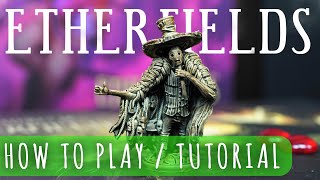
Video C6xNNgZPYvo Unknown Channel rules_teach at 0:00 sentiment: positive
video_pk 35742 · mention_pk 106906
Unknown Channel - Etherfields video thumbnail
Click to watch at 0:00 · YouTube ↗
Overall sentiment (raw)
positive
Pros
  • Clear, thorough rule teaching via structured, example-driven narration
  • Good use of a table of contents and spoiler warnings to manage learning pace
  • Strong emphasis on core actions (movement, action costs, gradual costs) early in the tutorial
Cons
  • Lengthy and dense content may overwhelm new players
  • Reliance on scripts, board components, and physical markers may make it hard to follow without the actual set
Thematic elements
  • Dream exploration, puzzle-like rule discovery, cooperative or semi-cooperative tubular progression toward awakening a dreamer gate.
  • Dream-logic world with dreamers and dreamscape interactions, gates, keys, and a quest-like awakening ritual; locations unfold on a map with tiles, tokens, and secret overlays.
  • Rule-teaching through a structured, multi-part tutorial that interleaves concepts with concrete in-video actions and script references.
Comparison games
none
Mechanics (from transcript analysis)
  • Deck building — At awakening and deck-building steps players adjust their influence/deck compositions, seed flaw cards, and manage card limits throughout a campaign.
  • Deck-building and recovery — At awakening and deck-building steps players adjust their influence/deck compositions, seed flaw cards, and manage card limits throughout a campaign.
  • Dream gate and keys — Dream gates require keys to enter dreams; keys are collected on the dream world map and are consumed when entering a gate to progress progress toward victory.
  • Entity and slumber tiles — Entities spawn and move on the dream world map; slumber tiles trigger short adventures with their own conditions and loot, distinct from dream entities.
  • Influence cards and progress cards — Influence cards provide one or more possible actions with costs shown by icons; progress cards, when placed in the progress zone, unlock ongoing effects and require costs to be paid before use.
  • Influence Points — Influence cards provide one or more possible actions with costs shown by icons; progress cards, when placed in the progress zone, unlock ongoing effects and require costs to be paid before use.
  • Intent tokens and costs — Movement and actions cost colored intents (green, yellow, red). Tokens come from card costs or can be boosted via the luck die, with rules about splitting costs and one-time use restrictions.
  • Luck die — Single die that can add intents or impose penalties. Outcomes affect ability to pay costs and can terminate or modify actions.
  • Mask system and dials — Dreamers may wear masks with active skills; masks refresh each turn and can grant unique effects that modify movement, actions, or interactions.
  • Morphing tokens — Morphing tokens modify entity capabilities (distress, range, and card activity) and can influence turn resolution; removal requires spending resources.
  • Shortcuts, map actions, and walls — Movement and map actions are constrained by walls; shortcuts can bypass some obstacles but come with tile costs or specific conditions.
  • Turn structure: Dreamers phase and Dreamscape phase — A two-phase turn where players alternate drawing and playing influence cards, then resolve events and entity movement during the dreamscape phase.
Video topics + discussion points
No key topics recorded for this video.
Quotes (from this video)
  • in this video i will guide you through the rules of the ether fields game
  • the goal is to learn the basic rules of the game
  • you can find the table of contents in the description under the video
  • before beginning your first scenario you have to choose the character you wish to play
  • the dreamers phase consists of two steps
  • the rules of card drawing and the hand size limits were already discussed
  • the awakening card and its setup can be found in the script book and on the tile
References (from this video)
No references stored for this video.
Video dh_7TD-3KJs No Pun Included general_discussion at 0:59 sentiment: negative
video_pk 33808 · mention_pk 100611
No Pun Included - Etherfields video thumbnail
Click to watch at 0:59 · YouTube ↗
Overall sentiment (raw)
negative
Pros
none
Cons
none
Thematic elements
  • not specified in the episode
  • not specified in the episode
  • not specified in the episode
Comparison games
none
Mechanics (from transcript analysis)
Mechanics unknown.
Video topics + discussion points
No key topics recorded for this video.
Quotes (from this video)
  • hello my name is efka this is bessie and i'm elaine
  • we have a little board game channel called nope included
  • reviewing board games is the best thing i have ever done in my life
  • our channel is supported by our patrons
  • we've decided to simply ask you to support us at whatever level you feel is right
  • narrative storytelling in board games through the lens of ryan lockett's sleeping gods
  • sharp criticism like our videos for horizon zero dawn
  • feel-good reviews like sprolopolis
References (from this video)
No references stored for this video.
Video rBli4DNp5rY Board Game Coffee collection_tour at 0:17 sentiment: positive
video_pk 9257 · mention_pk 27344
Board Game Coffee - Etherfields video thumbnail
Click to watch at 0:17 · YouTube ↗
Overall sentiment (raw)
positive
Pros
  • visually interesting
  • memorable playthrough
Cons
none
Thematic elements
none
Comparison games
none
Mechanics (from transcript analysis)
Mechanics unknown.
Video topics + discussion points
No key topics recorded for this video.
Quotes (from this video)
  • sick kids hospital saved my life I wouldn't be here to give you these games if it wasn't for Saint Kitts hospital
  • most of them are projects yes this is our Shelf of haven't put away yet
  • we have a lot of prototypes we have some prototypes of games that were never released
  • you're probably not even supposed to mention some of these but you know what we never said an NDA let's do this
  • we can't do this I'm working all the time and I just can't get them done seven days a week 24 hours a day
  • I was very upset with that because it was confusing it was because yeah I didn't read the all in
  • he's like I'm done I'm gonna walk away you tell me what happens at the end
  • it's a turntable yeah it will use the Lazy Susan and we did one of those like uh That 70s Show
  • the loudest thing on the planet like it was a big Hollow 10 year old the dice
References (from this video)
No references stored for this video.
Video hfP2PJYR3r0 Side Game LLC top_10_list at 51:00 sentiment: positive
video_pk 9127 · mention_pk 26915
Side Game LLC - Etherfields video thumbnail
Click to watch at 51:00 · YouTube ↗
Overall sentiment (raw)
mixed-to-positive
Pros
  • strong atmosphere and art
  • innovative dream-based mechanics
  • rich, evolving story world
Cons
  • some players found the grind and early slog heavy
  • rule integration and card-text density can overwhelm new players
Thematic elements
  • mythic exploration, nightmare motifs, personal backstories
  • dreamlike, surreal exploration world with dream-scapes
  • two-campaign base with an expansive dream-world arc
Comparison games
  • Sleeping Gods
  • Oath: Chronicles of Empire and Exile
  • Dawn of the Zeds
Mechanics (from transcript analysis)
  • deck-building with dream cards — cards add abilities and create dream sequences with unique effects.
  • Story-driven exploration — board state evolves with new cards, dreams, and events.
  • two-campaign structure — base dreamworld campaign plus a second wave of content (harpy/dream cards).
Video topics + discussion points
No key topics recorded for this video.
Quotes (from this video)
  • easy to set up and it's short
  • the new modules that you get in this really cool they change up the game for the better
  • this is the open-ended thing open-ended so the story you tell in between you kind of make up as you go along
  • the campaign system is tiny all you're going to be doing is adding a card
  • it's a one-and-done game so you open this one up you throw it away
  • the dream world or real world
  • the story deck add new cards to the deck and narrative arcs on the board
References (from this video)
No references stored for this video.
Video f9x0DLrug4Y Board Game Coffee general_discussion at 3:19 sentiment: positive
video_pk 8029 · mention_pk 23620
Board Game Coffee - Etherfields video thumbnail
Click to watch at 3:19 · YouTube ↗
Overall sentiment (raw)
positive
Pros
  • Rich, expansive narrative with high replayability
  • Strong thematic flavor and art
  • Flexible co-op with evolving character dynamics
Cons
  • Complex rules and potentially long learning curve
  • Large component footprint and setup time
Thematic elements
  • Dreamlike exploration with nightmare elements
  • A surreal dreamscape with shifting locations and dream logic
  • Story-driven, player-driven evolution of characters
Comparison games
  • Terracotta Army
  • Nemesis
  • Awaken Realms' other dream-driven titles
Mechanics (from transcript analysis)
  • cooperative play — Players work together to progress through a shared story and set of objectives.
  • Deck/hand management with story-driven choices — Card play and hand management drive narrative events and character actions.
  • Modular/dream-map exploration — The map links different dream areas; travel triggers new scenarios and encounters.
  • Narrative progression with evolving roles — Characters can join or leave the party, evolving over time and influencing outcomes.
Video topics + discussion points
No key topics recorded for this video.
Quotes (from this video)
  • it's the best game ever
  • this game is a nut job
  • the art is amazing the storytelling is amazing
  • Nemesis is fan Fantastic so it's it's semi-cooperative I guess it depends
  • it's the best alien game I've ever played that's not the alien license
  • Photosynthesis is a beautiful game
  • the core box is amazing
  • it's so heavy but it's worth it
  • awaken Realms sponsor this they’re so awesome
References (from this video)
No references stored for this video.
Video N4LJASmpEu0 Board Game Coffee unboxing at 0:19 sentiment: positive
video_pk 1049 · mention_pk 87363
Board Game Coffee - Etherfields video thumbnail
Click to watch at 0:19 · YouTube ↗
Overall sentiment (raw)
positive
Pros
  • Stunning artwork and miniatures
  • Immersive, nightmare-themed atmosphere
  • Premium production quality and components
  • Cooperative play can heighten tension and teamwork
Cons
  • Heavy setup and large footprint
  • High complexity may intimidate new players
  • Long unboxing with dense card lists can be overwhelming
Thematic elements
  • horror, mystery, dream exploration
  • Dreamworld/nightmare realm; surreal dreamscape
  • story-driven, choose-your-own-adventure flavor via dream cards
Comparison games
  • Tainted Grail
  • Nemesis
  • Mysterium
  • Hellraiser (inspiration)
Mechanics (from transcript analysis)
  • Cooperative Game — Players work together to survive nightmares.
  • cooperative play — Players work together to survive nightmares.
  • Deck building — Players draft and play dream/story cards to navigate the dream world.
  • deck-building — Players draft and play dream/story cards to navigate the dream world.
  • Story-driven text — Story text on cards and booklets shapes events and atmosphere.
  • tile/board exploration — Exploring dream-location tiles with varied back designs.
  • Variable components and setup — Core box includes modular components, minis, and tokens that differ per session.
Video topics + discussion points
No key topics recorded for this video.
Quotes (from this video)
  • this is ether fields i am very excited
  • great artwork and terrible nightmares
  • the art is amazing in this game
  • this is a demented game
  • it's gonna be good stuff
References (from this video)
No references stored for this video.
Transcript Navigation
Top
Showing 1–9 of 9
View on BoardGameGeek