/pic440763.jpg)
In Excape, also known as Exxtra and Rapido, you're trying to reach the end of the movement track first, both by rolling doubles (which is a blessed but rare occurrence) and staying on the ranking chart until your next turn.
On a turn, you first move your pawn 0-5 spaces if your two dice are still on the ranking chart. Next, you roll the dice, which show 1-2-3-4-7-X on one dice and 1-2-3-5-6-X on the other. After your first roll, if you roll doubles, move your pawn 1, 2, or 3 spaces based on what you rolled. You then treat your dice as a two-digit number, say 31, 22, 54, or 70, with the X counting as a 0. You can stop and place your dice on the ranking chart in an empty space — it contains six spaces numbered 0-5 — or you can roll again. If you roll doubles, you advance you pawn and face the same choices. If you roll an X or two Xs, then your turn ends and you move your pawn back one or two spaces.
When you place your dice on the ranking chart, if you place your dice on a lower-numbered space and your two-digit number is equal to or larger than dice that are on a higher-numbered space, then you bump that player's dice off the chart, which means they won't move at the start of their next turn. You can place any number on an unoccupied space, but the higher the space, the greater the odds of you being bumped before your next turn. How risky do you want to play?
Rapido contains modified rules for two-player games, and you can play with these rules in any version of the game. Each player has two sets of dice, but still only one pawn. If at the start of a turn, you have one or both pairs of dice in front of you, roll like normal, advancing on doubles and hoping to avoid Xs. When you place dice on the ranking chart, you knock off only the opponent's dice, never yours. If at the start of your turn, both pairs of dice are on the ranking chart, advance your pawn the sum of the spaces occupied, then roll a pair of dice.



- Debuts at number 78
- Flows well
- Deserves a place of honor
- Not sure why it wasn't on the list before
- race track
Mechanics (from transcript analysis)
- Dice Rolling — You do that by rolling your dice. They're special dice.
- Movement programming — You then put it on this chart basically that has the numbers 0 through five and that's how many spaces forward you're going to go if those dice are still there when it gets back to you.
- Push Your Luck — The pusher luck comes in two different ways. The first is when you're actually rolling the dice on your turn. After the first turn, you can keep rolling to try and get better combinations of these two dice.
- Take That — if I put say my 74 on there and somebody rolls a 75 and they then place below me on the track, they can knock me off.
Video topics + discussion points
Quotes (from this video)
- Ghost Lift debuts at number 72 on the list.
- This one's a little tricky to find right now.
- Um and the ghosts are adorable.
- Um I think uh this is a blast.
- Ghost lift is a fun one to check out.
- Wandering Galaxy debuts at number 71.
- It is a crossroads of the Jerry Hawthorne design philosophy.
- But I also like in Wandering Galaxy the uh the deck building um that that you get personally for your character to achieve uh tasks.
- Um, Wandering Galaxy is a blast as you take different roles on the ship uh and explore around, make decisions as a crew, and just have a darn good adventure with that Jerry Hawthorne aesthetic mixed in there as well.
References (from this video)

- The pressure element (timer) is not enjoyable for all children.
Mechanics (from transcript analysis)
- Dice Rolling — Children can roll a set of dice while playing, offering an early introduction to game mechanics.
- Real-Time — The host's son does not enjoy games with a timer, including Escape, due to the pressure element.
Video topics + discussion points
Quotes (from this video)
- And they realize I can hold my own train pieces and Ticket to Ride how exciting is that going to be
- With some games we won't play them until Zach has read the rules himself which he does as feverishly as reading a Lego catalog
- I don't think children are able to distinguish those differences early on so you're kind of burdening them with um a difficult responsibility if you expect them to know when to turn that on and off when they're quite young
- Letting kids win is not always a good idea
- if winning is not the most important part of the game then why why are you letting your child win every time you're basically making winning the most important part by your own actions
- And then when I finally won it felt so good I felt like I'd really accomplished something
- that's a very important life lesson to teach your children
- because this gives them a legitimate way to win because sometimes they're going to get lucky and that's great it levels the playing field
- and I don't think that any of our gaming systems have been turned on for you know couple of months probably since we started board gaming
- I've seen marked improvements in his reading skills his strategizing his problem solving especially his attit towards attitudes towards uh being fair play and and being a good loser
- you can't force them into it obviously a gentle push in the direction to get them started is fine but you have to let them decide what they do and do not like on their own
References (from this video)
Mechanics (from transcript analysis)
- Dice Rolling — Rolling two dice trying to get these numbers trying to move around a track where you're also trying to put those dice onto a ranking system and you want to knock the other players off the system so they don't score any points.
- Push Your Luck — Trying to move around a track where you're also trying to put those dice onto a ranking system and you want to knock the other players off the system so they don't score any points.
Video topics + discussion points
Quotes (from this video)
- I'm always excited and into a game if it's just a theme I've not seen before that's something fun it's something cool I like it
- I would say there aren't enough games about the wild west
- essentially what I'll have to do is like stardew Valley style progression in a game where it's survival but really you're just getting better and farming and building a world and all Society for yourself
- Age of War is my favorite Yahtzee game essentially
- it's a fast frenetic exciting quick dice game which I really really like
- Spornmina is such a weird card game
- Very satisfying and lovely little game.
- a very little obscure Amigo card game that people don't talk about that much but I've always loved hamster bath
- Our Oco or our Eco is a really great little card game that I highly recommend
- It's a wacky wild Fast Very very quick card shedding game that just causes lots and lots of fun and laughter
- This is a raucous fantastic incredible card game
- Tell Stones is my personal example of a game that everybody didn't like but I do like
- if I had just listened to the people who didn't like it I would never have played it and enjoyed it so much
References (from this video)

- Light and accessible
- Great filler game
- Engaging and fun
- Popular with players
- Can't Stop
Mechanics (from transcript analysis)
- Dice Rolling — Core mechanic involves rolling dice to advance on a staircase.
- player interaction — Other players can 'kick you off' the staircase.
- push-your-luck — Players roll dice and decide whether to continue or stop.
- Set Collection — Locking in high values on a separate staircase.
Video topics + discussion points
Quotes (from this video)
- this is another definitely a a forgotten gem in my opinion
- this is definitely unlike any other kitti game that I've played
- quite a frustrating game um but the hand management is extremely clever um and a very tense game as well
- the cool thing about this game is the twist at the end where if you are the player who spent the most money you are automatically disqualified from winning
- this one seems to be a bit more polarizing but it's a huge hit for me personally
- brilliantly refined very sophisticated and streamlined gameplay um one of the best T placement games out there
- definitely a deeper game than it first meets the eye and it's one of the best auction games ever made
- wonderful game one of the purest games I have in my collection and one of my favorites full stop an absolute work of art
- well Riders was fine Dragon Riders so Dragon master was decent royal visit if you like the tug-of war system you might like this one didn't quite work for me same go to Blue Moon Legends very interesting World designed game but one that didn't quite suit my game style
- definitely one of the highest regarded kitu games and for good reason it's my second favorite kitu game
- this one is another auction Style game where you have fixed bids so you cannot just bid what you want you have four tokens at any time and all you're doing is you are revealing these tokens or these tiles out in this kind of push your luck mechanism
- lots of layers lots of wrinkles um definitely a deeper game than it first meets the eye
- it's one of the best auction games ever made I think it might be my favorite
- this is one of his root building style games as you have a a rack full of tiles you're using them to create huge chains of your particular color and trying to connect these different kind of cities together
- gaml could not be more simple just simply place a TI or think two tiles or more than that at times onto the board and um score accordingly
References (from this video)

- Has a big luck factor which the host loves.
- It's a favorite game of the host.
Mechanics (from transcript analysis)
- Push Your Luck — The game involves taking risks for potentially greater rewards.
Video topics + discussion points
Quotes (from this video)
- Um I'd have slight concerns about the replayability of the game, but please do correct me uh on that.
- Maybe a little bit maybe a bit oversaturated in terms of how many there are out there.
- Unfortunately, I'm not familiar with either of those.
- Um I also thought that there wasn't enough mitigation in terms of activating the spots that you wanted.
- Um and pretty much the uh the cards not doing anything terribly interesting either.
- Um but I just like it in every way. But I'm a big sucker for really good Dawn games. I think he's a brilliant designer.
- Um hopefully I'll get copies of those for for sale relatively soon.
References (from this video)
- Favorite push your luck game
- Smooths off rough edges from 'Can't Stop'
- Great catch-up mechanism
- Wonderfully fun
- Universally loved
- Scales well
- Super fast
- Intense moments
- Best push your up game on the market
- Can't Stop
Mechanics (from transcript analysis)
- Dice Rolling — Core mechanism involves rolling dice.
- Lock In — Players can lock in their roll on a second staircase, securing their progress.
- player interaction — Other players can 'kick you off' a space by rolling a higher number on a lower spot.
- Push Your Luck — Players roll dice, with doubles allowing them to climb a track and specific rolls causing them to fall down stairs.
Video topics + discussion points
Quotes (from this video)
- hopefully you have enjoyed it if you have please be sure to hit like And subscribe to the channel and keep an out for the remainder of the series
- hey everybody and welcome back to my 2024 into 2025 edition of my top 100 board games of all time today I'll be covering game 70 up to number 61 and I have a massive four new games to the list on this portion of the video
- before we get started on the games I want to give a shout out to the show sponsor kendra.co.uk who are my goto online retailer and if you use the link in the show notes or the QR code then you can get 5% off your first order
- be sure to check out my new game Thalamus and send me an email if you want to secure yourself a copy
References (from this video)
- animals
Mechanics (from transcript analysis)
- I split, you choose — This is an eye split, you choose game where you're dividing up these animals to score points.
Video topics + discussion points
Quotes (from this video)
- So, Night Soul actually made my most anticipated list of games to be released in 2025.
- Love this idea of um kind of Victorian London, The Sewage System.
- And from the gist of what I've read, it sounds like a kind of contract fulfillment resource management game, but it does use dice placements.
- Now, I tend to like the kind of mix of a Euro game with dice placement.
- If you have enjoyed the video, please be sure to hit like and subscribe to the channel.
- Check out my other content, too.
- And for everybody else, I'll see you next time on Chairman of the Board.
References (from this video)
- Nice little game
Mechanics (from transcript analysis)
- Choose Your Own Adventure — A nice little isolate you choose game.
Video topics + discussion points
Quotes (from this video)
- RA, uh, 33 minutes and 28 seconds, and this was one of the biggest car crash games of RA that I've played.
- I have to admit, I did bounce off this one quite hard. I wasn't really a fan of it.
- And this one, I really like the gameplay, but it is too long.
- I think for an introductory Euro style game, this game does such a fantastic job of giving you the giving you the seven wonders experience in the most streamlined way possible.
References (from this video)
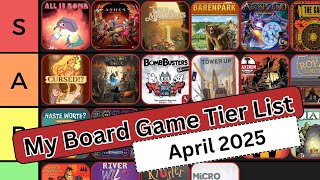
- Very good
- Pretty cool design
- Liked it (on first play)
- Unsure about long-term enjoyment after playing more
Mechanics (from transcript analysis)
Video topics + discussion points
Quotes (from this video)
- Count of the Nine Estates. Um, a game people keep suggesting to me and I've played it over the years off and on and I think it's not bad.
- Distilled clear Srank. It's such an amazing game. I absolutely love this.
- Draftosarus, also the game I very much enjoy. I will give this an A. S would be too much, but it's such a cute and nice uh drafting game.
- Cluster. Uh you have um a circle made of like a rope like a ropes circle rope circle so to speak and everybody gets like the same number of magnets and you put the magnets in the middle and when you put down your last magnet you win.
- Exobase also a game that I will bring a video to you at some point.
- Magic Keys in English. I think um this is like a children game actually. It's a children's game, but we play like with like I think we were like four adults playing that.
- Malus Hotos. I just released a preview video for that for the Kickstarter campaign and I enjoyed this game a lot.
- Micro City is a pretty decent game in a small box. Um, but it's also nothing all too amazing, right?
- Reforest clear as this is an absolutely amazing game.
- Sally Face Strange Nightmares uh for the video game uh Sally Face and I found this game quite decent actually.
- Stone Spine Architects uh in the roleplayer universe. And I like this a lot. I will give this an A.
- Switch and signal. I'm a little conflicted on that one.
- Yatsi. Yeah, this is like a guilty pleasure, right? We all know it's not an amazing game, but Yatsi is the basis for like a lot of other games with this mechanism of rolling your like rolling your dice and then being able to reroll some of them twice.
- Buds and Blooms from Mark Tuck. Also a game that I enjoyed playing.
- And actually, you know what? I'm actually missing one game. I also played Wingspan.
- Wingspan would also be an S of course and would be up here.
References (from this video)

- Great twist on a familiar mechanism
- Gamified mechanics
- Still loved after many plays
- Can't Stop
Mechanics (from transcript analysis)
- Dice Rolling — you're going to do that by rolling dice. If you roll like an X on one of these dice, then you're going to go bust and you're going to fall back down the staircase.
- Push Your Luck — If you roll like an X on one of these dice, then you're going to go bust and you're going to fall back down the staircase.
- Set Collection — you can actually choose when to stop, which will not only resolve reserve your place, but it'll also put you on another staircase um which you can determine yourself.
- Variable player powers — you can actually choose when to stop, which will not only resolve reserve your place, but it'll also put you on another staircase um which you can determine yourself.
Video topics + discussion points
Quotes (from this video)
- This is my goto push your luck game and I've played this tons and I still love it.
- It's such a great little twist on like a a can't stop mechanism.
- I just love those extra like gamified mechanisms um that Ry Kia adds into his designs.
- The best pusher luck game out there in my opinion.
- Ra for me is such a versatile game because it feels like it's got like the fun factor of like a party game. It's got the layers and the meticulous bidding of a Euro game.
- It's easy to approach or to get into. So, it's like a family weight game at the same time.
- The depth here is quite remarkable once you kind of open your eyes and really experience the game to its fullest.
- this one's been in the board game kind of um you know sphere and been relevant for you know 30 years now which is really um impressive.
- Everybody still talks about RA because it is that good and I play it all the time.
- I love you have the way you have to act so tactically. meaning that every time you approach this game, you are doing it with a fresh mind and trying to get the best bids or the best offers with the bids you have to put up there.
- perfect when it comes to design pedigree and just how meticulously well this is put together.
References (from this video)

- One of the best push-your-luck games.
Mechanics (from transcript analysis)
- push-your-luck — Described as one of the best push-your-luck games out there.
Video topics + discussion points
Quotes (from this video)
References (from this video)

- fast-paced, accessible
- Can't Stop
- Rapido
Mechanics (from transcript analysis)
- Push Your Luck — dice chucking; players roll to progress and risk failure
- push-your-luck — dice chucking; players roll to progress and risk failure
- team/dynamic action selection — players coordinate or compete with dice-driven actions
Video topics + discussion points
Quotes (from this video)
- Escape, on the other hand, I love this game.
- One Night Ultimate Alien is one I liked because I felt like it had some really weird powers.
- Soviet Kitchen is not as great because it doesn't work as good for kids.
References (from this video)

- Nostalgic engine builder; cassette-era theme
Mechanics (from transcript analysis)
Video topics + discussion points
Quotes (from this video)
- I included Thunder Road Vendetta maximum Chrome and I know that's a 2023 game but we're excited because it was one of our favorite games of 2023
- Heat Heavy Rain heat pedal to the metal has been one of the most successful games in our game group
- Ezra and Nehemiah because it's been described a bit as a greatest hits of some of the other mechanisms and features of the other Garfield games
- our number one game specifically would be rockard 1977
References (from this video)

- Strong musical theme with clear card-flow storytelling
- Engaging concept of sequencing a mixtape with song cards
- Theme may be niche to some players; enjoyment hinges on song flavor
- music / playlists
- A card-drafting / set-collection game built around constructing a mixtape
- playful, thematic
Mechanics (from transcript analysis)
- Hand Management — Players arrange songs to optimize flow and scoring potential.
- hand management / sequencing — Players arrange songs to optimize flow and scoring potential.
- Set Collection — Players draft song cards to create a cohesive mixtape with a good flow.
Video topics + discussion points
Quotes (from this video)
- I think that these are my 10 favorite wild, cool, strange, or otherwise delightful themes of games from 2025.
- Don't you hate it when you're fighting in World War II and you don't realize that the war has been over for over 20some years and you're still fighting it?
- Why? So we could steal the dinosaurs and bring them on home. Why? To make our cards score more points.
References (from this video)

- highly accessible, quick to play
- distillation of push-your-luck with clear decisions
- may be too luck-driven for some
- short play may not satisfy heavier gamers
- Movie-making/filmmaking meta in a light auction/race veneer
- Race to the finish with push-your-luck dice
- Push-your-luck with decisive pacing
- Circus Flotti
- Nightmare Productions
Mechanics (from transcript analysis)
- dice-driven race — Roll dice to advance on a track and gamble on outcomes
- Risk Management — Players weigh probabilities against progress and potential loss
- risk/decision balance — Players weigh probabilities against progress and potential loss
Video topics + discussion points
Quotes (from this video)
- Zu is not only my favorite Kenia game but it is also currently my favorite board game of all time.
- RaW is the best game in all of those categories, it is mathematically Sublime.
- Blue Moon City is a stellar game that humorously pains me to put it so low at the number three.
- Poison is genuinely a really good game that somehow will fit that vibe that's really approachable for people who aren't into hobby games.
References (from this video)

- Compact ~30-minute playtime with meaningful economic decisions.
- Intriguing lobbyist mechanic adds depth and agency.
- Simultaneous actions reduce downtime and increase tension.
- Use of market intelligence and deduction to anticipate moves.
- Reliance on luck in some market shifts can feel variable.
- Complex for new players; learning curve around phase interactions.
- Price volatility can be punishing in small player counts; learning curve around thresholds.
- Market fluctuations, risk management, information asymmetry.
- Modern-day stock market environment with banks, bonds, and insurance securities.
- Analytical economic simulation with strategic deduction and competitive signaling.
Mechanics (from transcript analysis)
- Five-round structure with market resolution — Game progresses through five rounds with three phases each, resolved by market cards and shareholder actions.
- Ledger boards and phase-specific cards — Personal ledger trackers plus phase 1–3 cards to guide investment and actions.
- Market forces and lobbyist cards — Deck of market force cards and a lobbyist mechanic to influence price movements and phase outcomes.
- Market price range and fluctuations — Prices range 10–90 per share and may flip sides when thresholds are crossed, driving volatility.
- Simultaneous action selection — Players secretly choose an action each phase and reveal them together, creating strategic uncertainty.
Video topics + discussion points
Quotes (from this video)
- The game is great for making decisions.
- For a game that lasts about 30 minutes it's got some good economic choices and deduction to make this game a great choice to get to the table.
- I really like how this game is formed where you gain a small amount of information each phase.
- The lobbyist is also a really fun aspect in the game.
- Paying 50 bucks is at times totally worth it so you can set up your turn to benefit from what will happen later in the round.
References (from this video)
Mechanics (from transcript analysis)
- cooperative puzzle solving — players work together to complete scenarios
Video topics + discussion points
Quotes (from this video)
- we picked it up for absolute peanuts
- it's actually really good for adults as well
- the rule book is utter utter awful
- this is a complete game we hate this game
References (from this video)
- Clean layout
- Unique character names
- Solo play
- Base building
- Distant exoplanet
- Survival
- Exo Ship
Mechanics (from transcript analysis)
- Base Building — Build self-sustaining base on hostile planet
Video topics + discussion points
Quotes (from this video)
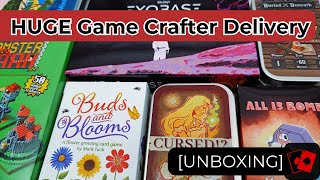
- I'm looking forward to Hamster Park and Cursed. I think these two things I will really enjoy.
- A huge thanks to Game Crafter for cooperating with me and sending me all of these cool games.
References (from this video)

- Educational flavor with strategic depth
- Broad appeal to hobbyists and new players
- May be heavy for casual gamers
- economic/deduction stock trading
- Stock market environment
- strategic, market-driven
- Chinatown
- Stockpile
Mechanics (from transcript analysis)
- economic engine — Market dynamics influence gains and risk
- Stock trading — Players trade stocks, bonds, and insurance for profit
Video topics + discussion points
Quotes (from this video)
- we're our favorite games whoa and welcome
- 50 is such a long journey, it was 1 and now it's 50
- we want to bring more people in because it shocks us sometimes
- we are so happy to celebrate 50
- we're on a panel with Will Wheaton, Tom Vassell, and Steph from Board Game Geek
- it's part of our weight journey that we're just telling them how things are going
- weight watchers tweak it, tweak something
- we want gaming to be inclusive, welcoming, and fun
- the real joy is the community you build around these games
- it's not just us, it's everybody that's our family
- you know it's a family, playing games together
- congrats again on 50 episodes, keep pressing and good luck
- our first giveaway is coming, five games bundled
- we have plans within plans coming up, we ain't over, we gotta keep going
- the energy and chemistry between you two is palpable and real
- i love how brutally honest you are with each other
- it's just simply a joy to watch and listen to you
- it's our responsibility to make sure everyone feels welcomed
- your stories about inclusion changed how i think about gaming
References (from this video)
Mechanics (from transcript analysis)
Video topics + discussion points
Quotes (from this video)
- the games are Made in India yes It's Made in India
- this is Halloween for sure
- I cannot wait till this one comes really enjoyed it
- the house that you put up is huge
References (from this video)
- Encourages creativity and banter
- Low prep and accessible for casual play
- Good for lighthearted group interaction and improv practice
- Can descend into chaos if participants are unwilling or over-competitive
- May rely on players' willingness to perform and engage
- improv storytelling and excuses
- informal online livestream among friends
- comedic, spontaneous
Mechanics (from transcript analysis)
- audience/partner evaluation — other players determine the best or most entertaining excuse; scoring or judgment is implied by participation and reaction.
- improv storytelling — players create plausible excuses for everyday situations; performance and wit are on display.
Video topics + discussion points
Quotes (from this video)
- I'm there for the ride
- Burger King foot lettuce
- Hereditary... I would unwatch that one
- three raccoons in a trench coat
- my iPod has a name, Sylvia
- they do color code the raccoons
- what if T-Rex's had kangaroo pouches
- I wrote a song
- every single outro should be how we like our discussion of so how are we going to end this