/pic7349980.png)














Fiction Deep Dive
What the Community Thinks About Fiction
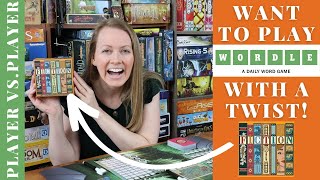
Fiction has captured the attention of board game reviewers as a fresh, social take on the word-deduction puzzle. Several reviewers describe it as a tabletop version of Wordle, bringing that viral phenomenon to life in a way that feels engaging rather than derivative. The game's core premise of one player becoming a deceptive Librarian who must give both truthful and false information creates a uniquely tense, interactive experience that stands out in the party game landscape. Reviewers consistently praise its brevity, accessibility, and the clever tension it generates between players, though some note that the lying mechanic can create either delightful or overwhelming stress depending on the group.
Core Mechanics That Define Fiction
Word Deduction Through Constrained Clues
At Fiction's heart lies a deduction puzzle where one player, the Librarian, secretly selects a five-letter word from highlighted cards (yellow for normal mode, red for hard mode with repeated letters). The guessing team then proposes five-letter words and receives feedback using three types of tokens: checkmarks for correct letters in the right spot, wavy lines for letters in the word but the wrong placement, and X tokens for letters not in the word at all. Reviewers note that the card-based word selection removes the barrier that often plagues solo word games, where struggling players feel lost without external structure. One reviewer observed that this feature particularly appeals to people who enjoy word games but sometimes struggle with unrestricted word choice, making the game more inclusive than pure deduction games.
The Lie Mechanic: One False Clue Per Round
The game's most distinctive feature is the mandatory lie. Every single round, the Librarian must change exactly one of their five clue symbols from truth to falsehood, forcing the guessing team to play detective. Players get a limited number of fact-or-fiction tokens during the game that allow them to force the Librarian to reveal whether a specific clue was truthful. Reviewers describe this mechanic as both brilliant and devious, creating gameplay that is clever and tension-filled. One reviewer called it a way to bring deception and genuinely clever strategic plays to an otherwise straightforward deduction puzzle. The lying mechanic transforms what could be a simple logic problem into a mind-bending exercise where players must cross-reference previous clues, remember which lies the Librarian has already told, and deduce patterns, all while managing their precious challenge tokens wisely.
The Fiction Experience
Quick, Focused, High-Pressure Gameplay
Fiction is structured in two halves, giving teams a fixed number of guesses per half to solve the word before they run out. The ticking pressure combined with the cooperative goal creates what multiple reviewers call the right amount of stress. One reviewer observed that the time constraint keeps the game snappy and prevents it from overstaying its welcome, noting that it is twenty minutes in and out and does not overstay its welcome. The short playtime means even if stress builds, there is a defined endpoint. At the halfway point, teams transition to a fresh set of guess boards, signaling a reset and creating a natural breathing space to refocus their deduction strategy. Reviewers appreciate this structure for its pacing: long enough to enjoy meaningful play, short enough that tension never becomes exhausting.
Social Dynamics and Roleplay Tension
Beyond mechanics, Fiction generates considerable social friction in the best possible way. The game forces players to sit on opposite sides of an information divide: some know the word (the Librarian), others must earn it through deduction. One reviewer captured this perfectly, noting that players will accuse their friends of lying straight to their face, because they are, and that the game creates a good amount of fun stress regardless of which side you played. The Librarian role in particular creates roleplay-like tension. Reviewers who took the Librarian seat described it as simultaneously delectable and deeply stressful. As one noted, being the guesser creates stress from puzzle-solving, but being the Librarian creates stress from needing to maintain consistency in lies and tell the truth strategically without getting caught. This asymmetry means different players experience the game in fundamentally different ways, which keeps replay value high.
What Makes Fiction Stand Out
A Wordle Alternative That Works at the Table
Fiction achieves what many games attempt but few pull off: translating a successful single-player digital experience into a multiplayer tabletop experience that feels richer, not diminished. Where Wordle is solitary screen-staring, Fiction becomes a shared social experience, with multiple reviewers calling it a more ideal version of Wordle. The game takes the core appeal of that five-letter deduction puzzle and wraps it in player interaction, deception, and cooperative pressure. By removing the need for players to invent their own words (via the card system) and adding the Librarian's deception layer, the game transforms the experience from a personal challenge into something fundamentally social. Multiple reviewers who dabbled in Wordle and loved it reported finding Fiction equally fun, and one noted that the last time they liked a word game this much was when Letter Jam came out.
Clever Puzzle Design Paired With Accessible Setup
The game achieves remarkable elegance in its component design and word selection. By sourcing words from classic novels, the game adds thematic flavor without making the mechanics depend on it. The distinction between yellow words (no repeated letters) and red words (repeated letters) creates a clean difficulty scaling that lets groups self-select their challenge level. Reviewers appreciate that the words are never obscure. One reviewer mentioned that highlighted words are always something you would be familiar with, which removes the frustration of games that hide behind uncommon vocabulary. The physical board design also earns praise for its clarity: the spaces for locked-in truths and the public row for clues keep information organized without requiring mental gymnastics.
Potential Drawbacks
Normal Mode May Be Too Permissive for Experienced Players
Multiple reviewers noted that on normal difficulty (yellow words, more generous challenge tokens), the guessing team has significant advantages. One reviewer stated bluntly that normal mode might be a little too easy, and that most of the people they game with could not actually lose at this game. The mechanic of forcing exactly one lie per round, combined with high-value challenge tokens, means skilled deduction teams can often puzzle through even when the Librarian plays well. The hard mode (red words with repeated letters, fewer tokens) addresses this, but reviewers suggested that groups of word-game enthusiasts or those playing multiple times should expect to need the difficulty bump quickly.
The Librarian Role Creates Unequal Fun for Some Players
While some players relish being the deceptive Librarian, reviewers noted this role is not for everyone and can be genuinely stressful. One reviewer observed that some people might love being the Librarian, but most would probably find that role less fun, since it is stressful trying to pick the right lie on the spot. The Librarian must maintain narrative consistency across the round, track which clues they have already lied about, and do all this while the team's questions come rapid-fire. Even well-intentioned Librarians can accidentally contradict themselves, revealing information or confusing the team. The game assumes at least one player enjoys lying and wants that spotlight; for groups where everyone prefers collaborative play or wants to avoid individual pressure, this could be a friction point.
If You Enjoy Fiction
Fiction fans often overlap with enthusiasts of Wordle, since the core five-letter deduction loop is shared, though Fiction adds the multiplayer layer. If you loved the collaborative puzzle-solving of Codenames, you will likely enjoy the team-versus-one dynamic and the emphasis on pattern recognition, though Codenames' information is more generous and less adversarial. Letter Jam offers a similar cooperative word-puzzle structure with hidden information, though it does not include deception in the same way. For those who like the lying mechanic itself, One Night Ultimate Werewolf creates social chaos through role reveals and accusations, though without the word-puzzle component. Finally, if you simply enjoy games that hit the sweet spot between party game and puzzle challenge with brainy, timed play, Fiction delivers that experience in a uniquely focused package.
What Reviewers Are Saying
"This is an incredibly clever way to bring what is usually a solitary screen-staring activity to life as a shared social experience. Honestly, I think it's a way more ideal version of Wordle."
— TheGameBoyGeek
"Fiction allows me an avenue to participate, especially if I'm playing as the Librarian. The difficulty and crunchy braininess of it really pays off, and regardless if you're the Librarian or you're the guesser, there's still a good amount of stress."
— Ryan and Bethany Board Game Reviews
"Being a liar is just absolutely delectable. But being in the guesser's position right now is a stress like you've never felt. It's so stressful."
— Paula Deming