/pic7161032.jpg)




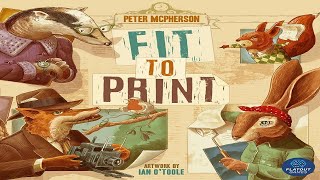



























Fit to Print Deep Dive
What the Community Thinks About Fit to Print
Fit to Print has earned enthusiastic praise from the board gaming community as one of Flatout Games' standout releases. Reviewers consistently highlight the game's elegant combination of time pressure and spatial puzzle solving, with many describing it as unexpectedly enjoyable despite initial reservations about real-time mechanics. The consensus points to a game that works brilliantly for both experienced gamers and newcomers, offering genuine depth beneath its accessible surface.
Core Mechanics That Define Fit to Print
Tile Collection and Spatial Arrangement
The heart of Fit to Print revolves around two distinct phases that drive each round. During the reporting phase, players flip newspaper tiles face-up with one hand, making rapid decisions about which articles, photos, and advertisements to keep. Once satisfied with their collection, players transition to the layout phase where they arrange these polyomino pieces onto their newspaper grid. The spatial puzzle demands careful placement: articles of the same color cannot touch, photos cannot be adjacent to other photos, and advertisements must remain separated. This constraint-based puzzle creates genuine strategic tension as players balance multiple objectives simultaneously.
Compound Scoring Across Multiple Dimensions
Scoring in Fit to Print rewards thoughtful construction rather than simple collection. Players earn base points from articles while photos grant bonus points based on adjacent pieces. The centerpiece card provides special scoring conditions, such as one point per technology article above the fold or two points with mood balancing benefits. White space analysis, mood balance between good and bad news articles, leftover tile penalties, and advertisement revenue all feed into the final tally. This layered scoring system means the best layout choices are rarely obvious, forcing players to weigh competing priorities throughout their three-round game.
The Fit to Print Experience
Frantic Real-Time Frenzy
The real-time element creates an electric table energy. With a four-minute timer ticking, players dive into the deck with one hand, flipping tiles and making split-second choices. Players describe the experience as genuinely frantic without becoming overwhelming, as the timer creates natural pressure points rather than constant panic. Multiple reviewers noted that players often have time remaining when they call layout, revealing that four minutes is generous once players understand their options. The chaotic reporting phase contrasts beautifully with the contemplative puzzle phase, where players have unlimited time to arrange their pieces optimally.
Newspaper Publication Fantasy Across Three Days
The three-day structure mirrors real newspaper production cycles: Friday, Saturday, and Sunday editions each expand the available grid space, progressively raising the challenge. The theme reinforces every decision naturally. Players aren't just placing tiles; they're curating actual newspaper content with bylines, photos of events, and paid advertisements that must balance the page. This thematic coherence makes even rule violations feel narratively appropriate. The game plays twenty minutes total, a breezy experience that never overstays its welcome despite the three-round structure.
What Makes Fit to Print Stand Out
Accessibility Masking Real Depth
Fit to Print exemplifies Flatout Games' philosophy: easy to teach, revealing complexity only through play. The core rules fit on a single reference card, making first-round teaching painless. Articles cannot touch their color, photos cannot neighbor photos, ads cannot touch ads. That's it. Yet beneath these simple rules lies surprising tactical depth. Hand management becomes crucial as players decide whether to grab tiles or grab discards. Push-your-luck decisions emerge constantly: grab more tiles and risk failing to fit them all, or play it safe with fewer pieces and accept lower scores. New players focus on basic constraint satisfaction while experienced players chase intricate scoring combos.
Simultaneous Play That Keeps Everyone Engaged
Unlike turn-based games where players wait between actions, Fit to Print's real-time structure means everyone plays simultaneously. All players flip tiles at once, all players arrange at once, all players score at once. This creates constant table engagement and social energy. Players can see opponents' placements influence their own decisions, creating implicit competition without formal blocking mechanics. One reviewer specifically praised the simultaneous action, noting it contrasts refreshingly with traditional turn-based alternatives.
Potential Drawbacks
Time Pressure Reduces Strategic Control
The real-time element creates winning chaos but also frustration for players who value methodical planning. The four-minute timer means tile selection happens fast, often before players fully evaluate options. One reviewer expressed that time pressure reduces control, making the game feel luck-reliant as players end up with whatever tiles remain when they call layout. The forced choice between strategic deliberation and physical speed means some will feel they're constantly solving suboptimal puzzles. For players who find real-time games inherently stressful, the turn-based variant solves this but loses the signature energy.
Grid Size Limitations and Leftover Penalties
The three grids grow progressively, yet even the Sunday board feels constraining given the tile quantities available. Players consistently capture too many tiles during reporting, creating leftover penalties that sting. This design appears intentional, forcing meaningful sacrifices rather than rewarding greed, but some view it as arbitrary punishment. Additionally, white space scoring punishes inefficient layouts significantly. The game demands near-perfect packing to avoid negative points, which some reviewers found overly harsh for games where tile scarcity determines what's available.
If You Enjoy Fit to Print
Players drawn to Fit to Print typically gravitate toward other Flatout Games titles like Cascadia and Calico, which share the elegant constraint-based puzzle design in smaller packages. Fit to Print's real-time element appeals to fans of Codenames and space-racing games where simultaneous action dominates. For those preferring polyomino placement, Tetris Effect and Puyo Puyo offer similar tile-fitting satisfaction. If the newspaper theme specifically resonates, games emphasizing publication and communication like Wavelength or Just One may feel thematically adjacent. The turn-based variant suggests fans of methodical spatial puzzles should not sleep on this title despite the real-time reputation.
What Reviewers Are Saying
Time is flying while you're trying to place your tiles and everything so yeah a very pleasant game, a little frantic when you're trying to place the tiles and you have a feeling you can't place them all but yeah I hope you enjoyed this game if you've played it multiplayer let me know how that has been for you. I think that would be a lot more chaotic but a lot of fun as well.
— DaniCha
I think it's a little bit sad that you have less control over when you're puzzling because you are selecting pieces and you're kind of frantic trying to remember how much happy and bad news I have and trying to remember the colors you have. You puzzle with what you end up with which on the one hand I do enjoy that and you're just trying to make the best of what you have but on the other hand I wish I had a little more control over which pieces I get.
— Crimsonboardgames
This one you're building a newspaper and it's really exciting it's a real time game which we always preface with it doesn't actually feel that bad once you get going four minutes is a lot of time. It's fun because there's two phases in this game one where you're grabbing a bunch of articles checking them over your newspaper committing to them potentially by placing them on your table and then once you think you have enough you say layout and then you begin laying out all the tiles you've collected.
— kovray