/pic2055255.jpg)












































Five Tribes Deep Dive
What the Community Thinks About Five Tribes
Five Tribes occupies a unique place in the board gaming community, it's universally respected as a modern classic but equally recognized as a game that can inspire love and frustration in equal measure. Players consistently praise the elegance of its core mancala-inspired mechanic, yet many acknowledge the game's primary challenge: analysis paralysis. Reviewers describe it as one of the best two-player games available, with its bidding system creating a compelling metagame that rewards clever planning. The game has been on personal top 100 lists for years, consistently ranking in the 50s-80s range, which places it firmly in the "excellent game I genuinely enjoy" category despite its occasional fall from higher positions.
Core Mechanics That Define Five Tribes
The Mancala Movement System
At Five Tribes' heart lies a beautifully simple mechanic inspired by the ancient mancala game. On your turn, you select a tile with meeples, pick up all of them, and distribute them one-by-one across adjacent tiles in a specific direction. Your last meeple must land on a tile containing a meeple of the same color as the one you just placed. This constraint creates the entire puzzle of the game. The tile where you land determines which tribe's action you activate, assassins remove meeples, builders score points, merchants collect resources, elders provide abilities, and viziers grant ongoing benefits. What makes this elegant is that every player experiences the board state shifting after each turn, making it impossible to plan multiple moves in advance. The system rewards both tactical flexibility and the ability to read what opponents might do next.
Bidding for Turn Order and the Pressure of Timing
Five Tribes layers a bidding system on top of its movement mechanic, forcing players to spend gold to determine turn order each round. Bidding zero is free but puts you last, a position that looks terrible until you realize going last gives you incredible information about what's available. Early positions cost more gold, ranging from one gold for moderate placement to premium prices for first turn. This creates thrilling tension: if you bid aggressively for an early turn, you exhaust resources that could otherwise buy cards or expand your influence. The bidding mechanic transforms Five Tribes from a pure spatial puzzle into a game of incentives and psychology, where controlling the board state matters less than controlling when you get to act within it.
The Five Tribes Experience
The Analysis Paralysis Challenge
Five Tribes is infamous in the community for inducing analysis paralysis. With thirty tiles, multiple colored meeples, a bidding round, special cards that modify actions, and consequences for every move you make (since picking up meeples opens opportunities for everyone else), even experienced players report taking extended turns. One reviewer described "horrifying pauses" where someone stares at the board trying to map out paths and evaluate consequences. What's striking is that the game can actually be played in 40-80 minutes if players move quickly, but competitive play routinely extends to 2+ hours. Tournament players evaluate every possible meeple cluster, every resulting board state, and every counter-move available to opponents. Casual players report doing the same thing despite their intentions to play faster. This isn't a flaw, it's a feature that emerges from the game's depth, but it's a feature that significantly impacts the experience.
Rewarding Clever Setup and Punishing Mistakes
The game excels at creating moments where one brilliant turn sets up your next turn for success. If you can maneuver your meeple placement just right, you might create a situation where your next turn offers multiple strong options while leaving opponents with limited good moves. Conversely, a careless move opens the board for opponents to capitalize. Reviewers emphasize that Five Tribes is a game where every action matters, not through player interaction (since you can't directly block spaces like in some worker placement games), but through board state manipulation. What you leave for others after your turn is equally important as what you accomplished during it. This creates the satisfying feeling of outsmarting your opponents through spatial reasoning and forward planning, balanced against the frustration of realizing mid-turn that you've set someone up for a devastating next move.
What Makes Five Tribes Stand Out
The Changing Board and Multiple Scoring Paths
Unlike static worker placement games where spaces remain available all game, Five Tribes' board transforms with every single action. Meeples move, tiles change ownership, cards get purchased, and the entire landscape of available moves shifts. This constant evolution keeps the game fresh across multiple plays and makes each game feel genuinely different. Adding to this is the multiple paths to victory: you can build an engine by purchasing djinn cards that provide ongoing abilities, collect set of market cards for end-game points, control specific tiles for area majority, or leverage a combination of all three. No single strategy dominates, the game rewards adaptability and the ability to pivot when the board shifts.
Excellence at Two Players
Reviewers consistently single out Five Tribes as one of the best modern two-player games. The bidding mechanic becomes particularly interesting with only two players, where the information game intensifies. You're making educated guesses about what your opponent values and how much gold they're willing to spend. Setting up back-to-back turns becomes possible with clever bidding, allowing you to manipulate the board in ways that are harder in higher player counts. The game plays equally well with three or four players, but something about the two-player experience elevates it, perhaps because both players' intentions become clearer, or because the reduced board complexity (fewer meeples, fewer simultaneous actions) makes the decision space more manageable despite still being substantial.
Potential Drawbacks
The Complexity-to-Learning Curve Ratio
Five Tribes presents itself as a relatively straightforward game, pick up meeples, drop them across tiles, activate the color you land on. But explaining the actual depth takes significantly longer. Players often finish their first game feeling they misunderstood core concepts or played suboptimally. The djinn cards, with their unique abilities, the subtle importance of the wizier piece (now called the Fakir after the original problematic slave card terminology), and the cascading consequences of every move create a deceptively heavy game. Reviewers who invested the time to truly learn Five Tribes report it as a 8.5-9 out of 10 experience, but that investment takes multiple plays and significant table time. It's a "looks lighter than it plays" game in the worst way for players seeking quick, straightforward experiences.
The Inevitable Blowout Turns and Runaway Leaders
Once a player establishes a strong engine through djinn cards and market card synergies, Five Tribes can spiral quickly in their favor. Securing the right combination of cards early can create a cascading advantage that becomes difficult to overcome. While the game includes catch-up mechanics through cards and the auction system's flexibility, some reviewer experiences included dominant positions emerging that felt insurmountable by mid-game. This is less a design flaw and more a reminder that Five Tribes rewards early strategic choices heavily, making sub-optimal decisions early feel particularly costly as the game progresses.
If You Enjoy Five Tribes
Five Tribes naturally appeals to players who appreciate spatial reasoning, tableau building, and games where every decision cascades across the board state. Fans of other Bruno Cathala designs will recognize his elegant, tightly designed systems. If you enjoy games where the auction system creates tension, like Splendor or Lord of Waterdeep, or games with mancala mechanics, Five Tribes delivers on both fronts. Players who thrive in games requiring constant board evaluation and who don't mind extended thinking time will find deep satisfaction. Those who prefer quick, decisive gameplay might find the analysis paralysis more frustrating than rewarding, even if the core mechanic itself appeals to them. If you appreciate games that play differently at different player counts and where two-player experiences feel meaningfully distinct from multiplayer ones, Five Tribes excels.
What Reviewers Are Saying
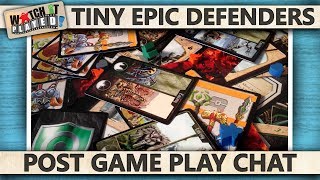
It's a game where you might find yourself in that situation of analysis paralysis, and you know what? Even though it takes a while to play, every decision matters. The board state changes after every single turn, so you can't plan more than one move ahead in multiplayer, and that's part of the tension that makes it so engaging once you understand it.
— Watch it Played
This game is still my favorite. I won again, which was hilarious because [opponent] just gets so upset. We're incredibly competitive when we play, we don't give an inch, and for that intensity of head-to-head play, Five Tribes at two players is just phenomenal. The bidding system makes you constantly think about what your opponent values.
— Our Family Plays Games
I had this game on my want-to-buy list for years, and we managed to give it a go. It's super fun. There's this neat mechanic where meeples start on all the tiles, and you have to pick them up and drop them one at a time, then pick up all of the same color when you get to your final tile. With two players especially, the bidding mechanic adds this whole layer where you can set up so you get two back-to-back turns.
— Allies or Enemies