





















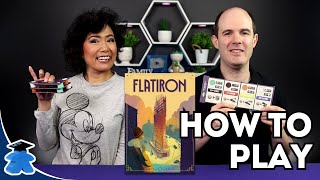















Flatiron Deep Dive
What the Community Thinks About Flatiron
Flatiron has quietly emerged as a standout two-player experience despite flying under the radar for many board gamers. Reviewers consistently praise the game for delivering substantial strategic depth within a compact 45-minute timeframe. The game combines elegant worker placement mechanics with an engine-building core, wrapped in the thematic shell of constructing New York's iconic Flatiron Building. What sets Flatiron apart is how it manages to feel weighty and demanding while remaining accessible to both new and experienced players. The asymmetrical player boards and focus on tight, interactive gameplay have resonated with strategists who appreciate games that reward planning and timing without descending into analysis paralysis. Multiple reviewers have noted that Flatiron deserves far more attention than it currently receives, particularly among players seeking meaty two-player games that don't stretch beyond an hour.
Core Mechanics That Define Flatiron
Worker Placement and Card Drafting
At its foundation, Flatiron employs worker placement using architect tokens that move between five distinct locations: Fifth Avenue, 22nd Street, 23rd Street, Broadway, and City Hall. Each turn, players must vacate their current position and claim an unoccupied location to take actions. This creates constant interaction because blocking becomes a viable and often necessary tactic. From the streets, players can buy the top card from the corresponding deck, spend money to gain two dollars, or activate all the cards already installed on their personal board in that street's column. The card-buying mechanism drives the engine-building experience. Players acquire street cards for one or two dollars, then tuck them into their personal tableau either above or below existing cards to customize which card effect activates. Each location on a player's board can hold a maximum of three cards, creating genuine deck-building constraints that prevent anyone from assembling an overpowered engine. This limitation forces meaningful choices about specialization versus diversification.
Pillar Placement and Floor Completion
The thematic heart of Flatiron lies in constructing the building itself. Players buy colored pillars and place them onto the flat iron building on the shared board. Each floor requires exactly three pillars, and no two pillars on the same floor can share the same color. The critical tension emerges from the timing of floor completion. Whoever places the third and final pillar on a floor triggers its completion and claims the substantial points associated with building that floor, plus bonuses from the board state. This creates exquisite moments of decision-making: do you place the second pillar now and risk your opponent completing the floor before you, or do you wait and risk losing the opportunity entirely? Players can carefully set up pillar placements over multiple turns, only to have a savvy opponent strike at the perfect moment and steal credit for the completed work. The floor-completion mechanic generates constant tension and rewards both patient setup and opportunistic pivoting.
The Flatiron Experience
Puzzly, Crunchy, and Solitary
Reviewers consistently describe Flatiron as a brain-burning puzzle where every decision carries weight. The game rewards deep thinking and lookahead planning without becoming paralyzing. Players are constantly evaluating which streets to visit next, which cards to acquire, how to arrange their tableau for maximum efficiency, and when to push for floor completions. The solitary nature of personal engines means players can focus on optimizing their own strategies while remaining acutely aware of their opponent's setup. Multiple reviewers called the game puzzly and deeply satisfying, particularly for players who enjoy the personal optimization and engine-building found in Euros like Terraforming Mars or Brass. The white backgrounds on street cards make the information clear and readable, contributing to the puzzle-solving feel. The game includes variable player board configurations on both the purple (standard) and green (advanced) sides, ensuring that even when both players use identical rule sets, their action landscapes remain fundamentally different, adding replayability and forcing each player to tailor their engine to their own board layout.
Intense Blocking and Indirect Conflict
While Flatiron is not a destructive or directly mean game, it generates profound player interaction through blocking and opportunity denial. Players frequently position themselves on streets specifically to prevent opponents from executing critical actions. Because each location can only accommodate one architect at a time, strategic positioning becomes paramount. A player who recognizes that their opponent needs a specific street to activate a powerful engine cascade can simply occupy that street and force the opponent to pivot. The game rewards reading what your opponent is building and making tough choices about when to block their plans versus focusing on your own development. This creates tension that feels earned rather than arbitrary. Reviewers praised how the game achieves meaningful interaction without being destructive, allowing both players to pursue their strategies while constantly interfering with each other's execution. The experience of seeing a carefully constructed setup torpedoed by savvy blocking or an unexpected floor completion generates both frustration and the kind of memorable moments that keep players returning for repeated plays.
What Makes Flatiron Stand Out
Compact Design with Serious Strategic Depth
Flatiron packs remarkable strategic density into a 45-minute game with only five worker placement spaces. Reviewers marveled at how much strategy fits into such a tight design. Each location offers three distinct action options, cards appear with multiple ability configurations, and the board state evolves with each floor addition and newspaper token swap. The game manages to deliver the gravitas of a heavy Euro while running faster than most light Euros. This makes Flatiron exceptional for players who love strategic games but lack the time for multi-hour commitments. The asymmetrical player boards mean that while both players follow the same rules, they pursue different action paths, creating natural differentiation that makes repeated plays feel fresh. The game also includes an optional solo mode and variable difficulty configurations, expanding its appeal beyond pure two-player competition.
Thematic Integration and Production Quality
The Flatiron Building itself serves as more than window dressing. Constructing the 3D structure provides constant visual feedback on game progress and creates genuine satisfaction as the iconic tower rises throughout the match. Reviewers appreciated the cohesive art deco aesthetic that immediately evokes 1920s Manhattan architecture. The chunky, colorful pillar tokens feel good to handle, and the individual sculptor designs for the two architect meeples add personality. The card designs employ clear iconography despite requiring reference during early games, and the use of white backgrounds keeps information readable even when cards overlap on personal tableaus. The production quality reinforces the game's identity as a focused, premium experience designed specifically for the two-player format.
Potential Drawbacks
Icon Complexity and Reference Overhead
While the game is language-free through icon use, some symbols require familiarity to parse quickly. Multiple reviewers noted that certain icon combinations, particularly around cost modifications and conditional bonuses, demand occasional rulebook consultation during early plays. Examples include symbols where a minus-three cost becomes minus-two when modified by another card, or icons indicating that specific bonus conditions apply only under certain board states. Experienced players internalize these patterns within a few games, but the reference overhead during initial plays represents a minor friction point. Players should expect to keep the rulebook nearby for the first few plays, particularly when resolving unexpected card interactions.
Limited Player Interaction Styles
Flatiron's interaction model centers on blocking and opportunity denial rather than direct confrontation. For players who prefer games with overt combat, negotiation, or aggressive player elimination, Flatiron's indirect interaction may feel too subtle or passive. The game never removes opponents from the board or directly damages their position. Instead, tension emerges from timing decisions and tactical positioning. Additionally, while the game supports solo play against an AI opponent, the core experience is fundamentally competitive, and some reviewers noted that the solo mode, while competent, does not match the satisfaction of head-to-head play. Players seeking cooperative experiences or more openly confrontational interaction should consider whether Flatiron's style aligns with their preferences.
If You Enjoy Flatiron
Players who love Flatiron share several common interests. If you enjoy White Castle, Fields of Arl, or other mid-weight two-player Euros, Flatiron delivers comparable strategic satisfaction with a distinct personality. Fans of engine-building games like Brass, Terraforming Mars, or Carcassonne will recognize familiar optimization pleasures in developing personal tableaus and cascading effects. Those drawn to games where timing and blocking matter more than random elements or dice rolling will appreciate Flatiron's emphasis on player agency and careful planning. The game appeals to players who value replayability and want their investment in learning a design to pay dividends through multiple plays. Flatiron also suits players who appreciate thematic integration where mechanics reinforce story, as building an actual structure becomes both mechanical goal and narrative satisfaction. Finally, anyone seeking two-player games that offer genuine strategic depth without consuming an entire evening should prioritize Flatiron as a core recommendation.
What Reviewers Are Saying
"This game is easily the biggest of the three we're talking about. It is a worker placement and engine building game and it's based around the building of the flat iron building in New York. What's really interesting is every single spot is different for the other person, meaning that all of the spots are asymmetrical. What this does, it adds such good player interaction to the game because blocking becomes super important."
— Allies or Enemies
"Flat Iron is a two-player only worker placement game where you build an engine to complete the Flat Iron building in New York. What I love about this game is how much strategy is packed into only five worker placement spots. It makes the game so tight. And what's also really interesting is every single spot is different for the other person."
— Board With Steve
"The brilliance is in the timing and indirect interaction. You can start building pillars on a floor, but whoever places the third pillar gets to complete the floor and score the big points regardless of who placed the first two. So you're constantly asking yourself, do I place this pillar now and risk my opponent finishing the floor, or do I wait and potentially miss the opportunity entirely?"
— Board Game Critique