/pic3647804.png)


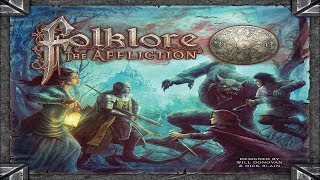





Folklore: The Affliction Deep Dive
What the Community Thinks About Folklore: The Affliction
Folklore: The Affliction stands out in the board gaming landscape as a dark, atmospheric role-playing experience in a box that delivers branching narrative and meaningful choice. Reviewers consistently praise its gothic setting and the way its living world unfolds through both planned story moments and random encounters that can dramatically shift how campaigns play out. Channels like Meet Me At The Table and AzureDeath have earned it a reputation among solo and cooperative players as something special that scratches the tabletop role-playing itch without requiring a dedicated game master.
Core Mechanics That Define Folklore: The Affliction
Narrative-Driven Campaign with Branching Paths
At its heart, Folklore is a story-forward game where your choices matter. You move through a storybook that guides your party toward objectives, but along the way you encounter fork-in-the-road decisions that alter how the narrative unfolds. Reviewers emphasize that the story elements you gather persist throughout the campaign and unlock or block content later, creating a genuine sense of consequence. The game offers multiple campaigns with varying difficulty, so players can experience different branches on subsequent playthroughs with new characters. The published edition by Greenbrier Games leans into this replayable, choose-your-path structure.
Dice-Based Combat with Character Progression and Loot
Combat uses a percentile dice system where you roll to hit against enemy defenses. Your characters level up by accumulating lore, gaining new abilities and stat boosts as they progress. The game incorporates a full crafting and equipment system, with loot discovery providing tangible growth in character power. Combat takes place either as full dungeon crawls on tiled maps with miniatures, or as faster skirmish encounters, letting you choose the depth of engagement depending on narrative pacing. This split keeps the moment-to-moment play varied rather than locking every fight into the same lengthy setup.
The Folklore: The Affliction Experience
Overland Travel Shifting Into Dungeon Encounters
Folklore uniquely shifts scope between layers: the overland map where you move between locations and encounter random events, dungeons with full tactical tile-based combat, and skirmish encounters that resolve quickly without setting up detailed maps. This variety keeps gameplay fresh and pacing fluid. Reviewers highlight how traveling the map itself generates narrative through encounter cards, town visits with multiple services, and road events that build atmosphere and consequence. You might discover allies, acquire items, or stumble into a vampire and lose precious supplies, all before reaching your destination.
Cooperative Storytelling with House-Ruled Flexibility
The game shines as a cooperative experience where players discuss decisions, pool resources, and react together to narrative reveals. Many reviewers note that one player can act as a quasi-game master to adjudicate ambiguous situations and adjust balance, particularly for lower player counts. This flexibility transforms Folklore from a rigid system into a customizable engine for the exact campaign your table wants to play. Several reviewers have shared detailed house-rule sets to streamline bookkeeping and tune difficulty, which speaks to how much the community has invested in making the experience their own.
What Makes Folklore: The Affliction Stand Out
A Dark Gothic World with Environmental Storytelling
The setting is richly realized, filled with cultists, vampires, werewolves, and demonic forces. The gothic aesthetic is not window dressing; it shapes encounter design, enemy types, and story hooks. Reviewers consistently cite the dark fantasy world as a major draw, comparing it favorably to other board game universes for atmosphere and internal consistency. The game builds its world through exploration and narrative encounters rather than dense exposition, so learning about the afflictions and factions feels organic and earned.
Modular Design and Expansions That Extend Scope
The base game ships with a full story, but expansions add additional campaigns, characters with unique abilities, and an adventure-creation toolkit for building your own scenarios. Reviewers note this modularity lets you tailor the experience: you can play a tight, focused story or commit to a sprawling multi-chapter saga. Each character class plays distinctly, with different ability trees and starting equipment, encouraging replays to explore alternate builds and party compositions.
Potential Drawbacks
Challenging Difficulty and the Healer Dependency
Folklore is genuinely tough. Reviewers consistently note that most party compositions feel obligated to include the healing class, or the game becomes significantly harder. Combat damage can spike, and without healing or defensive abilities, characters go down quickly. The difficulty ramps up noticeably as the story progresses. Failure is not always catastrophic, since you can often continue playing, but it creates narrative pressure and forces careful resource management. This is by design, yet it may frustrate players seeking a lighter experience.
Bookkeeping Burden and Session Length
The game involves substantial upkeep: tracking character stats, equipment, status effects, power points, lore, and story elements. Reviewers note that sessions can run long, especially early on as you learn the rules and combat systems. The percentile system, while thematic, can feel swingy when small bonuses do not meaningfully shift the outcome. Some reviewers recommend house-ruling faster combat resolution or playing abbreviated campaigns to keep sessions manageable, which again points to a system that rewards investment more than casual pickup play.
If You Enjoy Folklore: The Affliction
If Folklore captures your imagination, several adjacent experiences are worth exploring. Shadows of Brimstone delivers the overland-to-dungeon structure and gothic horror tone, though with a wild-west-meets-cosmic-horror flavor and looser narrative scaffolding. Runebound provides hex-crawl adventure and character leveling with more sandbox freedom and less scripted story. Arkham Horror: The Card Game matches the dark atmospheric tone and campaign branching if you prefer a card-driven system, while Destinies uses an app to carry the narrative so you can skip much of the bookkeeping. For classic dungeon crawling with lighter rules and faster setup, HeroQuest remains an approachable entry point into the same fantasy-adventure space.
What Reviewers Are Saying
"This game has an overland adventuring element, but it also has a dungeon-crawling element, and it also has a fantastic emerging narrative. The game moves between different scopes. In certain parts you're moving your characters on a map, but then you'll be instructed to pull out these dungeon tiles and move your miniatures around and actually do the dungeon-crawling part."
— AzureDeath
"The story is phenomenal. These characters can be kitted out to be however you want them to be. You want to be a healer? You can be a healer. You want to be a tank? You can be a tank. The skills you gain are going to make your character become whatever you want them to be."
— Meet Me At The Table
"This is such an amazing system. If you haven't tried it, do yourself a favor, it's just so good. The way that it moves between different scopes, going from the overland map to zooming into the dungeon with your miniatures and finding events along the road, it's just so cool how it does that."
— The Dungeon Dive