/pic1528722.jpg)



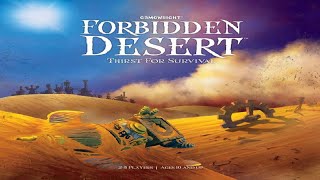




















Forbidden Desert Deep Dive
What the Community Thinks About Forbidden Desert
Forbidden Desert occupies a unique place in the cooperative game landscape. While some collectors view it as less of an instant gateway than its lighter sibling Forbidden Island, the broader board game community recognizes it as the standout entry in the Forbidden series. Players consistently cite its elegant design and meaningful challenge as reasons to keep it in rotation at family gatherings and gaming events, even when simpler titles see the table more often. Reviewers from Board Stupid to Pair of Dice Paradise return to it as a reliable, replayable team experience.
Core Mechanics That Define Forbidden Desert
Tile Shifting and the Living Board
At the heart of Forbidden Desert lies a deceptively simple yet powerful mechanic: the board itself becomes an adversary. Rather than remaining static, sand accumulates on tiles across the desert, forcing players to constantly adapt their exploration patterns. Players must uncover tiles by removing sand tokens and dig out critical locations to access ship parts scattered throughout the landscape. As the desert winds intensify, tiles shift their positions, fundamentally altering the layout and forcing the team to recalibrate mid-game. This creates a dynamic, living environment where the very terrain works against the expedition, a design from Matt Leacock that reviewers single out as genuinely clever.
Cooperative Survival Against a Ticking Clock
Forbidden Desert is fundamentally a race against environmental collapse. Each character has unique abilities, and players must coordinate their limited actions to accomplish multiple objectives: locate and excavate ship parts, manage their water and survival resources, and escape before the sandstorm becomes overwhelming. The game scales its challenge through variable difficulty settings, letting groups dial anything from punishing to accessible. This flexibility means both newcomers and experienced gamers find meaningful engagement, since the core tension of resource scarcity remains regardless of the difficulty level chosen.
The Forbidden Desert Experience
Theme That Matches Its Mechanics
The thematic coherence in Forbidden Desert stands as a model for cooperative design. The shifting sands are not merely a mechanical gimmick; they embody the core fantasy of being stranded in an increasingly hostile desert excavating a buried flying machine. Every sand token added, every tile obscured, every location that moves pushes the narrative forward. Players are not simply solving an abstract puzzle; they are desperately working together to survive mounting environmental pressure. This harmony between theme and mechanics creates an absorbing experience where the game world feels like a living antagonist rather than a collection of rules.
Replayability Through Scaled Difficulty and Variable Setup
The game excels at accommodating different play groups and skill levels without sacrificing tension. New players can start on easier settings and work their way up to more punishing tiers, creating a natural progression path. Additionally, the random placement of ship parts and the variable board state mean no two games follow identical paths. This combination of scaling mechanics and situational variability ensures that Forbidden Desert remains fresh across multiple plays, encouraging groups to return for another attempt after a loss rather than shelving it.
What Makes Forbidden Desert Stand Out
Designer Pedigree and Mechanical Innovation
Forbidden Desert comes from Matt Leacock, the architect behind the wildly successful Pandemic series, and it demonstrates why his design philosophy resonates with players. The way the desert moves and accumulates sand is genuinely smart, eschewing random chaos in favor of a system that feels both threatening and understandable. Players can anticipate how the board will shift while still being surprised by the consequences of their positioning. This balance between predictability and challenge creates gameplay that rewards thoughtful planning without punishing every stroke of bad luck.
Sweet Spot for Player Count and Engagement
While the game accommodates two to five players, reviewers consistently note that four players represents the ideal experience. At this count, the team has enough diversity of abilities to handle varied tasks, and the action economy keeps pacing tight without anyone feeling sidelined. Even at two players, the game scales well, maintaining the core tension and requiring meaningful cooperation. The fact that it works across this range without significant rules changes speaks to thoughtful design that respects different group sizes.
Potential Drawbacks
Higher Complexity Than Its Predecessor
Forbidden Desert demands more engagement than Forbidden Island. While this depth appeals to many gamers, it can be a barrier for groups seeking a quick, lightweight cooperative experience. The tile-shifting mechanic and the need to coordinate around a constantly changing board add cognitive overhead compared to the lighter sibling title. Some teachers and casual players report that simpler cooperative games like Castle Panic actually see more table time in their collections, suggesting that the added complexity does not always translate to increased play frequency in lighter gaming contexts.
Loss Frequency Can Frustrate Without the Right Mindset
Forbidden Desert delivers losses regularly, even on moderate difficulty settings. While this loss rate keeps the game compelling for players who embrace the challenge, groups expecting consistent victories may find the experience demoralizing. The game asks players to treat losses as fuel for another attempt rather than as failures, a mindset not all groups naturally adopt. Without that reframing, the difficulty can feel punishing rather than engaging, and the constant environmental pressure may wear on players who prefer a more relaxed cooperative game.
If You Enjoy Forbidden Desert
Players who gravitate toward Forbidden Desert often appreciate cooperative games that challenge teamwork through environmental pressure and resource scarcity. Consider exploring Pandemic Legacy, which applies narrative stakes and evolving mechanics to the same designer's core cooperative framework. For groups seeking similar tension through a shifting board, Horrified offers variable-difficulty monster hunting with asymmetric setup and scalable challenge. Those drawn to the survival fantasy might explore Survive: Escape from Atlantis, which uses tile destruction and peril-filled navigation as its central conflict, creating a comparable sense of urgency. And for players who prefer pure cooperative survival without escalating complexity, the original Forbidden Island remains an elegant, lighter alternative that preserves the core fantasy at a gentler entry point.
What Reviewers Are Saying
"Forbidden Desert is a tile exploration game where you're basically stranded in a desert trying to find this flying relic that has been scattered into pieces. The interesting thing is that the desert is actually trying to kill you; it moves around and blows around. The sands accumulate on certain tiles, so you have to work with your friends to get rid of the sand on the tile that someone else wants to explore."
— Board Stupid
"Its combination of challenge and accessibility makes it a comfort game to me, and it keeps me coming back to it. I always keep it available at gaming events and family get-togethers, and it's just never let me down."
— Pair Of Dice Paradise
"Forbidden Desert is a great co-op game where you're working as a team to try and unbury yourself, find your ship parts, and escape before it gets covered in sand. We lose about half the time, which is kind of great for a co-op, because it keeps pushing you to try again."
— Allies or Enemies