/pic4928296.jpg)
The sub-tropical climate and environment of Taiwan makes the island highly suitable for cultivating top quality tea. But it wasn't not until the 19th century after English businessman John Dodd discovered some amazing Oolong tea there that the Taiwanese tea business truly begin to bloom and "Formosa Tea" became world-reknowned.
In Formosa Tea, players are tea farm owners competing to harvest the best tea leaves, improve their tea processing techniques, and produce tea of the highest quality for not only the domestic market but also for the international market. With the unique worker placement and worker advancement mechanisms, along with the tea dehydration and scenting processing, players must use their workers wisely to make the best tea in the market.
A game of Formosa Tea is played in four rounds. In each round, players take turns to perform one of the five possible actions:
Send a worker to harvest tea leaves
Send a worker to a tea factory to process tea leaves
Retrieve a worker from the tea factory after tea processing is completed
Send a worker to sell tea in the domestic market
Send a worker to sell tea to international merchants.
After the end of the fourth round, the player who has the most prestige points wins!



- No knowledge of gameplay or theme.
Mechanics (from transcript analysis)
Video topics + discussion points
Quotes (from this video)
- this is the only game that I just straight up asked for this is this is actually iconic this is the only game in the history of uh Foster the meele that Jamie went up and just said hey I would really like a copy of that game
- I'm not like super big into RPGs but this is one that could get me into RPGs
- it is literally a pile of squishy poops
- I really wanted to focus this packs on getting um games that are really hard to find in Canada
- unless yeah something drastically changes just financially it does not make any sense for us to go
- we'll see what that other 10% says
References (from this video)

- constantly doing something
- simple mechanics
- Engaging
- plastic worker pieces felt cheap
- preferred wood pieces
Mechanics (from transcript analysis)
- Worker Placement — Players commit workers, which can lead to mistakes that lock them in. Requires attention to opponents' moves to avoid blocking.
Video topics + discussion points
Quotes (from this video)
- It's better than a sharp stick in the eye, as we say. A poke in the eye with a sharp stick.
- Grunt big or go home.
- We don't have a Costco nearby, so we don't really shop there.
- It's it's it's it's it was like basically Coke Pepsi were like this
- The nerds are sucking all the fun out of everything once again.
- My parents never gets worked up about anything, but man, does he get worked up about the Minnesota Vikings.
- And then you realize it's because it's it's it's all about money right? I mean, that's just that's all it is.
- Finding joy is an act of resistance.
- You know what I realized when watching the video? I'm a goofy looking [ ].
- Do you know what condescending means?
- It's like what? No, you just go like you just say use the word condescending and then go which Chris means to speak down to somebody. You just kind of use a little bit of that demeaning tone and guarantee they'll like bow up.
- So, Forest, what what who moved the rock? Well, who moved the rock for you, Chris? You were just bored. You saw you got an email or what?
- Hey, that's impressive though.
- The reason why can't I think of the other guy's name? I can picture him. He's been in a bunch of movies. He's he's like just a he's a tough guy actor and I keep on
- I always will love I mean Bruce Willis I mean god bless him because he doesn't have like seven marbles left rolling around in his brain right now
- Well, as long as you're not like, you know, breaking your arm, patting yourself on the back, you know, about it.
- It's just like you you you you you read you looked at cheat sheets, you looked at like the the schedules, you looked at this thing and that. You came up with your own listings. You with your gut. Now any rum dum can just go, oh, you know, here's all the stats, you know, here's all the famous football stats right here.
- It's not about guns. Yeah, it is.
- No, it's not the gun. It's the person. They plotted this, you know, blah blah blah blah blah. Shut up. Just go away.
- It's just like, well, why is it why is it seem so you know, um why does it seem to me that it just makes so much more sense if if like you know, allowing people you know, the right
- Well, yeah. I mean I mean why does it seem why why am I the crazy one when I'm like saying things like well maybe I I just just an idea. Um maybe we don't have you know, maybe we don't just you know, have you know more guns than people you know, I don't know.
References (from this video)

- It's a cool game.
- It's very good.
- Tea
Mechanics (from transcript analysis)
- Resource processing — Players are trying to make tea, processing it, and drying it.
- Set Collection — Players are getting stuff which is tea.
Video topics + discussion points
Quotes (from this video)
- It's a good one. Next up is another good one called Formosa Tea.
- It's a flip and cube placing game.
- This is the one that I wanted us to get.
- This is the way that doesn't spill.
- It is a longer game. I would have liked to play it but there is too many games so we're not playing it.
- He played it when it arrived. We never did.
- it's supposed to be fun, but there are so many fun games.
- this made it into the top 10 from last year.
- I love the worker placement like bidding that you bid with work.
- But I like so much about it. I just don't like how long it is.
- So even though I love and adore it, I don't think I will play it again.
- my number one game from last year was galactic cruise. Galaxy Cruise.
- And those are 20 more games leaving the shelf for different reasons.
- And if you have too many games, take a hard look on yourself and see if there's something that you don't really need to have there because I promise you it feels good.
References (from this video)

- elegant box size; fits well on shelves
- interesting timing interactions with real tension
- can feel long for a light audience
- may require careful teach to avoid confusion
- tea economies, timing, and network effects
- Formosa (Taiwan) tea production and trade
- timing-driven worker/resource interaction
- Federation (as a weight/tocus on placement and timing)
Mechanics (from transcript analysis)
- Engine Building: Triggered/Cascading — timing matters; you must balance tea placement and factory activation
- resource/hand management — resources must be moved and used at the right moments for maximum value
- timing/triggering — timing matters; you must balance tea placement and factory activation
- Work replacement — players place workers to gain tea resources and trigger actions across factories
- Worker Placement — players place workers to gain tea resources and trigger actions across factories
Video topics + discussion points
Quotes (from this video)
- it's only cards, don't make a big box for small cards
- Similo is a fantastic gateway cooperative deduction game
- it's a clever game where you want to have your workers out on the fields and it's a little blocking
- the tea resources at the right place at the right time matter a lot
- it's a cool timing in this game
- it's Batman everybody tells the truth — I love the detective system, but I'm not into Batman as a property
- it's just like the investigative system we love
- this is catalog the card game, yeah this is a neat package
- I thought this game was fun
- the deck-building and racing mix works well
References (from this video)
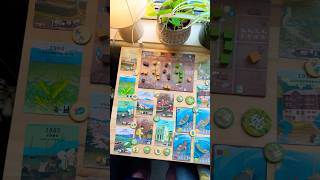
- Unique integration of worker placement with a worker-advancement mechanic tied to tech tracks
- Thematic fidelity to tea processing steps (withering, heating, rolling, oxidizing, drying, infusing)
- Engaging multi-step production cycle that influences scoring and market development
- tea production, processing, and trading
- Taiwanese tea plantations and the domestic/international tea market
- educational, process-forward overview
Mechanics (from transcript analysis)
- color/stacked resource harvesting — Harvesting can take either all cubes of the same color or one cube of each color from the space, influencing subsequent track progress.
- Compound Scoring — Final tea quality determines scoring; good or normal quality yields extra points.
- quality-based scoring — Final tea quality determines scoring; good or normal quality yields extra points.
- tea processing and quality management — Players process tea (oolong/black/green and scented varieties) on their boards, managing withering, heating, rolling, oxidizing, drying, and infusing to shape quality.
- tech track advancement tied to harvest — Whichever row the tea was harvested from grants advancement to players with a master on the corresponding tech track, equal to the number of workers in that row.
- Worker Placement — On your turn you place one worker on an unoccupied tea plantation space; the space dictates resource flow and triggers chain effects on tech tracks.
Video topics + discussion points
Quotes (from this video)
- This game has a unique worker placement and worker advancement dynamic.
- On your turn, you'll place one worker on an unoccupied tea plantation space.
- You'll be processing ulong, black, and green tea and manipulating their quality and dehydrating them on your player board.
- Whichever row the tea was harvested from, each player who has a master on the tech track in that row gets to move forward the number of spaces equal to the number of tea plantation workers in that row.
- It's a beautiful game and I love it.
References (from this video)

- Beautiful, painterly art with a refined color palette
- Deep and thematically cohesive tea production simulation
- Rulebook may require study and external references for mastery
- tea cultivation, processing, and distribution
- Taiwanese tea production; historical and culturally rich setting
- nerdy and detailed with a focused theme
Mechanics (from transcript analysis)
- Resource Management — Manage different teas with varying processing steps to fulfill orders.
- Worker placement / action selection — Players place workers to harvest, process, and fulfill orders for teas.
Video topics + discussion points
Quotes (from this video)
- It's like a board game summer camp at a hotel.
- You just get so much gaming in.
- Board game goals. I like that.
- It's always a lot of fun when you find the right people.