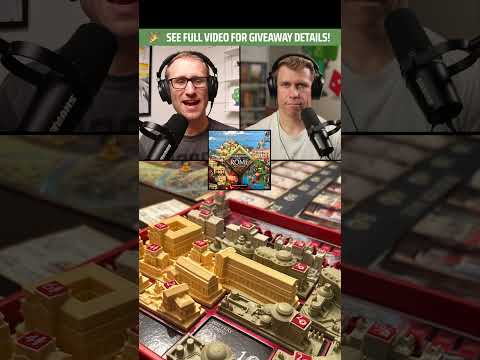




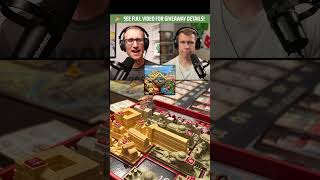

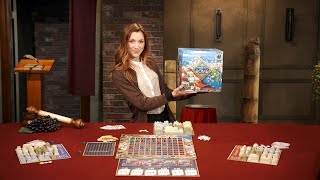



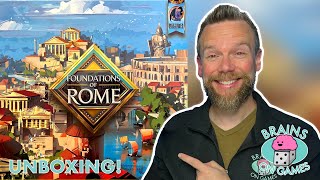
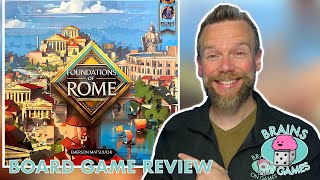


















The city-building board game Foundations of Rome puts you into the role of an architect competing to own land and build magnificent structures! Build domūs and insulae, fountains, foundries, and more to increase your renown - gaining glory for yourself and the empire! With 96 wonderfully detailed miniatures in the base game, Foundations of Rome is a testament to the glory of Rome that you can bring to the table.
Foundations of Rome is the next, and biggest game to date, in the Dice Tower Essentials line and is designed by famed designer Emerson Matsuuchi. With a quick setup time and easy to learn to rules you will be on your way to achieving glory within Rome in no time!
On a player's turn they select from purchasing a new lot, building a new building in the shared city of Rome, or collecting income!
Players collect Glory Points at the end of each round based on the population and commerce they have brought to the city as well as gaining glory for civic buildings that score not only based on their own buildings, but those of their opponents!
—description from the publisher
- Large, visually impressive box with well-organized insert trays
- Smooth, quick gameplay despite the large footprint
- Engaging population-based catch-up mechanic that enables multiple paths to victory
- Flexible victory conditions (population, commerce, civic buildings)
- Scoring system can reward interactions with neighbors, not just own components
- Good table presence and tidy cleanup
- Very large box and ample space required for play and storage
- As a Kickstarter product, aftermarket availability and pricing may vary
- Expansion content can add complexity for new players
- city development, population-based scoring, economic activity
- Ancient Rome city-building
- Eurogame / abstract strategy
- Foundations of Metropolis
Mechanics (from transcript analysis)
- Compound Scoring — Buildings score not only based on what they touch but also any neighboring building that they touch, amplifying scoring potential.
- Deed cards and lots placement — Take deed cards to claim lots, slide deeds, and place a marker on a lot to build within its boundaries.
- dice placement — Take deed cards to claim lots, slide deeds, and place a marker on a lot to build within its boundaries.
- end game bonuses — Expansion adds bonuses for placing lots along the edge of the board.
- End-of-era scoring and income conversion — Each era ends with population and income scoring; income buildings convert to point buildings in the final round.
- Expansion edge bonuses (New Roads of Fortune) — Expansion adds bonuses for placing lots along the edge of the board.
- Income generation and money management — Income is earned from deeds and income-generating businesses on the board.
- monuments expansion — An optional expansion with monuments and additional pieces that fits in the box.
- Population scoring with catch-up — The leading player receives a bonus based on population; players behind gain population-based points tied to the leader.
- Touch scoring for Civic and other buildings — Buildings score not only based on what they touch but also any neighboring building that they touch, amplifying scoring potential.
Video topics + discussion points
Quotes (from this video)
- it's a big box however inside it's all very well laid out there has custom insert trays for each one of these pieces
- the goal is to have the most points at the end of the game you do this primarily through population
- it's really simple despite being a huge box it plays very smoothly and very quickly
- New Roads of Fortune expansion which allows you to get bonuses for placing Lots along the edge which is really cool
References (from this video)
- dramatic table presence
- premium production value (visuals/physical components)
- production/excess feel criticized as negative in the comment
- perceived narrow, repetitive decision space
- urban development and empire-building
- Ancient Rome city-building
- macro, historical
- Race for the Galaxy
Mechanics (from transcript analysis)
- area scoring / layout optimization — Points are earned based on how districts and features are arranged on the board
- Resource management — Players manage limited resources to optimize district placement
- tile placement — Players place district tiles to build their city and score points
Video topics + discussion points
Quotes (from this video)
- No parts of this game work well together. There are a zillion different interactions, none of which are emergent.
- Imagine if Race for the Galaxy had many more icons and none of them interacted with each other in any way.
- The game is extremely frustrating to play.
- Memorizing cards/combos doesn't make this fun.
References (from this video)
- remarkable table presence
- easy to teach, a good warm-up for heavier games
- monumental architecture and city planning
- ancient Rome city-building
- tabletop tableau with tangible components
Mechanics (from transcript analysis)
- engine building — Players develop infrastructure and manage resources to improve city output.
- engine-building/resource management — Players develop infrastructure and manage resources to improve city output.
- tile placement — Players place tiles to build districts and monuments.
Video topics + discussion points
Quotes (from this video)
- planning is the key to making the best game days.
- So, next time you're picking games, definitely think about these three categories and how you want to structure your game day.
- Put your ideas in the comments because you all come up with some freaking amazing ideas so far
References (from this video)
- Impressive large box and contents
- Multiple modules add replayability
- High-quality miniatures
- Clear focus on theme of Rome and monument building
- Large footprint may require substantial table space
- Setup and teaching may be time-consuming for new players
- building monuments and districts to form a thriving metropolis
- Ancient Rome city-building
- expository unboxing commentary with product highlights
Mechanics (from transcript analysis)
- mini-games — Physical miniature components representing buildings/monuments.
- miniatures — Physical miniature components representing buildings/monuments.
- Modular board — Board composed of interchangeable modules changing layout each game.
- modular_board — Board composed of interchangeable modules changing layout each game.
- Resource management — Players manage resources to construct monuments and expand the city.
- resource_management — Players manage resources to construct monuments and expand the city.
- tile placement — Players place tiles to build districts and monuments on a modular board.
- tile_placement — Players place tiles to build districts and monuments on a modular board.
Video topics + discussion points
Quotes (from this video)
- oh my goodness got some nice Miniatures it looks like
References (from this video)
Mechanics (from transcript analysis)
Video topics + discussion points
Quotes (from this video)
- And it's not just small publishers that are being affected.
- The tariffs applied to their products are equal to $14.50 for every $10 that they spend on manufacturing for an estimated total of $1.5 million of additional expenses just in import taxes.
- I do believe that the first step towards inflicting change for the better is for each of us to start finding opportunities to speak up, speak out, speak often.
- Using your voice empowers others to do the same.
- That's why I made this video to use my little voice to hopefully try and encourage all of us to use our voice.
- That's all I got.
References (from this video)
- impressive visuals
- excellent scoring system
- good player interaction through blocking
- holds up well over time
- ancient Rome
- history
- architecture
- Metropolis
Mechanics (from transcript analysis)
Video topics + discussion points
Quotes (from this video)
- This is my most played game of the year
- It is the perfect engine builder
- absolutely adore this game
- one that instantly I fell really hard for it
- would absolutely watch Oathsworn the HBO series
- the story and the setting is that rich
- for me the epitome of what a thematic game can be
- every click of the clock matters
References (from this video)
- strong three/five-player tension
- tightly interdependent scoring
- great table presence
- rules could be dense for newcomers
- Urban development and civil infrastructure
- Ancient Rome city-building
- Procedural, with overbuilding and adjacency scoring
Mechanics (from transcript analysis)
- Grid building — Replace existing buildings with larger ones to shift scoring and space
- Overbuilding — Replace existing buildings with larger ones to shift scoring and space
- tile placement — Place tiles to build districts and score points
- tile/area placement — Place tiles to build districts and score points
Video topics + discussion points
Quotes (from this video)
- the improvements or twists I guess that they make on the original Splendor formula are so much fun
- this game is going to be a keeper in the collection
- the overbuilding rules... room for creative strategic plays
- this mission was just tight and interesting
- Best in Class in terms of worker placement engine building
- three win conditions and deeds tokens make the game dynamic
References (from this video)
- Transparent value structure; strong interaction through adjacency
- Requires careful balance across three scoring pathways
- shared city-building and adjacency bonuses
- ancient Rome, city-building together with adjacent benefits
- transparent, system-driven
- Glen More II Chronicles
- Suburbia
Mechanics (from transcript analysis)
- auction/bidding for lots — players bid for spots to place buildings, impacting scoring and adjacency
- shared city-building — players contribute to a common city with local synergies
Video topics + discussion points
Quotes (from this video)
- Math probably undergirds 99.9% of all games on the market; it's a matter of realizing it or not.
- The more you understand the math, the quicker your design and balancing process can become.
- Uncertainty is the spice that keeps a game interesting; if everything is too transparent, it can feel solvable.
- Perception of balance matters more than perfect mathematical balance—fun and fairness are the real goals.
- Elegance in design comes from the system working with the fewest parts and no extraneous elements.
- Music and math share rhythm and pattern; game design thrives when the rhythm of rounds feels natural.
References (from this video)
- Nostalgic, aesthetically pleasing
- Accessible to non-gamers; strong grid/building growth feel
- Rome-inspired urban development
- Ancient city-building and growth
Mechanics (from transcript analysis)
Video topics + discussion points
Quotes (from this video)
- SETI, I learned it, loved it. My type of game.
- This is by the creators of Terraforming Mars, and it’s a castle defense game set within a Viking theme.
- Parks is a fantastic game.
- It's a basic worker placement, right? That's the base feel of Russian Railroads.
- I absolutely love Tissue. It’s a richly thematic game with different modules that carry the theme.
- Galactic Cruise is my number two. I am so in love with this game.
- Heat Pedal to the Metal is my number one. It’s a quick, fast card-driven race that just sings.
- In the Footsteps of Marie Curie is based upon Marie Curie's lifetime and the research she did.
References (from this video)
- Rich content and components when fully expanded; visually impressive in some versions
- Very high price; potential complexity and duration; clarity issues around per-player time scaling
- urban development and monument construction
- ancient Rome city-building
- city-building with drafting and grid-like layout
- Gloomhaven
- other city-building drafting titles
Mechanics (from transcript analysis)
- card drafting — Drafting cards to acquire actions and build on a grid-based city.
- grid-based city building — Placement and development of buildings for income and scoring.
Video topics + discussion points
Quotes (from this video)
- this is basically a fantasy war game for one to six players featuring six different races each with their own powers
- three hundred dollars for this it's ridiculous
- it's not cheap
- this is insane
- dinosaurs are cool
- it's basically pandemic vibe with the dice game
- it's a Mario Kart–style racing game that just had cards and wacky abilities
- beige dungeon crawler you do not want beige to be a name associated with your dungeon crawler
- amygdala i think is how you pronounce this this is uh was it game brewer
References (from this video)
- Elegant, tight decisions with impactful overbuilding rules
- Strong visual presentation and modular maps
- New players may need help understanding interactions
- Deluxe components can be pricey
- urban development and land value
- Ancient Rome building foundation and expansion
- historical-feel with modern design
- Cartographers
- Pax Pamir
Mechanics (from transcript analysis)
- area-control — gaining influence by adjacent buildings and placement
- Overbuilding — build over existing structures to gain more value or victory points
- tile-placement — placing building tiles to shape the city grid
Video topics + discussion points
Quotes (from this video)
- for the fans so yeah drop brain down below
- these links do help support the channel and we appreciate that
- it's a big epic experience and there's no other game you can schedule a day with six people to have this shared epic moment
References (from this video)
- Highly praised by industry figures
- Beautiful miniatures with detailed painting
- Easy to learn despite complexity in appearance
- Great looking game with impressive production quality
- Complex rulebook
- Building and development
- Ancient Rome
- Constructive gameplay
Mechanics (from transcript analysis)
- Drop and Build — Players drop building miniatures to construct foundations of Rome
Video topics + discussion points
Quotes (from this video)
- it's getting our board game coffee seal of approval that's how good
- baby's first deck builder it's super simple and then it gets gradually harder
- King of New York I find personally is the better version
- Aquatica from Arcane wonders is a fabulous game
- foundations of Rome is one of my like favorite games of the year
- we just need a name for it
- thanks for joining us if you like this video and you want to see more subscribe to our channel
References (from this video)
- accessible for new players
- great setup efficiency for a large box game
- box size may be intimidating
- urban development and civilization management
- ancient Rome city-building with modular expansions
- massive components with accessible core mechanisms
- Lorenzo Magnifico
- Terra Mystica series
Mechanics (from transcript analysis)
- large-box setup with trays — efficient setup with color-coded trays and organized components
- resource management / building — players draft and place buildings, manage resources
Video topics + discussion points
Quotes (from this video)
- "it's a sandbox of fun"
- "the rules are very, very simple"
- "playing the long game"
- "this is one of the best co-op games"
- "the setup time for the size of the box is one of the best ratios"
References (from this video)
- visual appeal on the table
- intuitive and quick to teach
- lots of modular depth
- base game can feel light without modules
- Building a city with cards/tiles and modular expansions
- Ancient Rome city-building
- History-inspired city-building
- Foundations of Metropolis
Mechanics (from transcript analysis)
- grid-based real estate — Players place buildings on a dense grid.
- Modular expansion — Modules such as personal goals, monuments, and various mechanisms add depth.
Video topics + discussion points
Quotes (from this video)
- tournaments is a whole other different sort of genre.
- Foundations of Rome on my top 10 games that I'm going to be playing in 10 years.
- I want to kind of push back against that whole trap that you can get stuck in about always only ever playing new stuff.
References (from this video)
- Most checked out despite large size
- Tom's favorite on third shelf
- Fantastic game
- Large physical footprint
- City building and civilization
- Ancient Rome
Mechanics (from transcript analysis)
Video topics + discussion points
Quotes (from this video)
- This is easily on this shelf. The most checked out game. Wonderlands War I see played every time.
- Foundations of Rome despite how big this game is. It gets checked out all the time.
- Everyone's really upset with Grimlord Games cuz they never delivered their last Kickstarter, but another company has picked it up.
- I don't I still don't understand why companies can't put names on the sides of their boxes. Come on now.
- Frostpunk, the board game if you're ready to have a depressing day.
- I think Mosaic is a fantastic civilization game. So fast and easy to play.
- People love Smashup. I have almost everything for Smashup, but it just barely gets played.
- Probably Twilight Imperium is my favorite of all these here, even though I don't play it that much.
- Last Kingdom is a kind of a really fun game from Games based on said TV series. Uh but pretty good. Think Game of Thrones style.
References (from this video)
- solid gameplay loop
- expansion options (monuments, trade) add depth
- revisited and enjoyable
- large footprint / large components
- potentially expensive with expansions
- city-building and trade
- Urban development in ancient Rome with land plots and monuments
- Eurogame
- Foundations of Metropolis
Mechanics (from transcript analysis)
- area_control — auction/bid to acquire plots and influence area control
- building_and_land_development — construct buildings on plots
- expansion_modules — monuments expansion and trade expansion
- trading/commerce — trade, selling, bartering along the river
Video topics + discussion points
Quotes (from this video)
- my favorite game I played today was Michall Regrets.
- This is the big plastic miniatures version of Foundations of Metropolis.
- this really buttery smooth area control area majority card game
References (from this video)
- clean, competitive, accessible to teach
- base box expensive; expansions affect value
- bidding and development with monuments
- city-building empire with polyomino influence
- clear, cutthroat strategy
- Foundations of Metropolis
Mechanics (from transcript analysis)
- Area Control — placing lots and managing scoring zones
- bidding — auction-like decision on lots
- monuments expansion — modular rules to tweak scoring and actions
Video topics + discussion points
Quotes (from this video)
- Detective Club is going to be one where you have these different cards that are all different kinds of images that are really beautiful and very unique
- it's a clever timeline; accessible and easy to explain to anyone
- the expansion really elevates the gameplay on Aquatica
- it's the best slaughter game and it's very deep, but accessible
References (from this video)
- epic scale and thematic feel
- mechanical depth with multiple paths to scoring
- heavy rules complexity and longer playtime
- large-scale urban planning, economy, and infrastructure
- ancient Rome city-building with ambitious zoning and growth
Mechanics (from transcript analysis)
- dice drafting / zone sequencing — Players draft dice resources and place them to develop districts and zones across a Roman metropolis.
Video topics + discussion points
Quotes (from this video)
- we're not here to make friends we're here to break people
- one of the biggest personalities in a board game space
- it's a good investment
- the idea and it's it's mostly illegal now I believe
- this version is a ton of fun
- the table presence is terrific
References (from this video)
- easy entry for a regular gaming session
- works well as a bridge game for language/history topics
- not a deep historical simulation; limited in scope
- development of a Roman city-state and governance
- Ancient Rome society and city-building context
- short-session, approachable for weekly gaming
- Republic of Rome
- Trojan War Role-Immersion Game
Mechanics (from transcript analysis)
- city-building — tile/resource management to build a Roman city and meet goals
- short session design — intended for quick play and frequent discussion
Video topics + discussion points
Quotes (from this video)
- the students decide what they want to do and I throw events at them
- role immersion incorporates all of those different variations and I don't find one version like better or anything like that
- it's not perfectly balanced
- just jump in and get started
- get your foot in the door
References (from this video)
Mechanics (from transcript analysis)
Video topics + discussion points
Quotes (from this video)
- Gloomhaven will not be removed from number one on BGG it's just not possible.
- Frost Haven tweaks a few things but the stuff that it adds is so much more involved and in depth.
- Arc Nova is meteoric rise in the top lists; it's everywhere now.
- Mage Knight is my number one favorite game of all time.
- Spirit Island is my number one cooperative game of all time.
References (from this video)
- immersive ancient Rome theme
- architectural growth represented in gameplay
- tactile and educational for classrooms
- data on real ancient Rome could be contested; heavy setup
- availability of components may limit play
- city-building; architecture; archaeology
- Ancient Rome urban planning and architectural expansion
- tactical city-building euro
Mechanics (from transcript analysis)
- grid-based city-building — build a city with a grid layout to maximize monuments.
- mechanical economy / resource management — managing finances to construct buildings.
- tile-placement — placing foundations to form districts like Forum and Colosseum.
Video topics + discussion points
Quotes (from this video)
- this game puts me right into the Palace of Ivor every time I play it
- I'm going to Portugal with my parents this summer and you know I had a choice between getting a Lonely Planet guide or picking up Alhambra, and I really just felt like Alhambra was better prep
- Foundations of Rome truly an incredible representation of architectural growth in a major ancient city
- I am history or nothing if it's not historically immersive it's not on my shelf