












French Quarter Deep Dive
What the Community Thinks About French Quarter
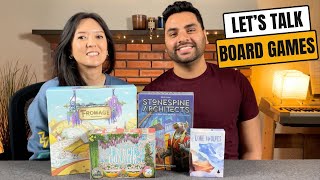
Reviewers tend to treat French Quarter as one of the more approachable entries in the loaded rolling rights line from Motor City Gameworks and 25th Century Games. Many place it alongside Three Sisters and Fleet: The Dice Game, while noting that its New Orleans theme gives it a personality of its own. The praise centers on how smoothly the game runs. Commentators say the design keeps a lot of scoring logic out of sight, so players rarely feel lost even as the layers build up. Several also appreciate that the actions feel like wandering through the city, with food, nightlife, and surprises waiting around each corner. Criticism is comparatively mild and focuses on the presentation of the components and on a few spots where the game can feel tight.
Core Mechanics That Define French Quarter
Dice Drafting and Color-Matched Cards
Each round begins with a set of dice being rolled and matched by color against a row of cards. Players draft dice from the pool, and the value of the die they take determines where it can be placed on their sheet. Reviewers describe this draft as the moment when the round takes shape, since you are always weighing what you want against what will still be there when your turn comes back around. The placement rule is what makes the draft tense. Tony and Marty explain that dice marked on the sheet must be within one of, or equal to, the numbers already around them, so the neighborhood you build matters as much as the number you roll.
Map Movement and the Second Line
Movement takes place on a map of the French Quarter, where players travel to buildings, streets, and performers and score as they go. Elia and Tyler describe a travel phase in which each turn involves choosing a card, moving, building, and using the map, all within a round that cycles through planning, travel, the second line, and cleanup. The second line is a parade that advances along the streets, and reviewers say the best players learn to route around it. Activity tracks tied to the streets raise score multipliers as players climb them, so the strongest scoring usually comes from committing to a few lanes early rather than spreading thin across the whole city.
The French Quarter Experience
A Sense of Place
Reviewers consistently say the theme is more than decoration. Elia and Tyler note that the actions speak to New Orleans, and that the buildings hold unknown outcomes that create a sense of discovery. Visiting a location can produce something you did not plan for, which keeps the city feeling alive from turn to turn. Players who enjoy a strong sense of place tend to respond to this quality first, often before they have fully worked out the optimal routes.
Pace and Solo Play
The pace is generally described as quick once the table has settled in. Ian and Stacy say the AI opponent in solo play is simpler than the one in Three Sisters or Fleet, and that it works by blocking some travel options rather than removing anything from your board. That approach keeps pressure on your own plan without making the solo opponent feel unfair. Jenna, of The Board Game Garden, describes solo play as a good way to learn the flow of the game before bringing in other players, and reviewers generally agree that the game plays comfortably at a lower player count.
What Makes French Quarter Stand Out
Hidden Depth Behind Smooth Rules
The clearest distinguishing feature in reviews is how approachable the rules feel relative to the scoring. Elia and Tyler argue that the game hides its complexity inside its systems, so that the experience reads as easy even though the decisions carry real weight. Reviewers say this makes French Quarter a strong entry point for players who want a deeper game without a steep learning curve. Ranking opinions vary, but most agree it sits in a sweet spot within the series.
Multipliers and the Map Puzzle
Scoring blends positional play on the map with tracks that multiply points, so one decision can pay off across several categories at once. Reviewers describe the spatial puzzle as the heart of the game, because the map constrains where you can go and when. Tony and Marty say they enjoyed the way moving around the map and placing dice under a restriction created a mechanism that stands apart from the other rolling and writing titles in the series.
Potential Drawbacks
Hard to Reach Performers
Performers are one of the more frustrating parts of the game for some players. Jenna found that performers are spread across the map and difficult to reach, which can leave a player who falls behind on routes struggling to collect the variety they need. Jenna still described the game positively, but reviewers agree that early positioning matters a great deal, and a weak start can be hard to recover from.
Print and Presentation
Tony and Marty were less enthusiastic about the printed components, specifically the artwork and the small size of the map print. They pointed out that a high-contrast version of the sheets is available for download, which can make the game easier to read and to reuse with erasable markers. Because the game depends on reading the map and tracking your own sheet, clarity on the table matters more than it might in a lighter title.
If You Enjoy French Quarter
Players who enjoy the loaded rolling rights series will likely find French Quarter a natural next step, especially if they appreciate dice placement that carries a spatial twist. Fans of Three Sisters and Fleet: The Dice Game should recognize the same design sensibility, though reviewers note that French Quarter leans more on movement and on its map. Those who want a game with a strong sense of place, a solo mode that does not feel punishing, and a scoring system that rewards long-term planning should find plenty to explore here.
What Reviewers Are Saying
"I think what French Quarter does really well is it hides its complexities within the game itself so it feels really smooth but there is a lot of complexity to it"
— Elia and Tyler
"overall really enjoyed it I'm happy to say that I definitely enjoyed it more than Motor City"
— The Board Game Garden
"the whole mechanism of moving about and having the Restriction of where to how to map the die that was something I really enjoyed"
— Rolling Dice & Taking Names